Who regulates electronic forms of counseling?


As we close out 2012, we continue to have little clarity regarding the regulation of tele mental health services. I received this newsletter from my state licensing board. It nicely reviews some of the ethical and practice matters for mental health services provided in non-face-to-face settings. However, read the “note” at the bottom,

Note:  If psychological services are provided and/or received in a state other than Pennsylvania, the licensure authority in that jurisdiction should be contacted regarding licensure requirements and practice limitations.

Pennsylvania cannot regulate what we do elsewhere. However, they do not seem to regulate the provision of telehealth to PA consumers by outsiders. This will remain a gray issue until either (a) a legal ruling in a case or (b) states explicitly limit the practice of telehealth.

Leave a comment

Filed under Uncategorized

Diane Langberg on Lessons for Counselors


Back in November, Diane Langberg presented 10 things that counseling students might not normally hear about during their academic training. Click here for the video.

Leave a comment

Filed under Biblical Seminary, christian counseling, christian psychology, Christianity, Psychology, teaching counseling

When all you see is brokenness…what then? A thought from Jeremiah 29


As a counselor and a Christian it is easy to see that the world is breaking. Suicides. Shootings. Affairs. Cancer. Addiction. Corporate Greed. Abuse. In addition, we hear about

  • Christian leaders who either perpetrate abuse or fail to protect when they hear of it
  • rampant immorality
  • political corruption

When we face these kinds of things, it is easy to fall into one of two unhelpful patterns. For some of us, we fight. We try harder. We attack others with sarcasm. We lay blame at the feet of others. While fighting harder to correct injustice is a good thing; while pointing out blame where it should lie is not a bad thing, the pattern of fighting may reveal a dangerous value system: if I can control my little corner of the world, things will get better. Sometimes this is true but most of the time, the “getting better” motif is an illusion. The wrong kind of fighting usually leads to embitterment.

Others of us choose a pattern of giving up.We stop trying to make a difference because it won’t. We turn down the volume on suffering. We avoid others who are obviously suffering. We move towards embittered discontentment. Now, it is not wrong to turn off the 24/7 “news” and to not read up on every tragedy. It is good not to fill our brains only with brokenness. But, giving up can sometimes lead to lamenting that the “good ole days” were better.

Enter the Prophet Jeremiah

In chapter 29, he writes to those who are experiencing brokenness. Israel is no more. A mass of Jews have been carried off into captivity. They live in a land that is not theirs as foreigners and likely without rights, privilege or land. They have lost connection with the promised land, with family, with language, with custom. Around them would be idol worshippers and a society not built on the Torah. There are some individuals who have been prophesying that in 3 years they will return home to Israel in triumph.

Jeremiah says, “Not so fast. No, you guys will die in captivity.” Well, no, he doesn’t exactly say that. He says it will be 70 years and then you (meaning your children and/or grandchildren) will get to return to the Land.

Nice. Jeremiah responds to their suffering and says, “Yup, it’s bad. And it is going to stay that way.”

But read on because he tells them God has a message for them to hear: (in Phil’s loose translation)

Obey me [the Lord, not Jeremiah]. Because I love you dearly, I will protect your soul. I will be blessing you even though there are dire consequences happening to you. Here’s what I want you to do:

  1. Look for the blessings I am sending you NOW. Don’t overlook them. They are really there for you to find.
  2. Live holy lives, not out of fear, but in confidence that I am keeping my promises to raise of a kingdom for my people.
  3. Live. Don’t put your life on hold. Build houses. Plant gardens. Harvest. Marry. Have kids. Help your kids get married. Enjoy your grandchildren. Be present and rooted where you are at. Live. Enjoy it.

Notice that to live, you have to move, act, have impact, even as you are accepting that you cannot avoid the consequences of living in a fallen world. I think this can be helpful for us in a season of much brokenness. Without denying the suffering that is everywhere, we can also choose to notice the little and the big blessings. We can simplify our lives to, “What do you want me to do today?” We can be mindful of the small activities of life. The grocery store is drudgery. Laundry is never-ending. And yet, we have the opportunity to act in our world and to pray for the peace of the city (as Jeremiah gives encouragement to do).

Maybe your joy is pretty tiny these days. That is okay. Just find it and savor it as a gift from God for the few minutes you have. Not all is broken. In a few days, hours, years, God will indeed put all to rights. Every heartache will become untrue. Still, even now, hang on to the signs of life and growth.

5 Comments

Filed under Biblical Reflection, Christianity, Depression, Despair, Meditations, suffering

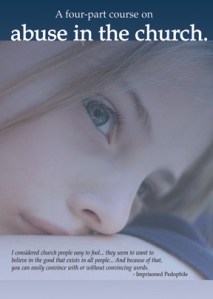
Abuse in the Church DVD now available


This summer I taught a class, along with Boz Tchividjian, about the problem and response of abuse within the church. Our four main plenaries were filmed and are now available on a 2 DVD set distributed by Vision Video. You can purchase the DVDs here at 20% off the price that will be listed on Amazon (and if you use the above link Biblical Seminary makes a few more pennies!). We Abuse in the Churchcover topics such as

  • how to recognize common characteristics of predators
  • prevention strategies beyond background checks
  • why we fail to act on abuse allegations and what to do about it
  • ministry responses to victims and offenders

The class was well-received by students and church leaders alike. It could be a great tool to get conversations going among lay and ordained church leaders as well as counselors who may be helping a church ensure top-notch abuse prevention measures as well as strategies for responding in a Godly way to abuse allegations–a way that ensures that the least of these are protected in the church.

Leave a comment

Filed under Abuse, biblical counseling, christian counseling, Christianity, Christianity: Leaders and Leadership, pastors and pastoring, trauma

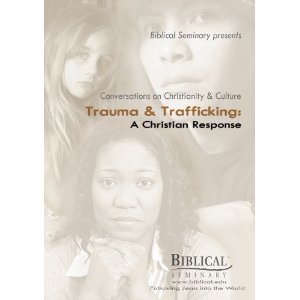
Trauma and Trafficking DVDs on Amazon


Nearly 2 years ago (March 2011), Biblical Seminary put on a conference about the problem of sexual trauma and trafficking. Our speakers included Dr. Diane Langberg (a noted psychologist), Bethany Hoang (IJM), Robert Morrison (a grassroots organizer), and Pearl Kim (now ADA for 2 Philadelphia counties). The sessions covered domestic and international sex trTrauma and Traffickingafficking, abuse and violence against women worldwide, the problem of sexual abuse in christian organizations, and how to mobilize community action without expending energy on non-profit status.

It was a powerful conference…and you can own it for a mere $19.99. Here’s the link to Amazon. Or, you can find it here at Vision Video (along with MP4 options as well) for 20% off.

This DVD set (3 DVDs) are an excellent starting point if you or your church group want to think more deeply about the biblical call to justice in the area of trafficking, trauma, and violence against women, whether “out there” or in the church.

Look for information on purchasing our most recent DVD series, Abuse in the Church, in the next week.


Leave a comment

Filed under Abuse, biblical counseling, Biblical Reflection, christian counseling, Christianity, Christianity: Leaders and Leadership, Diane Langberg, Post-Traumatic Stress Disorder, trauma

Diane Langberg on Listening to Trauma


Here’s video of Dr. Diane Langberg musing about what she has learned from listening to trauma over the years. (link here) She made this presentation as a part of a larger evening of trauma counseling training at Biblical Seminary, November 12, 2012.

Enjoy. More to come soon.

Leave a comment

Filed under Abuse, christian counseling, Christianity, counseling, counseling science, counseling skills, Psychology

Mandated reporting of violence risk?


Likely, you are participating in the current national soul-searching after the latest tragic school shooting/mass murder. In our angst we ask, “Why God?” and “What can we do to try to stop this kind of senseless killing?”

It is the second question that is on my mind right now.

Political debates will abound about gun control measures or the right to bear arms. In my humble opinion it is time to move beyond that debate and address the treatment of those who are most at risk to engage in mass killings. I have no idea about the mental status of this most recent killer but that shouldn’t stop us from trying to figure out how to better care for such individuals.

Who is at risk? A complex matter

Violence risk assessments have morphed over the years from clinical judgment (turns out our intuition wasn’t very accurate!) to an actuarial approach looking at factors like: active psychotic symptoms, family problems, history of aggression/domestic violence and or criminal behavior, social withdrawal/skills deficits, and substance abuse. But of course, there are many who have positive indicators on several of these factors who are in no danger of becoming a mass murderer. Still others meet none of these risk factors and yet become killers. [Read Randy Otto’s short paper on violence risk assessment and discussion of the historical, clinical, and environmental factors of violence risk]

One possible (partial) solution

Right now mental health professionals and educators are required to report possible child abuse. In addition, we counselors have duties to warn and protect when our clients indicate they are an imminent (meaning, immediate) danger to self or other. Sadly, many adults in high risk categories are not likely to be in treatment (due to costs, treatment availability and refusal) and may have enough sense not to make threats to those who are obligated to report.

So, what might we do to help those who do come in contact with at-risk individuals? In some states, all civilians are required to report potential child abuse. What if we develop a reporting mechanism for civilians to report those who are making statements about violent acts?

To make this procedure work, there are some additional changes we would have to enact (some of which are not simple)

  • We would have to engage in a large public awareness campaign and to train law enforcement and even mental health professional to recognize risk factors
  • We would need to develop humane but required treatment protocols
  • We would need to stop cutting public funds for mental health (and increase quality of community mental health care providers), and
  • We would need to consider limiting some of the currents rights to decline treatment when a number of the risk factors are present (this is, of course, no small matter. In this country we have the right to be insane…as long as we don’t hurt others).

Some need a rescue

Soon after the Connecticut shooting, The Huffington Post ran an op ed blog post by a mother of a mentally ill young man. It went viral as it was “a gorgeously written piece” by a mother whose son’s behavior terrified her. She well described the isolation and inability to find proper treatment and care for a son she loved but could not control. Almost as soon as her piece went public, others outed the writer as a person with mental illness who publicly blogged about wishing to strangle her children (see above link for that story). Despite her lack of judgment in prior writings, the original piece reminds us that there are many families suffering without avenues to help the ones they love. If we are going to make progress in quelling mass violence, we had better start building better mechanisms to treat the mentally ill and to support their family members.

3 Comments

Filed under counseling science, Psychology, Uncategorized

Bessel van der Kolk on curiousity


Watching Bessel van der Kolk’s live CE presentation on trauma and attachment from the comforts of a counseling office (far better than sitting in a hotel room since we can get up and go to the bathroom and make snarky comments from time to time).

He is focusing on neuroscience and the role of the body in trauma and trauma recovery. Here are a couple of tasty quotes:

  • trauma isn’t about what happened but how it lives in you now
  • the most important part of trauma recovery is self-regulation
  • If you can’t be curious about yourself, you can’t get better (speaking of curiosity of one’s body, how it reacts to trauma triggers; the capacity to observe in the here rather than live in the past).

2 Comments

Filed under Abuse, counseling science, counseling skills, Post-Traumatic Stress Disorder

Want consultation for your difficult trauma cases?


Just a reminder to those of you who are counselors and therapists out there, starting in January, Dr. Langberg and I will be offering group and individual consultations to mental health professionals seeking help for their domestic and international trauma recovery cases. We will be running a once a month group consultation on Fridays beginning mid January (runs for 6 months) here in the Philadelphia region. If you have any interest in joining the group or having your own private consultation, please check out our website for application and consent forms: http://globaltraumarecovery.org/group-consultation/

Group consultations are a great way to get feedback on a difficult case, learn from peers, as well as easier on your pocketbook.†


†consultations can not be considered supervision as we have no authority over your practice.

Leave a comment

Filed under Abuse, christian psychology, counseling, counseling skills, Post-Traumatic Stress Disorder, Psychology

Hope when it won’t get better?


Last night we ended our counseling & physiology class. All semester we have been looking at counseling through the lens of the body and its problems. All counseling problems are physiological since all counselees come with a body. But of course, some problems have more complex etiology and require counselors to understand how the body is part of the problem and solution. This semester we looked at a wide variety of problems: trauma, anxiety, addiction, sexual problems, bipolar disorder, autism, multiple sclerosis, traumatic brain injury, and much more. In addition, we explored how insomnia is the “mental illness multiplier” and some basic self-care and mindfulness provides much relief across all problems. And yet, we barely scratched the surface of the physical stuff we’d like to know.

But last night, we considered the problem of chronic illness, illnesses like chronic fatigue, fibromyalgia, and irritable bowel syndrome. Here’s the question I posed. What gives us hope when we no longer seek the removal or end of an illness? Most people come to counseling because they want to make their marriages better, end depression, find a new career, etc. But would you go knowing that all you can do is find marginal improvement and new ways to accept a chronic condition?

We discussed the unique problem of receiving endless advice (“Have you tried this? Have you considered that?”), the tendency to resist new ideas even while hoping a miracle will come along, and the fear that others will believe that your chronic condition is, “all in your head.”

Back to the question we asked, “What gives you hope when you don’t hope it will get better?”

Some answered that they found hope in finding other similar sufferers (though some danger in connecting with someone who only wants to vent). Others found hope in those who would be willing to listen and validate and help articulate lament. Still others found hope in those who would help them find just one more thing they can do to cope.

What would you find helpful and hope building?

4 Comments

Filed under christian counseling, christian psychology, Christianity, counseling, counseling skills