Good Read! New book out for lay counseling training


I am frequently asked about the best materials out there for churches interested in building a lay counseling ministry. There are materials out there that help to teach people to be good listeners. There are materials out there that give lay counselors an education on the nature of problems and how God is in the business of changing hearts and minds. These same materials help readers realize that lay counseling can be a credible and highly important ministry in the church. While professionals are needed for difficult cases, many counseling needs can be handled “in-house” if the church supports and supervises wise lay counselors.

Well, a new book is out and though I have not read it all, I have gotten a flavor of it, enough to recommend it to you all if you are looking for such a book. It is written by Robert Kellemen, author of a number of counseling texts and frequent blogger. Don’t miss his answer to a question of mine at the bottom.

Why is this an important book?

Here’s why:

  • Most prior books on this topic present lay counseling either as an anemic listening only task or speak only in theological terms and fail to actually train lay counselors to listen well. This book considers both the biblical basis for lay counseling AND is concerned about listening skills as well.
  • Most prior books forget to bring the WHOLE church along in the vision of biblical counseling. Bob has the readers consider the church culture and health. If the church (leaders) aren’t buying in to this, there won’t be a counseling ministry.
  • Bob focuses on the character of the counselor. This is HUGE. What’s worse than a poorly trained counselor? One who is well-trained but arrogant and un-reflective.
  • Bob covers practical matters of a counseling ministry including the ethics of lay counseling. This is extremely important if a church doesn’t want to make mistakes that could lead to lawsuits.

Click here for more on the book including a table of contents, video trailer, and sample chapter.

So, I asked Bob this question:

Most churches seem divided between those who support lay biblical counseling and those who think counselors should be specialists outside the church. How does your book speak to both?

Bob’s answer is extended but helpful:

That’s an excellent question. Anyone who knows the focus of my ministry knows that I tend not to be an either/or person, but rather a both/and person. I believe God calls both biblical counselors in the church and those who counsel outside the church.

Equipping Counselors for Your Church, by the very nature of the title, is much more focused on local church-based equipping. However, in chapter one I address More Than Counseling: A Vision for the Entire Church. Here I outline seven different “styles” of meeting counseling needs in the Christian community–including the “specialist model.”

A main reason I choose to focus on equipping counselors for the church is that very few others are doing so. While we have scores and scores of books about training professional Christian counselors, the last book written on equipping counselors for the church was Tan’s 1991 book–based upon his 1980s dissertation which in turn was based upon research from the 1970s. We’ve gone an entire generation without a book on equipping counselors for the church! Frankly, that’s inexcusable given the Bible’s clear mandate that we equip God’s people to speak the truth in love so that we all grow up in Christ (Ephesians 4:11-16).

Further, we have 100s of counselor education programs in Christian colleges, graduate schools, and seminaries, but in my research, few of those programs have required courses in equipping counselors. In the one course I took on the topic in my seminary MA, we were told that it was not possible to equip counselors for the local church! I couldn’t disagree more. I always tell pastors, counselors, and students that if you are going to obtain a Master’s Degree that means you have so mastered the topic that you not only are able to do the work of counseling, you should be able to equip others also.

So, we could debate the issue forever (biblical counselors in the church or specialists outside the church), but the fact is, there’s a dearth of biblical, best-practice material available for those who are committed to equipping one-another ministers for the church. Equipping Counselors for Your Church brings together two-dozen best-practice churches who are doing it successfully now, plus my experience launching and leading biblical counseling ministries in three very different churches. It provides a biblical, logical, theological, relational, field-tested, practical step-by-step “4E” process: envisioning, enlisting, equipping, and empowering.

2 Comments

Filed under biblical counseling, christian counseling, counseling skills, Doctrine/Theology, Good Books

Sneak preview: Healing Trauma in International Settings (AACC seminar)


Cascade Atrium, Gaylord Opryland Resort & Conv...

Image via Wikipedia

Just completed preparing my breakout seminar for this year’s AACC World Conference at the beautiful but outlandishly expansive Opryland Hotel in Nashville (Sept 28-Oct 2). This time around I presenting with my colleague Carol King on “Healing Trauma in International Settings: Best Practices.” Carol has had some experience in Rwanda and Goma, DRC and will be with our group in October when we do trauma recovery training in Kigali. Come back to the blog on the 30th and you can see and download the slideshow we will do.

What will we be talking about? 3 main points:

  • Listen…don’t assume you already know trauma or treatment practices
  • Train…don’t do the interventions yourself (train local leaders)
  • Utilize…don’t reinvent the wheel (use existing models)

Now obviously we will be fleshing those points out. Our goal is to help prepare interested counselors to develop short and long-range intervention strategies that utilize the cultural and human resources of the people they will serve. The only way to do this well is to have a listening and collaborative/support role approach. To that end I will talk about hoe to build an effective area case map.  We end by reviewing a few models for trauma recovery (both Christian and secular).

Check back on the 30th for the full set of slides.

Leave a comment

Filed under AACC, Abuse, christian counseling, christian psychology, Christianity, counseling, counseling science, counseling skills, Post-Traumatic Stress Disorder

Psychological rubbernecking?


One of the necessary first steps of doing international trauma work is to listen to the stories of trauma. There are two main reasons. First, it can be healing for the teller to tell their story to someone safe and caring (if those leading the story telling project follow some basic rules). Second, stories often reveal useful information that may determine future trauma recovery intervention strategies.

But let us also admit there can be a downside to getting others to tell their story, especially those who are impoverished and in great need:

  • When “helpers” or journalists helicopter in to hear the stories, the victims may not feel free to not tell their stories because of the help they hope to receive
  • Outside helpers may repeat the stories in such a way as to sensationalize or to gain more money for future trips. While some reasons to tell may be noble and good, does the retelling of the trauma put the victim at risk for retaliation?
  • Getting victims to tell their story may first raise hopes for change and then dash them if there isn’t a plan for follow-up
  • Sometimes outsiders listen only to help themselves feel better (see, we cared enough to listen) but not do anything to help

In less than one month I will be on my way to do just this kind of listening in both the DRC and Rwanda. The challenge for us is to listen and invite story-telling in ways that leaves victims with immediate help and hope and a viable plan for the future (as it pertains to what to do about their trauma).

But we face some hurdles in trying to hear the right (real) or most important stories.
1. Hearing the real stories. Sometimes stories get cleaned up in an effort to tell us what others think we want to hear. Other stories are told with a slant in order to avoid stirring up other trouble.

2. Avoiding our own biases. Some victims may be perpetrators even as they are also victims. It is easy to categorize individuals in such a way that we stop listening to the pain or the recovery. We can fail to see how victims handle temptations for revenge or how perpetrators act humanely.

3. Lost in translation. Most of the stories we will hear are going to be told to us in a language other than English. That means the story we hear may be the words of the translator rather than the victim.

There is a fine line between listening for learning or helping and listening for curiosity. It is not always clear where that line is but pray for us as we seek to listen in ways that bring health and a plan for healing. We do not want to merely rubberneck like those driving past a bad accident, looking but not providing any help.

One sign that we are listening well is that the victim not only recalls the terrible things from their past but that they also recall how they survived and have some sense of being empowered in their present and future.

1 Comment

Filed under christian counseling, DRC, Uncategorized

Good Read: Is addiction a disease of the brain?


Over on the NPR website Alva Noe (Philosopher, UC Berkeley) writes an interesting opinion blog (aren’t they all?) about why we shouldn’t call addiction a disease of the brain. As you will see from the hundreds of comments, he surely riled a bunch of people up. Some of the comments are quite clear, others just humorous. But I commend his blog for you to read. It makes you think about how some of our language regarding addiction unhelpfully narrows down the problem, thereby making it more difficult to pinpoint all that needs to change when fighting addiction.

Is addiction a disease of the brain? Following his logic, no. Is it a disease that involves the brain? Yes. We must recognize that we are not mere machines and as a result mental illness and addiction both must be viewed from socio-cultural-biological-relational-experiential-spitual-will perspective. A lot goes into creating an addiction. We ought not single out neural structures and activity as if that says all we need to know.

However, on the flip side, to suggest the that addiction isn’t a disease or a biological problem may also send the wrong message. In fact, addicts rarely can “just say no.” By the time they seek help their bodies are working against whatever little will power they have left.

So, addiction is a disease of the person. It may not qualify as a disease that we can identify on a specific cell, but the addicted person is no longer functioning properly and thus their entire person is diseased.

6 Comments

Filed under counseling, counseling science

Observing and Remembering Grief


On September 11, 2001, and for some time thereafter, Americans observed and experienced the grief of individuals and a nation. Now, ten years later, we observe and remember it anew–whether our own or the grief of strangers.

If you caught any of the television coverage you probably saw family members reading the names of the dead or tracing the names of loved ones carved into the memorials at ground zero. These images are both beautiful and heartrending, especially those of the children who are growing up without a parent. Or, you may have watched some of the surviving firefighters and police officers tell of their struggle to breathe or to fight the cancer that is likely the result of breathing in the toxic dust as they dug in the pit without proper protection.

As the names and ages scrolled across my television screen, I noted how many were so young, hardly even into the prime of their lives. Though I lost no one in my family or circles, I feel some small portion of the grief families continue to feel and am glad they have a beautiful place to go to remember their dead. Remembering the dead with ceremonies, markers, and moments of silence is an important part of living and grieving well. It is an active means to recall who we are (whether individual or nation), what we are, and where we are headed. As a people, we tend to do funerals pretty well. We recall someone who has died and how they influenced our lives. And, we endeavor to keep a part of their legacy alive in how we live our own lives.

I think these kinds of memorials have the opportunity to do the same thing.

But, and this takes nothing away from our collective grief, I am also aware that so many around the world die in obscurity without even the dignity of a thoughtful burial, with no one remembering their life or death. This is especially true in war-torn, impoverished areas. One militia erases the village of an opposing faction. Most are killed, a few survive by escaping into the bush or forest. The dead range from infants to elderly. They are left to be raided for any remaining goods, picked over by wild dogs, and whatever bones are found are later bulldozed into a mass grave.

In the West we may hear of these deaths and shake our heads at the senselessness of human atrocity. But distance and disconnect with other parts of the world rarely cause us to rise up as a nation and observe (stop if possible) and remember the grief of others.

One such arena of senseless and invisible slaughter happened in DRC. Bryan Mealer gives you an inside look at suffering and death and the desperate attempts of many Congolese to stay alive during the great African war. What I noticed was how little time there was to remember and grieve. Remembering is done by those who do not fear for their safety.

So, as we remember our own grief, let us also recall and remember those victims who get no grave nor remembrance.

2 Comments

Filed under suffering, trauma, Uncategorized

Getting confirmation on global trauma recovery plans


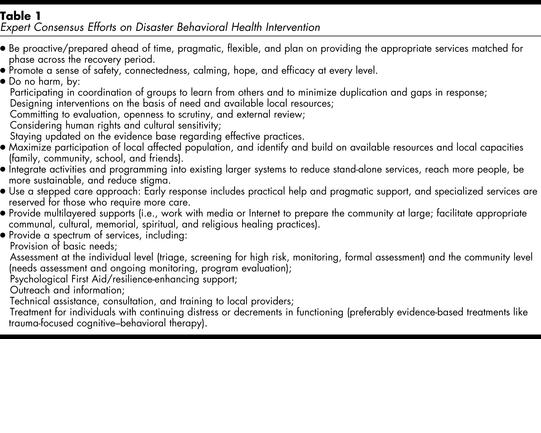
Since January I have been trying to articulate the best practices in doing trauma recovery or trauma healing work in international settings. The foundation of this approach to trauma recovery is, (a) Listen first to the needs, resources, and concerns of a community(b) identify local leaders who can be trained to be the primary trauma recovery workers (rather than outsiders being the primary clinicians), (c) tailoring interventions to the needs of  the community, and (c) above all…do no harm by over-promising, under-delivering, etc.

Today, I opened up my most recent American Psychologist (66:6, September 2011) and found my thinking confirmed in Watson, Brymer, and Bonanno’s Postdisaster Psychological Intervention since 9/11 (see citation at the bottom of the page). On page 485 they list what experts consider an appropriate steps to take in postdisaster behavioral health interventions. Now, most of you don’t probably get excited about research articles like this but I can tell you I did. Here’s the chart (click to see a larger image)

It is nice to find confirmation for something I was thinking but hadn’t read elsewhere.

From: Watson, P. J., Brymer, M. J., & Bonanno, G. A. (2011). Postdisaster psychological intervention since 9/11. American Psychologist, 66(6), 482-494. doi:10.1037/a0024806

1 Comment

Filed under Abuse, counseling science, Post-Traumatic Stress Disorder, Psychology, trauma, Uncategorized

Churches taking abuse prevention seriously? YES


We counselors rarely note, in public, the positive actions of churches who take seriously the call to care for the least of these. All too often we hear and repeat the news of churches who fail to enact prevention efforts or who botch responses to abuse within the church community.

So, this short blog is to remind us that many churches do work to prevent child and adult abuse and who respond well to abuse confessions or allegations. Today I participated in a phone call where one such church was looking for ways to take their existing practices and policies and make them even better. It won’t make the 6 pm news or the next Christianity Today because there is no scandal to report.

In honor of this church, let me give a couple of suggestions to others who might like to enact their own policies and practices

  • Determine the organization’s foundations and values for policies and responses to alleged abuse

You might think this a strange place to start but it is my experience that if a church/org doesn’t name their controlling values, another set of values will rule the day–and often without anyone knowing it. I have seen churches who make decisions on the basis of limiting liability. I would suggest a better value is protecting the vulnerable from abuse and standing for truth, justice and righteousness. I have also witnessed unspoken values of “fairness.” Since everyone is a sinner, then no sinner can be called out and restricted in their access. Since both victim and offender are sinners, then the blame is to be equally shared, even if the offender is a pastor.

  • Begin with some key theological principles. Study them. Engage in churchwide discussions

Key topics to consider: nature of evil, abuse, impact of sexual abuse; theology of reconciliation, restoration, forgiveness, and repentance (these topics are all different and not to be confused); theology of the state (too many churches see the State as evil and thus they do not begin to think about reporting child abuse)

  • Identify a team to develop policies and to handle abuse allegations and to identify potential risks
  • Craft policies for lay counselors, pastoral staff, child care workers, those who have been accused or found to have committed abuse (e.g., can they attend church; do they need a care team to bring church to them?)
  • Staff to explore how to make the church friendly to current and past abuse victims; consider sermon and Sunday School topics to set agenda and tone
  • Make clear abuse reporting policies to the church (even if not required by local jurisdiction) because of the moral call to protect the weak
  • Background checks for all staff, including pastoral staff
  • Finally, locate capable individuals who can assess, consult, and treat specific individuals in need of help (offenders or victims)

There is more to be done but this is a good start and will take some time to do it. Of course I can’t end without suggesting that churches seek out GRACE for help on either the prevention or response side of things.

Leave a comment

Filed under Abuse, Christianity: Leaders and Leadership, church and culture

When some help isn’t better than none


When is some help worse than none? When it creates more problems than might have been there without it. While that is easy to say, determining the line between helpful and harmful is less clear.

If your help saves a life, that seems good. If your help saves lives but creates or supports a system that destroys others, when do you decide to stop helping or to change the help you offer?

This is what Linda Polman raises and a key issue in her The Crisis Caravan: What’s Wrong with Humanitarian Aid? (2010, Metropolitan Books; first published in 2008 in Dutch by the title, De Crisiskaravaan).

Linda tells of a huge problem in the humanitarian aid industry (yes, it is one even if its primary purpose is to provide care for traumatized and displaced peoples). She puts the challenge this way in regard to providing humanitarian aid for those in warzones,

You do what you can for the victims, but soldiers exploit your efforts. They demand money for ever well yo dig and levy sky-high taxes, imposed on the spot, on all the sacks of rice and tents and medicines you arrange to have flown in. They consume a slice of your aid supplies and sell another slice. Among the items they buy with the proceeds are weapons, which they use to drive yet more people into your refugee camps or even to their deaths.

What do you do? Do you conclude that it is no longer possible to cling to the principles of the Red Cross, pack your bags, and leave to help war victims elsewhere? Or do you remain true to your convictions, believing that even if you save only one human life, some relief is better than none? (p. 1-2)

The first 2 chapters detail the problems of the international aid provided to Goma, DRC between July/August 1994 and 1996 when the Rwandan government used their soldiers to force the mass of Hutu refugees and former genocidaires back into Rwanda rather than allow the camps be locations for regrouping of the militias that would try to return to fight the new Rwandan government.

A couple of her observations

1. Not all refugees are the same. Some are truly in need. But a large number of the refugees in Goma brought a treasure trove of materials looted from their own country. Thus, they were less likely pushed there and more likely going there to reconstitute a machine against the RPF in a safe place.

2. The international community came in droves, almost seeming to try to make up for the failures in Rwanda for the past several months. But they didn’t understand that many of these folks were either perpetrators or related to them.

3. Not all of the deaths reported as due to cholera were in fact illness related. There were many that were killed for failing to be loyal enough to the Hutu extremist groups

4. NGOs have to market themselves and thus spend lots of money to get contracts to help more

5. NGOs hide the fact that many of their stuffs were taken by Hutu leaders so the NGOs would raise the number of people they were helping in order cover up that they lost a large percentage of materials/food to theft and corruption

6. Journalists are more likely to get their way paid to cover a crisis by an NGO, thus raising questions about the images they send back. Likely not going to be as objective.

Now, none of this suggests we shouldn’t provide humanitarian aid to refugees in warzones. But it does remind us that our help can also hurt others. Being wise as serpents and harmless as doves is a lot harder than we might expect.

Given our trip to the region next month, I have to remember that our good intentions are not always enough. I’m not sure how our help can hurt but if we don’t ask the questions, we won’t know either. Here are some open questions

1. Does short-term trauma recovery efforts start a healing process but fail to keep it going thus encouraging more hope than discouragement?

2. Does bringing people together to talk about trauma unintentionally trigger trauma or feelings of rage (we won’t know if some people are considered the “wrong kind of people”)?

3. How does taking pictures or filming any part influence the “data” we think we are collecting?

Leave a comment

Filed under conflicts, Congo, counseling, Post-Traumatic Stress Disorder, Rwanda, Uncategorized

Magazine Note: CCT on Global Issues and Challenges for Counselors


Volume 18:3 of Christian Counseling Today (published by AACC) is now out. If you don’t normally see this publication, you might want to lay your hands on a copy. Here is some of the content

  • Report on the Cape town Declaration (Lausanne Congress) and its vision for seeing counseling as mission (by Brad Smith and Fred Gingrich). You can read the whole Cape Town Declaration here.
  • Some thoughts on the cross as it relates to kingdom culture by Samuel Rodriguez
  • Diane Langberg’s important essay, “Trauma as a Mission Field.”
  • One of my former students on the state of religious persecution in China and the state of church based counseling. A must read if you are thinking about ministering in China.
  • An excellent article by Naji Abi-Hashem about 21st century challenges to the work of counseling
  • I and Josh Straub have a brief introduction to basic competencies for those who want to work internationally (had to get that in there!)

In addition, there are several other good essays dealing with the tragedy in Japan and Haiti, trauma in relief workers, and more. None of these are very long articles but they do serve to prime the pump. They should get you excited to think globally and act locally as a counselor.

Leave a comment

Filed under Uncategorized

Trauma Recovery Work in the DRC and Rwanda


Location map of Rwanda

Image via Wikipedia

It is official. Diane Langberg and I have our tickets for our upcoming trip to the Congo (DRC) and Rwanda where we will be interacting with trauma victims, pastors (who are also trauma victims), Bible Society and World Vision workers, and probably medical and education officials as well.

We leave on October 10 and arrive in Uganda on the 11th. We will be traveling into the DRC in the northeast quadrant (picture tiny plane!) near Bunia and also to Goma, on the shores of Lake Kivu and under the shadow of a large and active volcano. There we will be observing the work of the American Bible Society and She’s My Sister as well as meeting with rape and trauma survivors.

On the 17th, Lord willing, we’ll drive from Goma into Rwanda to Kigali. There we will be joined by colleague Carol King (Langberg & Associates therapist) and Josh Straub of the AACC and our Rwandan compatriots Josephine (WV) and Baraka (IJM) and will lead a  three-day training seminar re: trauma recovery resources and best practices. The plan is to return home via Kenyatta airport and Brussels on the 22nd.

Prepping for the trip includes everything from shots to planning who does what training segments. Those of you inclined to do so, pray for the logistics there as World Vision Rwanda puts the final touches on the location of training and invitees. A lot of work must happen for this to go smoothly. Also, there is an effort to raise funds for this (Project Tuza) at the AACC World Conference in Nashville the last week of September. Pray that attendees will catch a vision and support us as they can.

Anyone wishing to donate can here.

Leave a comment

Filed under Congo, counseling, counseling science, Post-Traumatic Stress Disorder, Rwanda, trauma, Uncategorized