
I teach at a missional seminary. You might wonder what “missional” is all about. Well, I’ve tried to articulate why missional is all about redemptive and redeeming relationships. Such relationships change the ways we relate to those we seek to serve, whether here in the U.S. or in any other part of the world. To read a bit about how missional relates to serving others in Africa, read this post over at the Biblical Seminary faculty blog. It came out on Halloween but Hurricane Sandy made her appearance a few days earlier so I doubt many saw this.

Book Note: A brief window into Palestinian life

English: Personal photo of Poet and Author Mourid Barghouti, taken by Dia Saleh (Photo credit: Wikipedia)
Just finished Mourid Barghouti’s I Was Born There, I Was Born Here (2011, Walker & Co.; first published in Arabic, 2009). It is a set of short stories about the author’s experiences as a Palestinian making trips from Jordan back to his homeland in occupied territories (Ramallah). No matter your political leanings or support for Israel and/or a two state solution, you will find his descriptions of road blocks, walls, difficulties moving around, etc. a reminder of the fact that trauma can result not just from shocking and unexpected experiences (e.g., assaults, rape, domestic violence) but also from the daily grind of living in a police state without the right status. And lest you think he is only talking about living under Israel’s thumb, he also describes living under intimidation in Cairo as well,
No matter the differences in terms and methods from one Arab country to another, such people [those who had just taken his adult son] are always gracious when inviting their prey to be their guests and they will always be bringing them back in an hour or so at the most. Men and women have spent decades in the cells of the Arab regimes without ever finishing that damned cup of coffee.
We got the message.
The message of fear or, rather, of intimidation….
Thuggish authority is the same, whether Arab or Israeli. Cruelty is cruelty and abuse abuse, whoever is the perpetrator (p. 199)
His son was forced to leave the country of his birth (Egypt) since he was not Egyptian. Here’s what the author said,
What has stayed with me from this incident was my inability to protect my son. (p. 200)
Besides the descriptions of interminable waits at checkpoints, rude interrogations, refused entry to home villages for no apparent reason, Barghouti also describes the experience of being seen by others as a criminal, a possible thief, a terrorist instead of the poet that he is.
A worthy read to see life from another perspective.
Share this:

Filed under Good Books, Great Quotes, trauma
More on “Can Your Body Make You Sin?”
I’ve written about this topic here and here before. In those posts I argue that there is a better question for counselors to consider than the one of culpability. Last night, we started the 2012 edition of Counseling & Physiology with the question of culpability and whether or bodies/brains can cause us to sin outside of our will. We also looked at our tendency to focus on judging whether a person is culpable for their sins (e.g., someone with Tourette’s who swears, someone with a TBI who is easily enraged, someone who is chronically anxious or still another who falls prey to addictive behavior). One of my main goals was to get students thinking about whether they under or overestimate the body’s role in counseling problems.
In the second post listed above I indicate the possibility of a better question than culpability. However, one of my students last night raised a question that went something like this,
Doesn’t the fact that you will choose how to respond to a client indicate that you have to judge the cause of the problem? If you encourage a client to consider psychoactive medications, aren’t you suggesting it is a body problem? If you focus on habits or heart issues, aren’t you assuming the problem is primarily a spiritual, will or behavioral control problem?
This was a great question and my answer was something like the following.
No and yes. Functionally, you will choose an area to work first. This does not mean you think that the type of intervention you choose indicates the main problem. It may only indicate that you think one intervention is an easier entry gate to counseling than another.
Here’s an example. Even if my client is severely depressed and I believe that the primary cause of this depression is their longstanding bitterness and anger towards God, I may encourage a psychiatric evaluation and the consideration of an antidepressant. It may be that once their mood improves, we can make better progress in investigating some spiritual matters in their life.
Human sins and weaknesses have multi-factored sources
Have you ever thought of the various sources of human sin? Here’s a visual of all of the things I think of that are a part of nearly every human sinful behavior. The sizes of the factors surely change depending on the situation. For some, will, high-handed rebellion, may be most of the pie. In other cases, bodily weakness may be the prime source. Also, some of these surely overlap and are not distinct. I may have started out in a rebellious state when I started doing drugs. Now, my body and psychological habits are equal players in why I maintain a drug habit.
What else would you add to this chart? Note that I place “will” in the smallest concentric circle. I imagine that we have far less conscious control over sin than we sometimes ascribe. Habits, unconscious motivations, and foolish (unthinking) choices probably dictate more of our behavior than our direct, willful, planned rebellion. Of course, none of this has ANY influence over culpability or morality as Scripture clearly indicates our guilt even when we are unaware of the Law’s commands. When Jesus says, “Father, forgive them for they know not what they do,” it tells us that consciousness of sin has little to do with our need for forgiveness.

Share this:

Filed under biblical counseling, christian counseling, christian psychology, counseling, sin
The biological roots of PTSD…and resilience

Brain structures involved in dealing with fear and stress. (Photo credit: Wikipedia)
A good friend of mine pointed me to a recent Nature essay that describes the biological markers for PTSD and resilience–and provides some of the answer of why some seem to recover fairly quickly while others continue to struggle. Here’s a couple key quotes:
“Functional magnetic resonance imaging (fMRI), which tracks blood flow in the brain, has revealed that when people who have PTSD are reminded of the trauma, they tend to have an underactive prefrontal cortex and an overactive amygdala, another limbic brain region, which processes fear and emotion…”
“People who experience trauma but do not develop PTSD, on the other hand, show more activity in the prefrontal cortex.”
Of course, we need to understand that we are complex beings with complex histories and current social connections. We don’t only look at neural activity but with increasing understanding, we learn how experiences such as childhood trauma, poor social support influence brain activity.
Some worry that the discussion of biological features of PTSD will lead only to increasing chemical interventions (meds, surgeries, etc.). I do not believe this to be the case given that we are also learning about the ways that current relationships and psychotherapies are altering brain activity.
Share this:

Booknote: Broken Memory
Just posted a short book review over at Global Trauma Recovery Institute. It is a novella about a child survivor of the 1994 genocide 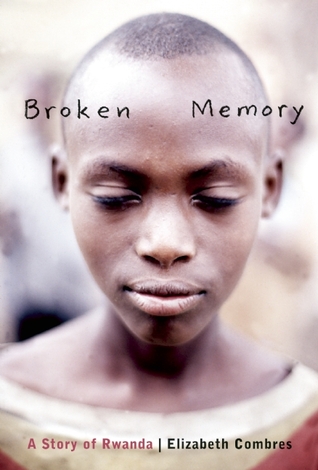 in Rwanda. If you are interested in getting an inside look at life after a trauma, dealing with memories and spaces in memories, and a common recovery process, I commend the book to you. Quite moving, easy to read (not triggering for most), and gives some good illustrations of actions of the survivor and other caring individuals that help the young woman regain control over her internal world.
Share this:

Filed under Africa, counseling, Good Books, Rwanda, trauma
Kristof on talent vs. opportunity
Have you caught the recent PBS showing of Half the Sky, a documentary based on the same-titled book about the oppression of women around the globe? Worthy of your time. The previous link will also point you to the book by Nicholas Kristof and his wife, Sheryl WuDunn. Last night, I caught the portion about female genital mutilation in Somaliland, caste-based forced prostitution in India, and struggles in Kenya.
Though there are many movings scenes, the quote that stands out most to me is from Kristof,
In this world, talent is universal, but opportunity is not.
Good reminder. We often believe in a just world, level playing field mentality. You get ahead because of hard work. You don’t get ahead? You didn’t want it bad enough. The problem with this is that the field of life isn’t level. You may be the brightest in the class, but if your parents can’t afford to pay your school bill, you won’t be able to graduate. If you don’t graduate, you can’t get the same kind of jobs, etc.
Rather than wring our hands over the unfairness, we ought to consider what boost we have received at birth and what we will do with our extra talents (to use the word from the biblical parable).
Share this:

Filed under Great Quotes
Global Trauma Recovery Institute website launched
We’ve finally gotten Global Trauma Recovery Institute off the ground with our web presence and our upcoming courses! Check o ut the download forms on the right side of the GTRI page for application, course abstracts, and information on small group consultations with Dr. Langberg and myself.
To refresh your memory, we have a 3 course design for continuing education and training regarding the work of global trauma recovery facilitation. Courses are designed to be at the postgraduate level and each course is divided into two parts, an online portion and an on campus portion. While the online portion can be taken alone, those who wish to be eligible for the immersion portion must complete all three online and on campus portions.
These three courses will prepare participants at a beginning stages of facilitating recovery efforts in the places God has placed on their hearts. We will be exploring the nature and impact of a variety of traumas, how best to listen, learn from, and engage a particular culture, and how to collaborate with local caregivers to improve existing trauma recovery efforts.
In addition, we offer individual or group case consultations. Our first group consultation cohort will begin January 11, 2013 and meet monthly for six months (in Jenkintown, PA). Sign up now since we will only be taking 6-8 for this cohort.
Share this:

Filed under Uncategorized
What really caused the Rwandan genocide? Scott Straus’ answer
Have begun reading Scott Straus’ The Order of Genocide: Race, Power, and War in Rwanda (2006, Cornell University Press) [HT to Carol for the copy]. Not sure how many books this makes about Rwanda but I am appreciating his attempt to take a dispassionate approach to answering the question about why the 1994 genocide happened, how it happened, how/why ordinary civilians participated in the killings. Right away, Straus focuses on the methods of data collection and why he avoids the sensationalized approach to describing the gore. Within his introduction, Straus makes this assertion and then spends the rest of the book showing his basis:
I find that the Rwandan genocide happened in the following way. After President Juvenal Habyarimana was assassinated on April 6, 1994, and in the midst of a defensive civil war against Tutsi-led rebels, Hutu hardliners declared all Tutsis to be “the enemy.” In a context of intense crisis and war, the declaration that Tutsis were the enemy functioned as a de facto policy–in effect, an authoritative order and a basis for authority–around which coalitions of actors could mobilize to take control of their communities. Once local actors who subscribed to the hardliners’ position had secured enough power, they made killing Tutsis the new order of the day and demanded compliance from the Hutu civilian population. In the Rwandan context, where state institutions are dense at the local level, where civilian mobilization is a common state practice, where the idea of state power is resonant, and where geography provides little opportunity for exit, large-scale civilian mobilization to kill was rapid, and the violence was extraordinarily intense and devastating. (p. 7)
In reviewing data that he can “triangulate”, Straus helps work through a number of hypotheses that may have explanatory power but lack the data to support them. If you want to gain an experience of the genocide, Jean Hatzfeld’s books are great introductions to the stories of surviving victims and perpetrators. But, this book moves beyond story to fuller explanations of how the violence spread so quickly and slaughtered so many in so few days.
Share this:

Mis-speaking, lying, or telling a truth you didn’t mean to tell? Reasons why we say things we regret
If you have been following American presidential politics, you will understand references to candidate faux pas like Romney’s “47%” or Obama’s “guns and religion.” [Check out this link for a comparison of the two].
Ever wonder why these gaffes happen? Is it a matter of mis-speaking as so often is claimed? Or is the candidate saying what he/she believes only to discover in the light of day that they wished they hadn’t been so honest? As I look at the possibilities, I see 4 reasons candidates say things they later must apologize for.
1. They mis-speak. Let’s deal with this one first since it is most often claimed as the reason for the faux pas. Anyone can get their tongue twisted around. My father once quoted Isaiah 40:31 during a sermon and said, “ings as wiggles” instead of “wings as eagles.” This is the usual form of mis-speaking. We can get numbers, facts, and ideas twisted around. Mis-speaking is usually fairly obvious to hearers and quickly fixed once it is brought to one’s attention.
2. They say what they think but later wish they hadn’t. Quite often we say what we think but then wish we hadn’t been so forthright. When it comes out, we recognize (immediately sometimes but not always) that what we said doesn’t sound very good. Sometimes we don’t always recognize what we believe until our own ears hear it. We look down upon a group of people (in the presidential examples, religious conservatives and recipients of public funds) and stereotype them as a group because that is how we have imagined them for some time.
3. They are mis-informed. There are times we say something but have mis-understood the facts. For example, there is a commonly repeated stat that 50% of evangelical marriages end in divorce. This is not true, but someone could repeat the stat as fact but later retract it once they learned the stat was not true. Sometimes we hold a stereotype but later discover better facts and change our opinions.
4. They lie to please others or win a point. Have you ever said something because it earned you some point, even if you didn’t fully believe it. Consider a fight with a family member. Did you ever stretch the truth to win a point, “You always… You never…” Or, maybe you said something that would please your audience. You made a joke about another group of people in order to win a laugh. You suggested you agreed with an opinion even though you did not.
So, sometimes we regret speaking what we believe. Other times we regret saying things for ulterior motives. Can you think of other reasons why we say things we wish we could take back? How would you react if a politician said,
What I said was patently false. I said it because I got caught up in pandering to my audience. It was wrong not only to speak falsehoods but also wrong to give in to people-pleasing. I apologize for these two wrongs and I endeavor to speak only the truth, even if it costs me your support or the presidency.
Share this:

Filed under Communication, News and politics
What good is a diagnosis?
At the recent AACC conference Dr. Michael Lyles, a board member of AACC and practicing psychiatrist, stated the following,
A diagnosis is only a word on a page if it doesn’t serve a function.
What kind of function was he thinking about?
- Does it explain a set of symptoms?
- Does it point to a treatment plan?
- Does is help differentiate between overlapping symptoms?
I’m a firm believer that our current DSM diagnostic system is at once both flawed and useful. It is flawed in that DSM diagnoses don’t address causes or do much to point to treatment. It is useful when used carefully to help differentiate between overlapping sets of symptoms–even as it needs considerable overhaul to do a better job. Take differentiating between Major Depression and hypothyroidism instigated depression. The two look identical. But using a multiaxial diagnosis, a person could rule out Major Depression if they were able to make a positive diagnosis of low/inactive thyroid function.
So, until we have a better nosological system (i.e., a replacement for the DSM), I will continue to use it. In years to come we will, however, recognize it for the blunt instrument that it is.
Right Diagnosis…Wrong Focus?
Consider the following case study (not a real person, devised from several stories) as an illustration for the problems we have moving from current diagnostic categories to proper treatment.
Tom is 27, married, father to one young daughter, working part-time as a youth pastor and going to seminary full-time. He comes to counseling on the encouragement of his primary care doctor. One month ago during final exams and an overly busy ministry schedule, Tom began experiencing rapid heartbeat, shortness of breath, feelings that he was losing his mind, and chronic fear of dying. After experiencing 4 panic attacks in rapid succession, he began worrying that something was terribly wrong and that he was about to die. His doctor first ruled out a physical origin for these symptoms, taught him breathing and distraction exercises to interrupt the buildup of panic, prescribed an anti-anxiety medication, and recommended he make an appointment with a therapist. During the first session, Tom details his history of stress, reports he has been able to forestall 2 more panic attacks but admits he still struggles with fears of dying, lacks assurance of salvation, and feels flooded with guilt that he worries so much. Upon further exploration, Tom believes the bible teaches him that he should not fear if he has “perfect love”. He has read all of the verses about anxiety and feels condemned for his struggle.
Tom meets criteria for Panic Disorder, without Agoraphobia. This is a highly treatable problem and within a few short sessions, Tom is likely to gain mastery over his body in that he will no longer evidence panic attacks. This, of course, is not the same as saying he will stop experiencing worry, guilt over his chronic worry, or start having assurance of his salvation. Logic, disputing worries, distractions, exploring and altering core beliefs may help reduce the symptoms that brought Tom to his doctor and counselor. A good Christian counselor may also be able to reconnect Tom to Scripture in ways that help him experience God’s care for him in spite of his fears (e.g., hearing the gentle voice of Luke 12 vs. a harsh rebuke).
But has the diagnosis been properly made? Yes. Tom met the criteria for an anxiety disorder. No. Tom’s counselor also helped him discover a deep layer of shame that may have been the source of his anxiety. Without the latter, the former is not altogether helpful.
So, should the diagnosis be an anxiety disorder or shame? Until we have shame as some form of a diagnosis, I’m okay with maintaining the anxiety disorder as a good description of external symptoms. But, Tom and others like him will need wise counselors who can dig a bit to discover diverse multiple shaping factors (e.g., biopsychosociospirtual) that lead to a common expression of symptoms.
What good is a diagnosis? I concur with Dr. Lyles: not much.


