Physiology Phridays: Deep Brain Stimulation


Next fall I will teach “Counseling & Physiology” for the first time so I am beginning now to plan through such a course. It’s my intention to use Fridays to blog on counseling stuff related to the brain and biology. Here’s my first post:

The March issue of the APA Monitor on Psychology magazine has an article on the use of deep brain stimulation for chronic and untreatable depression (after failures with medicine and ECT). DBS is a surgical procedure, first pioneered to stop Parkinsonian tremors, where electrodes are placed in the subgenual cingulate region and a “pacemaker” produces electrical current to the electrodes on a continuous basis. You can read about DBS here on wikipedia. The studies are small as of yet but the FDA has already approved this procedure for OCD patients.

This surgical procedure seems to produce positive feelings and relief from the depression. So, does this mean that depression is merely a biological problem? No. This is why medicines are quite helpful but it is counseling that maintains the relief from depressive symptoms.

Bottom line: Depression is a multi-faceted disorder–both from an etiological standpoint and from a treatment standpoint. One must consider biology, spirituality, cognition, and behavior. These areas are not mutually exclusive as work in one area has impact on the others. Efficacious treatment not only seeks to resolve the depression but also to consider how to live well–whether in a depressive state or not.

Leave a comment

Filed under biblical counseling, christian counseling, christian psychology, counseling science, Depression, Psychology

Jack Miller on repentance (again)


If you haven’t seen Jack Miller’s little book on repentance I encourage you get ahold of the new edition published by CLC publications (2009). The cost is under 8 dollars! Jack Miller wrote the first edition in 1975 under the title, “Repentance and the 2oth Century Man”. This one, entitled: Repentance: A Daring Call to Real Surrenderalso includes a foreward by Andree Seu (World Magazine) and an epilogue by Miller’s widow, Rose Marie.

Here’s why I find this little book very helpful. It clarifies the subtle but oh-so-important differences between true repentance and penance; between true repentance and regret. It reminds us that repentance is a daily moment-by-moment attitude but is not something that is full of shame and morose feelings. 

As someone who works with Christians struggling with addictive patterns, I find one of the greatest challenges is to help clients move from penance to repentance and from guilt to freedom. This book ought to help with both.   

For those unfamiliar with Jack’s legacy, he started New Life Presbyterian Church in Glenside (my church) and out of that church a number of other churches were planted as well as the founding of World Harvest Missionwhich has 170 missionaries now in 15 countries–including Uganda where missionaries were intimately involved in the care of those suffering through last year’s ebola outbreak.

Leave a comment

Filed under addiction, biblical counseling, christian counseling, christian psychology, Christianity, Evangelicals, self-deception, sin

New personality test for kids?


Personality testing for kids used to be based on parent report. Not a particularly valid method in my book. Yes, the PIC and the PIY (youth self report) provide good data, but they are long and highly influenced by adult models of personality.

So, here’s a cheap and quick personality test: your child’s tooth is loose. Does he (a) allow it to stay hanging by a thread for days, or, (b) work incessantly til he rips it out out even when the root is intact (consequently bleeding for an hour when he should have already been in bed?

I have both children. It is highly reliable. Now to just figure out what the test means.

5 Comments

Filed under Psychology

Enjoying the warmth in frigid PA


On Friday I couldn’t help but erect my greenhouse. It snowed on Sunday night. 2 years ago I did the same and the snow crushed my poor greenhouse. This time, my pvc structure survived. And though it is not going to get above 25 today, I will enjoy a warm and sunny 70.

I may or may not grow anything in it this year, but it sure does a world of good for my mental health. For less than 100 dollars and the ability to tolerate something rather ugly in your back yard, you too can have the next best thing to a great therapist. (Shh, it’s even better because you don’t keep paying for it each time you use it!)

3 Comments

Filed under gardening

Inside adulterous love: “It’s all about me!”


There’s no denying that forbidden love lust generates massive pleasure–even if it leads to equally massive despair, guilt, and/or destruction. If it didn’t, few would allow an affair to develop and continue risking all that is dear to them (respect, trust, family, friends, even job). Like heroin, the pleasure within adultery screams to be experienced again. Often those caught up in this kind of pleasure feel they have found their soul mate, their completion as a person. But let’s take a look at this “love” for a moment and the lies told.

1. “You complete me.” Sounds like it is a compliment to the other, right? Nope. It is all about how the speaker feels. That is the focus. Very self-indulgent.

2. “I can’t wait to be with you again.” Again, the focus is on what you do to me.

3. “You get me.” Ditto #1 and 2.

The funny thing is, if you were to remove the “love” phrases being bantied back and forth in an affair from their context, you see how self-focused the expressions of pleasure and satisfaction are despite the pretense of care for the other. But both parties delude themselves that it is real love as long as the “drug” lasts. As long as both feel that the other exists to bring them pleasure it feels like mutual love.

6 Comments

Filed under adultery, deception, love, Relationships, self-deception, Sex

Inside the brain of a Christian Psychologist


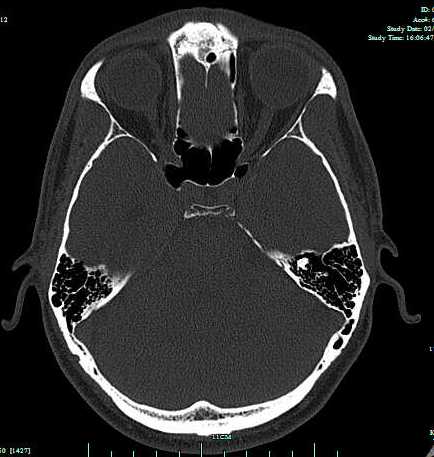
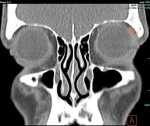
Ever wanted to get inside the head of a christian psychologist? Now you can explore the CAT scan images of a psychologist’s head courtesy of yours truly. Consider offering diagnoses and explanations as to how such an mind might work.

headtop viewvertical slice

These images were taken to rule other matters that might be causing sinusitis. I found looking at my head both nerve wracking AND exciting at the same time.

Conclusion: Negative sinusitis. Nothing missing of note.

3 Comments

Filed under christian psychology

Why we give hollow confessions


On a way too regular basis we observe others making apologies and/or confessions for wrongs done. This morning in my house, my one son hurt the feelings of the other and in working through the problem he made his apology under our direction. Not to be outdone, the other son wasn’t truthful about the situation and so later he too made a directed apology (aka, highly encouraged, but not forced).

Have you noticed that these kinds of apologies, whether from a ten year old or a 50 year old, ring hollow? It is easy from our stand point to concur that they don’t really mean what they say.

I think, in general, that this assessment isn’t accurate. Here’s why.

To hurt another; to do something for ourselves at the cost of others requires that we divorce empathy and self, reality and fantasy. So, when we do apologize, we cannot quickly reconnect these parts. Often the person does feel bad, guilty, afraid of the consequences. Notice that these feelings are rather self-centered. In time, if they go about reconnecting care for others and their feelings, they will feel much more empathy and concern for the wounded party. However, at the outset of their confession, these two things are still divorced. Thus the hollow confession. They do not know what they are really apologizing for beyond a few facts. The longer the deception, the longer the disconnection and time taken to reconnect to the experience of the other.

There are other confounding variables that hinder empathic confessions. One’s goal (get out of trouble, stop the pressure, smooth it over, please the other) may also decrease the likelihood empathy.

Leave a comment

Filed under Christianity, conflicts, deception, Repentance, self-deception, sin

Breaking down Christian Counseling barriers


Maybe it’s a stage of life, maybe I’m hallucinating, but it seems to me that the divisions withing Christian forms of counseling are exploding. And to that I can only say hurrah!!

Let me give you the clifnotes version of American Christian counseling history (minus many important details) starting with the 20th century:

  • Fundamentalist/Modernist fallout after the turn of the century builds division between fundamentalist/evangelicals and academics, including psychology. Division over naturalism
  • Christians authoring psychology related books (Boisen, Clinebell, Hiltner, Narramore) in 30s-50s
  • Creation of Christian Association of Psychological Studies in 1956 by Dutch Reformed pastors but later broadened to include those wacky Californian evangelicals interested in psychology. Writings at this time were broadly evangelical but often contemporary psychology models with bible verses attached. Beginnings of the integrationof psychology and Christianity movement with creation of doctoral training programs by Fuller Seminary and others.
  • Jay Adams counters in late 60s and early 1970 (Competent to Counsel) with nouthetic counseling model to return to the power of the Scripture to change people and to throw off the humanistic clutches of psychology. Numerous models of biblical counseling birthed. Most prominent: CCEF
  • Divide between Biblical counseling models and professional Christian Psychology widens in the church. Much maligning of each other. To associate with one meant no possible association with the other. Biblical counseling avoids professional jargon; integrative psychology pushes for meeting state licensing standards
  • Biblical Counseling moves in 1980s from predominantly deconstructive and critique oriented to more positive model building
  • 1990s: some beginnings of dialogue between key thinkers/authors in biblical counseling and integration movement. Integrative clinicians see benefits of the biblical work done by biblical counselors, see problems with many superficial integrative models, and both sides seem to be less separatistic and more open to learning from each other
  • Now in the 21st century: A new version of Christian Psychology willing to embrace biblical counselors, psychologists, theologians, etc. and desiring to build a robust, biblically founded understanding of people informed by psychological research.

Okay, that’s in broad brush strokes and I left out huge developments and individuals. But yesterday I received a survey about biblical counseling programs. It’s clear our old divisions and categories no longer work. Now, today I get an advertisement for a biblical counseling conference that includes a wide variety of speakers. We are truly crossing lines! I’m interested to see what comes of this in the next 5 years.

FYI, interested in a fuller history? Start with the 1st chapter in Eric Johnson and Stan Jones’ “Psychology and Christianity: 4 Views” book. Follow their reference list. Then check out David Powlison’s U Penn PhD dissertation on the history of Jay Adams. Neftali Serrano published his PsyD dissertation on the beginnings of CAPS. That will whet your appetite.

5 Comments

Filed under biblical counseling, christian counseling, christian psychology, Christianity, History of Psychology, Psychology

Open letter to NBC and P & G


February 23, 2009

Dear Executives at NBC and P&G (owners of the Gillette Venus Embrace),

I write this letter to express my disappointment regarding your Venus Embrace razor “check please” advertisements during the broadcast of the 2009 Tyson American Cup–a gymnastics meet of the top elite men’s and women’s gymnasts from around the world.

On Saturday afternoon, NBC broadcast live portions of the meet. I watched this meet with great interest with my ten year old son–also an USAG competitive gymnast. We were excited to watch the men’s high-flying tricks and the skills of 13 year old Jordyn Wieber, all around winner. But sadly, we were forced to change the channel solely because of the sexual content of your commercials. These depicted numerous scenes of men caressing women’s legs–even to the point of sliding their hands up under skirts. The final scene of the ad depicts a couple falling in embrace onto a bed in a sexual position.

Your message clearly expresses that men (and therefore boys) can’t resist a woman’s smooth legs. While my son found the ad disgusting, you still “educated” him as to how a man should focus on a woman’s legs.

There is no reasonwhy you cannot successfully promote your product without sexualizing a day-time television audience that includes children. Other advertisers recognized that the audience included teenagers and targeted them with ads (appropriately) for snacks.

I ask you to pull this offensive ad and to cease sexualizing children for your bottom line. If your product is as good as you say, you can sell it without offending your audience.

Sincerely,

Phil Monroe

3 Comments

Filed under Commercials, Sports

Please “Lie to Me”


Have you caught the television show, “Lie to Me”? It is a newer show based on the work of psychologist Paul Ekman who has researched the ways we involuntarily respond (movements, facial expressions, eyes, etc.) when lying. If you are bored, try watching your friends and family as you ask them penetrating questions. Last night I was up watching TV because I couldn’t sleep. A couple of actors were involved in a infomercial about an enhancement product. I couldn’t help but laugh when the host (a woman) kept saying “this is great” and other praiseworthy statements while looking down and away and shaking her head. She looked about as comfortable as someone having to undress in public.

But, can you really tell if someone is lying? Ekman has compiled an interesting history of research but the data suggest to me that we aren’t all that good in detecting lies. In fact, we’re probably no better than chance. I read a Washington Post article that talked about how some people become quite good at detecting deception in particular situations (e.g., police with thieves) but that these same people don’t seem to be as good at doing that in other parts of their lives.

Wonder why?

1. We make these decisions based on our gut as well as our observations. And our gut is about as accurate as coin flips. We consider particular data and reject other data, but not in a thoughtful, conscious way.

2. We don’t always want the truth (this has been brought by other reviewers of this show). We can’t handle the whole truth. If we tried, we’d never trust anyone. We would become paranoid.

3. Deception is a practiced activity, and frankly, we’re pretty good at it. Some are better than others. The best get away with it for a long time.

You might wonder if we can spot lying with other technologies and as you know some things can be detected. Lie detectors do detect autonomic responses. Unfortunately, they can’t tell why you had that response. Some computer programs can detect some unique features often found in text written by those lying (has to do with the amount of positive and negatives used).

One more thing about deception. It is my belief that many people want to tell a portion of the truth. And that is what comes out–the portion they want to believe and they want you to believe. They want to confess–just not the truth as it really is. A good interviewer can draw out these “confessions” and then expose the mis-information to reveal the lie.

Be sure your lies will find you out? Well, we know that is true in light of eternity. And maybe we will find us exposed in this life as well.

5 Comments

Filed under Cognitive biases, Cultural Anthropology, deception, Psychology