Category Archives: trauma

Trauma and Trafficking DVDs on Amazon


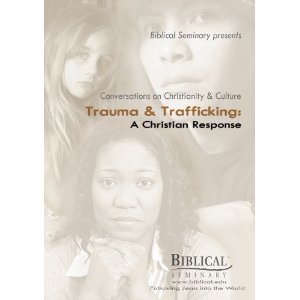
Nearly 2 years ago (March 2011), Biblical Seminary put on a conference about the problem of sexual trauma and trafficking. Our speakers included Dr. Diane Langberg (a noted psychologist), Bethany Hoang (IJM), Robert Morrison (a grassroots organizer), and Pearl Kim (now ADA for 2 Philadelphia counties). The sessions covered domestic and international sex trTrauma and Traffickingafficking, abuse and violence against women worldwide, the problem of sexual abuse in christian organizations, and how to mobilize community action without expending energy on non-profit status.

It was a powerful conference…and you can own it for a mere $19.99. Here’s the link to Amazon. Or, you can find it here at Vision Video (along with MP4 options as well) for 20% off.

This DVD set (3 DVDs) are an excellent starting point if you or your church group want to think more deeply about the biblical call to justice in the area of trafficking, trauma, and violence against women, whether “out there” or in the church.

Look for information on purchasing our most recent DVD series, Abuse in the Church, in the next week.


Leave a comment

Filed under Abuse, biblical counseling, Biblical Reflection, christian counseling, Christianity, Christianity: Leaders and Leadership, Diane Langberg, Post-Traumatic Stress Disorder, trauma

Update on the Complexities of Goma, DRC…And Why You Should Care


Followers of this blog will know that I have been to Eastern Congo and am passionate about the people there. You also know that there is a rather ugly and complex struggle for power in that region. This link to a Huff Post opinion piece provides an insight to some of those current complexities from an insider’s perspective. For example, some found the M23 group as elevating safety over that of the government soldiers. And yet, the M23 group may be funded by outsiders with evil intent.

I highly recommend you read it. You might ask why, since what goes on in the DRC has little to do with your life. You should care because,

  1. the extent of the recent decades of disaster there will boggle your mind and overshadow nearly every other disaster you care about
  2. these are our brothers and sisters and we are called to love our neighbor

The author, Julia Lewis, concludes her essay this way

The sad fact is that violence in the DRC is constant. As Congolese activist Vava Tampa recently reported in an article on CNN, the conflicts in DRC

… have claimed nearly the same number of lives as having a 9/11 attack every single day for 360 days, the genocide that struck Rwanda in 1994, the ethnic cleansing that overwhelmed Bosnia in the mid-1990s, the genocide that took place in Darfur, the number of people killed in the great tsunami that struck Asia in 2004, and the number of people who died in Hiroshima and Nagasaki — all combined and then doubled.

What will happen next in DRC? Anything is possible — and we need the world to keep listening. As many as 5.4 million people died in the last Congo war. That is fact, not fiction. And we cannot afford for it to happen again.

Leave a comment

Filed under DRC, Goma, News and politics, trauma

Book Note: A brief window into Palestinian life


English: Personal photo of Poet and Author Mou...

English: Personal photo of Poet and Author Mourid Barghouti, taken by Dia Saleh (Photo credit: Wikipedia)

Just finished Mourid Barghouti’s I Was Born There, I Was Born Here (2011, Walker & Co.; first published in Arabic, 2009). It is a set of short stories about the author’s experiences as a Palestinian making trips from Jordan back to his homeland in occupied territories (Ramallah). No matter your political leanings or support for Israel and/or a two state solution, you will find his descriptions of road blocks, walls, difficulties moving around, etc. a reminder of the fact that trauma can result not just from shocking and unexpected experiences (e.g., assaults, rape, domestic violence) but also from the daily grind of living in a police state without the right status. And lest you think he is only talking about living under Israel’s thumb, he also describes living under intimidation in Cairo as well,

No matter the differences in terms and methods from one Arab country to another, such people [those who had just taken his adult son] are always gracious when inviting their prey to be their guests and they will always be bringing them back in an hour or so at the most. Men and women have spent decades in the cells of the Arab regimes without ever finishing that damned cup of coffee.

We got the message.

The message of fear or, rather, of intimidation….

Thuggish authority is the same, whether Arab or Israeli. Cruelty is cruelty and abuse abuse, whoever is the perpetrator (p. 199)

His son was forced to leave the country of his birth (Egypt) since he was not Egyptian. Here’s what the author said,

What has stayed with me from this incident was my inability to protect my son. (p. 200)

Besides the descriptions of interminable waits at checkpoints, rude interrogations, refused entry to home villages for no apparent reason, Barghouti also describes the experience of being seen by others as a criminal, a possible thief, a terrorist instead of the poet that he is.

A worthy read to see life from another perspective.

Leave a comment

Filed under Good Books, Great Quotes, trauma

Booknote: Broken Memory


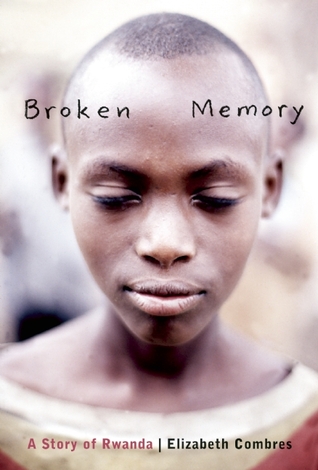
Just posted a short book review over at Global Trauma Recovery Institute. It is a novella about a child survivor of the 1994 genocide in Rwanda. If you are interested in getting an inside look at life after a trauma, dealing with memories and spaces in memories, and a common recovery process, I commend the book to you.  Quite moving, easy to read (not triggering for most), and gives some good illustrations of actions of the survivor and other caring individuals that help the young woman regain control over her internal world.

1 Comment

Filed under Africa, counseling, Good Books, Rwanda, trauma

What really caused the Rwandan genocide? Scott Straus’ answer


Have begun reading Scott Straus’ The Order of Genocide: Race, Power, and War in Rwanda (2006, Cornell University Press) [HT to Carol for the copy]. Not sure how many books this makes about Rwanda but I am appreciating his attempt to take a dispassionate approach to answering the question about why the 1994 genocide happened, how it happened, how/why ordinary civilians participated in the killings. Right away, Straus focuses on the methods of data collection and why he avoids the sensationalized approach to describing the gore. Within his introduction, Straus makes this assertion and then spends the rest of the book showing his basis:

I find that the Rwandan genocide happened in the following way. After President Juvenal Habyarimana was assassinated on April 6, 1994, and in the midst of a defensive civil war against Tutsi-led rebels, Hutu hardliners declared all Tutsis to be “the enemy.” In a context of intense crisis and war, the declaration that Tutsis were the enemy functioned as a de facto policy–in effect, an authoritative order and a basis for authority–around which coalitions of actors could mobilize to take control of their communities. Once local actors who subscribed to the hardliners’ position had secured enough power, they made killing Tutsis the new order of the day and demanded compliance from the Hutu civilian population. In the Rwandan context, where state institutions are dense at the local level, where civilian mobilization is a common state practice, where the idea of state power is resonant, and where geography provides little opportunity for exit, large-scale civilian mobilization to kill was rapid, and the violence was extraordinarily intense and devastating. (p. 7)

In reviewing data that he can “triangulate”, Straus helps work through a number of hypotheses that may have explanatory power but lack the data to support them. If you want to gain an experience of the genocide, Jean Hatzfeld’s books are great introductions to the stories of surviving victims and perpetrators. But, this book moves beyond story to fuller explanations of how the violence spread so quickly and slaughtered so many in so few days.

Leave a comment

Filed under conflicts, Rwanda, trauma

Book note: Unbroken, the story of Louis Zamperini’s traumatic WWII experiences and survival


Just finished Laura Hillenbrand’s Unbroken: A World War II Story of Survival, Resilience, and Redemption (Random House, 2010). She tells the story of Louis Zamperini’s early life (which depicts the miracle of his surviving childhood and his own juvenile delinquency) leading up to his Olympic experiences in Berlin and then his airmen experiences in the Pacific. In May, 1943, while looking for another plane that didn’t return to base, Zamperini’s plane goes down in the middle of the South Pacific. Against the odds, he and 2 others survived.

Actually, the miracle that he survived could be said about his entire life: impoverished immigrant family, juvenile delinquency, being an Airmen, surviving a plane crash in the middle of the Pacific, surviving on a flimsy raft for 47 days without any food or water other than rain or raw fish here and there, surviving torture by the Japanese for a couple of years and then, finally, surviving PTSD and accompanying alcoholism.

Read the book of you are interested in the life of airmen in WWII (it is amazing how many died in noncombat crashes). Read the book if you are interested in hearing how psychological trauma from war and torture often impacts a person. Read the book if you like surprising endings.

1 Comment

Filed under Good Books, ptsd, trauma, Uncategorized

Why we react and then think


Human brain parts during a fear amygdala hijac...

Human brain parts during a fear amygdala hijack from optical stimulus. (Photo credit: Wikipedia)

Ever wonder why? Check out this quote by Richard McNally¹ about the role of the amygdala,

LeDoux discovered two pathways for activating the amygdala, a subcortical structure integral to the experiences and expression of conditioned fear. One pathway rapidly transmits sensory input about fear stimuli to the amygdala via a subcortical route, whereas the second pathway passes through the cortex, taking twice as long to reach the amygdala. Subcortical activation of the amygdala makes it possible for a fight-or-flight reaction to begin even before information about fear-evoking stimulus has reached conscious awareness via the cortical route.” (p. 178, emphases mine)

If this is true, then in anxiety and intense emotion-producing events our brains begin the reaction phase prior to any thought processes. If true, then we might consider

  1. The goal of trauma treatment or anger management is NOT to avoid having reactions but to more quickly reach cognitions and alternative emotions that help moderate a negative reaction
  2. the empirical evidence for the clinical process whereby a client adopts a neutral reaction as opposed to a negative reaction is quite lacking. There are a number of models that process to “cool down” the amygdala, but these treatments often lack serious empirical support.

So, the next time you instantly react in a way that bothers you, don’t be so hard on yourself. Instead stop yourself, take a deep breath, work to analyze the situation and to lean into a post hoc truth. We have our hands full enough with what we know we need to do, we don’t need to worry so much about our first reaction.

¹McNally, R.J. (2003). Remembering Trauma. Cambridge, MA: Harvard University Press.

2 Comments

Filed under anger, Anxiety, counseling, counseling science, trauma

Listening to Trauma/Scripture Experts


I am attending a “community of practice” hosted by the American Bible Society–a community of global trauma recovery specialists who also are experts in Scripture engagement. It is a very interesting group and most are focused on Africa though some minister in India and South America. While a few of these experts have mental health training, most have other training–missiology, sociology, bible translators, pastoral care, and bible distribution and engagement. All recognize how trauma is a barrier to Scripture engagement and faith development. The big question we are struggling with today is the issue of developing healing/recovery models to be used in another culture. How do we minimize the communication that we in the West have the problems all figured out? How do we help support local leadership (rather than finding leadership that does what we already want to do)? What will be most sustainable?

It is good to hear how God is using diverse ideas and peoples to minister to traumatized communities. And, it is good to remember that God has gifted people across all disciplines to do exceptional trauma healing work.

4 Comments

Filed under suffering, teaching counseling, trauma

Global Trauma Recovery Institute Launched! Dr. Langberg Joins Biblical Faculty


American Bible Society

American Bible Society (Photo credit: Wikipedia)

It is my pleasure to announce that I and Biblical Seminary are the recipient of a sizeable grant to launch our new Global Trauma Recovery Institute–training for lay and professional recovery experts in the US and around the world. The grant (from an anonymous donor and the American Bible Society) funds the Seminary’s collaborative program with ABS to provide deeper training for those active in both trauma recovery efforts in the US or in training local facilitators in east/central Africa.

Why collaborate with a bible society?

ABS is involved in a trauma healing/scripture engagement project, focused in Africa but with other works going on around the world. This project has been under the work of ABS’ She’s My Sister initiative in the Congo. The bible societies were founded on bringing scripture to bear on the current issues of the time–specifically slavery. So, it make sense that ABS is interested in helping traumatized individuals recover from wounds by showing how God cares and is active in their recovery. Through connections with a few of my students, I and Diane Langberg have become co-chairs of the advisory council to the above-named initiative.

What does this mean for Biblical?

The generous grant will enable Biblical to do the following

  • Commission a research study of the psycho-social impact of trauma in the African context
    • in collaboration with Wheaton College’s Humanitarian Disaster Institute
    • WHY? We need better understanding of the scope of the problem and what locally led interventions will be the most effective (both in terms of success and sustainability)
  •  Develop introductory and advanced global trauma recovery courses that enable MA and postgraduate students to develop specialization in training local trauma recovery facilitators here and around the world
    • These courses will be delivered in a hybrid format starting late 2012; delivered in hybrid system (on-line and in-person)
    • Mental health continuing education credit will be possible
  • A hands-on practical experience under the direction myself and Dr. Langberg will be the capstone experience for students who complete the entire training
    • Likely 2013 in an African context
  • A website providing free and homestudy CE materials for those unable to come to the Philadelphia area
  • Consultation groups formed for those seeking help with cases and projects in domestic and international trauma recovery

How is Dr. Langberg involved?

Dr. Diane Langberg is the leading Christian psychologist with expertise in trauma recovery. Her teaching has taken her to South America, the Caribbean, Africa, Asia, and Europe. Her books on sexual abuse remain popular with both clinicians and victims. She joins Biblical Seminary as a Clinical Faculty member (clinical faculty are practitioners who also lecture and train) and will have a leadership role in the shaping and delivery of the curriculum and trainings. It is safe to say that the counseling department has been most influenced by Dr. Langberg’s training and supervision.

How can I find out about these courses and consultation groups?

Until we launch the institute website, the best way to keep yourself informed is to do one of the following: subscribe to this blog where I will be posting updates; keep checking with www.biblical.edu for more information, or email me at pmonroeATbiblicalDOTedu and I will put your name on a growing list of those who want to be on our mailing list.

Leave a comment

Filed under "phil monroe", Abuse, Africa, biblical counseling, Biblical Seminary, christian counseling, christian psychology, Christianity, counseling science, counseling skills, Post-Traumatic Stress Disorder, trauma

Kony 2012: Some thoughts on a viral video


Have you seen the video already? As of Monday, March 12, the youtube counter was at 74 million views. Not bad for 6 days. The video, as I am sure you already know, was created by Invisible Children, and organization designed to advocate for the protection of children in central Africa and programs of help (tracking Kony’s militia, educating children, early warning detection, etc.). Their primary purpose is to (a) educate the world about the abuses and terrorism of Joseph Kony, and (b) keep up the political pressure on decision makers so that they do not drop the ball on the efforts to arrest Kony. If you are not aware, President Obama sent 100 military advisors to the region to support national troops in their search for Kony. Kony2012 is meant to maintain political and cultural pressure to keep searching for him (20 power brokers, 12 politicians= 2012).

Of course, with every good intention, comes criticism and controversy. You can read a number of complaints about the efforts. Invisible Children (IC)

  • advocate US military involvement in a foreign country where we do not have significant interests
  • spend only some 37% of donations in Africa on programs
  • imply in the video that Kony is attacking Ugandans when he hasn’t been there for 6 years
  • make no mention of the destruction by Kony in the DRC and the CAR.
  • further the idea that the white man needs to save Africa

Do a little homework and you realize that IC is promoting Kony’s capture (not death), is designed to be an advocate and not primarily a service program in Africa, and knows that Kony isn’t in Uganda anymore. I suppose the complaint that has the most merit is that the video perpetuates the idea that white people have to solve Africa’s problem. It might have been helpful to show what Africans are doing already.

So your thoughts? Does the video spur you on to help? Does the recent take downs of dictators fuel our willingness to remove tyrants from power? Should we solve other country’s problems? Given the DRC’s lack of a strong central government, ought we to act first and apologize later?

I would suggest that the video does its job in a bit of education with a focus on action steps. A video that just gives the gory facts (and pictures) often just traumatizes and paralyzes. It could have played up the footage in such a way as to make it seem like Africans are violent people–or corrupt. The film could have talked about the immense forests of the DRC and that finding Kony will be finding a needle in a haystack. Or, it could have played to all that IC has done in a self-promotional manner. Yet it did none of those things. It made mention of the need, the desire of Africans to bring Kony to justice, and the opportunity average people have to help leaders keep their eye on the ball.

My thoughts? Watch the video. Engage in some good conversation about how Christians can speak up about evils done to nameless/faceless people. Debate the merits of propaganda for a good cause. Discuss practical ways to influence power. Decide if IC is a good place for your funds and if not, find another doing the work you cannot do yourself. Speak up for justice. Review the electronic action kit.

Do something.

PS: Here is a great (bit long) perspective from Drs who have a deep and abiding love for Uganda and Jesus: http://paradoxuganda.blogspot.com/2012/03/on-kony-and-viruses.html

2 Comments

Filed under Africa, Congo, Democratic Republic of Congo, DRC, trauma