Category Archives: trauma

Taunting your Abuser?


Is it ever right to taunt your abuser? Is it Godly?

[WARNING: This is a thought experiment…not a recommendation!]

My wife is working on some presentations she’ll be making on the book of Habakkuk and so we have been looking at the book and talking about some of the difficulties in the text (She’s far more insightful on these things than I am!). The 2nd chapter contains a taunt against the oppressor/abuser Babylon. God is having a conversation with Habakkuk and the short version goes like this:

Habakkuk: Why are you allowing all this sin among your people? Do something!

God: I will. I’m sending Babylon and they will carry Judah off.

Habakkuk: Um…God…Babylon? Really? You do know they are like the most heathen people? You’re going to use the worst group of people in the world to judge us? You know we’re not THAT bad?

God: Yup. I’m going to do something that blows you away. I’m up to something you can’t even imagine. I know that Babylon is proud. And here are the taunts you and everyone else is going to throw at them when I judge them.

At this point God appears to give them words to use when the time comes. Consider 2:15-16

Woe to him who gives drink to his neighbors, pouring it from the wineskin till they are drunk, so that he can gaze on their naked bodies. You will be filled with shame instead of glory. Now it is your turn! Drink and be exposed. The cup from the Lord’s right hand is coming around to you, and disgrace will cover your glory.

It would appear that God has no problem taunting humans in their rebellion and depravity. When God taunts, he is speaking truth. When we speak truth, along with God, about unrighteousness then maybe such a taunt is a possibility:

You’ve abused me but just you wait. God is in heaven above. He sees and he will judge. You will face the consequences of what you have done, either in this life or at the last day. There will be justice!

Just an Old Testament thing?

Are taunts only in the OT? Does Jesus do away with them when he tells us to love our enemies? Apparently loving one’s enemies does not mean not speaking a taunt. Notice that Luke records Jesus making ten different “woe to you” taunts against religious leaders and other unbelieving/arrogant people. Can Jesus be failing the second greatest commandment?

Clearly the taunts in the OT or Jesus’ curses of unbelieving religious leaders are not normative. We are not called to do this. But…maybe their existence does a couple of things for us.

  • Give Godly words for the private and possibly public comments made by victims of abuse (note: these words do not approve of revenge, bitterness, or other ungodly motivations. But desire for justice is a good and Godly desire and should be expressed!)
  • Allow others to validate victims’ experience of injustice without pressing for a quick Romans 8:28 response

A word of caution

Habakkuk 2 ends with a postscript to the 5 taunt songs against Babylon.

But the Lord is in his holy temple; let all the earth be silent before him

Judah was guilty of injustice (1:3). They did not have clean hands. They were not innocent. God did give them words of taunt to use against Babylon. Yet, before God they needed to be silent and humble. The cup of wrath that Babylon would drink is passed over God’s people–not because of their innocence but because of God’s providential love. Christ drinks to the dregs that cup of wrath in our stead. He gives us a better cup to drink.  It is far too easy to consider ourselves innocent and our enemies guilty. We ought to stand in silence and awe because we have not been treated as we rightly deserve.

5 Comments

Filed under Abuse, biblical counseling, Biblical Reflection, christian counseling, Christianity, trauma, Uncategorized

DRC/Rwanda Trip: Day 9


October 19, 2011, Kigali, Rwanda

Finally! Our conference begins. 19 separate group represented here for a total of 42 caregivers. Baraka Unwingeneye (IJM and lay counselor trainer) opened the conference with small and large group discussions on the causes, symptoms, and definition of trauma. The participants were active in discussions. The energy is high! Baraka concluded her section by reminding us all that everyone can be traumatized, even the strong in body and faith. Diane then spoke for 50 minutes or so on the nature of traumatic memory and an overview of the first two phases of intervention. Her voice was a bit weak as she came down with a cold but she delivered it well just the same. Her outline provided a useful reminder of treatment necessity: talking…tears…time. She concluded with some discussion of how having healing relationships, a purpose, and faith all play significant roles in the recovery process.

We ended the morning with a handkerchief project where participants created a depiction of their grief/suffering and then shared it with others. We knew this was going to be powerful and that it would take time. However, we were somewhat surprised at just how powerful it was and how much the participants valued telling others (in dyads and groups) a portion of their trauma story. Several told us that even though they had been counseling others since the genocide in 1994, they had never told anyone their own trauma story.

Our afternoon continued with small and large group activities/discussions and concluded with a question and answer session. The group is hungry for information and we do not have to do much to encourage conversation, discussion, and engagement. Our late afternoon and evening is spent resting, planning for tomorrow’s work and enjoying each other’s company. The food continues to be outstanding at Solace. The only complaint I have is how early the roosters and birds start calling. 4 am is way too early for this. Just outside my window is something sounding like a bird having swallowed a bugle. I later discover it is the gray crowned crane. Here’s a short video I shot from my balcony where I got it to “sing.”  (photos by Joshua Straub)

Leave a comment

Filed under AACC, counseling, counseling skills, Post-Traumatic Stress Disorder, Rwanda, trauma

DRC/Rwanda Trip: Day 8


Tuesday, October 18, 2011, Kigali

Today is our first relaxed day of the trip. We begin the day by having devotions with the staff at IJM. Josh led them in some thoughts from the book of James on themes of justice and justified. The Apostle Paul illustrates the payment (transaction) for justification found in the cross. James points us to the evidence (receipt) of our justification found in our works that prove we have been justified. There is no faith without works.

After devotions, we went to a very American looking cafe to have coffee and to go

Good coffee good colleagues

over the conference plans with IJM employee and counselor Baraka Unwingeneye. She and Josephine Munyeli (WorldVision) are our co-laborers and without them we would not be able to do this work. Our planning helps us nail down tomorrow’s conference efforts. We know we have good ideas for days 2 and 3 but we must be flexible and alter what we want to do for what can be done well.

Walked back to Solace for lunch and then out for a stroll of nearby streets with Carol. Just prior to dinner we received a visit from Rev. Nathan Ndyamiyemenshi at ALARM. He took us to see their retreat property on a lovely hill on the edge of Kigali. A beautiful spot for anyone who would want to take a group to Rwanda. One of the buildings had a plaque stating that it was a donation from Calvary Church of Souderton!

On the return to Solace, we stopped off to by Rwandan coffee beans to bring home. Speaking of home, I am getting homesick. While it is good to have a restful day, I am ready to get on with our conference and go home. Good that we start tomorrow.

2 Comments

Filed under counseling, Rwanda, trauma

Hungering for Justice? A new read for an old verse


During my recent trip to the DRC and Rwanda I practiced French by reading the Bible in French and English. Not sure it helped much but I did discover an interesting difference in Matthew 5:6 between the two translations that made me stop and think.

First the NIV:

Blessed are those who hunger and thirst for righteousness, for they will be filled.

Now the French:

Heureux ceux qui ont faim et soif de la justice, car ils seront rassasiés!

Notice something different? Most English translations use the word righteousness. Those who hunger after righteousness will be filled (or satisfied). Now, when you substitute the word justice–those who hunger and thirst for justice–does it add meaning to you?  It does to me.

Justice? Righteousness? Do you hear differences?¹

When I hear the word righteous, I think of individual holy acts, attitudes, and character. When I hear the word justice, I often think of fairness, judgment, and legal outcomes that make right prior wrongs. In reading this verse in French and in Goma, DRC where so many have no justice and can’t return to their villages due to ongoing conflict, my mind considers that Jesus might be saying that those who hunger and thirst after justice are going to be blessed in a particular way.

Obviously, those who hunger and thirst after righteousness will also long for justice for individuals, communities and states. One cannot be righteous and yet unjust or just and unrighteous. However, it is possible for us to fight against sin in our own lives, practice individual acts of righteousness, and yet forget to pray and work for justice for those who are being oppressed.

Some years ago Carl Ellis, in a class on African American theology, suggested that White evangelical churches often preach and teach about individual righteousness (i.e., what to put off and what to put on) but rarely teach about corporate righteousness unless it is to rail against worldly matters (e.g., abortion, homosexuality, greed, etc.). I do think this is changing as evangelicals are paying attention to matters of justice around the world. Yet, we can be reminded that God cares about those who are unjustly treated. It is not just Abel’s blood that cries out (Gen 4:10) for justice.

Thankfully, there is a just and righteous outcome. The sacrifice of Jesus “speaks a better word than the blood of Abel.” (Heb 12:24). Yet when you read Matthew 5 don’t forget that God is actively blessing those who are oppressed. He will satisfy them by fulfilling their desires. Let us not forget to hunger and thirst after justice for ourselves and for the world.

¹In this post I am not tackling the best translation for the Greek word (δικαιοσύνην) used in this verse. The 92 times it is used in the KJV are all translated righteous/ness. However justice is implied in 2 Peter 1:1 as we have faith due to the righteousness of God.

1 Comment

Filed under Biblical Reflection, Christianity, Congo, Democratic Republic of Congo, Doctrine/Theology, Evangelicals, trauma, Uncategorized

Back in the USA after whirlwind trip to DRC and Rwanda


Glad to have the trip to see the trauma recovery efforts and needs in the DRC and Rwanda. Glad to return home. It has been a whirlwind of experiences and emotions. I know many of you were in prayer for our trip so over the next 2 weeks I plan to post daily logs of our trauma recovery trip to the Democratic Republic of Congo (DRC) and Rwanda. I have some pictures and video that I hope to post but am still trying to figure out how to make some edits to the video clips I took each day.

Let me start by making a couple of observations about the things that were most noticeable–both in going to a new culture and in returning home. These are random…

  1. Chaos is the name of the game in the DRC. Nothing works well. Not customs, not roads, not electricity, not UN.
  2. Smooth roads in the DRC are few and far between. In Goma, they are TERRIBLE. Looks like they just carved them out of lava. What a wonderful place to live if you make your living replacing axles and struts.
  3. Electricity is spotty, internet slow…but most in Goma have 2 cell phones each. Why? Because they have two cell providers and at any time, one may be down
  4. The UN soldiers aren’t well liked in the DRC. Seen as either neutral (just observing not helping) or negative (participating in the raping of the Congo). Being a UN soldier may be one of the most mindnumbing job there is. Stand around. Do nothing for most of the time.
  5. Everybody walks everywhere
  6. Rwanda is developing by leaps and bounds. Not sure if all of it is good. On the one hand, massive construction in Kigali. Roads from Goma to the center of the country a delight. On the other hand, there are large sections that used to be slums in Kigali that are now green space/farming/nice properties. Where did those people go?
  7. Stereotyping: Congolese seem more open about their feelings than Rwandans.
  8.  We are so blessed in this country. We can count on our infrastructure.  We do not have to pay bribes. If we work, we probably will get paid.
  9. Despite their poverty, African worship is far more joyful and therapeutic (in a good way) than what we call worship in this country.
  10. I probably wouldn’t invite guests to my house if it were a 2 room board shack with no running water or toilet. Not the case for some in the DRC and Rwanda.
  11. Trauma is everywhere in Africa. Few resources to deal with it there, including the church

Day One: October 10-11; travel to Entebbe, Uganda

6 pm. Lift off on time from Philadelphia International Airport. Diane and I fly overnight to Belgium. It is always a challenge for me to get sleep on a plane so I got a prescription for Ambien to help. Learned that half a pill doesn’t much work for me. The total trip from Philadelphia to Uganda takes 18 hours of flight time. Add in the waits in Philadelphia, Brussels, and Kigali and you have 24 hours of travel, a long and painful trip. Yet, each leg went well and went off as planned. Two minor interesting experiences

  • Recognized a stewardess on the first leg who plied me with a few freebies to make the trip much more pleasant
  • Pretty sure I sat next to French journalist, Jean Hatzfeld, author of Machete Season and the Antelope Strategy on the trip to Kigali. Not sure since his English isn’t that good but he was editing proofs of a new book he said was about him and his role after the genocide. Wished I had determined for sure who he was and told him how I found his books so helpful.

Arrived in Entebbe at 9:45 pm, October 11. After that many hours, you feel rather fuzzy brained. But, we were met by someone from the Ugandan Bible Society who had us wait at the airport with him until Bagudekia Alobeyo, our American Bible Society friend, arrived on his flight some 45 minutes later. Once Bagu (our Congolese pastor/guide and friend) arrived we set off to a nearby hotel, the Imperial Beach Resort Hotel right on Lake Victoria. This turns out to be our best accommodations of the trip. First impressions right out of the airport. The lovely smell of charcoal cooking fires are quite prominent.

Off to sleep in hopes of good rest to be ready for our quick flight into the DRC tomorrow!

3 Comments

Filed under Congo, counseling, trauma, Uncategorized

Trauma Recovery Work in Africa: Itinerary


Those of you interested in trauma recovery work can feel free to pray through our upcoming trip and itinerary (as well as for our families!). Our team (Diane Langberg, Carol King, Josh Straub, Baraka Unwingeneye, Josephine Munyeli, and me) will be providing a 3 day trauma recovery training for Rwandan nationals October 19-21 funded by generous donors from the AACC and WorldVision. Diane and I are leaving early for some assessment work with the American Bible Society and national bible societies in the region.

  • Oct 10-11: DL and PM to Entebbe, Uganda to meet up with African and American Bible Society leaders
  • Oct 12: DL and PM (via MAF plane) to Bunia, DRC to meet with Bible Society workers and those receiving care
  • Oct 13: DL and PM (via MAF plane) to Beni, DRC to meet with seminary/university professionals; then on to Goma, DRC
  • Oct 14-16: DL and PM meeting with Bible Society staff, trauma victims, and trauma recovery workers in Goma, DRC
  • Oct 14: JS and CK to leave for Kigali, RW
  • Oct 17: DL and PM to drive from Goma, DRC to Kigali, RW
  • Oct 18: Meetings, prep for conference
  • Oct 19-21: Conference lead by BU, JM, DL, JS, CK, and PM for WorldVision workers, clergy, educators, and others
  • Oct 21: Leave Kigali
  • Oct 22: Arrive Philadelphia

Pray for health, safety, ability to listen well, to teach well and to be flexible. Pray for our families in just the same way.

Leave a comment

Filed under "phil monroe", AACC, christian counseling, christian psychology, Democratic Republic of Congo, Goma, Rwanda, teaching counseling, trauma

Observing and Remembering Grief


On September 11, 2001, and for some time thereafter, Americans observed and experienced the grief of individuals and a nation. Now, ten years later, we observe and remember it anew–whether our own or the grief of strangers.

If you caught any of the television coverage you probably saw family members reading the names of the dead or tracing the names of loved ones carved into the memorials at ground zero. These images are both beautiful and heartrending, especially those of the children who are growing up without a parent. Or, you may have watched some of the surviving firefighters and police officers tell of their struggle to breathe or to fight the cancer that is likely the result of breathing in the toxic dust as they dug in the pit without proper protection.

As the names and ages scrolled across my television screen, I noted how many were so young, hardly even into the prime of their lives. Though I lost no one in my family or circles, I feel some small portion of the grief families continue to feel and am glad they have a beautiful place to go to remember their dead. Remembering the dead with ceremonies, markers, and moments of silence is an important part of living and grieving well. It is an active means to recall who we are (whether individual or nation), what we are, and where we are headed. As a people, we tend to do funerals pretty well. We recall someone who has died and how they influenced our lives. And, we endeavor to keep a part of their legacy alive in how we live our own lives.

I think these kinds of memorials have the opportunity to do the same thing.

But, and this takes nothing away from our collective grief, I am also aware that so many around the world die in obscurity without even the dignity of a thoughtful burial, with no one remembering their life or death. This is especially true in war-torn, impoverished areas. One militia erases the village of an opposing faction. Most are killed, a few survive by escaping into the bush or forest. The dead range from infants to elderly. They are left to be raided for any remaining goods, picked over by wild dogs, and whatever bones are found are later bulldozed into a mass grave.

In the West we may hear of these deaths and shake our heads at the senselessness of human atrocity. But distance and disconnect with other parts of the world rarely cause us to rise up as a nation and observe (stop if possible) and remember the grief of others.

One such arena of senseless and invisible slaughter happened in DRC. Bryan Mealer gives you an inside look at suffering and death and the desperate attempts of many Congolese to stay alive during the great African war. What I noticed was how little time there was to remember and grieve. Remembering is done by those who do not fear for their safety.

So, as we remember our own grief, let us also recall and remember those victims who get no grave nor remembrance.

2 Comments

Filed under suffering, trauma, Uncategorized

Getting confirmation on global trauma recovery plans


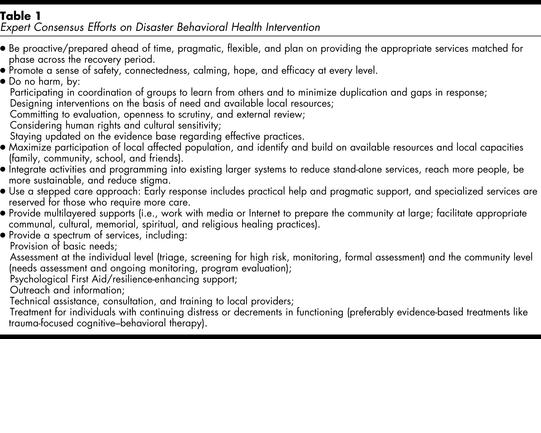
Since January I have been trying to articulate the best practices in doing trauma recovery or trauma healing work in international settings. The foundation of this approach to trauma recovery is, (a) Listen first to the needs, resources, and concerns of a community(b) identify local leaders who can be trained to be the primary trauma recovery workers (rather than outsiders being the primary clinicians), (c) tailoring interventions to the needs of  the community, and (c) above all…do no harm by over-promising, under-delivering, etc.

Today, I opened up my most recent American Psychologist (66:6, September 2011) and found my thinking confirmed in Watson, Brymer, and Bonanno’s Postdisaster Psychological Intervention since 9/11 (see citation at the bottom of the page). On page 485 they list what experts consider an appropriate steps to take in postdisaster behavioral health interventions. Now, most of you don’t probably get excited about research articles like this but I can tell you I did. Here’s the chart (click to see a larger image)

It is nice to find confirmation for something I was thinking but hadn’t read elsewhere.

From: Watson, P. J., Brymer, M. J., & Bonanno, G. A. (2011). Postdisaster psychological intervention since 9/11. American Psychologist, 66(6), 482-494. doi:10.1037/a0024806

1 Comment

Filed under Abuse, counseling science, Post-Traumatic Stress Disorder, Psychology, trauma, Uncategorized

Trauma Recovery Work in the DRC and Rwanda


Location map of Rwanda

Image via Wikipedia

It is official. Diane Langberg and I have our tickets for our upcoming trip to the Congo (DRC) and Rwanda where we will be interacting with trauma victims, pastors (who are also trauma victims), Bible Society and World Vision workers, and probably medical and education officials as well.

We leave on October 10 and arrive in Uganda on the 11th. We will be traveling into the DRC in the northeast quadrant (picture tiny plane!) near Bunia and also to Goma, on the shores of Lake Kivu and under the shadow of a large and active volcano. There we will be observing the work of the American Bible Society and She’s My Sister as well as meeting with rape and trauma survivors.

On the 17th, Lord willing, we’ll drive from Goma into Rwanda to Kigali. There we will be joined by colleague Carol King (Langberg & Associates therapist) and Josh Straub of the AACC and our Rwandan compatriots Josephine (WV) and Baraka (IJM) and will lead a  three-day training seminar re: trauma recovery resources and best practices. The plan is to return home via Kenyatta airport and Brussels on the 22nd.

Prepping for the trip includes everything from shots to planning who does what training segments. Those of you inclined to do so, pray for the logistics there as World Vision Rwanda puts the final touches on the location of training and invitees. A lot of work must happen for this to go smoothly. Also, there is an effort to raise funds for this (Project Tuza) at the AACC World Conference in Nashville the last week of September. Pray that attendees will catch a vision and support us as they can.

Anyone wishing to donate can here.

Leave a comment

Filed under Congo, counseling, counseling science, Post-Traumatic Stress Disorder, Rwanda, trauma, Uncategorized