Category Archives: Abuse

Thinking about justice: Starting from the wronged


At the Justice2013 conference here in Philadelphia. Yesterday’s pre-conference sessions included one by Nicholas Wolterstorff (professor at Yale) entitled, “My Story: Starting From the Wronged in Thinking About Justice”. He told of 2 experiences where he heard the stories of injustice (one in South Africa, the other from Palestinian Christians) and how these stories shaped his thinking about justice. He argues that starting from the position of the wronged changes how we think about justice. Here’s a few of his points:

  • We have reactive (retributive) rights and primary rights. Reactive rights are those that we have once we are wronged. Primary rights are those we always have (e.g., dignity). Most people think only about reactive rights or about justice in light of injustice.
  • In thinking about primary rights/justice, there are two common models: right order model (view that there is an external standard for order and rights (e.g., the bible); inherent rights (what one is due (equity, dignity) from merely being human).
  • Rights and fairness are connected but fairness or treating people equally is not necessarily justice. Some need more than others.
  • Justice and freedom are connected but autonomy as an absolute right is “justice for eagles and lions”, meaning only justice for the powerful. What about justice for those who have dementia, who are born without capacity to act? What if dignity is the foundation for justice?
  • Punishment as payback violates the biblical concept of “do not return evil for evil.” Thus, we must view punishment as connected to love (e.g., as a parent punishes a child to teach but not to pay them back for their evil action).

2 Comments

Filed under Abuse, Justice

What happens after a trauma may be the key in the formation of PTSD


Thanks to a friend I read this essay today about a possible way to model PTSD formation–by considering what does or does not happen in the trauma victim’s social environment after the trauma experience. The article discusses 2 different studies, one animal and the other human.

The animal study concludes that kidnapping a mother rat from her pups for more than 15 minutes will result in anxious activity upon reunification in the same cage where the trauma happened. Mother and pups will continue to be over-reactive well beyond the event. However, if mother and pups are reunited in a new environment, the trauma reactions (racing around, stepping on each other, aggressive behaviors) seem not to be present. Might it be that they have a shared job of exploring the new environment?

The human study points to the importance of having reunification symbols or rites of re-entry when bringing child soldiers back into the community. This appears to have value over just quietly pretending that nothing happened.

2 Comments

Filed under Abuse, counseling, counseling science, Post-Traumatic Stress Disorder, Psychology, trauma, Uncategorized

Did God injure me? A great pastoral response


I am reading a version of a paper entitled, “Connecting horizons with Job: Pastoral care (in cooperation with professionals) in the trauma-coping process” by Egbert Brink. In one section he discusses pastoral care responses to the victim’s experience that God was the adversary (such as Job experienced). Mr. Brink cites Job 9:10-12, 9:16-17 where Job feels like God’s hand is the one who is doing the wounding. The victim that Mr. Brink is meeting with says,

Did God do this, did He wound me? My heart says yes, but my mind does not allow that answer….Again; did God wound me? Yes…Okay. That’s what Job feels, and I identify with Job. The next logical step is: what emotions do I have? … This is scary, but the step must be taken. It’s not until you say it, that the emotion can be set free. I can do it, I say: I am disappointed in God, and angry, I think. That last bit isn’t proper, but I can’t help it. Don’t take it too harshly. (p. 16)

Mr. Brink (or is it Dr? I do not know) provides this commentary,

…this is a special moment in trauma coping process…every traumatized person is faced with the question why God let it happen and did not protect him or her. The book of Job grants the necessary space to ask these probing life questions dealing with the mysteries of God. Faith in God’s omnipotence and goodness raises many questions in this context, but also provides space for them. Passionate complaints don’t immediately put God’s omnipotence in question but rather underline it.  (ibid, emphasis mine)

And then Mr. Brink says this,

The pastoral task, then, is not to stand in the way of the traumatized client with apologetics, as Job’s friends do. God does not need advocates to plead his case. (ibid, emphasis his)

I found the following Vimeo link (http://vimeo.com/48232843) of Mr. Brink giving a talk on this paper and pastoral case.

1 Comment

Filed under Abuse, Biblical Reflection, pastors and pastoring, Post-Traumatic Stress Disorder, trauma

Good trauma telling?


In preparation for the start of our introductory Global Trauma Recovery course here at Biblical I re-read Richard Mollica’s Healing Invisible Wounds book (see previous posts about the book here and here). Mollica reminds us that there is a healing way to tell one’s trauma story…and there are destructive forms of telling the story.

Destructive forms of storytelling?

Trauma victims do need to tell their story. They need to be heard. But some forms of telling do more damage than good. Signs that the telling may not be helpful?

  • Puts victim/teller into high emotions (reliving the experience versus telling about it)
  • Overwhelms the hearer (who then disconnects thereby leaving the victim feeling more alone)
  • Focuses solely on the trauma or trauma symptoms (e.g., the degradation, shame, etc. thus maximizing paralysis and minimizing survival skills, resiliencies, and other important parts of the person’s life)

Facets of healthy trauma telling?

Mollica suggests 4 facets of good story telling

  • Factual re-telling of trauma (however not every graphic detail)
  • Identifying the cultural significance of the trauma experience
  • Gaining existential or spiritual perspective (reframe from larger perspective on self and world)
  • Identifying the teller/listener relationship forming

Notice that the storytelling is not just about what happened. It is also about the significance, looking from God’s perspective (on self, other, world, etc.) and identifying new connections, skills, resiliencies, etc.

Mollica gives these questions for counselors, family, and pastors to help guide a better story. I find them very helpful if one accepts the caveat that they are not all asked in one sitting nor would we demand articulate answers from victims:

  1. What traumatic events have happened?
  2. How are your body and mind repairing the injuries sustained from those events?
  3. What have you done in your daily life to help yourself recover?
  4. What justice do you require from society to support your personal healing?

3 Comments

Filed under Abuse, counseling, counseling science, counseling skills, Good Books, Post-Traumatic Stress Disorder, teaching counseling, trauma, Uncategorized

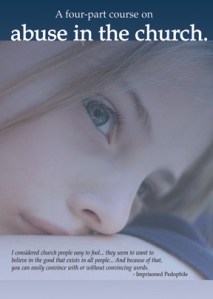
Abuse in the Church DVD now available


This summer I taught a class, along with Boz Tchividjian, about the problem and response of abuse within the church. Our four main plenaries were filmed and are now available on a 2 DVD set distributed by Vision Video. You can purchase the DVDs here at 20% off the price that will be listed on Amazon (and if you use the above link Biblical Seminary makes a few more pennies!). We Abuse in the Churchcover topics such as

  • how to recognize common characteristics of predators
  • prevention strategies beyond background checks
  • why we fail to act on abuse allegations and what to do about it
  • ministry responses to victims and offenders

The class was well-received by students and church leaders alike. It could be a great tool to get conversations going among lay and ordained church leaders as well as counselors who may be helping a church ensure top-notch abuse prevention measures as well as strategies for responding in a Godly way to abuse allegations–a way that ensures that the least of these are protected in the church.

Leave a comment

Filed under Abuse, biblical counseling, christian counseling, Christianity, Christianity: Leaders and Leadership, pastors and pastoring, trauma

Trauma and Trafficking DVDs on Amazon


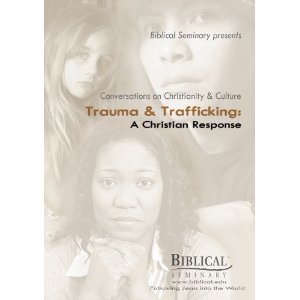
Nearly 2 years ago (March 2011), Biblical Seminary put on a conference about the problem of sexual trauma and trafficking. Our speakers included Dr. Diane Langberg (a noted psychologist), Bethany Hoang (IJM), Robert Morrison (a grassroots organizer), and Pearl Kim (now ADA for 2 Philadelphia counties). The sessions covered domestic and international sex trTrauma and Traffickingafficking, abuse and violence against women worldwide, the problem of sexual abuse in christian organizations, and how to mobilize community action without expending energy on non-profit status.

It was a powerful conference…and you can own it for a mere $19.99. Here’s the link to Amazon. Or, you can find it here at Vision Video (along with MP4 options as well) for 20% off.

This DVD set (3 DVDs) are an excellent starting point if you or your church group want to think more deeply about the biblical call to justice in the area of trafficking, trauma, and violence against women, whether “out there” or in the church.

Look for information on purchasing our most recent DVD series, Abuse in the Church, in the next week.


Leave a comment

Filed under Abuse, biblical counseling, Biblical Reflection, christian counseling, Christianity, Christianity: Leaders and Leadership, Diane Langberg, Post-Traumatic Stress Disorder, trauma

Diane Langberg on Listening to Trauma


Here’s video of Dr. Diane Langberg musing about what she has learned from listening to trauma over the years. (link here) She made this presentation as a part of a larger evening of trauma counseling training at Biblical Seminary, November 12, 2012.

Enjoy. More to come soon.

Leave a comment

Filed under Abuse, christian counseling, Christianity, counseling, counseling science, counseling skills, Psychology

Bessel van der Kolk on curiousity


Watching Bessel van der Kolk’s live CE presentation on trauma and attachment from the comforts of a counseling office (far better than sitting in a hotel room since we can get up and go to the bathroom and make snarky comments from time to time).

He is focusing on neuroscience and the role of the body in trauma and trauma recovery. Here are a couple of tasty quotes:

  • trauma isn’t about what happened but how it lives in you now
  • the most important part of trauma recovery is self-regulation
  • If you can’t be curious about yourself, you can’t get better (speaking of curiosity of one’s body, how it reacts to trauma triggers; the capacity to observe in the here rather than live in the past).

2 Comments

Filed under Abuse, counseling science, counseling skills, Post-Traumatic Stress Disorder

Want consultation for your difficult trauma cases?


Just a reminder to those of you who are counselors and therapists out there, starting in January, Dr. Langberg and I will be offering group and individual consultations to mental health professionals seeking help for their domestic and international trauma recovery cases. We will be running a once a month group consultation on Fridays beginning mid January (runs for 6 months) here in the Philadelphia region. If you have any interest in joining the group or having your own private consultation, please check out our website for application and consent forms: http://globaltraumarecovery.org/group-consultation/

Group consultations are a great way to get feedback on a difficult case, learn from peers, as well as easier on your pocketbook.†


†consultations can not be considered supervision as we have no authority over your practice.

Leave a comment

Filed under Abuse, christian psychology, counseling, counseling skills, Post-Traumatic Stress Disorder, Psychology

Repost at AACC: Seven Questions About Your Church Abuse Prevention Policy


The AACC has reposted my blog designed to help church leaders and counselors review current child abuse prevention policies. You can see the post at their site by clicking here.

As I say in the post, every church with any insurance policy likely has some measure of policy. However, why settle for something designed only to limit liability? Such an approach does not seek first the protection of the vulnerable. Rather, limiting liability places the protection of the organization ahead of the protection of children. In fact, policies that are tools of protection of children will also limit liability. We just need to get the order straight.

For further information and help with child protection, don’t forget to check out G.R.A.C.E.


Leave a comment

Filed under AACC, Abuse, Christianity, Christianity: Leaders and Leadership, church and culture, ethics