GTRI 2014 Trip: Day 3


[These are journal entries from my recent trip To Uganda and Rwanda during the first weeks of July.]

Day 3, July 3

Today was the 2nd and final day of the first ever Community of Practice for the Bible Society of Uganda trauma healing volunteers. Another long day as the program did not end until about 7 pm! Today I presented on an overview and update on the impact and treatment of PTSD. This is a group that likes to ask questions! We discussed the role of demonic in PTSD and how to know the difference. Many of the participants were quite interested in discussing how to educate local pastors in understanding the nature of dissociation. I also participated in teaching the new lesson (added chapter to Healing The Wounds of Trauma material) on domestic violence. In discussing why victims “choose” to stay in DV situations we had some lively discussion about whether the Bible teaches that women must stay. Very productive I think and gave some people a new perspective on the need to bring this hidden scourge out into the light.

The conference ended with reports, public conference evaluations (loved the very direct and loving evaluation of my presentations: have me speak more, have me slow down!), the handing out of the certificates, and final words. One of the most moving items was that I received “thank yous” in every mother tongue present. Seemed like there were at least 30 different languages represented. It was hard not to be choked up. I recognized a few (Arabic, Swahili, Kinyarwandan).

Two take-aways I want to remember:

  1. We need special materials for ex-combatants. First, much of the focus in Uganda has been on child soldiers. But the country is full of adult ex-combatants who were in Amin’s military or subsequent militaries and who now feel disconnected and distanced from current society. Some report that if they get together for sharing with other ex-combatants, they get reported (falsely) for starting a rebel group. One reported being jailed briefly for such a matter. Several told me that they were suffering terribly from being in POW camps and from the violence they witnessed. But most importantly, they noted that much of the trauma healing materials only speak of soldiers as the cause of trauma and so they feel more isolated when they read about or attend trauma healing exercises. No one, they feel, speaks of the trauma of seeing comrades die, of being forced to carry out commands against their will.
  2. Trauma healing volunteers, financing, and the need for View from my roomtangibles. Some of the volunteers believe that they must bring tangibles when coming to do trauma healing work. Words are not enough and participants expect some sort of handout: soap, money for transport, etc. The discussion we had about this ranged from criticism of this part of Ugandan culture and the need to develop a donor rather than handout culture to recognition that this culture has been formed, in part, by well-meaning foreign (Muzungu) NGOs that offer handouts as a means to increase participation in projects. Some volunteers noted they had been falsely accused of pocketing monies intended for participants when they didn’t come with any “gifts.” In addition, many discussed the difficulty of funding the trauma healing groups and the need to find sustainable funding using micro-enterprise.
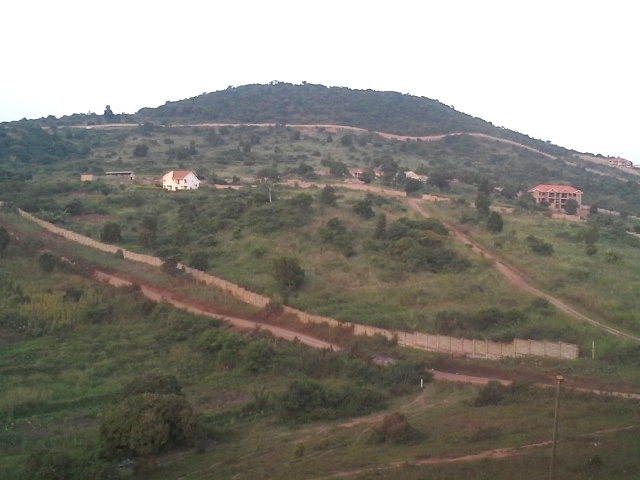
My day had three other stimulating experiences. First, I was interviewed by a journalist for television broadcast. Supposedly, it aired across the nation this evening, though I did not see it. Second, a woman told me of meeting Joseph Kony about 4 years ago (during the failed attempt to negotiate with him). She said that he was very winsome and crafty. If she didn’t know better, she could have fallen for his lines. I guess this is one of the reasons he is able to stay “missing” by convincing others to help hide him. Finally, I received a text from my wife letting me know that the US government warned of a terror plot at Entebbe airport tonight (about 10 miles from here). I’m planning on being there tomorrow to fly to Kigali. I guess I will evaluate the treat in the am.

3 Comments

Filed under Africa, counseling skills, Post-Traumatic Stress Disorder

GTRI 2014 Trip: Day 1 and 2


unnamed[I’ve been back for a couple of weeks but just now getting to write about this trip. These notes from each day come from my journal and don’t represent all that I did each day.]

Today (July 1), I landed midday at Entebbe airport just outside Kampala, Uganda. Entebbe is on the shores of Lake Victoria. I was met by Justus Rubarema of the Bible Society of Uganda as well as Klero Onuha of the Bible Society of South Sudan. Both men worth getting to know! We waited a bit for Margaret Hill’s plane arriving from Nairobi. Once gathered, we made for the Lweza Conference Centre about half way to the city of Kampala. Lovely grounds. Peaceful. Enjoyed the little monkeys eating flowers and looking for handouts (I had none).

I arrived at this conference (Community of Practice for Trauma Healing practitioners trained by the Bible Society) feeling fairly awake despite 26 hours of travel time. It may have helped a bit that I was unexpectedly bumped to business class on Qatar Airways from Philadelphia to Doha (a 13 hour leg). I suspect the lay flat seats had something to do with my feeling pretty good. Feeling good, I invited Margaret to go on a small walk around the area and on a quiet road outside the compound. Discussed some of her techniques to help quiet distress in participants where violence and trauma was ongoing (e.g., Bangui, CAR). We discussed the use of the “butterfly hug” as a means to calm. Also, discussed the use of drawing a place “bien etre” rather than a “safe place” since most participants she had did not have such a safe place at the present time. We finished our discussion of how to safeguard the mis-use of these calming techniques so that they would not be mis-represented as being more than they are, techniques used to help someone in the midst of distress.

Ended our day with a meal of rice, bananas, potatoes and chicken. Off to bed in hopes of getting on the right time zone quickly.

Day 2

First full day of the conference (and FULL it was, 8am to 6:30pm). Attendees are all Ugandan plus Klero from South Sudan. Most are volunteers for the Bible Society, trained to provide healing groups using the Healing Wounds of Trauma materials. Some work with children, some with adults, some with ex-combatants, some with refugees, and some with women with HIV. The purpose of this conference is to add to their knowledge and skill base plus problem-solve as to how to provide more trauma healing experiences around the country—with almost no budget. Most of the country is well-represented including a number from Gulu and also the Nakivale refugee camp. More men than women. A couple of academic types are also present, representing both the Ugandan Counseling Association and the Ugandan Christian Counseling Association. Plus, one nun representing the faculty of a nearby Catholic college.

I presented on an update to listening skills which seemed well-received. This group is very willing to discuss, raise questions, and debate. I like it! It was requested that I offer some counseling sessions after dinner and so I did. Two men requested it and so I got a chance to hear about their ministries, their hearts, and their difficult struggles, both from the past and in the present. One of the things I am seeing here is that Ugandans need the wisdom of Solomon, the heart of David, and the integrity of Daniel, even when trying to deal with so-called Christian bosses. One fun fact is that the power went out right in the middle of one of the sessions. No problem. We could keep talking in pitch-dark! But by the time I fumbled with lighting a nearby candle, a generator kicked on and power was restored.

Leave a comment

Filed under "phil monroe", Africa, counseling skills, Post-Traumatic Stress Disorder

Piercing Words From Cry, The Beloved Country


Just returned from 2 weeks in Uganda and Rwanda (more on that in subsequent posts). During interminable transit time to and from Kigali I read Alan Paton’s “Cry, The Beloved Country.” Missed reading that as a student and after last year’s trip to South Africa, I needed to read it. Without giving away too much of the story, one of the characters in the book is going through his son’s papers after his murder. His son had been an activist against the then mistreatment of Black Africans in South Africa. One of the papers said this:

The truth is that our Christian civilization is riddled through and through with dilemma. We believe in the brother of man, but we do not want it in South Africa. We believe that God endows men with diverse gifts, and that human life depends for its fullness on their employment and enjoyment, but we are afraid to explore this belief too deeply. We believe in help for the underdog, but we want him to say under. And we are therefore compelled, in order to preserve our belief that we are Christian, to ascribe to Almighty God, Creator of Heaven and Earth, our own human intentions, and to say that because he created white and black, He gives the Divine Approval to any human action that is designed to keep black men from advancement.

…

The truth is that our civilization is not Christian; it is a tragic compound of great ideal and fearful practice, of high assurance and desperate anxiety, of loving charity and fearful clutching of possessions. (p. 187-8)

This quote struck me so not because of the focus on Black/White relations but because it also fits other ways we struggle to respond to the “underdog.” We want to feel pity but rarely do we want to give up the power to enable the underdog to be one of us. For “other” to be one of us, we would have to cede power and that creates anxiety.

If you haven’t read the book for a while or never did, I commend it to you.

1 Comment

July 16, 2014 · 4:26 pm

Military trauma and traumatic brain injury: Challenges and Opportunities


Colleague and veteran Steve Smith has let me know about this web article regarding the state of PTSD/TBI injury among active duty military personnel. The essay points to some very startling numbers:

  • 59% report no improvement or worsened symptoms after undergoing treatment for PTSD and TBI
  • 30% dropped out before treatment was complete
  • A large portion of patients are on up to 10 meds at a time

The news item goes on to summarize presentations made a few days ago at the American Legion symposium on care for TBI and PTSD veterans. What makes this worth reading is that the actual slides from the presentations are provided in links at the end of the piece. I encourage you to go and read up. You can see what is being done using complementary treatments, the numbers of veterans with head injuries (interestingly, 80% are NOT received during combat) and/or PTSD, what services are available and what recommendations are made to DoD and the VA system to improve patient care.

Leave a comment

Filed under Post-Traumatic Stress Disorder, Psychology, ptsd, trauma

What is your response to graduation?


Tomorrow marks the end of the road for students of the 8th cohort of our MA counseling program here at Biblical. After two years of hard labor, er studying and practice, they are now set free to do other things like read for pleasure or hang with family on Monday nights. Of course, some will transition to a few final online licensure courses and others will continue to accrue supervised hours to meet licensure requirements, but the intensity of learning and the cohort life will not be the same.

In thinking about my own graduation from a cohort some 15 years ago, I remember the strange feeling of having arrived at the finish line with an empty feeling. I think that feeling came from the fact that I still had a ways to go to get licensed and to land a job.

Or maybe we put too much expectation on the acquisition of a goal, on our accomplishments. Degrees, jobs, houses, marriages, children–all good things–do not provide lasting changes in our outlook on life, our level of happiness, our perception of self. Sure, these things do provide opportunities for re-evaluation of self, the world, values, etc. But they do not exert changes. You can find people with many degrees, titles, things, who are still searching for an elusive sigh of relief, of arrival at some new constant state.

Is there a better response to graduation?

Instead of only looking for arrival or to the future, what if we use this time to see what God has done in our lives over the last two years? Like climbing a mountain, you get time at the top to stop and look out and back to see how far you travelled. During the climb your head is down trying to avoid tripping over rocks or roots. On the journey, you had to keep a steady pace for fear of quitting. But at the top you can stop and ponder. The time doesn’t last long since you will need to climb down soon. But before you go, take a look at the things God has enabled you to do. You weathered losses, had many ah-ha moments, developed courage to try rather scary things, had to admit weakness, received unexpected support, were sustained and able finish tasks that you thought unnecessary.

If you have just reached a goal like a graduation, take a minute to write down what diificulties you survived and what unexpected blessings you experienced. Look back and then write it down. Otherwise, you may forget as you climb back down the mountain.

Leave a comment

Filed under Biblical Seminary, counseling, education, seminary

My next two weeks in East Africa


Starting Monday I will be off traveling to Kampala, Uganda and then on to Rwanda for Global Trauma Recovery Institute. I welcome your prayers for myself, my students, and the attendees. In addition, Diane Langberg and myself will be leading a group of 12 Americans (10 GTRI students) on a listening/dialogue immersion trip throughout Rwanda. Some of the highlights of our trip(s) will include,

  • 2 day trauma healing community of practice in Kampala with the Bible Society of Uganda
  • 3 day trauma healing community of practice in Rwanda with the Bible Society of Rwanda
  • Afternoon mini-conference with pastors in Southern Province, Rwanda
  • Day with the newly forming Association of Christian counselors in Rwanda
  • Visits to NGOs working with trauma victims and street children
  • Church services
  • Visits to genocide memorials
  • Visit to a refugee camp
  • Numerous conversations, formal and informal over the next two weeks

I will make some attempts to update all on my trip as I go. You can follow me here and @PhilipGMonroe or @BTSCounseling. If you are interested in seeing more about the GTRI engagement model, check out this short video. And, if you would like BTS to continue doing this kind of missional work, feel free to go here and donate before the end of our fiscal year, June 30.

Leave a comment

Filed under Biblical Seminary, christian counseling, christian psychology, counseling skills, Diane Langberg, genocide, Rwanda, trauma, Uncategorized

Some thoughts on international trauma training


In just a few days I will be off to Uganda and then on to Rwanda to do some training with trauma healing workers in both country’s bible societies. In addition, a group of students from our Global Trauma Recovery Institute will join me in Rwanda to learn more about how to help without hurting. In light of this trip, I penned a few thoughts for those who have a heart to do something about the massive trauma needs around the world. Here’s a preview:

Trauma is a hot topic these days. We live in a world where we are aware of terrible traumas happening around the globe in real time. We hear and see tsunamis unfolding, towns being flooded when dikes are breached, mass shootings, bodies strewn about due to ethnic conflict, houses destroyed by errant bombs, and gender violence in almost every corner of the world. While humanitarian efforts to respond to the physical needs of those in trouble are not new, there is a recent push to have charity workers become “trauma informed” so they can also address spiritual and psychological distress.

Trauma is a hot topic not just because we have more evidence of it happening in real time. It is hot because we have better information about the impact of violence and abuse on the human brain, on human interactions, and on the fabric of a society (Mollica, 2006).

Christian counselors, many of whom want to provide cups of cold water to the hurting masses, undoubtedly wish to use their skills to bring hope, healing and recovery to traumatized peoples around the world. But just where should they start?

You can read the rest of my thoughts over at our faculty blog site.

Leave a comment

Filed under "phil monroe", Abuse, Biblical Seminary, Post-Traumatic Stress Disorder, Rwanda, trauma

Lies and stereotypes told by helpers hurt the cause of trauma recovery


I’ve written a piece over at the faculty blog on the shady side of bending the truth to get more attention on the problem of trauma and the need for trauma recovery. It is a common temptation for those of us who work with trauma victims, a temptation to use the stories of trauma to garner personal acclaim (“look what I am doing about the problems in the world”) and to stereotype to increase attention and funding for those who are hurting. Shaping the truth hurts the cause and hurts the victims.

Read at the above link for more.

1 Comment

Filed under Abuse, deception, Post-Traumatic Stress Disorder

When you hear “gender” what does it mean to you?


Over the last couple of days our faculty has been on retreat. At one point we watched this TEDx talk by Jackson Katz regarding the need for male leadership in response to gender-based violence. Jackson raises this issue:

What do you hear when you hear the word gender?

What do you hear when you hear the word race?

What do you hear when you hear sexual orientation?

His point is that with each of these words we tend to “hear” or imagine the minority: female, people of color, gay/lesbian/bisexual, etc. He suggests we are much less likely to think “male” in response to gender, white/Caucasian in response to race, and “heterosexual” in response to sexual orientation.

Do you agree?

If so, why is this? Jackson would say it is because the majority is always invisible and thus not included in discussions. His point is that gender-based violence becomes just a female issue due to this problem. While you might not agree with all he says, it is a worthy 0f your consideration on how it is that we ignore problems that seem to not relate to our own experience.

Leave a comment

Filed under Gender

Traumatic Nightmares? Two Treatment Possibilities


Many who suffer from PTSD or other traumatic reactions also experience chronic nightmares. It is bad enough to have to deal with intrusive memories and triggers during the day but being robbed of peaceful sleep can send you over the edge, both in terms of physical and emotional health. Christian counselors may be tempted to ignore these nightmares (how can you stop something you have little control over?) or overly spiritualize the content of the dream.

But we ought not neglect the problem of nightmares. It is well-known that reductions in quality of sleep make all mental illnesses worse. Nightmare sufferers understandably avoid sleep but of course this creates a vicious cycle of insomnia, anxiety, and increased avoidance strategies.

There are two intervention options (among many) that appear to have fairly robust positive data indicating helpfulness. (For detailed descriptions of these two and others including the analyses of value, see this pdf): Prazosin (medication) and Imagery Rehearsal Therapy (IRT).

Prazosin is an anti-hypertensive (alpha blocker) that may work on the problem of too much norepinephrine in PTSD patients. It seems to improve sleep length and REM time. Interestingly, beta blockers have been found to increase nightmares rather than reduce them. I am no physician and so cannot evaluate the value of this medication for clients but would encourage clients with chronic, severe and re-occurring nightmares to talk with their doctor about whether Prazosin might work for them. The studies I have reviewed primarily examined the value of this medication for veterans with extreme nightmare problems. The most significant downside to medication treatment is that it only works when the medication is taken. Stop the medication, the nightmares may come back. However, some relief may be beneficial and thus the medication then has value.

Imagery Rehearsal Therapy (IRT) is a short-term therapy that does not work on the actual content of the traumatic experience or attempt to treat PTSD. Instead, it treats nightmares as a primary sleep disorder problem. There are variations on IRT but most versions last between 4 and 6 sessions and may be delivered in individual or group formats. Sessions include education about the nature of nightmares, sleep hygiene protocols, and the imagery replacement protocol. While some of the IR protocols are done imaginally, others ask nightmare sufferers to (a) write down the details of the distressing nightmare, and (b) write a new ending to the nightmare. As Bret Moore and Barry Krakow describe, the therapist does not dictate the new outcome of the revised dream but encourage the sufferer to “change the nightmare anyway you wish” (Psychological Trauma, v. 2, 2010). The nightmare sufferer then rehearses (multiple times) the new ending and is instructed to ignore the old nightmare.

Sound goofy? How is it that a person can just decide to have a different dream? However, the evidence that this therapy works is quite robust. Numerous studies with veterans and civilians indicates it is effective in reducing unwanted nightmares. Most treatment protocols suggest starting with nightmares with content unrelated to actual traumatic events.

Thus, Christian counselors ought to review these two treatments and consider learning the IRT protocol to bring relief to chronic nightmare sufferers.

4 Comments

Filed under christian counseling, christian psychology, Christianity, counseling, counseling science, counseling skills, Post-Traumatic Stress Disorder, Psychology, Uncategorized