GTRI 2014: Day 11, Muhanga to Butare/Huye


July 11, 2014.

We ended the Community of Practice at noon and said our goodbyes. The morning consisted of a short devotional comparing the good and the false shepherd described in John 10. We explored how helpers may end up becoming “hirelings” due to burn-out and

Community of Practice

Community of Practice

loss of vision. After the devotional, our tables each became case consultations with caregivers discussing their hard cases and receiving encouragement, support, prayer, and a bit of advice. In a number of instances, caregivers brought up the issue of those who have mixed parentage (Hutu/Tutsi) and the struggle to deal with their identity. I and others have noted that this group has been far more vocal talking about the different “tribes” where previous groups have rarely even mentioned these groupings. It makes me wonder whether this is unique to this group or whether there is something going on in the country that makes it okay to discuss identity.

After our goodbyes, we traveled south for 2 hours to the university town of Butare. Butare is the home of the National University. First stop in Butare consisted of an ice cream at Sweet Dreams just down the road from the Shalom Guest house where we are staying (known internationally as the project with the female drumming corp). Our purpose here is to meet with Anglican Bishop Nathan Gasatura and some of the pastors/leaders of his diocese to discuss the trauma recovery needs. Bishop Nathan has been a friend and attended some of our previous training. Diane spoke a bit about “talking, tears, and time” and the process of healing through trauma. We had a good dialogue where one question was raised, how can a Hutu counselor help a Tutsi victim (or vice versa)? I was thankful that Baraka Paulette, the new president of the new Rwandan Association of Christian Counselors, was present as she answered in a very beautiful way, putting all at ease. Though our time was short, we squeezed in a bit of singing and dancing in the cathedral.

Before our meeting, a few of us purchased locally roasted inexpensive Rwandan coffee and an espresso at Café Connexion across the street from the cathedral and guesthouse. This cafe was not something most would venture into in the United States. It contained dingy walls, a couch and a couple of stuffed chairs, a shelf full of brown bags of coffee, a large coffee roaster and the center of the room was a small desk with an espresso machine. Yet, this was possibly the best coffee I tasted on the trip. [the return trip the next morning and bag of coffee brought home and now gone supports this opinion!] After dinner, many of us walked down the dimly lit main street in the dark passing the university. It was good to walk and good to deepen relationships with fellow GTRI mates.

1 Comment

Filed under counseling, counseling skills, Uncategorized

GTRI 2014: Day 10, Muhanga


July 10, 2014. Centre St. Andre

Thursday, Day 2 of the Community of Practice with the Bible Society of Rwanda. Already we are seeing deepening relationships. Last night many Americans and Rwandans sat together in the dining area talking and getting to know each other and revealing deep stories, stories of courage, pain, and hope. Precious times.

On day two of the Community of Practice we began with a short devotional considering Jeremiah’s lament. Barbara Shaffer and Carol King led a training and discussion of the problem of domestic violence. This is a new chapter in the Healing Wounds of Trauma materials. We discussed how much of a problem it is in Rwanda, why women stay, and how we can help both victim and abuser.

DSC_0307In the afternoon, we did another teaching (Carol and myself) regarding the problem of suicide. It appears that most Rwandans believe that one who commits suicide is automatically going to hell. In addition, the family is often shunned. This seemed a very entrenched belief and so my raising doubts and questions resulted in very spirited debate. While we also discussed how to help the suicidal person and how to help the family members, I left them with the encouragement not to speak for God and since no verses speak to the future of suicide persons, they ought to be careful to put words into God’s mouth.

We ended this conference day by giving the Rwandans an opportunity to have a session for their own care. We can see the weariness on their faces. Baraka led a care for the caregiver session while the GTRI team met to process what we were hearing and seeing–the heartache and the resiliency.

Monique (R) with Souvenir

Monique (R) with Souvenir

We had the privilege of listening to Monique’s story of surviving the genocide as a teenager and God’s subsequent call on her life. The story is too precious and hard to share here beyond a few words. She survived when family members around her were executed (shot) and fell on top of her. The killers left the pile of bodies, not knowing that she was not killed. Just prior to this event, she had read Psalm 91 and heard God speaking to her about her own future when she read verse 7,

“A thousand may fall at your side, ten thousand at your right hand, but it will not come near you.” 

She has gone one to become an evangelist for Christ and a helper of the hurting. I can attest that she has a gift that few have. And I will never read that verse again in the same way

As the previous night, many of us stayed up quite late deepening relationships with new and old Rwandan friends. Looking over the dinner area, I saw heads bowed in prayer, attempts to speak in French, cackling laughter, and the sharing of food and drink. Such a beautiful sight.

Tomorrow will end our COP and we will move on south to Butare.

Leave a comment

Filed under Africa, counseling skills, Post-Traumatic Stress Disorder

Brooks on journaling about emotions


Friend Jeff McMullen pointed out a recent David Brooks op ed in the New York Times. (Read it here). While I’m not sure I agree fully with his journaling/not journaling point he says something very important about the timing of writing one’s emotions after a traumatic event. He says,

When people examine themselves from too close, they often end up ruminating or oversimplifying. Rumination is like that middle-of-the-night thinking — when the rest of the world is hidden by darkness and the mind descends into a spiral of endless reaction to itself. People have repetitive thoughts, but don’t take action. Depressed ruminators end up making themselves more depressed.

Then later, this important distinction between immediate processing of emotions and later processing,

We are better self-perceivers if we can create distance and see the general contours of our emergent system selves — rather than trying to unpack constituent parts. This can be done in several ways.

First, you can distance yourself by time. A program called Critical Incident Stress Debriefing had victims of trauma write down their emotions right after the event. (The idea was they shouldn’t bottle up their feelings.) But people who did so suffered more post-traumatic stress and were more depressed in the ensuing weeks. Their intimate reflections impeded healing and froze the pain. But people who write about trauma later on can place a broader perspective on things. Their lives are improved by the exercise.

David points to some research that exists that suggest CISD is unhelpful for some participants. Some are made worse. Yet, narrating one’s trauma in the broader context of a life tend to see a reduction of symptoms. The difference seems to be whether the focus in on life or mostly on the trauma. Trauma in perspective is the goal. Just reviewing trauma may in fact strengthen the traumatic reaction rather than weaken it.

1 Comment

Filed under Abuse, counseling, counseling science, Post-Traumatic Stress Disorder, Psychology, ptsd

GTRI 2014: Day 9 Muhanga


July 9, 2014

Wednesday morning. We had our last lovely breakfast at Solace guest house, packed our things and left to travel a little over an hour south to Centre Saint Andre, a retreat and conference facility. We arrived in time to get our rooms to put our things away and get to the start of the conference. This Community of Practice conference, run by the Bible Society of Rwanda, is their first ever such meeting of trauma healing facilitators and is designed to raise the level of skills and knowledge of the facilitators as well as share best practices among them. Our role at the conference is threefold: lead some of the teaching sessions, listen and respond to case consultations and, best of all, get to know the facilitators and share experiences. The room was set with tables for 6 with 4 Rwandans and 2 Americans each.

The conference began with a bible study by the secretariat of the Bible Society. He spoke of the necessity of having the right names for things. He noted the significant difference in naming Rwanda a country healing from genocide instead of Rwanda a genocide country. Each table then discussed successes and challenges. At my table we heard of many good stories of healing (Success) but also that the

Credit: Heather Evans

Credit: Heather Evans

facilitators feel much guilt for not helping more (Challenge). They struggle with feeling worn out and impoverished helping others. Some noted how their own families and marriages were suffering given that they found it hard to say no to tangible needs of those they were trying to help. They noted that many of the recipients did want to have tangible gifts in order to take time to be in a healing group.

Next, Diane Langberg presented on the topic of shame. She defined guilt as a response to what we do but shame as a response to what we perceive we are or have become. She noted there are different types of shame but all result in a loss of “glory.” Some religious traditions believe that blood (honor killings) is the only way to cleanse the family of shame. She pointed out that while this is gravely distorted view of shame/honor, blood IS the only cleansing of shame–Jesus’ death and resurrection. She explored how Jesus did not run from the shame, that the image of God is one who runs after the shamed, who clothes them, who brings them his honor.

In response, the table groups considered three questions: What is considered shameful in Rwanda? What does the church say is shameful? Which of these are false sources of shame per the Scriptures? Consider some of the items mentioned,

  • To be pregnant without a husband, yet a man is proud
  • To divorce or separate
  • To be impotent or barren
  • To be a victim of rape
  • To be drunk (if woman); only shameful for a man if he does something wrong when drunk
  • To engage in open conflict; to talk openly of problems
  • To be in need/impoverished
  • For a woman to talk about domestic violence; to be a man beaten by his wife
  • to have disobedient children
  • To be albino
  • To commit adultery (church endorsed shame); to be HIV+

Interestingly, it was not always agreed upon which items should not be considered shameful.

396We ended our training day with a teaching/group interaction I did regarding addictions (the nature of addictions, what the Scriptures say, and how these facilitators can help improve commitment to sobriety in those they seek to help). I think most Americans and Rwandans felt the beginnings of connections forming as personal stories were told to us and we received them for what they were, treasures.

1 Comment

Filed under christian counseling, Rwanda, trauma

GTRI 2014: Day 8 Kigali


July 8, 2014

Tuesday. Yesterday was a deep dive into Rwanda for GTRI students. They heard directly from Rwandan caregivers and spent time trying to weigh the genocide and its ongoing impact. Today we begin meeting and interacting with trauma healing and recovery caregivers in a conference setting. At a local hotel about 100 Rwandans gathered to kick off the Bible Society’s trauma healing community of practice and the inauguration of the Rwandan Association of Christian Counselors. The purpose of this meeting was to introduce both projects to the public and to invite the media and dignitaries to be present. The Rev. Emmanuel Kayijuka game some opening remarks and an Anglican Bishop offered a brief bible study of John 4:1-3, the woman at the well. He pointed out that she was likely a prostitute and an DSC_0233abused woman, abused by men, by society and desperate. Why else gather water at noon. He also pointed out that after her healing, she became a woman on a mission of healing, seeking social contact for the purpose of evangelism. After these reflections, Dr. Jean Mutabaruka presented a paper looking at the relationship between trauma, PTSD, and complicated grief. He pointed to 12 types of trauma in Rwanda, including sexual/physical/emotional abuse, witnessing violence, discrimination, poverty, etc. At the end, he raised a few general questions regarding the management of the mourning period/process each year.

After the professor finished, both Diane Langberg and I made a few brief remarks in response. Dr. Harriet Hill presented an overview of trauma healing project, in Rwanda and around the world. She showed the latest trailer of a documentary (much about the Congo project) about bible based trauma healing slated to be aired on ABC network this fall. Fun to see people I know in this trailer. David from the Rwandan Bible Society reviewed the progress to date: 2,918 trained people using Healing Wounds of Trauma material. Many of these are able to train others while the rest are better able to care for themselves.

New President: Baraka Credit: Heather Evans

The second half of the day included a presentation by Baraka Paulette Unwingeneye about the efforts thus far to form the Rwandan Association of Christian Counselors. This group of counselors and caregivers have been meeting with us since 2011 and are ready to be birthed. As Baraka said it, it may be like an elephant’s gestation, but now we are near the final month. We had presentations from Narcisse about the needed documents to be filed to make the association official, myself about the benefits and processes to form an associations. Then, those in attendance voted in a president, vice-president, secretary, treasurer, advisors, and conflict managers. This may not sound very moving, but I assure it was!

Fun too

While we come to Rwanda for serious matters, not everything has to be intense. As our day was ending, we quickly changed from our conference clothes to go out for a bit of shopping: the Simba market for coffee and tea, and another market selling typical Rwandan traditional items (clothes, woven bowls, banana leaf art. I looked and looked for a blue African traditional shirt but came up empty.

This marks our last night at Solace. Tomorrow we move on to the conference proper about 50 minutes or so south in Muhanga (Southern Province). Though we are about to begin the training in earnest, I think I am beginning to relax. A year’s worth of planning is now well under way. Despite a few surprises and schedule changes, most everything is working as planned. No problems with transportation, food, water, housing. Meetings planned have more or less happened.

Leave a comment

Filed under Africa, counseling, counseling skills, Rwanda

GTRI 2014: Day 7, Kigali


Credit: Heather Evans

Credit: Heather Evens

July 7, 2014 (day 3 for GTRI students)

The purpose today was to begin immersing in life and ministry in Rwanda after genocide. Today, we began with a brisk walk to the offices of International Justice Mission for their morning devotions. After singing a couple of songs we listened to a brief meditation on Psalm 77 led by Dr. Barbara Shaffer, one of our team leaders. We closed with praying together for the personal and work prayer requests from IJM staffers. I look forward to meeting at IJM each time we are here. It is good to hear about the work they are doing in bringing justice and aftercare recovery to child sex abuse victims.

After devotions, we left for the national genocide memorial. On the way, I needed to get some US dollars exchanged to pay the various bills that could only be paid in Rwandan Francs. 10 one hundred dollar bills became a 4 inch wad of Franc bills (1 dollar equals 690 Francs). Glad many places take US dollars!

Though the group has read much about the 1994 genocide, it is important for the group to go through the memorial and museum to see the roots, progression, and aftermath of the genocide. Walking around mass graves for several hundred thousand Rwandans will sober a person! The final room of museum puts together beautiful pictures of children with text beneath pictures detailing their interests, qualities, and also how they were killed. Very chilling. Though I have been through this room before, I chose to speed through rather than become overwhelmed.

A couple of our team members spoke with a young Rwandan man who had come to the memorial for his birthday. Why? Because it wanted to spend it with his family–family interred in the mass graves. Things like this encourage silence as the right response.

Before leaving the memorial our team had a few minutes with a guide who told us a bit of his story, which included the ugly reality that priests and pastors actively worked for genocide. Miraculously, this young man’s faith is still intact.

Credit: Heather Drew

Credit: Heather Drew

After a lunch at Afrika Bite, a buffet restaurant for the usual foods (multiple starches, cooked vegetables, and some meat), we visited a sewing co-op that provides women counseling and skills in making things from greeting cards to blankets, purses, ipad covers and the like. We met with the leaders to talk about how they were helping children of rape connect with their mothers. After the meeting, we saw a number of the women hard at work.

From here, our team split, one group attending a counseling center for women and the other group meeting with a group of HIV positive men and women who are part of a ministry of a church. In both groups, it was helpful to see ministry at the ground level. Unlike many US counseling centers, these ministries must consider both mental, physical, spiritual, and financial health at the same time.

Our day ended back at Solace Ministries debriefing what we saw, heard, and felt. Words fail to capture the weight of the hurt and pain post-genocide but also the resilience and recovery that we see. One of the nice things about debriefing each night with the team is that we are able to learn from each other and see/hear things we might not have experienced even as we were in the same spaces. For example, one of our team had a front row seat to US congressional concerns and activities during the beginnings of the genocide. Hearing from her provided context to the two dimensional understanding most of us have of the story.

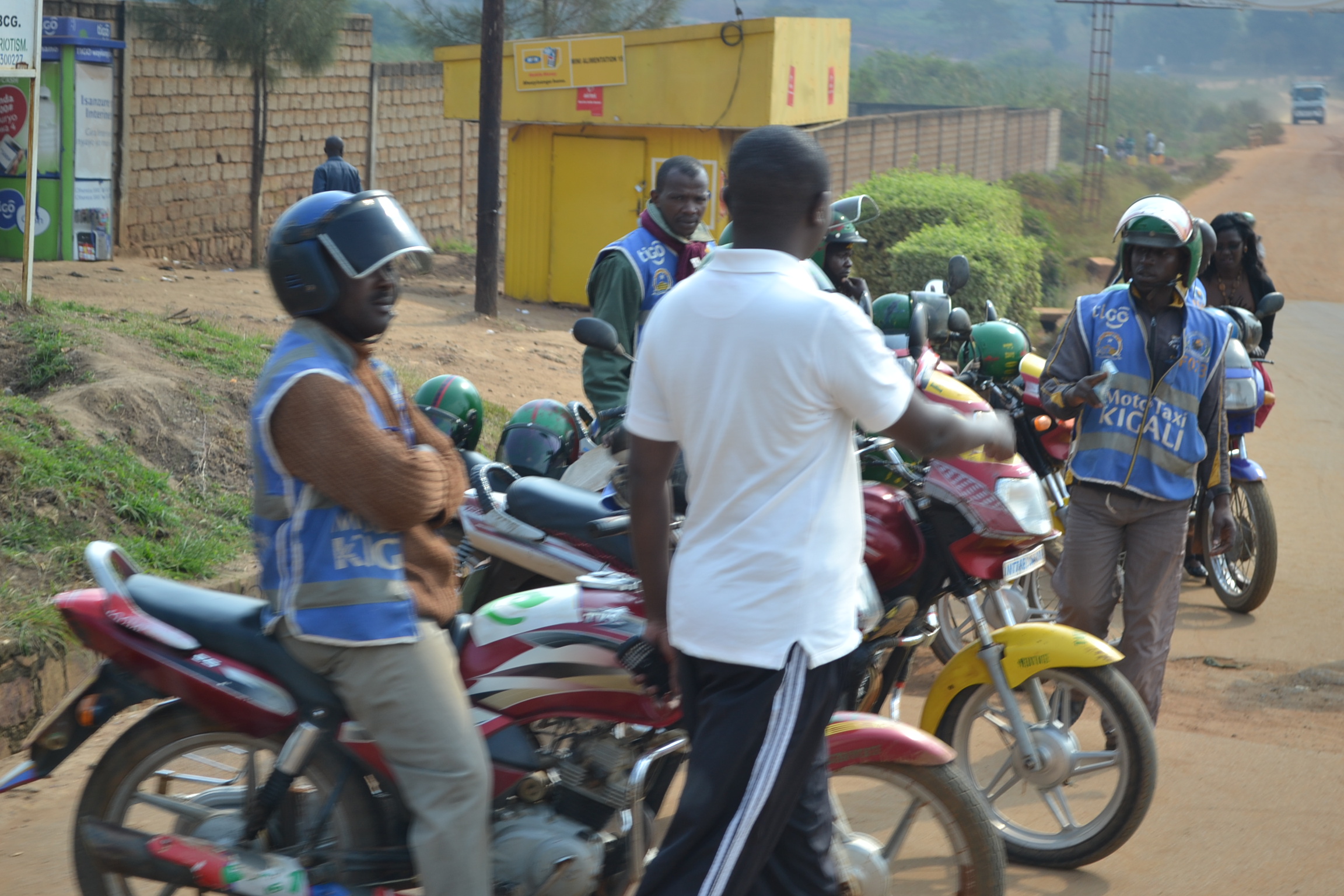
One fun note. I finally got my first moto (called bodas in Uganda) ride. I needed to go to a market and the easiest way to get there was by moto. The driver I flagged had almost no English and very little French. With his broken English and my broken French, I was able toDSC_0013 get him to understand. Though the ride was short, it was fun and pretty inexpensive.


2 Comments

Filed under Uncategorized

GTRI 2014 Immersion: Day 5-6


July 5, 2014

A bright and sunny start to this day. The team will arrive to join me this afternoon. At Solace, a typical breakfast includes fresh fruits, coffee, croissants, honey, cheese and hard-boiled eggs. Eating on the porch I enjoyed the views across the valley and got to know some fellow Americans working for Solace (from Wisconsin

Credit: Heather Evans

Credit: Heather Evans

). Since this is a relatively quiet day, I decided to go on a hike of this part of Kigali. Walked by the offices of International Justice Mission and through several neighborhoods. It is nice to get to know the city well enough not to get lost.

After lunch, our good friend and colleague Baraka Paulette came by to bring me to the airport to meet the incoming GTRI team. Everyone arrived on time and in good spirits, even if bleary eyed from the travel. After getting everyone into their rooms, quite a few were up for a short walk. On the way, we stopped at a nearby art center to

Typical Solace meal Credit: Heather Evans

Typical Solace meal
Credit: Heather Evans

see the gallery and talk to artists busy at work. Soon we had dinner (usually 3 courses: soup, entrée, dessert).

At this point, I discover that we do not have reservations here at Solace for our last night. I ask the staff to help us find a comparable accommodations and they let me know that they will help us.

July 6, 2014

Sunday. We attend Baraka’s church on Ndera hill. We enjoy worship despite it not being in English. At least a couple of choirs sing. Diane preaches (translated) on Isaiah 45:2-3 which speaks of the mystery of treasures in dark places and makes application to those who are suffering much and yet

Credit: Heather Evans

Credit: Heather Evans

finding treasure in the Lord’s calling them by name. Several of the group held children’s church outside. After the service we were brought back into the church with the members to receive communion. Sitting on benches in a rectangle, we were given opportunity to wash our hands and then proceed with the service. (For those who want to know, we had the melt-in-your-mouth wafer and individual cups of juice).

After church we were taken to Baraka’s family home to enjoy a goat roast, a lovely way to pass the Sabbath! Mid-afternoon we departed on our bus for Enfant de Dieu, an organization that cares for former street children. They house almost 100 boys, providing them with training, education, and housing. We watched them drum and dance for us

Credit: Heather Evans

Credit: Heather Evans

(including street-style dancing) and then shared donuts and sodas as well as some games. I and one of the older boys played beach volleyball against another teammate and child on something that was akin to sand. My poor feet took a beating. During our time we also got to hear how the ministry works and about the counseling offered in groups and individuals. It was especially fun to show some of the video footage on my phone from last year. We could see who had grown the most and who had left to go back to family.

Finally, we ended our day back at Solace Ministry with an American missionary couple who have been in Kigali for almost 2 years. They were able to describe work with prostitutes and pastors. Also, they filled the team in on some of the cultural differences: A person is a girl or boy until she or he has a child. Many girls would choose to contract HIV rather than be childless. For a man to get married he has to build a family home. Because some of the materials are so expensive, many are putting off marriage and thus encouraging sex before marriage. Many expect that men and women who travel will have sex outside of marriage while on the trip. Some form of genital mutilation is present here (not so much cutting as stretching). Finally, we explored the survival mentality and how that can be a help and a hindrance.

Leave a comment

Filed under Rwanda

Volunteer tourism: Help or Hurt?


[My trip diary will continue on Monday. But this blog presents a related topic.]

I heard a NPR news story about volunteer tourism and who it helps most (listen here). If you have gone on, heard about, or given to short-term missions projects, you likely have considered the question of whether it is really worth the expense. Are locals really being helped when huge amounts of cash must be used to fly and house outsiders on their trip. At times I have wavered. Should this 30,000 dollars be better used by giving it to local ministries and letting them hire local workers to do what outsiders might do.

Sometimes this is true. But there are a few things to consider:

1. The money probably wouldn’t be raised without sending the outsiders.

2. Having outsiders come and see provides much encouragement.

3. Developing world-minded outsiders (read Americans) can have significant and ongoing impact.

4. Some trips are better than others (as the news story suggests) in that giving goes to local ministries. On our recent trip we stayed at ministry guesthouses which support those ministries and provide jobs to local people. We paid small businesses for services whenever possible.

No doubt some trips are harmful, especially when they promise but do not deliver or continue to support imbalance of power. But many trips do significant benefit for all involved.

5 Comments

Filed under Africa

GTRI 2014: Day 4


July 4. Transit day.

Today is a transit day. Breakfast of hardboiled egg, bread, and coffee. Talked with Klero of South Sudan. Discussed ideas of how to bring GTRI courses/materials and other counseling training to local areas here in Uganda and in S. Sudan. While Juba has great Internet per Klero, most people there do not have access to it. The same is true here in Uganda. I am very interested in finding a way to bring this training (videos, readings, exercises) to this region without it being in an online format as it is right now. Seems the areas of greatest interest are basic helping skills, trauma healing from the Bible Society, deeper understanding of impact of trauma and expression of PTSD across cultures, and exposure to psychopathology. My goal would be to give this material away and offer live conferencing sessions to the training mentor as needed. Then, possibly follow-up with a visit to “t0p-up” as Harriet Hill is fond of saying.

Anyone want to fund that or help me figure out how to get others to do so? (Smile)

After breakfast we made our way to a nearby Catholic college to talk with Sister Bokiambo and the dean of the counseling department, Fr Evarist Gabosya Ankwasiize. They were interested in future opportunities with shared learning (my bringing students here to engage and interact with their students and participate in joint training). I left with new ideas for this location (on the shorts of Victoria) and with the encouragement that the Bible Society might be able to begin some seminars here to improve the dialogue between Scripture engaged trauma care and traditional mental health trauma care.

After a lunch of fried fish on the shorts of Victoria, I said my good-byes to Justus and Esther at Entebbe airport. The added security was quite evident (3 bag checks and 3 metal detectors before boarding) but there were no problems. The flight to Kigali was under 1 hour on a very new Rwandair airplane. Just enough time for a Passion fruit drink from the steward. Arrived to significant upgrades to the airport.

Arrived at Solace Ministries Guesthouse, our usual haunts since 2011. Solace isn’t hotel level but I love it for many reasons: Simeon’s great cooking (he makes fantastic vegetable soups and dessert of fresh tropical fruit and ice cream tonight), my money goes to a ministry and not a behemoth corporation, the water is hot, the rooms are clean, and it is centrally located. Seems Internet is a bit upgraded since I was able to SKYPE with Kim and boys.  [For a 2012 video of Solace Guesthouse, see here.]

I arrived here after the major July 4 celebrations today. Today marks the end of the 100 day mourning period and celebrates the liberation of Kigali. This is the 20th anniversary. A number of fireworks were shot off tonight, which I was told later triggered some local people into thinking the city was under attack.

Tomorrow, Lord willing, the rest of the team will arrive from the US and other points and our GTRI immersion trip will begin in earnest.

Leave a comment

Filed under Rwanda

GTRI 2014 Trip: Day 3


[These are journal entries from my recent trip To Uganda and Rwanda during the first weeks of July.]

Day 3, July 3

Today was the 2nd and final day of the first ever Community of Practice for the Bible Society of Uganda trauma healing volunteers. Another long day as the program did not end until about 7 pm! Today I presented on an overview and update on the impact and treatment of PTSD. This is a group that likes to ask questions! We discussed the role of demonic in PTSD and how to know the difference. Many of the participants were quite interested in discussing how to educate local pastors in understanding the nature of dissociation. I also participated in teaching the new lesson (added chapter to Healing The Wounds of Trauma material) on domestic violence. In discussing why victims “choose” to stay in DV situations we had some lively discussion about whether the Bible teaches that women must stay. Very productive I think and gave some people a new perspective on the need to bring this hidden scourge out into the light.

The conference ended with reports, public conference evaluations (loved the very direct and loving evaluation of my presentations: have me speak more, have me slow down!), the handing out of the certificates, and final words. One of the most moving items was that I received “thank yous” in every mother tongue present. Seemed like there were at least 30 different languages represented. It was hard not to be choked up. I recognized a few (Arabic, Swahili, Kinyarwandan).

Two take-aways I want to remember:

  1. We need special materials for ex-combatants. First, much of the focus in Uganda has been on child soldiers. But the country is full of adult ex-combatants who were in Amin’s military or subsequent militaries and who now feel disconnected and distanced from current society. Some report that if they get together for sharing with other ex-combatants, they get reported (falsely) for starting a rebel group. One reported being jailed briefly for such a matter. Several told me that they were suffering terribly from being in POW camps and from the violence they witnessed. But most importantly, they noted that much of the trauma healing materials only speak of soldiers as the cause of trauma and so they feel more isolated when they read about or attend trauma healing exercises. No one, they feel, speaks of the trauma of seeing comrades die, of being forced to carry out commands against their will.
  2. Trauma healing volunteers, financing, and the need for View from my roomtangibles. Some of the volunteers believe that they must bring tangibles when coming to do trauma healing work. Words are not enough and participants expect some sort of handout: soap, money for transport, etc. The discussion we had about this ranged from criticism of this part of Ugandan culture and the need to develop a donor rather than handout culture to recognition that this culture has been formed, in part, by well-meaning foreign (Muzungu) NGOs that offer handouts as a means to increase participation in projects. Some volunteers noted they had been falsely accused of pocketing monies intended for participants when they didn’t come with any “gifts.” In addition, many discussed the difficulty of funding the trauma healing groups and the need to find sustainable funding using micro-enterprise.

My day had three other stimulating experiences. First, I was interviewed by a journalist for television broadcast. Supposedly, it aired across the nation this evening, though I did not see it. Second, a woman told me of meeting Joseph Kony about 4 years ago (during the failed attempt to negotiate with him). She said that he was very winsome and crafty. If she didn’t know better, she could have fallen for his lines. I guess this is one of the reasons he is able to stay “missing” by convincing others to help hide him. Finally, I received a text from my wife letting me know that the US government warned of a terror plot at Entebbe airport tonight (about 10 miles from here). I’m planning on being there tomorrow to fly to Kigali. I guess I will evaluate the treat in the am.

3 Comments

Filed under Africa, counseling skills, Post-Traumatic Stress Disorder