On Funerals


I attended a funeral of a co-worker yesterday. Ken Rush served his church, denomination, and Christian higher education. At his funeral, he was lauded for living a life faithfully to Christ, from start to the end–even through his cancer. It was moving.

As a kid I didn’t attend many funerals. Not sure if that was because I didn’t like them (I didn’t) or because culturally kids were kept away. Anyway, some of the most memorable services I’ve attended have been funerals for beloved saints.

While the pain and grief are not good, the funeral affords me a time to reflect on our mortality, God’s goodness and message of hope in the life of the Christian. They are important since they remind us what IS important. We get so carried away with life that we forget how short and fragile it is, and that this life is not the main event.

2 Comments

Filed under Uncategorized

Divorce & Remarriage II: OT Reflections


Chapters 2-3 of Instone-Brewer’s Divorce & Remarriage in the Church reviews OT reflections on divorce and remarriage. In the first few pages of chapter 2, the author skips much review of Eden and goes right for the problem in marriages after the Fall. Adam and Eve discover, “the difference between good an devil, and at the heart of this discovery was the desire to do what they wanted.” (p. 24) God’s original design of “leaving and cleaving” provides the remedy to our tendency toward individualism and is meant to help us through the hard times.

But what happens when the ideal of leaving and cleaving doesn’t work? What happens to the wife? The Husband? Is there any relief? Instone-Brewer (I-B) then reminds readers that failing marriages is not merely a modern problem. He briefly summarizes the ancient near eastern laws prior to Moses. In short, women have no power, no say. A husband can abandon her and the kids, leave her with nothing (since she can’t own property) and then return and take her back whether she wants to or not.

Enter Moses. I-B says that Law given by Moses brings some things to rights. First, everyone was treated with equal respect and not given different punishments based on importance or personal wealth. Second,

The most impressive differences between the laws of Israel and those of other ancient Near Eastern nations were in the laws of remarriage. In other countries it was difficult for an abandoned woman to get remarried, but in Israel this unfairness was corrected by giving her the right to receive a divorce certificate from her husband….It confirmed that her husband had divorced her and meant that it was safe for another man to marry her… (pp. 28-29)

I-B backs up his contention that she could remarry by speaking of archaeological finds of very early Jewish divorce certificates that contain language, “you are now free to marry any man you wish.”

Lest anyone think the OT supports divorce, I-B attempts to distinguish between what is acceptable and a legal recognition of what has happened. Though divorce is always a sign of something wrong, I-B contends that God provides a means to force a divorcing man to give her a certificate to allow her to remarry.

This chapter is a little campy in places but makes a good point that the divorce certificate allowance was to protect wives from even more damage–to limit the effects of sin. Jesus seems to support this argument in Matt 19:18 when he states that Moses gave them this law because their hearts were hard (i.e., had no concern for their wives and children). Notice that women are not even considered able to divorce their husbands. There are a number of other OT passages that I-B has yet to deal with that I expect will show up in the next chapter. 

1 Comment

Filed under book reviews, Christianity

Bringing light to the porn and prostitution industries


This weekend I started reading Victor Malarek’s book, The Natashas: Inside the New Global Sex Trade. It is about the 4th wave or explosion of trafficked women from Eastern Europe who are enslaved as sex slaves around the world. Not fun reading but necessary for those interested in understanding the extent and effect of sex trafficking. [WARNING: If you have suffering sexual abuse, you do not need to read this book. It would only add to your trauma. This book is for those who do not know your experience!]

I suspect that this book would be useful for those struggling with temptations to visit massage parlors, prostitutes or view on-line pornography. Each of these illicit sexual encounters is designed to convey the message that the woman wants and enjoys providing the man with pleasure. While I recognize that some individuals pursue bondage and pain oriented pornography, most find coercive imagery counterproductive to their sexual fantasy. Hence, this book would be useful in that it has the capacity to blow up pleasure oriented fantasy. Tempted to look at porn? Recognize that the pictures you find enjoyable are likely made by those exploiting and enslaving women. She may be smiling at you but she may be doing so in order to avoid further torture or death.

The author is correct when he asserts that the sex trade benefits from complicity (using women for one’s own pleasure) and complacency (assuming the women are willing victims). Unfortunately, he has no real answer other than to expose the shame of countries and politicians that turn a blind eye.  

1 Comment

Filed under Abuse, book reviews, News and politics, pornography, Post-Traumatic Stress Disorder, prostitution, Sex, suffering

Practicum Monday: Potentially Harmful Therapies


I was perusing the Journal of Psychology and Christianity (27:1, 2008; pp. 61-65) this morning and saw Siang-Yang Tan’s mini article entitled, “Potentially Harmful Therapies: Psychological Treatments That Can Cause Harm.” He was working of a similarly titled article by the so-called Ralph Nader of Psychology, Scott Lilienfeld of Emory U. (in Perspectives on Psychological Science, v. 2:1, 2007, pp. 53-70).

Some therapies on the PHT list would not surprise you. For example, Tan lists re-birthing techniques where you wrap up your client in blankets put them between the therapist’s legs so they can be healed from their birth trauma. Sadly, a teenager suffocated not that long ago here in PA when an unlicensed person attempted this with her client. Also, Tan lists the use of hypnosis with those with Dissociative Identity Disorder (DID).

But, you may be surprised to find that Critical Incident Stress Debriefing (CISD) also makes the list of PHTs. CISD (aka CISM) has been used for years with police and fire fighters to help them debrief from traumatic experiences and the thinking is that this prophylactic intervention helps exposed individuals avoid problems such as PTSD.  But there is evidence that such care may not only not help some individuals, it might actually harm others by increasing their arousal and those inclined to be hyperaroused appear to do better with no debriefing. For more of a critique of debreifing see DeVilly, Gist, & Cotton’s 2006 article in the Review of General Psychology (10:4) entitled, “Ready! Fire! Aim! …”

While CISD is not without merit and not always harmful, its popularity and widespread use without careful analysis should give us pause.

What widely accepted methods of Christian counseling also have the potential for harm?

6 Comments

Filed under christian counseling, counseling science, Psychology

Considering sexual identity


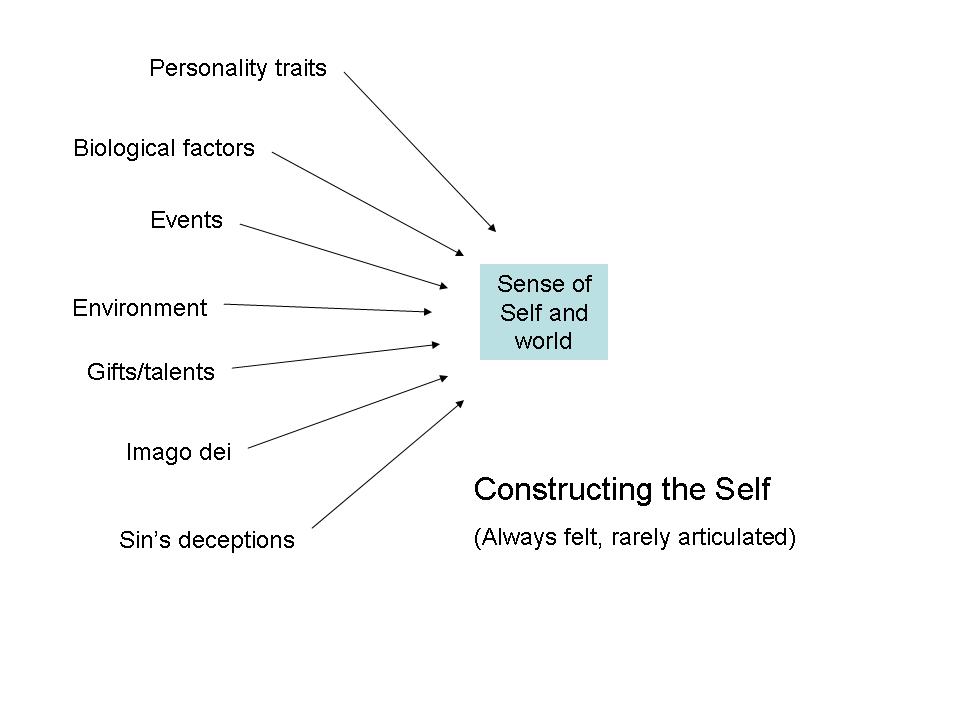
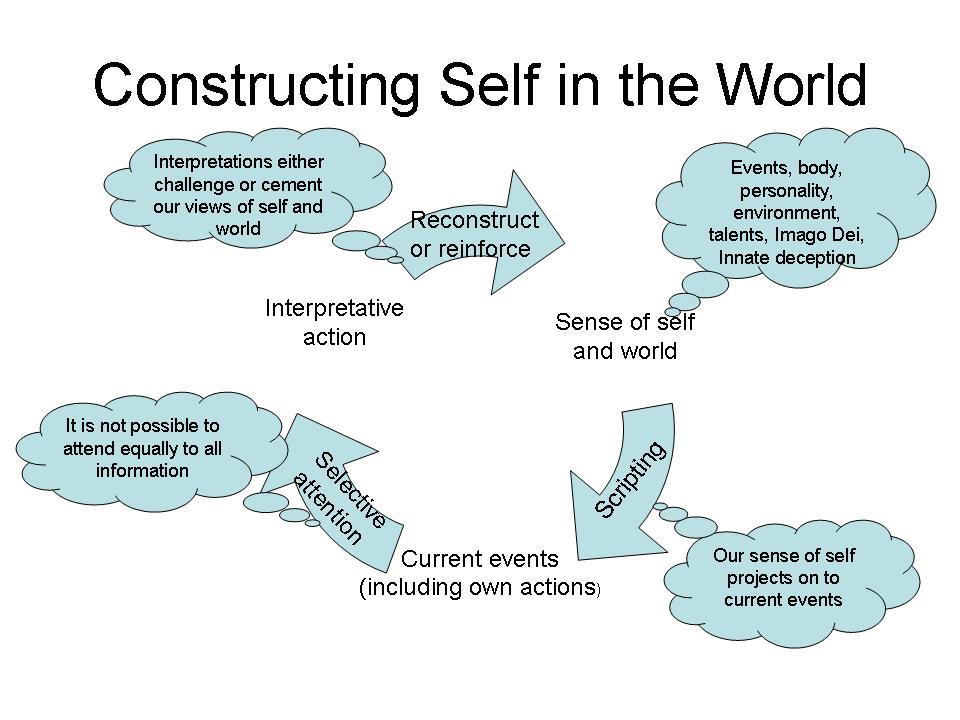
Tonight I’m talking to a large group of teens at Monmouth Chinese Christian Church in NJ on the topic of sexual identity. Unlike a good sermon, I have four points: Is sexual identity important? Does God have anything to say about it? How does it get formed and deformed? What can we do to protect our identity and desire.

Should be fun. I’m going to start them out with this question: What words, ideas, images, characteristics, etc. come to mind when you complete the sentence, “A man is…” or “A woman is…”

We all have images and words and ideas that pop into our heads. We have an image of a “manly” man and a “womanly” woman. I want the audience to think for a bit about where those images come from.

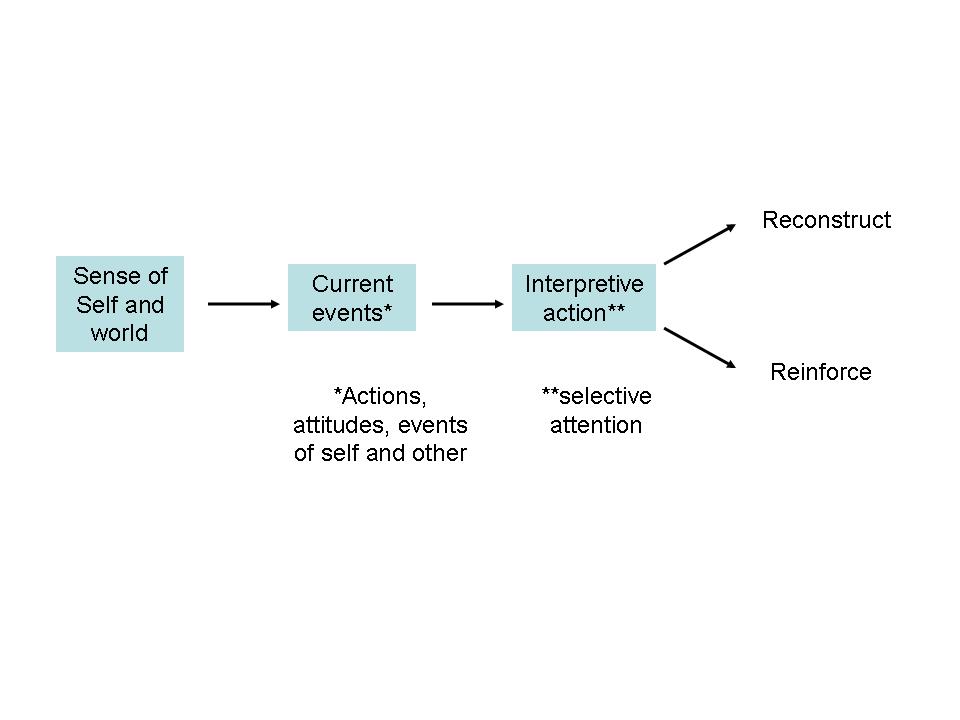
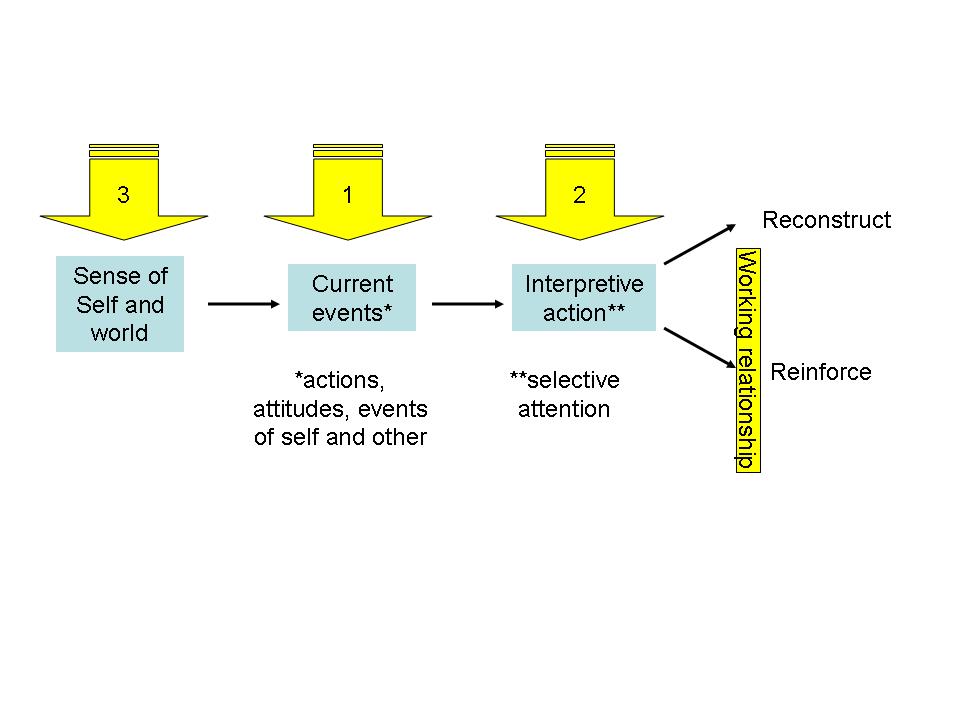
What images pop into your head? How do these effect your own evaluation of your manhood or womanhood? Where did that script come from?

19 Comments

Filed under Identity, sexual identity, sexuality

Finding the cause of America’s gas problem


Okay, I know yesterday’s post was frivolous but I want to share some funny lines from a brochure found at a gastrointestinal practice, America’s hidden gas problem.

The brochure is entitled: Gas.

Its point is to teach us the many causes. So, lets see what it has to say.

Gas may be caused by excessive swallowing of air…Air swallowing may be lessened by the following:

Meal times should be quiet, unrushed, and regular. Eat slowly and chew well. Listen to some relaxing music. Many families take advantage of being together at meal time to argue. Postpone tense discussions until well after meal time.

I’m sorry. I eat with 2 gradeschool boys. Meals are rarely relaxing. And yes, I wait with anticipation so I can get into an argument with them. Maybe we were wrong about waiting an hour after eating to swim. We should have been saying no to arguments to avoid gas. Now, here are some more tips:

Stop trying force up belches…This leads to a vicious cycle of belching and swallowing air.

Avoid sipping hot drinks. Carbonated beverages may also cause some gassiness.

Avoid chewing gum or sucking on hard candies…

Avoid ice cold drinks.

Avoid milk and milk products including milk, puddings, ice cream, cheeses, pizza, cheeseburgers, cakes, breads, pancakes.

Wheat, oats, barley, and rye make some people gassy.

Legumes…make just about everyone gassy.

Fruit sugar (fructose)…makes about 50% of people gassy!

Sorbitol…will cause gaseousness if used excessively.

Nervous tension may cause a worsening of gas. Anger, anxiety, and depression have all been incriminated. Some form of sedation or supportive therapy may be helpful in some people

Sedation? Really? Has anyone sought sedation for their gas problem? Maybe if I am sedated I won’t care if I’m farting alot.

Okay, so what CAN I have? The pamphlet suggests live cultured yogurt and hard cheeses are low in lactose (which causes many people discomfort) and rice. That’s it for suggestions.

I guess I’ll have a lukewarm glass of water and some rice please…and put on some muzak to calm my anxious heart.

4 Comments

Filed under Uncategorized

Not your grandparents’ country store catalog


Yesterday we received a catalog for a country store. I’m familiar with this country store catalog as it is well-known in New England. So, I flipped through it for old-times sake. Looks like they are selling the same things as when I was a kid. Muumuus of all kinds. Several pages, in fact. Then there is the udder balm creams farmers swear will solve your cracked hands problem. Comfy slippers, pickled veggies, old-timey candies, and those little plastic bonnets for your serving bowls when you want to place them in the frig.

Then I turned the page and WHOA…two pages entitled, “intimate solutions.” Creams to enhance pleasure, to lift the breast, and even things that need batteries.

I guess they’ve determined that their target audience (boomers interested in ordering things that remind them of their grandparents and life as a kid?) might also want to enhance intimacy and yet only have the delivery person see that they are ordering from a quaint country store.

Times, they are a changin.

5 Comments

Filed under Sex

Divorce & Remarriage I: Confusion!


What is the right biblical and pastoral answer for those with real questions concerning divorce and remarriage? David Instone-Brewer in Divorce and Remarriage in the Church (IVP, 2003/6) suggests that much of our current advice and interpretation of Scripture on these matters are not clear nor sensible (hence the need for his book 🙂 )

The trouble with most theologies of divorce is that they aren’t sensible. They may give a reasonable account of most of the texts, in a forced way, but their conclusions just aren’t practical… (p. 13)

Instone-Brewer says most interpretations today fall into 2 camps: (a) there are 2 valid reasons for divorce; remarriage is not allowed unless one person dies, and (b) no grounds for divorce or separation.

The first interpretation isn’t logical says the author. “Why would Jesus and Paul identify these two grounds for divorce but not allow divorce for physical abuse or other harmful situations?” (p. 14) The second option is more logical but no more practical.

Adding to the confusion are those who just decide the bible isn’t practical and so try to extend the texts on divorce to cover adultery, abuse, abandonment, etc. While these are more sensible, their textual support is “dubious.”

Instone-Brewer came to see the texts in new light after studying the text AND first century Judaism and so the remainder of the book will be his conclusions in 4 sections
1. God is a divorcee (OT material). ch 2-4
2. Jesus’ and Paul’s teaching on divorce and remarriage (ch 5-7)
3. How this teaching should work and a look at marriage vows (ch 8-10)
4. Church policy on divorce and what it should do now (ch 11-15)

But the author can’t bear to stop the chapter now so he launches into what he didn’t find in the Bible: the words, “Those whom God has joined, no man can separate.” What Jesus DID say is, “let no one separate.” Why the distinction here? Is Jesus saying it is not possible to separate? If God has joined, then no one can unjoin? Instone-Brewer says no. What it means is that no one SHOULD separate.

Second, who are these words to? The one who causes it? The one who starts the proceedings? You get the inkling that Instone-Brewer believes it is the one who causes vows to be broken. Why? Well, God divorces us but he is the victim.

…his warning is not to the person who finally tidies up the legal mess after the marriage has broken down but to those who would violate their marriage vows and, in so doing, cause the marriage to break up. (p. 18)

Of course people do break their vows all the time and so if they are repentant, I-B says we should forgive them. But if vows are repeatedly broken, then the marriage is, “in shreds.” (p. 19).

Again, I-B can’t wait to reveal his hand later and so concludes (a) the bible only allows victims to initiate divorce and Jesus’ problem with his hearers was that they had abandoned this idea for groundless divorce, and (b) the OT also allows divorce for abuse and neglect.

Well, what do you think? Should biblical intepretations be sensible (to us) and practical? I confess that I have never used sensible when considering whether my interpretation is good–at least knowingly. Seems much doesn’t make sense to me. But, it is an interesting way of thinking about these passages. If they are meant for us to use, they they should be practical, no?

I think he’s shortchanged us by limiting the typical camps on this topic. There are many who believe that there are a limited number of legitimate reasons and in those reasons, remarriage is possible.

For those really wanting to get into the topic, I would recommend two other writers: Jay Adams book on marriage, divorce, and remarriage. Also, check out John Piper’s lengthy document. He takes a very conservative (no remarriage) position–even more conservative than the official position of his elders.

Let’s see where I-B goes as he engages the OT next.   

Leave a comment

Filed under biblical counseling, Biblical Reflection, book reviews, christian counseling, Doctrine/Theology, marriage, Relationships

Mind the gap


When exiting the train in England, you might hear the conductor telling you to “mind the gap” between the train and the platform. Consider another gap…

One of our pastors preached on Sunday from Hebrews 6:13-20. In this passage the writer of Hebrews reminds us of God’s promises and that they are sure because God does not lie and that he swears an oath on himself that his promises will be fulfilled (are being fulfilled in Christ).

And yet, our pastor remarked that there is a gap between our present feelings and the objective reality of God’s finished work. We live in that gap until heaven or Christ’s return. Our hope while we live in the gap is anchored in Jesus.

How do you deal with the gap? Seems much of counseling work is figuring out how to live and function in the gap, what to place our hope in, working to remember what is true, and living well with others who also struggle with their “gap.”

What have you found helpful as you “mind the gap?” 

5 Comments

Filed under Biblical Reflection, christian counseling, Meditations

Practicum Monday: Is conflict necessary in therapy?


In the latest edition of the Journal of Counseling Psychology (55:2, 172-184), Nelson, Barnes, Evans, and Triggiano have published an article on the inevitable conflict between supervisor and supervisee–what leads to it, how supervisors react to it as well as supervisor strategies for managing it.

But, these lines about therapy caught my eye:

It is likely that conflict is as difficult to manage in supervision as it is in psychotherapy. Yet addressing conflicts successfully can be a healing and educational venture. The work of “tear and repair” in therapeutic relationships suggested by Safran (1993) and Safran and Murran (1996, 2000) is thought to be critical to optimal outcome in psychotherapy. The capacity of therapeutic relationships to recover from relationship breaches is thought to enhance client trust that relationships can survive misunderstandings and disagreements as well as client confidence that he or she can successfully resolve them. A skillful therapist can guide a client through the process of accepting the therapist’s inevitable fallibility, thus enhancing client capacity to accept his or her own… (172)

What do you think? Is conflict necessary for healing? I think yes. Otherwise, the client and the therapist idealize each other and so become blind to reality.

However, not all relationship breaches are good and we don’t always respond well to them, making matters worse.

How do you feel about conflict with your clients? With your counselor?

6 Comments

Filed under christian counseling, christian psychology, conflicts, counseling science, counseling skills, Psychology