Category Archives: Psychology

Does sympathy require action?


Can you experience true sympathy towards another but do nothing in response? When you watch people suffering the effects of famine, hear of genocide, see a homeless person begging for money, can you feel sympathy but not do something about the problem?

Consider these opening words of Octavius Winslow, 19th century preacher (in the US and London) in his The Sympathy of Christ with Man: Its Teaching and its Consolation New York: Robert Carter & Brothers, pp iii-iv.

Much that passes for sympathy, and is really so, as commonly understood, is deficient in this one essential element, and needs to be remodeled. There is poetry and there is beauty in real sympathy; but there is more- there is action. True sympathy may exist impotent to aid, we concede, and its silent expression may not, in some instances, be the less grateful and soothing; but the noblest and most powerful form of sympathy is not merely the responsive tear, the echoed sigh, the answering look- it is the embodiment of the sentiment in actual help.

In this book he takes up the action oriented sympathies of Christ. We have a high priest who sympathizes with our state AND acts to do something about it.

Does true sympathy lead to action?

I believe so. Now, I want to be clear that it does not always lead to removing the suffering. It does not always mean immediate and direct help. There are times where the help is indirect. Consider the Scriptures in that the Lord hears the cries of the Israelites enslaved in Egypt and rescues them…some 400 years later. We can’t say that his action was deficient.

Our sympathies may lead to,

  • speaking the truth in love
  • comfort
  • pursuing justice
  • educating others who can do something
  • praying
  • not rescuing someone too quickly from their own tragic choices
  • inviting another to get some help

So, if you feel sympathy and helpless about doing something of value. Think again. What action does the Lord enable you to do “at such a time as this”?

3 Comments

Filed under Christianity, Insight, Psychology, Uncategorized

The Mission of God to the Mentally Ill: What Role Does the Church Play?


The Mission of God to the Mentally Ill: What Role Does the Church Play?.


Check out my blog on Biblical Seminary’s new faculty blog. Addresses the most frequent search terms and comments on this blog.

2 Comments

Filed under biblical counseling, Biblical Seminary, christian counseling, christian psychology, Christianity, counseling, Psychology

Getting confirmation on global trauma recovery plans


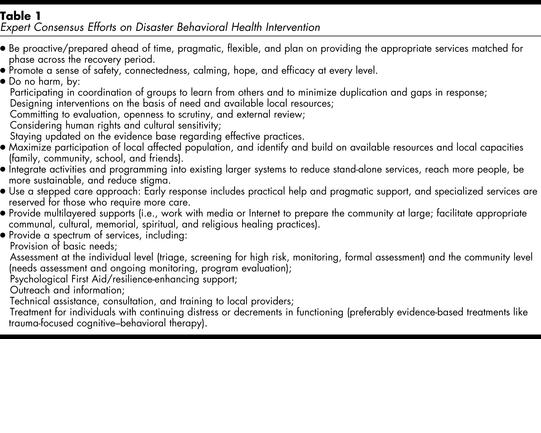
Since January I have been trying to articulate the best practices in doing trauma recovery or trauma healing work in international settings. The foundation of this approach to trauma recovery is, (a) Listen first to the needs, resources, and concerns of a community(b) identify local leaders who can be trained to be the primary trauma recovery workers (rather than outsiders being the primary clinicians), (c) tailoring interventions to the needs of  the community, and (c) above all…do no harm by over-promising, under-delivering, etc.

Today, I opened up my most recent American Psychologist (66:6, September 2011) and found my thinking confirmed in Watson, Brymer, and Bonanno’s Postdisaster Psychological Intervention since 9/11 (see citation at the bottom of the page). On page 485 they list what experts consider an appropriate steps to take in postdisaster behavioral health interventions. Now, most of you don’t probably get excited about research articles like this but I can tell you I did. Here’s the chart (click to see a larger image)

It is nice to find confirmation for something I was thinking but hadn’t read elsewhere.

From: Watson, P. J., Brymer, M. J., & Bonanno, G. A. (2011). Postdisaster psychological intervention since 9/11. American Psychologist, 66(6), 482-494. doi:10.1037/a0024806

1 Comment

Filed under Abuse, counseling science, Post-Traumatic Stress Disorder, Psychology, trauma, Uncategorized

When someone you love suffers from PTSD?


Has anyone read this book? The full title is: When Someone You Love Suffers from Posttraumatic Stress: What to Expect and What you Can Do  (By Claudia Zayfert and Jason DeViva (Guilford Press).

If so, any thoughts on it? I do not yet have it in my possession. One of the areas I found wanting re: PTSD is a good book for spouses of survivors of sexual abuse. There was a book that I would use but is no longer in print. Some do read “Stop Walking on Eggshells”, a book about living with Borderline Personality Disorder. While there are relational behaviors commonly seen in people with either complex PTSD or BPD, the two problems are different and sadly, those with complex trauma reactions get stigmatized with the BPD label.

So, if anyone has seen this and wants to lend their comments, I would welcome them here.

4 Comments

Filed under Abuse, Post-Traumatic Stress Disorder, Psychology, ptsd, Uncategorized

Narrative therapy and emotion 1


This month, Richard Smith and I are teaching an on-line class entitled, Christian Counseling in Postmodern Culture. Dr. Smith is managing the culture side of things in this class and has students thinking about the impact of consumerism, the “empty” self of the modern era, and “infantilist ethos” (from Barber’s 2008 Consumed)

This week Dr. Smith gave the class this quote:

At heart postmodernity [is] the same anthropology: both see humans as primarily units of consumption for whom choice is the defining characteristic… The difference between modernity and postmodernity is not that great looked at in this way: The cult of the autonomous ego, an endlessly acquisitive conqueror and pioneer devolved into a commodious individualism characterized by an unencumbered enjoyment of consumption goods and commodities.  (Brian Walsh and Sylvia Keesmaat).

A mouthful? Boil it down to this…postmodernist philosophy is very much concerned about the self. Not all that new. Now, postmodernism is much more than that and NOT all bad. But my point here is this: a counselor working in this culture must be able to connect with the client and help them construct/reconstruct their story rather than just give them lists of universal truisms to apprehend. Not that there isn’t universal truth but that the approach to them must  done in a dialogical and storying manner.

Enter narrative therapy.

Thus, I intend to blog a bit on this topic during the rest of August by summarizing and commenting on Working with Narrative in Emotion-Focused Therapy: Changing Stories, Healing Lives, by Lynne E Angus and Leslie S. Greenberg (APA, 2011).

Chapter one begins with this statement:

Being human involves creating meaning and using language to shape personal experiences into stories, or narratives. (p 3)

Do you agree? I would argue there is much truth in this. We shape our sense of self from our retelling of our experiences (both in words and in unspoken thoughts/emotions). But, we do not re-tell all of our experiences. Rather, we collect some and ignore others. Part of counseling is to dialog with the clients about how they shape their own narrative.

The authors then make this statement about the work of counseling,

As therapists, it is when we listen carefully to our clients’ most important stories that we gain access to how people are attempting to make sense of themselves in the context of their social worlds. In this way, psychotherapy is a specialized discursive activity designed to help clients shape a desired future and reconstruct a more compassionate and sustaining narrative account of the past. (p. 3-4)

Here they are telling us that our stories we tell are shaped by our emotions and at the same time make sense of our emotions.

What is EFT? It is a therapy that sees emotions as “centrally important in the experience of the self.” (p. 6). It was developed (principally by Les Greenberg) out of humanistic and Rogerian ideas of self-actualization and of counselor activities of being with, following the client and guiding. Throw in some F. Perl’s empty chair techniques as well. EFT focuses on emotions. Adaptive emotions are “the most fundamental, direct, initial, and rapid reactions to a situation…” (p. 7). Maladaptive emotions “…usually involve overlearned responses based on previous, often traumatic, experiences.” By this they mean emotions such as shame and abandonment sadness. They define secondary emotions as those reactions that are intended to protect the primary or most vulnerable emotions. Finally, they define instrumental emotions as those expressed for a motivation to achieve an aim.

Why the focus on emotion? Because they seek the goal of being emotionally congruent and adaptive. In this book, they focus on empathic attunement and changing client narratives.

How? Clients identify, experience, explore, story, make sense of, and flexibly manage their emotions (their words). Therapists notice “meaning markers” that reveal client confusion or conflict with the self.

This book will explore the narrative approach to EFT. “Critical life events must be described, reexperiences emotionally, and restoried before the trauma or damaged relationship can heal. New meanings must emerge that coherently account for the circumstances of what happened and how the narrator experienced it…” (p. 11)

Finally, they say,

…no form of psychotherapy is likely to have a big impact on basic temperament traits, but a client’s specific strategies, adaptations, and their internalized life narratives (i.e., macronarratives) have as much impact on behavior as do dispositional traits. (p. 13)

That is an interesting quote and puts the act of storying as more important than disposition.

So, what we will look at in the remaining 7 chapters is how the authors help facilitate new meanings and change their own narrative. The question for us is whether or not the narrative or re-storying approach to therapy is (a) effective in remediating problems, and (b) fits with Christian faith.

3 Comments

Filed under christian counseling, counseling, counseling science, counseling skills, Psychology, Uncategorized

Safe churches for sufferers of PTSD?


A friend recently asked me about the characteristics of the kind of church someone with PTSD should seek out in looking for a safe place to heal. I’d like to ask that of my readers. What special characteristics might someone look for as a good church family when they suffer from hidden damage? If YOU were looking for a church and wanted to find a safe, compassionate, sensitive church, what would you look for? What characteristics would tell you that the church was what you wanted?

Preaching and teaching? Interpersonal characteristics? Resources? Characteristics of leadership?

36 Comments

Filed under Abuse, pastors and pastoring, Post-Traumatic Stress Disorder, Psychology

Heal thyself? Do we have the capacity?


Those who follow the Christian faith wholeheartedly believe that God is the “great physician” and eschew the belief that humans heal themselves. As a result of this belief, Christians sometimes react rather strongly to humanistic language of “self-healing.”

But before you do, consider this: if we assume that God is indeed the creator of all things, then we must also assume he puts into place the many corrective features found in the body. The liver and kidneys remove toxins from the body; blood clots when we cut ourselves; we sneeze to get rid of irritants; we sleep to rejuvenate what has become run down. In better words, Richard Mollica says,

This force, called self-healing, is one of the human organism’s natural responses to psychological illness and injury. The elaborate process of self-repair is clearly seen in the way physical wounds heal. At the moment of injury, blood vessels contract to staunch bleeding. Chemical messengers pour into the tissue, signalling a multitude of specialized cells to begin the inflammation process. White blood cells migrate into the wound within twenty-four hours, killing bacteria and triggering a process of cleansing and tissue repair. A matrix of connective tissue collagen is then laid down, knitting together the ragged edges of the wound in a repair that may not be perfect but is highly functional. (p. 94)

He goes on to say,

The healing of the emotional wounds inflicted on mind and spirit by severe violence is also a natural process.

I find his writing on this subject rather helpful. Sometimes we look passively to God to resolve our traumas, as if it were entirely up to Him. Other times we either resist what we can do or attempt what is not healthy for us. Dr. Mollica (an MD) provides many examples in his book of how the body naturally tries to heal/respond to trauma (e.g., DHEA counteracts toxicity of too much cortisol), where the system goes wrong, and what we can do about it from a therapeutic standpoint.

Dr. Mollica is right in that our bodies are designed to respond well to traumatic experiences. However, I’m pretty sure he also agrees that we are not designed to do this unassisted. The community must participate in the process. We are social beings and thus our healing must be socially situated.

Two Toxins: Emotional Memory and Poor Storytelling

Part of the problem, says Dr. Mollica, is the emotional memory system. When we experience a trauma, our cortex forms declarative memories of the event. These are where we store the “facts” (where we were, what we felt, and how these events connect to previous experiences). But there is another memory system, one he calls “emotional memory” (p. 96). Declarative memory involves the cortex and hippocampus while emotional memory involves the amygdala.

The amygdala is the fear-response command center of the brain, and it does not wait around for the conscious mind, located in the cortex, to decide if a threat is real or not. The amygdala can activate an emergency response throughout the body within milliseconds by calling the stress-response system into play.  (p. 96)

Unfortunately, traumatic events can create emotional memories in the amygdala that keep on replaying and are difficult to extinguish over time. (p. 97)

Another toxin is the re-telling of the trauma story in a way that retraumatizes the victim. Dr. Mollica, in chapter 5, describes the problem of poor storytelling. Poor storytelling evokes only the trauma, the shame, the degradation experienced. Storytelling should cause us to form images in the teller and listener’s minds. These images need to symbolize the whole person/story and not only the most damaging details. The problem is we tend to tell stories that fixate on the intense emotions and thus elicit toxic emotions and maintain the experience that the trauma is still ongoing.

Many traumatized persons are plagued by the two poles of humiliation–sadness and despair on one side, and anger and revenge on the other. (p. 122)

Assisted Self-healing?

Mollica says, “A proper clinical approach to emotional memory avoids triggering the emotions stored in the amygdala and enables the cortex to assert conscious control over the recollection of traumatic events. (p. 97)

How do you do this? With the help of a storytelling coach, a person tells their story in a factual, direct, but not grotesque way that would cause the listener to turn away. Why does this matter? Because part of the healing process is to be heard, seen, and empathized with. Fixating on the most grotesque details only enhances the emotional memory system and pushes others away. Good storytelling still tells the truth but does so in a way that reconnects people with the world, enables them to feel sadness but in community with others, and helps them see that their lives are not solely defined by the traumatic events. Further, good storytelling points to larger values that are still held and not lost due to the evil done by others. Surely trauma does shape and change us. Recovery and healing to the point of living as if the event did not happen would be to live in a world of denial and self-deception. But good storytelling reminds us that we are not ONLY defined by and/or limited to being victims. And good storytelling reminds us of God’s sustaining power that is greater than those who can only destroy bodies.

Dr. Mollica summarizes this chapter this way,

Strong emotions comprise the traumatic memories that are imprinted in the survivor’s brain. One of the mind’s key tasks after trauma is to take these strong emotions and gradually reduce them over time through good storytelling. A poor storyteller tells a toxic trauma story, unhealthy to mind and body with its focus on facts and high expressed emotions. In our society situations that demonstrate this type of storytelling are common, including superficial, sensational media reporting of tragedies and debriefing therapy by misguided mental health workers. In contrast a good storyteller is able to express tragic emotions with the artfulness of a musician playing an instrument, engaging the listener’s interest and involvement. (p. 133)

I commend to you the book. He discusses both good and bad dreams, the role of “social instruments” of healing and a call to health. Very helpful book if you are interested in international trauma recovery.

7 Comments

Filed under Abuse, counseling science, counseling skills, Post-Traumatic Stress Disorder, Psychology, ptsd, Uncategorized

The real damage done in abuse?


I’ve written before on the damage done when a community fails to respond to abuse in a justice oriented way. But here is a more succinct and apt quote by Miroslav Volf:

If no one remembers a misdeed or names it publically, it remains invisible. To the observer, its victim is not a victim and its perpetrator is not a perpetrator; both are misperceived because the suffering of the one and the violence of the other go unseen. A double injustice occurs—the first when the original deed is done and the second when it disappears. (italics mine)

Abuse victims sometimes tell us that the most significant damage to them is when community members (family, leaders, peers) fail to “see” or act justly when they hear of the abuse. It was bad enough to be sexually abused (yes, that is real damage too) but far worse to be told it didn’t happen or be told to take it for the sake of the larger community (e.g., you wouldn’t want to harm his reputation, destroy the family, cause others to fall away from Christ, etc.).

I saw this quote in the first pages of The Long Journey Home: Understanding and Ministering to the Sexually Abused, to be released soon by Resource Publications, an imprint of Wipf & Stock. I have the typeset PDF and the editor, Andrew Schmutzer, says the book will be released in August. This book (over 500 pages!) may become the place to turn for Christians seeking to understand the scourge of sexual abuse in all its ugly forms. Chapters are written by those who are expert in the social sciences, theology, and pastoral care. The line up is phenomenal. You can see the title page/table of contents (TOC Long Journey Home) to see the gamut of chapters and authors.

2 Comments

Filed under Abuse, christian counseling, christian psychology, Christianity, Christianity: Leaders and Leadership, counseling, counseling science, pastors and pastoring, Psychology, ptsd, Uncategorized

U.S. Children Misdiagnosed with Bipolar Disorder – Newsweek


U.S. Children Misdiagnosed with Bipolar Disorder – Newsweek

The above link is to an article I just read regarding the overdiagnosis of bipolar disorder in children. Written by a Dr. Kaplan (child psychiatrist), he notes that many children with ADHD or ODD have been diagnosed with bi-polar disorder due to temper tantrums, grandiosity, impulsivity, racing thoughts, elevated silliness, etc. These symptoms are really happening but Dr. Kaplan does not believe they are associated with bipolar disease (and thus not appropriate to be treated with medications like Lithium, Wellbutrin, or Depakote). Dr. Kaplan goes on to say that he thinks  there isn’t any scientific evidence of bipolar beginning in childhood.

Not sure I would agree with him about this but I do agree that bipolar is an easy target when a child has frequent outbursts and is difficult to rein in. He and others are right to point out that irritability is not a good indicator of bipolar disease. Nor is emotional lability a good indicator. Many ADHD kids end up with a bipolar diagnosis when they should not have it.

What should the overdiagnosis tell us? It is not really about “big pharma” trying to drug our kids. It is not about psychiatrists just wanting to push pills. It is about overwhelmed parents and teachers who do not know what to do with the overwhelming emotional/behavioral rollercoaster some children exhibit. They (parents and kids) need help and our understanding of these issues (lability, irritability, grandiosity, tantrums, etc.) and how to best help these children are poor.

Rather than beat up on the system, let us figure out better methods to parent and counsel these types of children.


5 Comments

Filed under anger, counseling, counseling science, counseling skills, Psychology

“I tried that…it didn’t work”: Responding to failures in counseling


One of the things a counselor does in meeting a new client is to ask, “tell me what you have tried thus far to solve this problem.” We ask this question because we know we are not the first stop for most folks trying to solve a problem. Whether it is a parent seeking a way to manage a child’s misbehavior, a couple seeking help in changing the way they talk to each other, or an individual trying to address an ongoing anxiety problem, most people have tried and not found adequate success–which is why they come to see us.

But, let me tell you what goes through my head when I suggest a couple of options/approaches my client might try and they respond with, “I tried it…it doesn’t work.” My internal, private response?

Define try. Define work.

Now that probably sounds negative but I don’t mean it that way at all. What I mean to communicate is that I do not yet know what this person tried, for how long, and what result, if any, was achieved. What I do know is that my work is cut out for me because the client statement usually conveys a closedness to trying that particular intervention (or similar ones) again. My job is to ask questions to understand each word: try and work.

Tried it.

There are a couple of commons ways people try solutions to problems. They may try something without proper consultation. They may try something in an intermittent manner. Let me give you some examples. Parents may try a reinforcement strategy with a child but fail to find a powerful enough reinforcer to make the system work. Or, a couple may try a speaker/listener technique but revert in the middle back to a debate/invalidating mode. A couple may need to take a “time out” or break to avoid a conflict escalation but the one asking for a break may do so using it as a power move (“I’m outta here!) rather than a de-escalation attempt.

Didn’t work.

A good technique may or may not work, depending on any number of reasons. Some interventions really won’t work for a particular person or setting. However, it is important to recognize that some interventions fail to work for reasons already mentioned above and others may fail to “work” because of client expectations. For example, a parent may try a particular intervention with their child to reduce angry outbursts. Then, the parent returns to counseling the next week and tells the counselor the intervention didn’t work. Upon deeper investigation the parent does admit that the number of outbursts reduced, the duration of the outbursts shortened. Why did they feel that the intervention didn’t work? Well, last night they have a horrible blowout and very small irritating interactions each day. So, the intervention may have worked even though the parent is feeling very worn out and discouraged. Or, in the couple illustration, listening technique may enable the couple to fight less but one spouse feels that the other has a history of being self-centered and thus cannot trust the reasons they are now trying to do a better job. So, they interpret short-term success as not real or legitimate.

Setting the stage for homework

Counselors often give homework. For homework interventions to work, a counselor should: (a) make a very clear explanation of what should be done, when, and how often, (b) what results, if any, to note, (c) the short and long-term purpose of this intervention, and (d) follow up next week to see how the  client fared and what alterations might need to be made in the following week.

Counselors do well not to oversell the value of the intervention, admit that not all interventions work and that troubleshooting is an essential part of counseling, write down their homework requests for clients, and make sure that the homework given fits the client’s level of commitment to the process.

Leave a comment

Filed under christian psychology, counseling, counseling science, counseling skills, Psychology, Uncategorized