Category Archives: Christianity

Why “sexy wife” language hurts so many women


Maybe you’ve seen this post: http://deeperstory.com/the-sexy-wife-i-cant-be/? If not, you should read it to learn just how painful and destructive and superficial the “be a sexy wife for your husband” is, especially when combined as “biblical teaching.” Now, the feeling of being sexy isn’t the problem. What is the problem is the failure of speakers/writers to account for the large number of women (and men!) whose sexuality was stolen from them via abuse and other forms of oppression. In addition, these “be sexy” speakers/writers seem to ignore how Scriptures have been distorted to demand sex from spouses (someday I should write a post about the number of times I have been asked during public Q and As about 1 Cor 7 and the demand it makes on women to please their husbands).

Can you imagine giving a talk about the joys of giving birth to an audience where 1:3 women were infertile? Can you imagine NOT acknowledging that a large portion of the audience might struggle with the topic?

For those of you who did read the above talk, the author Mary DeMuth, posted this follow-up post regarding the weight of the stories she heard in the comments section of her first post. Note how she finds hope and comfort among darkness and heaviness. For brave ones, you might read the comments at the bottom of both posts. Note the relief expressed that someone else understands. Note the common refrain, “I didn’t breathe while reading this.” That should tell us how desperate many are for being understood and that most are expecting the other shoe (that “just do it” one) to drop. Note the links to other posts already on this topic.

We need better pictures of sexuality in marriage that recognize pleasure as something that can be had but not at the expense of reality of safety, vulnerability, and comfort. Sexual pleasure is good but it is not the highest end. And decreased quality of pleasure is not a temptation or risk for adultery…unless pleasure has become a god to us.

4 Comments

Filed under Abuse, Christianity, church and culture, Sex, sexuality, trauma

Better objectives than reconciliation?


When you experience a broken relationship, do you long for the day when what is broken is made new? I do, even when I know that the chances of restoration and reconciliation are slight.

However, I’ve written a post over at our faculty blog suggesting that as good a goal as reconciliation is, it makes for a poor objective for us. Wonder why I think little of reconciliation as an objective? Click the link to find out and to consider some alternate objectives.

Leave a comment

Filed under Abuse, biblical counseling, Biblical Reflection, christian counseling, Christianity, conflicts, Relationships

A Danger in Christian Counseling Theory?


The faculty blog at Biblical Seminary (where I teach) has published an edited version of an older post here on this site. If you like cheeky titles, try this on for size:

Christian Counseling Theory and the Bible: A Dangerous Mix?

Leave a comment

Filed under biblical counseling, christian counseling, christian psychology, Christianity, counseling, Psychology

New Resource for Men with Porn Addiction


A friend of mine, David White, published a book late last year with New Growth Press entitled, Sexual Sanity For Men: Re-creating Your Mind in a Crazy Culture. I commend you this book for several reasons.

  1. The topic is absolutely important. David doesn’t offer a white knuckle approach to dealing with sexual temptations. Nor does he gloss over the difficulties and give the simplistic bible answer as to why porn use is bad for you or that Jesus is a substitute for porn (see week 11, day 2 for how why he rightly says, “Jesus is not going to become like porn for you” and why many addicts imagine that he will.)
  2. The book design is perfect. By saying this I am not talking about its physical attributes. Ever read a book that has decent sized chapters and then a few questions at the end? If you are like me you might glance at those “for further thought” questions and then move on to the next chapter. The result is that you get lots of content quickly but make little to no application. David’s book is written in the format of daily readings (5 per week) for 14 weeks. Each reading is about 2-3 pages with specific reflection  and self-assessment questions with space to write. I suggest a reader complete on own but then meet up with a group of guys and discuss (hold accountable) what your read/wrote.
  3. The focus. The material and questions spend what may feel like an inordinate amount of time on discovering how deceived we are. You could feel like he is beating a dead horse. But I would suggest that David is intentionally helping readers peel back layer and layer of deceptions that allow sin to continue. How else could believers imbibe sin if they weren’t first deadening with deception? For example, he asks the reader to note where they wear the “fig leaf of ministry” as a way to mollify guilt.

I would encourage readers to add one question to each day/week: “What is one thing I am going to endeavor to do today, with God’s help, in light of what I just read?” If we only stay with the assessment, we can become defeated and discouraged by the amount of mess we find. But, God gives us a way of escape. Where is it today? Don’t promise yourself the world. You’ll break that promise. Endeavor to make one small, incremental change today. Tomorrow, you’ll do it again. And, don’t try to do it alone.

You can find David at www.harvestusa.org.

*received complimentary book from NGP but review is my own and not the result of free books. I get plenty others that never make my recommended list.

Leave a comment

Filed under book reviews, Christianity, pornography, Sex, sexual addiction

Diane Langberg on Lessons for Counselors


Back in November, Diane Langberg presented 10 things that counseling students might not normally hear about during their academic training. Click here for the video.

Leave a comment

Filed under Biblical Seminary, christian counseling, christian psychology, Christianity, Psychology, teaching counseling

When all you see is brokenness…what then? A thought from Jeremiah 29


As a counselor and a Christian it is easy to see that the world is breaking. Suicides. Shootings. Affairs. Cancer. Addiction. Corporate Greed. Abuse. In addition, we hear about

  • Christian leaders who either perpetrate abuse or fail to protect when they hear of it
  • rampant immorality
  • political corruption

When we face these kinds of things, it is easy to fall into one of two unhelpful patterns. For some of us, we fight. We try harder. We attack others with sarcasm. We lay blame at the feet of others. While fighting harder to correct injustice is a good thing; while pointing out blame where it should lie is not a bad thing, the pattern of fighting may reveal a dangerous value system: if I can control my little corner of the world, things will get better. Sometimes this is true but most of the time, the “getting better” motif is an illusion. The wrong kind of fighting usually leads to embitterment.

Others of us choose a pattern of giving up.We stop trying to make a difference because it won’t. We turn down the volume on suffering. We avoid others who are obviously suffering. We move towards embittered discontentment. Now, it is not wrong to turn off the 24/7 “news” and to not read up on every tragedy. It is good not to fill our brains only with brokenness. But, giving up can sometimes lead to lamenting that the “good ole days” were better.

Enter the Prophet Jeremiah

In chapter 29, he writes to those who are experiencing brokenness. Israel is no more. A mass of Jews have been carried off into captivity. They live in a land that is not theirs as foreigners and likely without rights, privilege or land. They have lost connection with the promised land, with family, with language, with custom. Around them would be idol worshippers and a society not built on the Torah. There are some individuals who have been prophesying that in 3 years they will return home to Israel in triumph.

Jeremiah says, “Not so fast. No, you guys will die in captivity.” Well, no, he doesn’t exactly say that. He says it will be 70 years and then you (meaning your children and/or grandchildren) will get to return to the Land.

Nice. Jeremiah responds to their suffering and says, “Yup, it’s bad. And it is going to stay that way.”

But read on because he tells them God has a message for them to hear: (in Phil’s loose translation)

Obey me [the Lord, not Jeremiah]. Because I love you dearly, I will protect your soul. I will be blessing you even though there are dire consequences happening to you. Here’s what I want you to do:

  1. Look for the blessings I am sending you NOW. Don’t overlook them. They are really there for you to find.
  2. Live holy lives, not out of fear, but in confidence that I am keeping my promises to raise of a kingdom for my people.
  3. Live. Don’t put your life on hold. Build houses. Plant gardens. Harvest. Marry. Have kids. Help your kids get married. Enjoy your grandchildren. Be present and rooted where you are at. Live. Enjoy it.

Notice that to live, you have to move, act, have impact, even as you are accepting that you cannot avoid the consequences of living in a fallen world. I think this can be helpful for us in a season of much brokenness. Without denying the suffering that is everywhere, we can also choose to notice the little and the big blessings. We can simplify our lives to, “What do you want me to do today?” We can be mindful of the small activities of life. The grocery store is drudgery. Laundry is never-ending. And yet, we have the opportunity to act in our world and to pray for the peace of the city (as Jeremiah gives encouragement to do).

Maybe your joy is pretty tiny these days. That is okay. Just find it and savor it as a gift from God for the few minutes you have. Not all is broken. In a few days, hours, years, God will indeed put all to rights. Every heartache will become untrue. Still, even now, hang on to the signs of life and growth.

5 Comments

Filed under Biblical Reflection, Christianity, Depression, Despair, Meditations, suffering

Abuse in the Church DVD now available


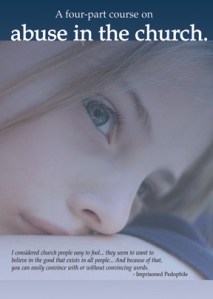
This summer I taught a class, along with Boz Tchividjian, about the problem and response of abuse within the church. Our four main plenaries were filmed and are now available on a 2 DVD set distributed by Vision Video. You can purchase the DVDs here at 20% off the price that will be listed on Amazon (and if you use the above link Biblical Seminary makes a few more pennies!). We Abuse in the Churchcover topics such as

  • how to recognize common characteristics of predators
  • prevention strategies beyond background checks
  • why we fail to act on abuse allegations and what to do about it
  • ministry responses to victims and offenders

The class was well-received by students and church leaders alike. It could be a great tool to get conversations going among lay and ordained church leaders as well as counselors who may be helping a church ensure top-notch abuse prevention measures as well as strategies for responding in a Godly way to abuse allegations–a way that ensures that the least of these are protected in the church.

Leave a comment

Filed under Abuse, biblical counseling, christian counseling, Christianity, Christianity: Leaders and Leadership, pastors and pastoring, trauma

Trauma and Trafficking DVDs on Amazon


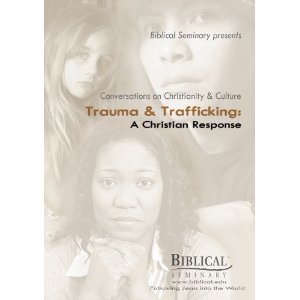
Nearly 2 years ago (March 2011), Biblical Seminary put on a conference about the problem of sexual trauma and trafficking. Our speakers included Dr. Diane Langberg (a noted psychologist), Bethany Hoang (IJM), Robert Morrison (a grassroots organizer), and Pearl Kim (now ADA for 2 Philadelphia counties). The sessions covered domestic and international sex trTrauma and Traffickingafficking, abuse and violence against women worldwide, the problem of sexual abuse in christian organizations, and how to mobilize community action without expending energy on non-profit status.

It was a powerful conference…and you can own it for a mere $19.99. Here’s the link to Amazon. Or, you can find it here at Vision Video (along with MP4 options as well) for 20% off.

This DVD set (3 DVDs) are an excellent starting point if you or your church group want to think more deeply about the biblical call to justice in the area of trafficking, trauma, and violence against women, whether “out there” or in the church.

Look for information on purchasing our most recent DVD series, Abuse in the Church, in the next week.


Leave a comment

Filed under Abuse, biblical counseling, Biblical Reflection, christian counseling, Christianity, Christianity: Leaders and Leadership, Diane Langberg, Post-Traumatic Stress Disorder, trauma

Diane Langberg on Listening to Trauma


Here’s video of Dr. Diane Langberg musing about what she has learned from listening to trauma over the years. (link here) She made this presentation as a part of a larger evening of trauma counseling training at Biblical Seminary, November 12, 2012.

Enjoy. More to come soon.

Leave a comment

Filed under Abuse, christian counseling, Christianity, counseling, counseling science, counseling skills, Psychology

Hope when it won’t get better?


Last night we ended our counseling & physiology class. All semester we have been looking at counseling through the lens of the body and its problems. All counseling problems are physiological since all counselees come with a body. But of course, some problems have more complex etiology and require counselors to understand how the body is part of the problem and solution. This semester we looked at a wide variety of problems: trauma, anxiety, addiction, sexual problems, bipolar disorder, autism, multiple sclerosis, traumatic brain injury, and much more. In addition, we explored how insomnia is the “mental illness multiplier” and some basic self-care and mindfulness provides much relief across all problems. And yet, we barely scratched the surface of the physical stuff we’d like to know.

But last night, we considered the problem of chronic illness, illnesses like chronic fatigue, fibromyalgia, and irritable bowel syndrome. Here’s the question I posed. What gives us hope when we no longer seek the removal or end of an illness? Most people come to counseling because they want to make their marriages better, end depression, find a new career, etc. But would you go knowing that all you can do is find marginal improvement and new ways to accept a chronic condition?

We discussed the unique problem of receiving endless advice (“Have you tried this? Have you considered that?”), the tendency to resist new ideas even while hoping a miracle will come along, and the fear that others will believe that your chronic condition is, “all in your head.”

Back to the question we asked, “What gives you hope when you don’t hope it will get better?”

Some answered that they found hope in finding other similar sufferers (though some danger in connecting with someone who only wants to vent). Others found hope in those who would be willing to listen and validate and help articulate lament. Still others found hope in those who would help them find just one more thing they can do to cope.

What would you find helpful and hope building?

4 Comments

Filed under christian counseling, christian psychology, Christianity, counseling, counseling skills