Category Archives: Christianity: Leaders and Leadership

System justification: motivated avoidance of vulnerability


System justification: the tendency to defend an organization or institution in the face of negative public opinion or distressing facts.

Have you ever noticed that when some person, institution, value, or position you love and cherish is being attacked, you come to its defense? Think back to your childhood. You may have mistreated a sibling but if someone else was a bully, you did not stand idly by. You may have criticisms of your church or country, but if an outsider attacks it, you feel a level of outrage. When you finally do come to see the criticisms of outsiders as valid, it is also common for us to leave our once cherished system and become an enemy. Consider how former catholics converting to evangelical christianity may often be more critical of their former church than those who never followed the tradition.

This is a common, understandable, but potentially unhelpful response. It seems that it is difficult to stay inside a system and yet be vocal about its value AND weaknesses. Either we stay and defend or leave and attack.

Some Evidence

Steven Shepherd and Aaron Kay say,

Being actively critical of something one is dependent on is thought to be psychologically uncomfortable, and therefore avoided in favor of increased perceptions of legitimacy, trust, and desirability. System justification theory posits that people are motivated to justify and legitimize the status quo and the system in which one lives. (Journal of Personality & Social Psychology, 102(2), 2012, 264-280)

They go on to say that feeling dependent on a system leads to increased trust in that system which leads to active avoidance of evidence critical of that system. In other words, we like to be comfortable and loss of an important system increases our sense of vulnerability.

This “motivated avoidance” of information that might undermine our sense of safety shows up in domestic violence  research. In the most recent journal of  Psychological Trauma (5(3), 2013, 241-250), Ryan Matlow and Anne DePrince point out the differences between women who experience chronic violence at the hands of one partner versus domestic violence from the hands of multiple partners. Those who stay with a violent partner appear to use active avoidance strategies to ignore the violence but focus only on the good qualities. The assumption is that the attachment bond is more important to protect than to admit that their partner is abusive.

One more piece of anecdotal evidence: many spouses of adulterous partners either leave immediately or stay and defend against the evil other person who “attacked” the family. It is rare (but I have seen it) to stay with someone who you think is the main or sole cause of adultery.

We stay and defend instead of stay and reform. Or, we leave and attack. Staying and criticizing for reform is difficult and potentially dangerous.

Is there another way?

Imagine that one of the authors of the newly revised DSM 5 were to acknowledge that several of the significant changes were based merely on political or philosophical forces and not at all on empirical data. Imagine that a Republican or Democrat in Congress would agree that their party cared more about winning than finding true compromises. Imagine that a member of the PCA (my denomination) admitted that electing but not ordaining deaconesses for service in the church was hiding behind semantics.

What enables us to have the courage to stay and critique our favorite systems (assuming that there is something worth saving!)? I suspect the following must be present:

  • A love for truth above winning arguments (which will influence how we criticize others!)
  • A love for both those outside the system and those inside who need to change
  • Honest admission of previous or current support of problem systems
  • Courage in the face of criticism from others who dislike our truth-telling
  • Vision for reform (it is too easy to destroy, much harder to construct)
  • A willingness to give up what provides comfort, choosing future honor over insider status
  • Acceptance that one outcome may be your being kicked out of your beloved system

Of course, the power to avoid avoidance of vulnerability comes not from intellectual prowess but from no other place than the Holy Spirit. Why else would we trade current comfort now?

Leave a comment

Filed under Christianity, Christianity: Leaders and Leadership, church and culture, Relationships

Public responses to allegations of wrongdoing by your friends


You’ve seen the little clip: a person does something wrong and the camera crew films a neighbor–or family member–making a comment about the character of the person.

“He was a quiet boy, never caused any trouble.”

So, let’s say one of your good friends was accused of abuse of children. How would you respond to reporters (or bloggers asking for you to weigh in)? Should you speak? Stay silent? Would it matter if the friend was a regular Joe or a famous leader of a church? Would it matter if you were famous or in leadership? Would it matter if you both served on an important ministry together? Should you wait until the court case has finished or speak your mind about what you know even if the case is not completed?

This is the question that has been raging a bit regarding the ongoing complaints of clerical and child abuse (and now a civil lawsuit) against Sovereign Grace Ministries leaders. After many calls for colleagues of SGM leadership to speak out against child abuse as they had against Penn State, two different sets of public letters were published commenting on the cases.

You be the judge: would it have been better to publish this and this explanation or to remain silent?

It seems to me that silences and then explanations of any length rarely serve any good purpose. Those who wish for you to speak will not be happy you waited. Then when you speak, you are likely to say things that will say more than you intended and reveal more than you care to reveal. For example, if you point out the fact that civil lawsuits are notoriously hard to litigate, may arise from those desiring to receive monetary damages, may damage innocent reputations, you would be speaking the truth. All of these things are possible. But it is easy to reveal more than intended,

  • when you speak after a significant portion of the lawsuit has been dismissed, not on fact but due to missing a statute of limitations deadline
  • when you speak more sentences about questions of merit and only a few sentences about the need for justice for victims
  • when you raise doubts about civil allegations while you hide behind the fact that you are not finder of fact (AKA the judge or jury)

A better response?

Say something immediately or nothing at all.

Of course, it is ALWAYS easier to criticize and to offer hind-sight answers. I do not think that I am above protecting a friend. I suspect I would be tempted to act in just the same way. We want to protect those we know and love and to doubt those we do not know. But, consider for a moment, how this response:

Our friend has been accused of doing some very horrific acts (or failures to act). These are serious charges. We love our friend. These charges doe not seem to fit the man we know, and yet we know that anyone is capable of [sin/crime]. We will support him. And yet, our support does not hinder the need for truth, justice, and healing for all victims. We will be meeting with our friend and encouraging him to speak the truth, to admit any wrongdoing, no matter the risk to so-called reputation. We will examine whether we have any information that would help bring justice in this case and we will not hold this information back to protect our friend. If others have information, we implore you to bring it so that this case can be quickly concluded. We want you to know that we will not tolerate [sin/crime] in other leaders or ourselves. We serve the glory of God and not the glory of each other. We will not be making any further public comments until the case has concluded. This is a difficult time, please be in prayer for all those involved in this case.

Would that be enough? Probably not for some readers, especially if there were longstanding behaviors in question that suggest a system of cover-up. And yet, I think an early statement like this probably eliminates the firestorm that silence or blanket statements of approval create. Once the firestorm starts, there is almost nothing that can be done without a very simple, “we have erred in our silence.” Anything else will be an attempt to parse the silence and so any later words will be parsed by others…and found wanting.

12 Comments

Filed under Abuse, Christianity: Leaders and Leadership, Justice, news, Relationships, Uncategorized

Pastors as chaplains to child victims of abuse


Over at the Seminary’s  blog site, I have a post on the role of pastors with victims of abuse. It is designed to correct the all-too-common failure of church leaders to support (publicly) victims as they go through the legal system.

You can read it here: http://www.biblical.edu/index.php/faculty-blog/96-regular-content/716-pastors-as-chaplains-to-victims-of-abuse


Leave a comment

Filed under Christianity: Leaders and Leadership, pastors and pastoring

Abuse in the Church: Pastoral Responsibilities, Ministry Opportunities


This afternoon I will be speaking to pastors, ministers, elders, and key ministry leaders of the Bible Fellowship Church denomination at their annual conference. Their website states they have over 65 churches and over 10,000 in worship on a given Sunday.

It is a wonderful opportunity to talk about a difficult subject: abuse in the church.

We would like to believe that it happens elsewhere. But the church is not free from those who would harm children. The church has never been free from matters of abuse. The Apostle Paul takes a church to task for putting up with what sounds like abuse and incest. Thankfully, the evangelical church is waking up to the need to educate leaders about sexual abuse and how to care for both victims and perpetrators.

If you are interested in seeing what I will be talking about, here’s the slide show: Abuse In the Church

NEED MORE RESOURCES?

If you are new to this blog, use the search engine to find many other posts about preventing and responding abuse in the church. Or, click the image to the right for a 5 plus hour DVD on this very topic. Or check out www.netgrace.org for excellent resources and help on dealing with abuse in Christian settings.

1 Comment

Filed under Abuse, christian counseling, Christianity: Leaders and Leadership, trauma

Disaster preparedness for your church?


Friends of mine at Wheaton College’s Humanitarian Disaster Institute are offering a 4 day seminar for those who want to Wheaton College, Wheaton, Illinoishelp their church respond to local and international disasters. The goal is to prepare your church to be disaster resilient and to respond well to needs in your community. If your church is desiring to have an effective disaster ministry, you should attend this training. HDI is able to bring together theological discussions, leadership training, and best practices for psychological first aid.

Details:

  • June 4-8, 2013, Wheaton College, Wheaton, IL
  • $175 (if you register by May 1) for 4 days of training
  • Contact: Linda Bretz, linda.bretz@wheaton.edu

Check out this HDI Disaster Leadership Workshop (2) for details and registration.


Leave a comment

Filed under christian counseling, Christianity: Leaders and Leadership, Doctrine/Theology

Abuse in the Church DVD now available


This summer I taught a class, along with Boz Tchividjian, about the problem and response of abuse within the church. Our four main plenaries were filmed and are now available on a 2 DVD set distributed by Vision Video. You can purchase the DVDs here at 20% off the price that will be listed on Amazon (and if you use the above link Biblical Seminary makes a few more pennies!). We Abuse in the Churchcover topics such as

  • how to recognize common characteristics of predators
  • prevention strategies beyond background checks
  • why we fail to act on abuse allegations and what to do about it
  • ministry responses to victims and offenders

The class was well-received by students and church leaders alike. It could be a great tool to get conversations going among lay and ordained church leaders as well as counselors who may be helping a church ensure top-notch abuse prevention measures as well as strategies for responding in a Godly way to abuse allegations–a way that ensures that the least of these are protected in the church.

Leave a comment

Filed under Abuse, biblical counseling, christian counseling, Christianity, Christianity: Leaders and Leadership, pastors and pastoring, trauma

Trauma and Trafficking DVDs on Amazon


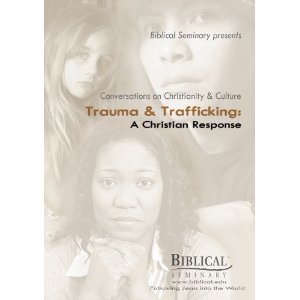
Nearly 2 years ago (March 2011), Biblical Seminary put on a conference about the problem of sexual trauma and trafficking. Our speakers included Dr. Diane Langberg (a noted psychologist), Bethany Hoang (IJM), Robert Morrison (a grassroots organizer), and Pearl Kim (now ADA for 2 Philadelphia counties). The sessions covered domestic and international sex trTrauma and Traffickingafficking, abuse and violence against women worldwide, the problem of sexual abuse in christian organizations, and how to mobilize community action without expending energy on non-profit status.

It was a powerful conference…and you can own it for a mere $19.99. Here’s the link to Amazon. Or, you can find it here at Vision Video (along with MP4 options as well) for 20% off.

This DVD set (3 DVDs) are an excellent starting point if you or your church group want to think more deeply about the biblical call to justice in the area of trafficking, trauma, and violence against women, whether “out there” or in the church.

Look for information on purchasing our most recent DVD series, Abuse in the Church, in the next week.


Leave a comment

Filed under Abuse, biblical counseling, Biblical Reflection, christian counseling, Christianity, Christianity: Leaders and Leadership, Diane Langberg, Post-Traumatic Stress Disorder, trauma

Repost at AACC: Seven Questions About Your Church Abuse Prevention Policy


The AACC has reposted my blog designed to help church leaders and counselors review current child abuse prevention policies. You can see the post at their site by clicking here.

As I say in the post, every church with any insurance policy likely has some measure of policy. However, why settle for something designed only to limit liability? Such an approach does not seek first the protection of the vulnerable. Rather, limiting liability places the protection of the organization ahead of the protection of children. In fact, policies that are tools of protection of children will also limit liability. We just need to get the order straight.

For further information and help with child protection, don’t forget to check out G.R.A.C.E.


Leave a comment

Filed under AACC, Abuse, Christianity, Christianity: Leaders and Leadership, church and culture, ethics

Abuse and Pastors: An Open Letter from a Pastor to Pastors


This letter and website link was forwarded to me today. I don’t know Jeff Crippen but I do like his utter honesty about the cultural influences in some conservative settings that encourage domestic and sexual abuse and that implicitly encourage injustice to victims of oppression.

I encourage you all to read this…especially if you were once a victim and your church didn’t care well for you. Maybe this will bring some healing.

Abuse and Pastors: An Open Letter from a Pastor to Pastors.

2 Comments

Filed under Abuse, Christianity, Christianity: Leaders and Leadership, church and culture

5 Top Abuse Prevention Actions for Churches


Over at Biblical’s faculty blog I have a new post discussing top abuse prevention and response strategies. These are the most common strategies found in my students’ papers. There are certainly many more strategies and more detail to be had for each item, but for any church looking to review its preparation for an allegation, these five make a great place to start.

Leave a comment

Filed under "phil monroe", Abuse, Biblical Seminary, Christianity: Leaders and Leadership, counseling