Tag Archives: trauma

GTRI 2014: Day 12 Kigeme Refugee Camp


July 12, 2014. Kigeme Refugee Camp to Kigali

For all who travelled with us, our visit to the refugee camp was moving in many ways. We saw deep poverty and yet deep resilien

Heather with her new friends

Heather with her new friends

ce. The following observations are from Heather Drew, a counselor and one of my GTRI students and who begins her tenure as Fieldwork Coordinator in my seminary department today! Please welcome Heather and check out her blog as she is a gifted communicator in her own right.

Today was our last full day in Rwanda. We woke up in Butare, got one last cup of the best coffee I’ve ever tasted at a lovely coffee shop called Cafe Connexions, then rode our bus to a UN refugee camp in Kigeme. Around 20,000 Kinyarwandan speaking Congolese

Kigeme camp children

Kigeme camp children

refugees live in this camp, 12,000 of which are children, we were told. The abundance of children was immediately apparent to us as we were greeted by dozens of sweet smiles peering into our bus, waiting for us to climb out. Some of us took photos of/with the children and showed them the photo (they love that). Stan The children followed us around like we were pied pipers. The parents followed us with their eyes, and greeted us kindly. The camp was made up of rows upon rows of small mud houses with metal roofs – living spaces the size of a small American living room – containing 6-8 (or more) family members each. Our group wove through the narrow, red-dusty walkways between houses, climbing up slippery hills with the help of our small chaperones. They taught us some additional phrases in Kinyarwandan, showed us their beautifully-made and efficient water collection/filtration system, and held our hands. The EUG_7154children who could speak a few words in English were eager to do so. The ones who knew no English spoke to us without any words, showing us their homemade toys constructed with old bottles and broken pieces of things. It made me realize that the less a person has, the more resourceful and creative they become. This is a very prevalent characteristic throughout Rwanda.

At the base of the hill on which the camp sits is a meeting space where our team met with several leaders within the camp who lead trauma healing groups with fellow refugees. We were traveling with our friend Harriet Hill, one of the writers/developers of the Healing Wounds of Trauma material put out by American Bible Society, which this group has found so useful. (This book has been translated into several languages and is effectively used to facilitate around the world.) I had greatly anticipated this day, and in the moment the depth of it was not lost on me at all; here we were sitting in a room with about 50 Congolese refugees who use this book to lead healing groups in one of the most trauma-impacted areas of the world with Harriet Hill, the woman who had a dream over a decade ago to develop the material. It was extremely moving.

Leaders/facilitators gave testimonies about the groups and about personal healing, and presented questions they had. One person shared, “We are all traumatized…This material heals us and then we can help others heal.” Another shared, “During the genocide, so many of us – on both sides of the conflict – had hearts like animals. The Bible takes away our animal hearts.” Not all of these testimonies were ones of “arrival,” however. A few shared how they are still in the midst of the long healing process. The truthfulness of this impacted and inspired us.

After their testimony time Phil, Diane, Harriet, and their two leaders were invited to speak. Remarks were encouraging and thankful. Harriet Hill shared how much it meant to her that they have such bravery to share the comfort they themselves have received from Christ. She also shared Psalm 126, words that resonate with their stories. Finally, at the end of the meeting, we shared Fanta and

Zenko with Marianne Millen

Zenko with Marianne Millen

snacks together (a tradition of hospitality in Rwanda), then we said our goodbyes – even to Zenko, our dear new friend, which we were very sad about! – and boarded our bus for a 2 hour ride back to Kigali. I tried to focus on taking in the breathtaking beauty of the country as we made our last drive, because no photo can capture it.

Our final night was spent at East African Villas in Kigali. This was a hotel in Rwanda managed by a lovely Christian man called Ezekiel who was wearing a Georgia Bulldogs shirt when we arrived, which we enjoyed. We rested and enjoyed hot showers (a luxury I will no longer take for granted) during the few hours before dinner. Then we settled together in the dining room, ate our final Rwandan dinner feast, then Phil initiated our final team debriefing & sharing time.

We all shared 3 words that we each felt best expressed what we had learned in Rwanda. Among the things shared: new meaning of “celebrating the recovery of life” and also of “groans that words cannot express,” what it means to embrace Jesus’s invitation to “watch with Him,” the privilege of carrying people’s stories with them, how impactful people’s eyes and testimonies were, how much courage we saw, how much desperation we saw and how that was pointed at God in many cases. It was a much-needed time of sharing. To my knowledge, there wasn’t a dry eye among us.

We ended our night by taking a few group photos on the balcony.

GTRI 2014 Team

GTRI 2014 Team

1 Comment

Filed under christian psychology, counseling, counseling skills, Rwanda, Uncategorized

GTRI 2014: Day 10, Muhanga


July 10, 2014. Centre St. Andre

Thursday, Day 2 of the Community of Practice with the Bible Society of Rwanda. Already we are seeing deepening relationships. Last night many Americans and Rwandans sat together in the dining area talking and getting to know each other and revealing deep stories, stories of courage, pain, and hope. Precious times.

On day two of the Community of Practice we began with a short devotional considering Jeremiah’s lament. Barbara Shaffer and Carol King led a training and discussion of the problem of domestic violence. This is a new chapter in the Healing Wounds of Trauma materials. We discussed how much of a problem it is in Rwanda, why women stay, and how we can help both victim and abuser.

DSC_0307In the afternoon, we did another teaching (Carol and myself) regarding the problem of suicide. It appears that most Rwandans believe that one who commits suicide is automatically going to hell. In addition, the family is often shunned. This seemed a very entrenched belief and so my raising doubts and questions resulted in very spirited debate. While we also discussed how to help the suicidal person and how to help the family members, I left them with the encouragement not to speak for God and since no verses speak to the future of suicide persons, they ought to be careful to put words into God’s mouth.

We ended this conference day by giving the Rwandans an opportunity to have a session for their own care. We can see the weariness on their faces. Baraka led a care for the caregiver session while the GTRI team met to process what we were hearing and seeing–the heartache and the resiliency.

Monique (R) with Souvenir

Monique (R) with Souvenir

We had the privilege of listening to Monique’s story of surviving the genocide as a teenager and God’s subsequent call on her life. The story is too precious and hard to share here beyond a few words. She survived when family members around her were executed (shot) and fell on top of her. The killers left the pile of bodies, not knowing that she was not killed. Just prior to this event, she had read Psalm 91 and heard God speaking to her about her own future when she read verse 7,

“A thousand may fall at your side, ten thousand at your right hand, but it will not come near you.” 

She has gone one to become an evangelist for Christ and a helper of the hurting. I can attest that she has a gift that few have. And I will never read that verse again in the same way

As the previous night, many of us stayed up quite late deepening relationships with new and old Rwandan friends. Looking over the dinner area, I saw heads bowed in prayer, attempts to speak in French, cackling laughter, and the sharing of food and drink. Such a beautiful sight.

Tomorrow will end our COP and we will move on south to Butare.

Leave a comment

Filed under Africa, counseling skills, Post-Traumatic Stress Disorder

Brooks on journaling about emotions


Friend Jeff McMullen pointed out a recent David Brooks op ed in the New York Times. (Read it here). While I’m not sure I agree fully with his journaling/not journaling point he says something very important about the timing of writing one’s emotions after a traumatic event. He says,

When people examine themselves from too close, they often end up ruminating or oversimplifying. Rumination is like that middle-of-the-night thinking — when the rest of the world is hidden by darkness and the mind descends into a spiral of endless reaction to itself. People have repetitive thoughts, but don’t take action. Depressed ruminators end up making themselves more depressed.

Then later, this important distinction between immediate processing of emotions and later processing,

We are better self-perceivers if we can create distance and see the general contours of our emergent system selves — rather than trying to unpack constituent parts. This can be done in several ways.

First, you can distance yourself by time. A program called Critical Incident Stress Debriefing had victims of trauma write down their emotions right after the event. (The idea was they shouldn’t bottle up their feelings.) But people who did so suffered more post-traumatic stress and were more depressed in the ensuing weeks. Their intimate reflections impeded healing and froze the pain. But people who write about trauma later on can place a broader perspective on things. Their lives are improved by the exercise.

David points to some research that exists that suggest CISD is unhelpful for some participants. Some are made worse. Yet, narrating one’s trauma in the broader context of a life tend to see a reduction of symptoms. The difference seems to be whether the focus in on life or mostly on the trauma. Trauma in perspective is the goal. Just reviewing trauma may in fact strengthen the traumatic reaction rather than weaken it.

1 Comment

Filed under Abuse, counseling, counseling science, Post-Traumatic Stress Disorder, Psychology, ptsd

GTRI 2014: Day 9 Muhanga


July 9, 2014

Wednesday morning. We had our last lovely breakfast at Solace guest house, packed our things and left to travel a little over an hour south to Centre Saint Andre, a retreat and conference facility. We arrived in time to get our rooms to put our things away and get to the start of the conference. This Community of Practice conference, run by the Bible Society of Rwanda, is their first ever such meeting of trauma healing facilitators and is designed to raise the level of skills and knowledge of the facilitators as well as share best practices among them. Our role at the conference is threefold: lead some of the teaching sessions, listen and respond to case consultations and, best of all, get to know the facilitators and share experiences. The room was set with tables for 6 with 4 Rwandans and 2 Americans each.

The conference began with a bible study by the secretariat of the Bible Society. He spoke of the necessity of having the right names for things. He noted the significant difference in naming Rwanda a country healing from genocide instead of Rwanda a genocide country. Each table then discussed successes and challenges. At my table we heard of many good stories of healing (Success) but also that the

Credit: Heather Evans

Credit: Heather Evans

facilitators feel much guilt for not helping more (Challenge). They struggle with feeling worn out and impoverished helping others. Some noted how their own families and marriages were suffering given that they found it hard to say no to tangible needs of those they were trying to help. They noted that many of the recipients did want to have tangible gifts in order to take time to be in a healing group.

Next, Diane Langberg presented on the topic of shame. She defined guilt as a response to what we do but shame as a response to what we perceive we are or have become. She noted there are different types of shame but all result in a loss of “glory.” Some religious traditions believe that blood (honor killings) is the only way to cleanse the family of shame. She pointed out that while this is gravely distorted view of shame/honor, blood IS the only cleansing of shame–Jesus’ death and resurrection. She explored how Jesus did not run from the shame, that the image of God is one who runs after the shamed, who clothes them, who brings them his honor.

In response, the table groups considered three questions: What is considered shameful in Rwanda? What does the church say is shameful? Which of these are false sources of shame per the Scriptures? Consider some of the items mentioned,

  • To be pregnant without a husband, yet a man is proud
  • To divorce or separate
  • To be impotent or barren
  • To be a victim of rape
  • To be drunk (if woman); only shameful for a man if he does something wrong when drunk
  • To engage in open conflict; to talk openly of problems
  • To be in need/impoverished
  • For a woman to talk about domestic violence; to be a man beaten by his wife
  • to have disobedient children
  • To be albino
  • To commit adultery (church endorsed shame); to be HIV+

Interestingly, it was not always agreed upon which items should not be considered shameful.

396We ended our training day with a teaching/group interaction I did regarding addictions (the nature of addictions, what the Scriptures say, and how these facilitators can help improve commitment to sobriety in those they seek to help). I think most Americans and Rwandans felt the beginnings of connections forming as personal stories were told to us and we received them for what they were, treasures.

1 Comment

Filed under christian counseling, Rwanda, trauma

GTRI 2014: Day 4


July 4. Transit day.

Today is a transit day. Breakfast of hardboiled egg, bread, and coffee. Talked with Klero of South Sudan. Discussed ideas of how to bring GTRI courses/materials and other counseling training to local areas here in Uganda and in S. Sudan. While Juba has great Internet per Klero, most people there do not have access to it. The same is true here in Uganda. I am very interested in finding a way to bring this training (videos, readings, exercises) to this region without it being in an online format as it is right now. Seems the areas of greatest interest are basic helping skills, trauma healing from the Bible Society, deeper understanding of impact of trauma and expression of PTSD across cultures, and exposure to psychopathology. My goal would be to give this material away and offer live conferencing sessions to the training mentor as needed. Then, possibly follow-up with a visit to “t0p-up” as Harriet Hill is fond of saying.

Anyone want to fund that or help me figure out how to get others to do so? (Smile)

After breakfast we made our way to a nearby Catholic college to talk with Sister Bokiambo and the dean of the counseling department, Fr Evarist Gabosya Ankwasiize. They were interested in future opportunities with shared learning (my bringing students here to engage and interact with their students and participate in joint training). I left with new ideas for this location (on the shorts of Victoria) and with the encouragement that the Bible Society might be able to begin some seminars here to improve the dialogue between Scripture engaged trauma care and traditional mental health trauma care.

After a lunch of fried fish on the shorts of Victoria, I said my good-byes to Justus and Esther at Entebbe airport. The added security was quite evident (3 bag checks and 3 metal detectors before boarding) but there were no problems. The flight to Kigali was under 1 hour on a very new Rwandair airplane. Just enough time for a Passion fruit drink from the steward. Arrived to significant upgrades to the airport.

Arrived at Solace Ministries Guesthouse, our usual haunts since 2011. Solace isn’t hotel level but I love it for many reasons: Simeon’s great cooking (he makes fantastic vegetable soups and dessert of fresh tropical fruit and ice cream tonight), my money goes to a ministry and not a behemoth corporation, the water is hot, the rooms are clean, and it is centrally located. Seems Internet is a bit upgraded since I was able to SKYPE with Kim and boys.  [For a 2012 video of Solace Guesthouse, see here.]

I arrived here after the major July 4 celebrations today. Today marks the end of the 100 day mourning period and celebrates the liberation of Kigali. This is the 20th anniversary. A number of fireworks were shot off tonight, which I was told later triggered some local people into thinking the city was under attack.

Tomorrow, Lord willing, the rest of the team will arrive from the US and other points and our GTRI immersion trip will begin in earnest.

Leave a comment

Filed under Rwanda

GTRI 2014 Trip: Day 3


[These are journal entries from my recent trip To Uganda and Rwanda during the first weeks of July.]

Day 3, July 3

Today was the 2nd and final day of the first ever Community of Practice for the Bible Society of Uganda trauma healing volunteers. Another long day as the program did not end until about 7 pm! Today I presented on an overview and update on the impact and treatment of PTSD. This is a group that likes to ask questions! We discussed the role of demonic in PTSD and how to know the difference. Many of the participants were quite interested in discussing how to educate local pastors in understanding the nature of dissociation. I also participated in teaching the new lesson (added chapter to Healing The Wounds of Trauma material) on domestic violence. In discussing why victims “choose” to stay in DV situations we had some lively discussion about whether the Bible teaches that women must stay. Very productive I think and gave some people a new perspective on the need to bring this hidden scourge out into the light.

The conference ended with reports, public conference evaluations (loved the very direct and loving evaluation of my presentations: have me speak more, have me slow down!), the handing out of the certificates, and final words. One of the most moving items was that I received “thank yous” in every mother tongue present. Seemed like there were at least 30 different languages represented. It was hard not to be choked up. I recognized a few (Arabic, Swahili, Kinyarwandan).

Two take-aways I want to remember:

  1. We need special materials for ex-combatants. First, much of the focus in Uganda has been on child soldiers. But the country is full of adult ex-combatants who were in Amin’s military or subsequent militaries and who now feel disconnected and distanced from current society. Some report that if they get together for sharing with other ex-combatants, they get reported (falsely) for starting a rebel group. One reported being jailed briefly for such a matter. Several told me that they were suffering terribly from being in POW camps and from the violence they witnessed. But most importantly, they noted that much of the trauma healing materials only speak of soldiers as the cause of trauma and so they feel more isolated when they read about or attend trauma healing exercises. No one, they feel, speaks of the trauma of seeing comrades die, of being forced to carry out commands against their will.
  2. Trauma healing volunteers, financing, and the need for View from my roomtangibles. Some of the volunteers believe that they must bring tangibles when coming to do trauma healing work. Words are not enough and participants expect some sort of handout: soap, money for transport, etc. The discussion we had about this ranged from criticism of this part of Ugandan culture and the need to develop a donor rather than handout culture to recognition that this culture has been formed, in part, by well-meaning foreign (Muzungu) NGOs that offer handouts as a means to increase participation in projects. Some volunteers noted they had been falsely accused of pocketing monies intended for participants when they didn’t come with any “gifts.” In addition, many discussed the difficulty of funding the trauma healing groups and the need to find sustainable funding using micro-enterprise.

My day had three other stimulating experiences. First, I was interviewed by a journalist for television broadcast. Supposedly, it aired across the nation this evening, though I did not see it. Second, a woman told me of meeting Joseph Kony about 4 years ago (during the failed attempt to negotiate with him). She said that he was very winsome and crafty. If she didn’t know better, she could have fallen for his lines. I guess this is one of the reasons he is able to stay “missing” by convincing others to help hide him. Finally, I received a text from my wife letting me know that the US government warned of a terror plot at Entebbe airport tonight (about 10 miles from here). I’m planning on being there tomorrow to fly to Kigali. I guess I will evaluate the treat in the am.

3 Comments

Filed under Africa, counseling skills, Post-Traumatic Stress Disorder

GTRI 2014 Trip: Day 1 and 2


unnamed[I’ve been back for a couple of weeks but just now getting to write about this trip. These notes from each day come from my journal and don’t represent all that I did each day.]

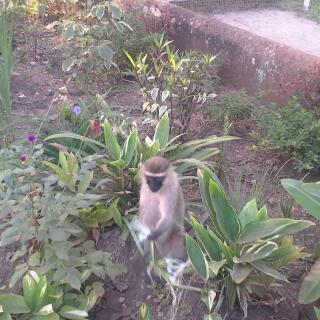
Today (July 1), I landed midday at Entebbe airport just outside Kampala, Uganda. Entebbe is on the shores of Lake Victoria. I was met by Justus Rubarema of the Bible Society of Uganda as well as Klero Onuha of the Bible Society of South Sudan. Both men worth getting to know! We waited a bit for Margaret Hill’s plane arriving from Nairobi. Once gathered, we made for the Lweza Conference Centre about half way to the city of Kampala. Lovely grounds. Peaceful. Enjoyed the little monkeys eating flowers and looking for handouts (I had none).

I arrived at this conference (Community of Practice for Trauma Healing practitioners trained by the Bible Society) feeling fairly awake despite 26 hours of travel time. It may have helped a bit that I was unexpectedly bumped to business class on Qatar Airways from Philadelphia to Doha (a 13 hour leg). I suspect the lay flat seats had something to do with my feeling pretty good. Feeling good, I invited Margaret to go on a small walk around the area and on a quiet road outside the compound. Discussed some of her techniques to help quiet distress in participants where violence and trauma was ongoing (e.g., Bangui, CAR). We discussed the use of the “butterfly hug” as a means to calm. Also, discussed the use of drawing a place “bien etre” rather than a “safe place” since most participants she had did not have such a safe place at the present time. We finished our discussion of how to safeguard the mis-use of these calming techniques so that they would not be mis-represented as being more than they are, techniques used to help someone in the midst of distress.

Ended our day with a meal of rice, bananas, potatoes and chicken. Off to bed in hopes of getting on the right time zone quickly.

Day 2

First full day of the conference (and FULL it was, 8am to 6:30pm). Attendees are all Ugandan plus Klero from South Sudan. Most are volunteers for the Bible Society, trained to provide healing groups using the Healing Wounds of Trauma materials. Some work with children, some with adults, some with ex-combatants, some with refugees, and some with women with HIV. The purpose of this conference is to add to their knowledge and skill base plus problem-solve as to how to provide more trauma healing experiences around the country—with almost no budget. Most of the country is well-represented including a number from Gulu and also the Nakivale refugee camp. More men than women. A couple of academic types are also present, representing both the Ugandan Counseling Association and the Ugandan Christian Counseling Association. Plus, one nun representing the faculty of a nearby Catholic college.

I presented on an update to listening skills which seemed well-received. This group is very willing to discuss, raise questions, and debate. I like it! It was requested that I offer some counseling sessions after dinner and so I did. Two men requested it and so I got a chance to hear about their ministries, their hearts, and their difficult struggles, both from the past and in the present. One of the things I am seeing here is that Ugandans need the wisdom of Solomon, the heart of David, and the integrity of Daniel, even when trying to deal with so-called Christian bosses. One fun fact is that the power went out right in the middle of one of the sessions. No problem. We could keep talking in pitch-dark! But by the time I fumbled with lighting a nearby candle, a generator kicked on and power was restored.

Leave a comment

Filed under "phil monroe", Africa, counseling skills, Post-Traumatic Stress Disorder

My next two weeks in East Africa


Starting Monday I will be off traveling to Kampala, Uganda and then on to Rwanda for Global Trauma Recovery Institute. I welcome your prayers for myself, my students, and the attendees. In addition, Diane Langberg and myself will be leading a group of 12 Americans (10 GTRI students) on a listening/dialogue immersion trip throughout Rwanda. Some of the highlights of our trip(s) will include,

  • 2 day trauma healing community of practice in Kampala with the Bible Society of Uganda
  • 3 day trauma healing community of practice in Rwanda with the Bible Society of Rwanda
  • Afternoon mini-conference with pastors in Southern Province, Rwanda
  • Day with the newly forming Association of Christian counselors in Rwanda
  • Visits to NGOs working with trauma victims and street children
  • Church services
  • Visits to genocide memorials
  • Visit to a refugee camp
  • Numerous conversations, formal and informal over the next two weeks

I will make some attempts to update all on my trip as I go. You can follow me here and @PhilipGMonroe or @BTSCounseling. If you are interested in seeing more about the GTRI engagement model, check out this short video. And, if you would like BTS to continue doing this kind of missional work, feel free to go here and donate before the end of our fiscal year, June 30.

Leave a comment

Filed under Biblical Seminary, christian counseling, christian psychology, counseling skills, Diane Langberg, genocide, Rwanda, trauma, Uncategorized

Some thoughts on international trauma training


In just a few days I will be off to Uganda and then on to Rwanda to do some training with trauma healing workers in both country’s bible societies. In addition, a group of students from our Global Trauma Recovery Institute will join me in Rwanda to learn more about how to help without hurting. In light of this trip, I penned a few thoughts for those who have a heart to do something about the massive trauma needs around the world. Here’s a preview:

Trauma is a hot topic these days. We live in a world where we are aware of terrible traumas happening around the globe in real time. We hear and see tsunamis unfolding, towns being flooded when dikes are breached, mass shootings, bodies strewn about due to ethnic conflict, houses destroyed by errant bombs, and gender violence in almost every corner of the world. While humanitarian efforts to respond to the physical needs of those in trouble are not new, there is a recent push to have charity workers become “trauma informed” so they can also address spiritual and psychological distress.

Trauma is a hot topic not just because we have more evidence of it happening in real time. It is hot because we have better information about the impact of violence and abuse on the human brain, on human interactions, and on the fabric of a society (Mollica, 2006).

Christian counselors, many of whom want to provide cups of cold water to the hurting masses, undoubtedly wish to use their skills to bring hope, healing and recovery to traumatized peoples around the world. But just where should they start?

You can read the rest of my thoughts over at our faculty blog site.

Leave a comment

Filed under "phil monroe", Abuse, Biblical Seminary, Post-Traumatic Stress Disorder, Rwanda, trauma

Lies and stereotypes told by helpers hurt the cause of trauma recovery


I’ve written a piece over at the faculty blog on the shady side of bending the truth to get more attention on the problem of trauma and the need for trauma recovery. It is a common temptation for those of us who work with trauma victims, a temptation to use the stories of trauma to garner personal acclaim (“look what I am doing about the problems in the world”) and to stereotype to increase attention and funding for those who are hurting. Shaping the truth hurts the cause and hurts the victims.

Read at the above link for more.

1 Comment

Filed under Abuse, deception, Post-Traumatic Stress Disorder