Good Read: Is addiction a disease of the brain?


Over on the NPR website Alva Noe (Philosopher, UC Berkeley) writes an interesting opinion blog (aren’t they all?) about why we shouldn’t call addiction a disease of the brain. As you will see from the hundreds of comments, he surely riled a bunch of people up. Some of the comments are quite clear, others just humorous. But I commend his blog for you to read. It makes you think about how some of our language regarding addiction unhelpfully narrows down the problem, thereby making it more difficult to pinpoint all that needs to change when fighting addiction.

Is addiction a disease of the brain? Following his logic, no. Is it a disease that involves the brain? Yes. We must recognize that we are not mere machines and as a result mental illness and addiction both must be viewed from socio-cultural-biological-relational-experiential-spitual-will perspective. A lot goes into creating an addiction. We ought not single out neural structures and activity as if that says all we need to know.

However, on the flip side, to suggest the that addiction isn’t a disease or a biological problem may also send the wrong message. In fact, addicts rarely can “just say no.” By the time they seek help their bodies are working against whatever little will power they have left.

So, addiction is a disease of the person. It may not qualify as a disease that we can identify on a specific cell, but the addicted person is no longer functioning properly and thus their entire person is diseased.

6 Comments

Filed under counseling, counseling science

Observing and Remembering Grief


On September 11, 2001, and for some time thereafter, Americans observed and experienced the grief of individuals and a nation. Now, ten years later, we observe and remember it anew–whether our own or the grief of strangers.

If you caught any of the television coverage you probably saw family members reading the names of the dead or tracing the names of loved ones carved into the memorials at ground zero. These images are both beautiful and heartrending, especially those of the children who are growing up without a parent. Or, you may have watched some of the surviving firefighters and police officers tell of their struggle to breathe or to fight the cancer that is likely the result of breathing in the toxic dust as they dug in the pit without proper protection.

As the names and ages scrolled across my television screen, I noted how many were so young, hardly even into the prime of their lives. Though I lost no one in my family or circles, I feel some small portion of the grief families continue to feel and am glad they have a beautiful place to go to remember their dead. Remembering the dead with ceremonies, markers, and moments of silence is an important part of living and grieving well. It is an active means to recall who we are (whether individual or nation), what we are, and where we are headed. As a people, we tend to do funerals pretty well. We recall someone who has died and how they influenced our lives. And, we endeavor to keep a part of their legacy alive in how we live our own lives.

I think these kinds of memorials have the opportunity to do the same thing.

But, and this takes nothing away from our collective grief, I am also aware that so many around the world die in obscurity without even the dignity of a thoughtful burial, with no one remembering their life or death. This is especially true in war-torn, impoverished areas. One militia erases the village of an opposing faction. Most are killed, a few survive by escaping into the bush or forest. The dead range from infants to elderly. They are left to be raided for any remaining goods, picked over by wild dogs, and whatever bones are found are later bulldozed into a mass grave.

In the West we may hear of these deaths and shake our heads at the senselessness of human atrocity. But distance and disconnect with other parts of the world rarely cause us to rise up as a nation and observe (stop if possible) and remember the grief of others.

One such arena of senseless and invisible slaughter happened in DRC. Bryan Mealer gives you an inside look at suffering and death and the desperate attempts of many Congolese to stay alive during the great African war. What I noticed was how little time there was to remember and grieve. Remembering is done by those who do not fear for their safety.

So, as we remember our own grief, let us also recall and remember those victims who get no grave nor remembrance.

2 Comments

Filed under suffering, trauma, Uncategorized

Getting confirmation on global trauma recovery plans


Since January I have been trying to articulate the best practices in doing trauma recovery or trauma healing work in international settings. The foundation of this approach to trauma recovery is, (a) Listen first to the needs, resources, and concerns of a community(b) identify local leaders who can be trained to be the primary trauma recovery workers (rather than outsiders being the primary clinicians), (c) tailoring interventions to the needs of  the community, and (c) above all…do no harm by over-promising, under-delivering, etc.

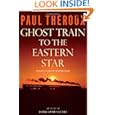
Today, I opened up my most recent American Psychologist (66:6, September 2011) and found my thinking confirmed in Watson, Brymer, and Bonanno’s Postdisaster Psychological Intervention since 9/11 (see citation at the bottom of the page). On page 485 they list what experts consider an appropriate steps to take in postdisaster behavioral health interventions. Now, most of you don’t probably get excited about research articles like this but I can tell you I did. Here’s the chart (click to see a larger image)

It is nice to find confirmation for something I was thinking but hadn’t read elsewhere.

From: Watson, P. J., Brymer, M. J., & Bonanno, G. A. (2011). Postdisaster psychological intervention since 9/11. American Psychologist, 66(6), 482-494. doi:10.1037/a0024806

1 Comment

Filed under Abuse, counseling science, Post-Traumatic Stress Disorder, Psychology, trauma, Uncategorized

Churches taking abuse prevention seriously? YES


We counselors rarely note, in public, the positive actions of churches who take seriously the call to care for the least of these. All too often we hear and repeat the news of churches who fail to enact prevention efforts or who botch responses to abuse within the church community.

So, this short blog is to remind us that many churches do work to prevent child and adult abuse and who respond well to abuse confessions or allegations. Today I participated in a phone call where one such church was looking for ways to take their existing practices and policies and make them even better. It won’t make the 6 pm news or the next Christianity Today because there is no scandal to report.

In honor of this church, let me give a couple of suggestions to others who might like to enact their own policies and practices

  • Determine the organization’s foundations and values for policies and responses to alleged abuse

You might think this a strange place to start but it is my experience that if a church/org doesn’t name their controlling values, another set of values will rule the day–and often without anyone knowing it. I have seen churches who make decisions on the basis of limiting liability. I would suggest a better value is protecting the vulnerable from abuse and standing for truth, justice and righteousness. I have also witnessed unspoken values of “fairness.” Since everyone is a sinner, then no sinner can be called out and restricted in their access. Since both victim and offender are sinners, then the blame is to be equally shared, even if the offender is a pastor.

  • Begin with some key theological principles. Study them. Engage in churchwide discussions

Key topics to consider: nature of evil, abuse, impact of sexual abuse; theology of reconciliation, restoration, forgiveness, and repentance (these topics are all different and not to be confused); theology of the state (too many churches see the State as evil and thus they do not begin to think about reporting child abuse)

  • Identify a team to develop policies and to handle abuse allegations and to identify potential risks
  • Craft policies for lay counselors, pastoral staff, child care workers, those who have been accused or found to have committed abuse (e.g., can they attend church; do they need a care team to bring church to them?)
  • Staff to explore how to make the church friendly to current and past abuse victims; consider sermon and Sunday School topics to set agenda and tone
  • Make clear abuse reporting policies to the church (even if not required by local jurisdiction) because of the moral call to protect the weak
  • Background checks for all staff, including pastoral staff
  • Finally, locate capable individuals who can assess, consult, and treat specific individuals in need of help (offenders or victims)

There is more to be done but this is a good start and will take some time to do it. Of course I can’t end without suggesting that churches seek out GRACE for help on either the prevention or response side of things.

Leave a comment

Filed under Abuse, Christianity: Leaders and Leadership, church and culture

When some help isn’t better than none


When is some help worse than none? When it creates more problems than might have been there without it. While that is easy to say, determining the line between helpful and harmful is less clear.

If your help saves a life, that seems good. If your help saves lives but creates or supports a system that destroys others, when do you decide to stop helping or to change the help you offer?

This is what Linda Polman raises and a key issue in her The Crisis Caravan: What’s Wrong with Humanitarian Aid? (2010, Metropolitan Books; first published in 2008 in Dutch by the title, De Crisiskaravaan).

Linda tells of a huge problem in the humanitarian aid industry (yes, it is one even if its primary purpose is to provide care for traumatized and displaced peoples). She puts the challenge this way in regard to providing humanitarian aid for those in warzones,

You do what you can for the victims, but soldiers exploit your efforts. They demand money for ever well yo dig and levy sky-high taxes, imposed on the spot, on all the sacks of rice and tents and medicines you arrange to have flown in. They consume a slice of your aid supplies and sell another slice. Among the items they buy with the proceeds are weapons, which they use to drive yet more people into your refugee camps or even to their deaths.

What do you do? Do you conclude that it is no longer possible to cling to the principles of the Red Cross, pack your bags, and leave to help war victims elsewhere? Or do you remain true to your convictions, believing that even if you save only one human life, some relief is better than none? (p. 1-2)

The first 2 chapters detail the problems of the international aid provided to Goma, DRC between July/August 1994 and 1996 when the Rwandan government used their soldiers to force the mass of Hutu refugees and former genocidaires back into Rwanda rather than allow the camps be locations for regrouping of the militias that would try to return to fight the new Rwandan government.

A couple of her observations

1. Not all refugees are the same. Some are truly in need. But a large number of the refugees in Goma brought a treasure trove of materials looted from their own country. Thus, they were less likely pushed there and more likely going there to reconstitute a machine against the RPF in a safe place.

2. The international community came in droves, almost seeming to try to make up for the failures in Rwanda for the past several months. But they didn’t understand that many of these folks were either perpetrators or related to them.

3. Not all of the deaths reported as due to cholera were in fact illness related. There were many that were killed for failing to be loyal enough to the Hutu extremist groups

4. NGOs have to market themselves and thus spend lots of money to get contracts to help more

5. NGOs hide the fact that many of their stuffs were taken by Hutu leaders so the NGOs would raise the number of people they were helping in order cover up that they lost a large percentage of materials/food to theft and corruption

6. Journalists are more likely to get their way paid to cover a crisis by an NGO, thus raising questions about the images they send back. Likely not going to be as objective.

Now, none of this suggests we shouldn’t provide humanitarian aid to refugees in warzones. But it does remind us that our help can also hurt others. Being wise as serpents and harmless as doves is a lot harder than we might expect.

Given our trip to the region next month, I have to remember that our good intentions are not always enough. I’m not sure how our help can hurt but if we don’t ask the questions, we won’t know either. Here are some open questions

1. Does short-term trauma recovery efforts start a healing process but fail to keep it going thus encouraging more hope than discouragement?

2. Does bringing people together to talk about trauma unintentionally trigger trauma or feelings of rage (we won’t know if some people are considered the “wrong kind of people”)?

3. How does taking pictures or filming any part influence the “data” we think we are collecting?

Leave a comment

Filed under conflicts, Congo, counseling, Post-Traumatic Stress Disorder, Rwanda, Uncategorized

Magazine Note: CCT on Global Issues and Challenges for Counselors


Volume 18:3 of Christian Counseling Today (published by AACC) is now out. If you don’t normally see this publication, you might want to lay your hands on a copy. Here is some of the content

  • Report on the Cape town Declaration (Lausanne Congress) and its vision for seeing counseling as mission (by Brad Smith and Fred Gingrich). You can read the whole Cape Town Declaration here.
  • Some thoughts on the cross as it relates to kingdom culture by Samuel Rodriguez
  • Diane Langberg’s important essay, “Trauma as a Mission Field.”
  • One of my former students on the state of religious persecution in China and the state of church based counseling. A must read if you are thinking about ministering in China.
  • An excellent article by Naji Abi-Hashem about 21st century challenges to the work of counseling
  • I and Josh Straub have a brief introduction to basic competencies for those who want to work internationally (had to get that in there!)

In addition, there are several other good essays dealing with the tragedy in Japan and Haiti, trauma in relief workers, and more. None of these are very long articles but they do serve to prime the pump. They should get you excited to think globally and act locally as a counselor.

Leave a comment

Filed under Uncategorized

Trauma Recovery Work in the DRC and Rwanda


Location map of Rwanda

Image via Wikipedia

It is official. Diane Langberg and I have our tickets for our upcoming trip to the Congo (DRC) and Rwanda where we will be interacting with trauma victims, pastors (who are also trauma victims), Bible Society and World Vision workers, and probably medical and education officials as well.

We leave on October 10 and arrive in Uganda on the 11th. We will be traveling into the DRC in the northeast quadrant (picture tiny plane!) near Bunia and also to Goma, on the shores of Lake Kivu and under the shadow of a large and active volcano. There we will be observing the work of the American Bible Society and She’s My Sister as well as meeting with rape and trauma survivors.

On the 17th, Lord willing, we’ll drive from Goma into Rwanda to Kigali. There we will be joined by colleague Carol King (Langberg & Associates therapist) and Josh Straub of the AACC and our Rwandan compatriots Josephine (WV) and Baraka (IJM) and will lead a  three-day training seminar re: trauma recovery resources and best practices. The plan is to return home via Kenyatta airport and Brussels on the 22nd.

Prepping for the trip includes everything from shots to planning who does what training segments. Those of you inclined to do so, pray for the logistics there as World Vision Rwanda puts the final touches on the location of training and invitees. A lot of work must happen for this to go smoothly. Also, there is an effort to raise funds for this (Project Tuza) at the AACC World Conference in Nashville the last week of September. Pray that attendees will catch a vision and support us as they can.

Anyone wishing to donate can here.

Leave a comment

Filed under Congo, counseling, counseling science, Post-Traumatic Stress Disorder, Rwanda, trauma, Uncategorized

Great literature on the effect of unconfessed guilt and refused forgiveness


The Scarlet Letter (1860) by T. H. Matteson. O...

Image via Wikipedia

Listening to Nathaniel Hawthorne’s The Scarlet Letter. You can read for free here (if you have a Kindle you can download).  Hawthorne does a fantastic job illustrating the anguish of unconfessed sin. Despite the book being about Hester Prynne and her reception of the scarlet letter, Rev. Dimmesdale takes center stage with his struggle with his own sin shame and his unwillingness to speak the truth.

For those of you who read this back in the dark ages of high school, you will remember it takes place in Puritan Boston and Hester is a known adulterer given her lack of a husband and her infant daughter just born. She is branded with the scarlet letter but refuses to reveal her paramour.

Rev. Dimmesdale is a staunch reformer but in chapter 11 you see what his interior life is like and his torment between his perception of his own sin shame and the way his community views him (as near saint).

It is inconceivable, the agony with which this public veneration tortured him. It was his genuine impulse to adore the truth, and to reckon all things shadow-like, and utterly devoid of weight or value, that had not its divine essence as the life within their life. Then what was he?—a substance?—or the dimmest of all shadows? He longed to speak out from his own pulpit at the full height of his voice, and tell the people what he was. “I, whom you behold in these black garments of the priesthood—I, who ascend the sacred desk, and turn my pale face heavenward, taking upon myself to hold communion in your behalf with the Most High Omniscience—I, in whose daily life you discern the sanctity of Enoch—I, whose footsteps, as you suppose, leave a gleam along my earthly track, whereby the Pilgrims that shall come after me may be guided to the regions of the blest—I, who have laid the hand of baptism upon your children—I, who have breathed the parting prayer over your dying friends, to whom the Amen sounded faintly from a world which they had quitted—I, your pastor, whom you so reverence and trust, am utterly a pollution and a lie!”

More than once, Mr. Dimmesdale had gone into the pulpit, with a purpose never to come down its steps until he should have spoken words like the above. More than once he had cleared his throat, and drawn in the long, deep, and tremulous breath, which, when sent forth again, would come burdened with the black secret of his soul. More than once—nay, more than a hundred times—he had actually spoken! Spoken! But how? He had told his hearers that he was altogether vile, a viler companion of the vilest, the worst of sinners, an abomination, a thing of unimaginable iniquity, and that the only wonder was that they did not see his wretched body shrivelled up before their eyes by the burning wrath of the Almighty! Could there be plainer speech than this? Would not the people start up in their seats, by a simultaneous impulse, and tear him down out of the pulpit which he defiled? Not so, indeed! They heard it all, and did but reverence him the more. They little guessed what deadly purport lurked in those self-condemning words. “The godly youth!” said they among themselves. “The saint on earth! Alas! if he discern such sinfulness in his own white soul, what horrid spectacle would he behold in thine or mine!” The minister well knew—subtle, but remorseful hypocrite that he was!—the light in which his vague confession would be viewed. He had striven to put a cheat upon himself by making the avowal of a guilty conscience, but had gained only one other sin, and a self-acknowledged shame, without the momentary relief of being self-deceived. He had spoken the very truth, and transformed it into the veriest falsehood. And yet, by the constitution of his nature, he loved the truth, and loathed the lie, as few men ever did. Therefore, above all things else, he loathed his miserable self!

His inward trouble drove him to practices more in accordance with the old, corrupted faith of Rome than with the better light of the church in which he had been born and bred. In Mr. Dimmesdale’s secret closet, under lock and key, there was a bloody scourge. Oftentimes, this Protestant and Puritan divine had plied it on his own shoulders, laughing bitterly at himself the while, and smiting so much the more pitilessly because of that bitter laugh. It was his custom, too, as it has been that of many other pious Puritans, to fast—not however, like them, in order to purify the body, and render it the fitter medium of celestial illumination—but rigorously, and until his knees trembled beneath him, as an act of penance. He kept vigils, likewise, night after night, sometimes in utter darkness, sometimes with a glimmering lamp, and sometimes, viewing his own face in a looking-glass, by the most powerful light which he could throw upon it. He thus typified the constant introspection wherewith he tortured, but could not purify himself. In these lengthened vigils, his brain often reeled, and visions seemed to flit before him; perhaps seen doubtfully, and by a faint light of their own, in the remote dimness of the chamber, or more vividly and close beside him, within the looking-glass. Now it was a herd of diabolic shapes, that grinned and mocked at the pale minister, and beckoned him away with them; now a group of shining angels, who flew upward heavily, as sorrow-laden, but grew more ethereal as they rose. Now came the dead friends of his youth, and his white-bearded father, with a saint-like frown, and his mother turning her face away as she passed by. Ghost of a mother—thinnest fantasy of a mother—methinks she might yet have thrown a pitying glance towards her son! And now, through the chamber which these spectral thoughts had made so ghastly, glided Hester Prynne leading along little Pearl, in her scarlet garb, and pointing her forefinger, first at the scarlet letter on her bosom, and then at the clergyman’s own breast.

None of these visions ever quite deluded him. At any moment, by an effort of his will, he could discern substances through their misty lack of substance, and convince himself that they were not solid in their nature, like yonder table of carved oak, or that big, square, leather-bound and brazen-clasped volume of divinity. But, for all that, they were, in one sense, the truest and most substantial things which the poor minister now dealt with. It is the unspeakable misery of a life so false as his, that it steals the pith and substance out of whatever realities there are around us, and which were meant by Heaven to be the spirit’s joy and nutriment. To the untrue man, the whole universe is false—it is impalpable—it shrinks to nothing within his grasp. And he himself in so far as he shows himself in a false light, becomes a shadow, or, indeed, ceases to exist. The only truth that continued to give Mr. Dimmesdale a real existence on this earth was the anguish in his inmost soul, and the undissembled expression of it in his aspect. Had he once found power to smile, and wear a face of gaiety, there would have been no such man!

This is a long quote but you can see the psychological and spiritual torture of unconfessed sin and the public/private divide. At one level Dimmesdale is painted as one who can really relate too the common sinner. At another level, he is tortured by his living a false persona.

1 Comment

Filed under deception, Good Books, Great Quotes

What did you read this summer?


Here in Philadelphia we are preparing for whatever part of Hurricane Irene comes our way. Looks like there will be time spent in the Monroe basement fighting the onslaught of water. Wet vacs at the ready.

In the lull before the storm, this would be a good time to review the good reads of the summer. I’ll tell you what I read if you tell me what you read or listened to via CD/recorded books. Is there a theme? I read things that caught my interest which was all over the place.

  1. Dancing in the Glory of Monsters: The Collapse of the Congo and the Great War of Africa, by Jason Stearns. Stearns has done a masterful job in collecting first person interviews from those involved. From Congolese, rebel fighters, RPF soldiers, Ethnic Tutsis who have long called the Kivus area home. If you are interested in trying to understand the complex nature of the political and humanitarian crises in this area after the Rwandan genocide, this is a good book to read. A bit depressing but helpful in prep for our October trip to the Congo and Rwanda. I also started a book about Robert Mugabe and Zimbabwe but didn’t finish it.
  2. The Anglo Saxon World, by Michael D.C. Drout. I listened to this 7 CD set. Dr. Drout (from the other Wheaton College) was eminently capable in his lectures covering the rise and fall of the Anglo Saxon world in England from 500 t0 1000 AD. I never lost interest! Helped me understand its Germanic roots, influence on English Christianity, the value of Epic poetry like Beowulf (which I have decided to read now), and some of the foundations for Tolkien’s Lord of the Rings (Drout considers Tolkien one of the foremost Anglo-Saxon experts).
  3. Ghost Train to the Eastern Star, by Paul Theroux. Listened to this book as well. Paul writes a travel log of his retracing a prior travel some 33 years earlier where he takes trains across Europe to China and up Russia. Some 25,000 miles of travelling. Quite interesting if you like knowing what life is like in the countries he explores. Seems to be quite focused on the sex trade and some very heartbreaking descriptions of trafficked women in southeast Asia. But the BEST part of his book is this: read his introduction to the book here on p. 1-3. See what he says about travel writers pathology. Funny!
  4. Baseball books. I read two this summer. Knuckler: My Life with Baseball’s Most Confounding Pitch by Tim Wakefield. I’m a big Sox fan and I have a great deal of respect for Wakefield. He’s no superstar but he is absolutely willing to do whatever his team needs, whether go out and start, do long relief, or sit the bench during the playoffs because they need someone else to be on the roster. As I write this, Wake is trying for his 200th win…and getting hit around. Seems he’s stuck on 199 for a bit. The book was a nice look at his life from his own vantage point. The second book was even more interesting to read. Nobody’s Perfect tells the story and the back story on what should have been a perfect game thrown by Armando Galarraga–except for a blown call on the last out (what SHOULD have been the last out). What makes this interesting is that each chapter is written in the first person telling the inner story of the pitcher and the umpire, James Joyce. Both show their quality character. If you like baseball and understand that a perfect game is so unlikely and that umpires never admit their mistakes, you will like this book.
  5. On recommendation by someone who gets how systems work, I read, The Primes: How any Group can Solve any Problem, by Chris McGoff. Excellent business planning book that didn’t feel like business at all but how to figure out how to do the “one thing” that you just have to do. I’m reading it as I try to figure out how to devise a continuing education and consultation side of my work. If you ever dream about starting a business or solving a work problem, I’d encourage you to read this.
  6. You might be wondering if I read anything in my own domain of counseling. I did. Two books. Healing Invisible Wounds: Paths to Hope and Recovery in a Violent World, by Richard Mollica. He describes how the act of telling one’s trauma story can lead to healing. If you are working with international trauma, a must read. I also read Working with Narrative in Emotion-Focused Therapy, by Angus and Greenberg. I started blogging on the chapters but went on vacation and finished it when I didn’t have access to the Internet. I hope to get back to blogging the chapters.

I think that is it. I know I skimmed and glanced at a whole bunch more. I tend to do the 5 minute read on lots of books that might be interesting but that I know I don’t have time to read. The 5 minute read gives me the main points and conclusions without having to take so much time.

By the way, the summer isn’t over. I have an edition of Beowulf on my nightstand. Not sure I’ll get through it. Linda Polman’s The Crisis Caravan: What’s Wrong with Humanitarian Aid is waiting right beside it. I’m about to start listening to John Milton’s Paradise Lost on my drives to work and I’m listening to Hawthorne’s The Scarlet Letter at the gym. My new great love is listening to stuff when it would normally be wasted time. My way of not thinking about problems.

So, did you read or re-read something fun this summer? What was it?

4 Comments

Filed under book reviews, Good Books, Uncategorized

How do you make decisions?


A line in a recent sermon by David White has stuck with me for a bit. He asked us to consider the mindset behind our decision-making. He reminded us that we might say, “If the Lord wills I will do thus and so.” Sounds holy right? But maybe we really mean, “If God lets me do what I want, then I’m going to do what I want.” Notice the differences between being concerned about what God wants and what we want to do if he’ll just let us.

The line that got me was this:

If it is not unholy, should I pursue my particular ambition?

To be honest, I’m not sure he said it or if that is what I wrote down in my notes. What I took away from it is that we commonly quick check the box on whether what we want to do is right or not and if we think it is right, then we stop asking God whether we ought to do it or not. While it is good to consider rights/wrongs in decision-making, I can still ignore important matters in determining whether I should choose to do A or B. This probably sounds abstract so let me put this into a specific and real context:

Should I accept a speaking engagement invitation some months from now? The group and topic are worthy of the time. But should I do it? If it is not wrong, can I just say yes? Is right/wrong really the same as asking God whether or not this is good and right for me to do. As I considered the factors in the decision, here’s some of what passed through my mind.

  • Well, it is a conference I was already considering I might attend. So, I would have been gone from my family anyway.
  • This particular invitation was pretty special and might not repeat any time soon. I should do it.
  • You know Phil, a number of your mentors and colleagues would be there and it would be cool to be on the docket as “invited.” Then I admitted to myself: Glory is not really a reason and the work would be greater than just attending. You often underestimate how much effort it takes to do these things.
  • I really want to do this. My motivations are mixed but it still would be fun.
  • I hate saying no to requests. 

So, what did I do? I asked God for some help in making the decisions. I did not choose to talk to anyone about it (other than my wife and the one doing the inviting) for fear I would get folks to tell me what I wanted to hear.

How did it turn out? Believe it or not just as I was crafting the email to tell the conference planner that I would be coming, I remembered I had tentatively given my assent to an event here in the Philadelphia area. Now, you need to know that this event was more of a dream than a reality, more of, “I’m willing to be present if you guys decide to hold that meeting.” After a fleeting thought that I could squeeze both event in (something I’ve tried before), I realized I was getting my answer and some grace to say no to something that was absolutely enticing but not what I need to do this year.

Does God have a specific will?

I continue to believe in Jim Petty’s 3 circles of discerning the will of God. Somethings are very clearly wrong and should be avoided. This is the inner circle and you could label it “the law”. The middle circle are things that are not necessarily wrong but need to be evaluated through the lens of “the law of love.” These are things that could be wrong because they reveal that we love ourselves more than others. For example, if I decide to give up my job to take up a risky start-up business, I might be unloving to my family and placing them at more risk than they are comfortable with. Finally, the outermost circle contains everything else and is “christian liberty.” So, I decided to go to college or I’ve decided to get married and this seems good to those who know me well. There may be many choices of good schools and potential spouses. Christian liberty says that there isn’t one choice and if I screw it up I’m out of God’s will.

And while I still think in these terms, I am also realizing I don’t spend much time thinking beyond my own interests. It is time to take up the challenge of this question, “Okay, so it is not wrong…but is it right for me and my family? Is this how I should spend my time?” And then…time to pray a bit more and wait expectantly for an answer.

7 Comments

Filed under Christianity, Guidance and Counseling, Insight, Uncategorized