
Today I will be presenting a break out at the AACC World Conference on spiritual abuse. If you are interested in seeing slides of my talk, click: Spiritual Abuse.

Counseling Adult Survivors of Child Sexual Abuse: Phase 2 mis-steps and correctives
Today Dr. Diane Langberg and I will be offering a 3 hour pre-conference CE training at AACC’s 2015 World Conference here in Nashville, TN. Our focus is on some of the common counselor mistakes made during the phase of processing the abuse history and all that happens as a person tries to see self and history through different eyes. We focus on the relational approach to repair the mistakes we make. I have a small bit on reframing resilience and posttraumatic growth. Our perceptions of recovery and where we (counselors and clients) should be headed sometimes need to be examined.
For those interested in seeing the slides from my portion of the talk, click: AACC WC Pre-conf 2015
Share this:

Filed under Uncategorized
What can we do about the refugee crisis?
If you have any connection to the outside world you know that the Middle East, North Africa, and Europe is undergoing a refugee crisis of massive proportions. Syrian and Iraqi refugees are finding their way to Europe to try to escape the violence, hunger, and lack of basic resources resulting from ongoing conflicts in both countries. For years, Lebanon, Jordan, and Turkey have borne most of the brunt of the burdan from the crisis, but now refugees are risking their lives crossing the Mediterranean to Europe. What was a regional conflict is now a wider political and economic challenge.
If you are like me you read the stories, see the pictures, dig into the complexities of the problem and end up feeling helpless or hopeless. Someone has to do something. But what? Is there anything you and I can do to help? We know we can pray and we know we can give money to aid organizations. However, I suspect we often fail to do either of these things because will my prayers or fifty dollars do anything, realluy?
Can we do anything else? Here are a few things I think merit consideration as doing our part. They may not do anything at all in the big picture, but then again, they may help you take one more step, even if only helping you to pray more pointedly and persistently.
- Choose to be continuously educated. It is easy to make sweeping generalizations about those who are fleeing violence, about those in host countries, about the various armed militias. Sometimes we are right but far too often we develop simplistic formulas for the problem and solutions. Read outside of your normal news sources. If you are in the U.S., check out the stories by BBC and Al Jazeera news corps. Especially look for news stories about the refugees, who they are and what they are looking for. Many journalists in this area tweet out their stories/blogs. Find them and read them. Don’t allow hopeless feelings keep you from bearing witness to the tragedies nor from calling on God to intervene.
- Study the Scriptures regarding the God who loves refugees, hears their cries (think Exodus) and his son who was himself a refugee (check out Matthew 2). What is God’s mind on caring for those who have nothing and who will cost us something if we do care for them? Too often we can become consumed with political and economic realities and forget that God’s word calls us to love immigrant and outsider among us. In doing so, challenge your common assumptions about how we should relate to Muslim outsiders.
- Learn a lay-counselor trauma training model. The American Bible Society has a program, Healing Wounds of Trauma. This program is Scripture-engaged, dialogical, lay-oriented, and cascade oriented. You can get trained by attending a low-cost equipping session (4-5 days) and then train others (hence the cascade effect). You do not need to be a counselor but plenty of counselors love this model because it is so easily transferrable. Translated and contextualized into many languages, you can teach in English and the participants can teach in their own communities in their own language. Wait, you migh think, I don’t know any refugees in my community. While there may not be any Syrian refugees (then again, there many well be!), immigrants and refugees are all around us. Find out who is serving them (e.g., Lutheran Social Services, World Relief, etc.) and see if you can use this materials with them. This particular program isn’t the only one out there but it is effective and budget friendly.
- Of course, give and pray. Once you get connected to local refugee serving organizations, you will have a better sense of who is serving in your community and how your time, talent, and treasure could be used.
Share this:

Filed under counseling, Justice, news, News and politics, Training, trauma, Violence
Learn the Shape of Yourself and Other Advice for Counselors
The best counselors know themselves well. No, I don’t mean that the best counselors are self-centered. Rather, good counselors understand their biases, foibles, strengths and challenges. The best counselors know themselves inside and out and notice when they start to project their own thoughts and feelings onto others.
Why is this capacity so important? A counselor must see and note the difference between yourself and the client in front of you. This is vitally important if you are going to be of any help to that person. When we fail to see the difference, we end up counseling the other person as if they were an extension of ourselves. As a result, we fail to challenge our own biases and assume what helped us will help them.
Enter writer Mary Karr to illustrate this problem from the vantage point of writing a memoir.
Mary, author of several memoirs, has written a new book on how to write a memoir. I heard her being interviewed on NPR’s Fresh Air program today (find the audio here) and was taken by her advice to writing students. In response to a question about how to know if memory of events is accurately described, Mary tells of how she stages a fight (unbeknownst to her students) and then asks them to write about what they saw. As you might expect, each student sees something different. Why? Because they project their own lives and experiences onto the event. Even those with perfect recall, those who can get the dialogue just right, never fail to project their own assumptions into the story. Mary reminds listeners that it is impossible not to project ourselves into our observations. “We don’t so much as apprehend the world as we beam it from our eyeballs.” What can we do about this problem? She implores that writers to,
Learn the shape of yourself. Learn what you tend to project onto the landscape so that you can account for that tendency in your life and question it…
Learn to know the shape of yourself. What excellent advice for counselors.
Just last week I met with a man with decades of cross-cultural missions work on several continents. We spoke about the best ways to help students and new arrivals succeed cross-cultural ministry. This man reminded me that the best cross cultural education is not reading volumes about another culture (as good and helpful as that can be) but learning to know oneself inside and out so as to see the projections we tend to place on “the other.”
Want to avoid hurting others? You will surely need to know good counseling techniques and methods. you will want plenty of experience differentiating between types of problems. But, if you fail to really understand yourself and your tendencies, your utilization of those techniques may not be what the client needs.
Best advice to know yourself?
- Don’t take yourself too seriously.
- Ask your friends who you really trust to give it to you straight about your annoying habits.
- Get into your own therapy and don’t hide who you really are from the counselor.
Share this:

Filed under Uncategorized
Evaluating Character of a Leader? See How they Treat “The Other”
How a person treats “the little people” or “outsiders” tells you a lot about a person’s character. I once remember interviewing someone with great credential for an upper level job. On paper and in the interview, this person seemed like a perfect fit. But afterwards, I learned that this potential hire had clearly mistreated (with arrogance) a lower level administrative assistant in the organization. That changed everything I thought about the quality of the character of the person.
Most leaders are gifted. They have vision and drive and a capacity to instill both in their followers. Usually, this means the person has an excellent command of language so as to move others to feel as she or he does. But such strengths can be easily cloaked in deceptive languages and what could have been good is used for a bad purpose, most often that of personal gain.
How much more dangerous if the leader combines these gifts with spiritual/religious language. Notice how the cloak of good things could easily cover up evil outcomes:
GOOD WORD ==> CLOAKED INTENT
- unity your opinion doesn’t matter
- trust don’t question my actions and decisions
- truth believe as I do or you are out
An Evaluation Tool Better than Words?
Check how they treat vulnerable people, people who do not tend to listen well, people who need lots of attention due to their weaknesses. See how they talk about those who work for them and who get little public glory. Do they blame underlings for their mistakes. Do they receive criticism well? Do they talk in “we” language (vs. “I”) and back that talk up with giving glory to others where it is due? And finally, how do they describe their enemies or those who are not part of the cheerleader squad?
For all of us who have any leadership, let us remember God’s strong warning to shepherds in Ezekiel 34. False shepherds are those who
- Use the sheep for personal gain (milk, wool, meat)
- Starve the sheep
- Not cared for weak, sick or injured
- Not sought after the lost ones
- Ruled with harshness
- Abandoned the flock altogether
These are God’s enemies, destined for destruction. But we are not left in the dark about what a good leader looks like. Ezekiel 34:11f provides the test of a true shepherd, God himself. He finds, rescues, brings back, feeds, provided pleasant places and peace. He will bandage and heal and bring justice.
Share this:

Filed under Uncategorized
Giving Grace To Yourself When Change Is Slow
Have you ever struggled to change a habit, attitude, or thought process and wondered, “Why can’t I just change this in my life?” Maybe you wish to think different thoughts or feel differently about a person. Maybe you want some cravings to go away. But it just seems you aren’t improving as you hoped.
Without excusing your flaws or ignoring bad patterns that need change, you may find that giving grace to the challenge of change actually helps you make the change more quickly.
Consider this silly example of change. The seminary where I work poured a new walkway between my small building and our main classroom building. Now, instead of a step up to get in the building, it is all level ground. I have used this walkway for fifteen years as I walk from my car into the building and for the past two as I have walked between the two buildings.
Here’s the problem. I am almost falling down every time because my brain wants to step down when leaving the building and to raise my leg up higher as I enter the building. Either I am tripping as I leave, stepping down only to find that there is no step or I am entering gingerly trying not to look foolish. My body and brain have one expectation and unless I concentrate, I keep doing what I have always been doing, which no longer works.
If this is true about a walkway change, it stands to reason that other more emotional and relational changes would be even harder to manage. Consider some of these
- the loss of a loved one: coming to terms with someone who is no longer there
- trusting someone who has shown themself in the past to be trustworthy
- trigger fears in public spaces after a trauma
- eating habits after years of over or under control of food
- having a positive thought after years of negative rumination upon waking
- avoiding porn when bored
- choosing a soft response when angry instead of yelling
So, change is hard. How does giving grace to myself help me?
Imagine for a minute that you make a mistake. Now, consider both of these self responses and how it would impact your capacity to keep working at change:
- Stupid, stupid, stupid! Why are you such a failure. You are a waste of space and energy in this world. Lots of people change, why can’t you? You say you are a Christian but I fail to see any maturity.
- [sigh]. Change is so hard. You’ve been thinking and responding to this situation like this for decades. So, it’s not surprising change comes slowly. Good thing God is gracious. Lord, I may not be able to stop the first thought but thank you for helping me catch myself just a bit sooner. Now, deep breath, try again, here is what I want to think/do/say…”
Which of the above two examples of self-talk will help you move forward and which one leaves you stuck in a perception of failure?
Notice the problem that keeps us stuck longer is shame (and our responses to it) more so than our particular changes that may be coming slower than we want. Sometimes pride is the barrier more than the behavior we want to change.
Today, watch your self-talk and instead of beating yourself up with shame talk, just acknowledge the flaw/failure/sin and remind yourself that right now, you can choose a different response. See how that influences your attitude and your energy for change.
Share this:

Filed under addiction, christian counseling, christian psychology, Uncategorized
Rwanda 2015 Trip Recap: Deepening Relationships
9 mental health professionals representing Global Trauma Recovery Institute travelled to Rwanda a couple weeks ago to continue the work of learning from and with trauma healing specialists in that country. This marks my 6th trip to this lovely, complex little country. While the centerpiece of this trip was once again the Community of Practice bringing together Bible Society Rwanda volunteers and Association of Christian Counselors for training, much of the heart of this trip was the support and encouragement of our friends.
Here are a few highlights from the trip:
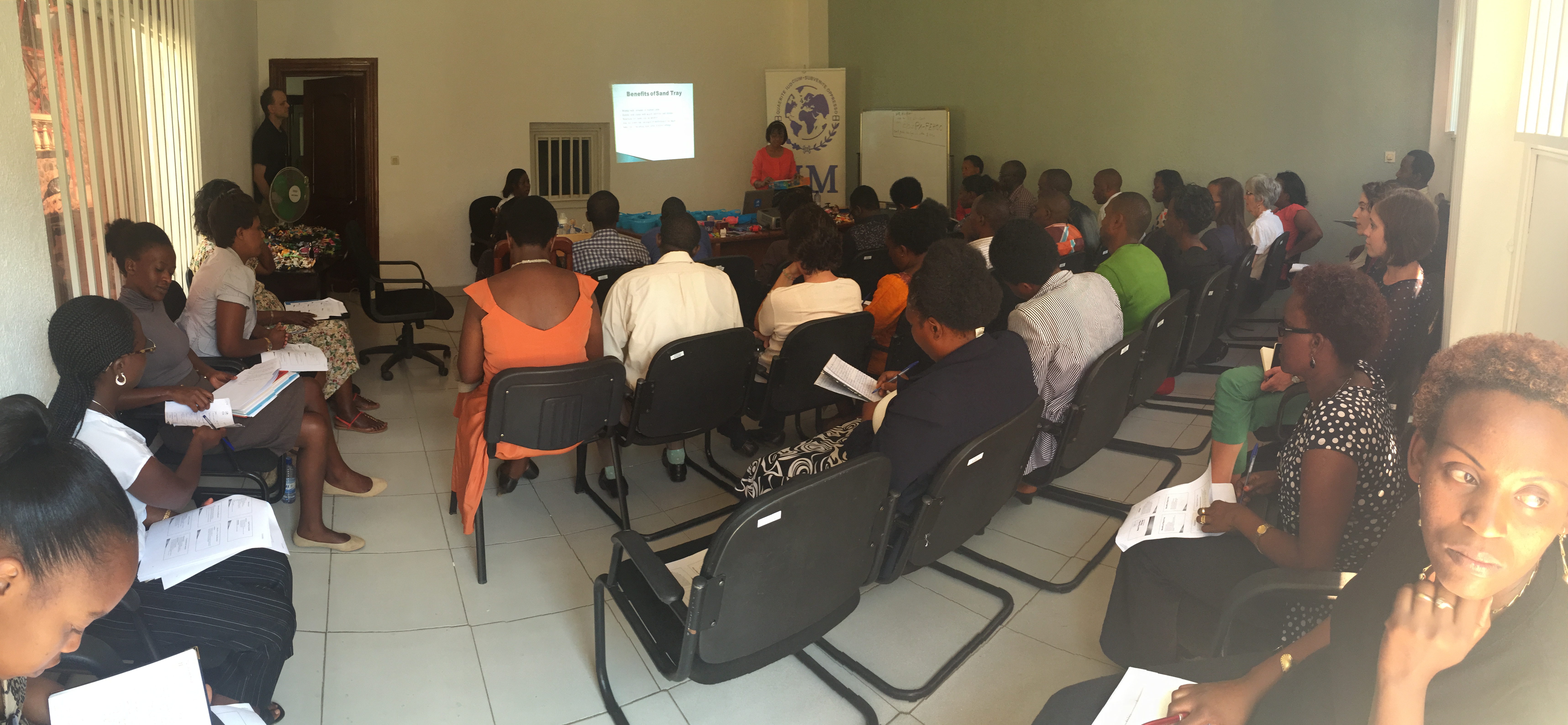
- Sandtray training. At IJM Rwanda’s new office location one of our team, Rowan Moore LCSW, provided a short lecture and demonstration of the value of sandtray work with trauma victims. It is true that telling the trauma story can be a significant part of the recovery process. Yet,
Courtesy Heather Drew
“telling” is not only with words. In fact, telling” need not use words. Enter sandtray work. After the presentation, the 35 plus participants made their own sandtrays and shared the meaning in small groups. As a parting gift, our team left two sandtrays, 25 lbs of sand, and a suitcase full of miniatures to be used. Special thanks to the sandtray company that donated the two trays.
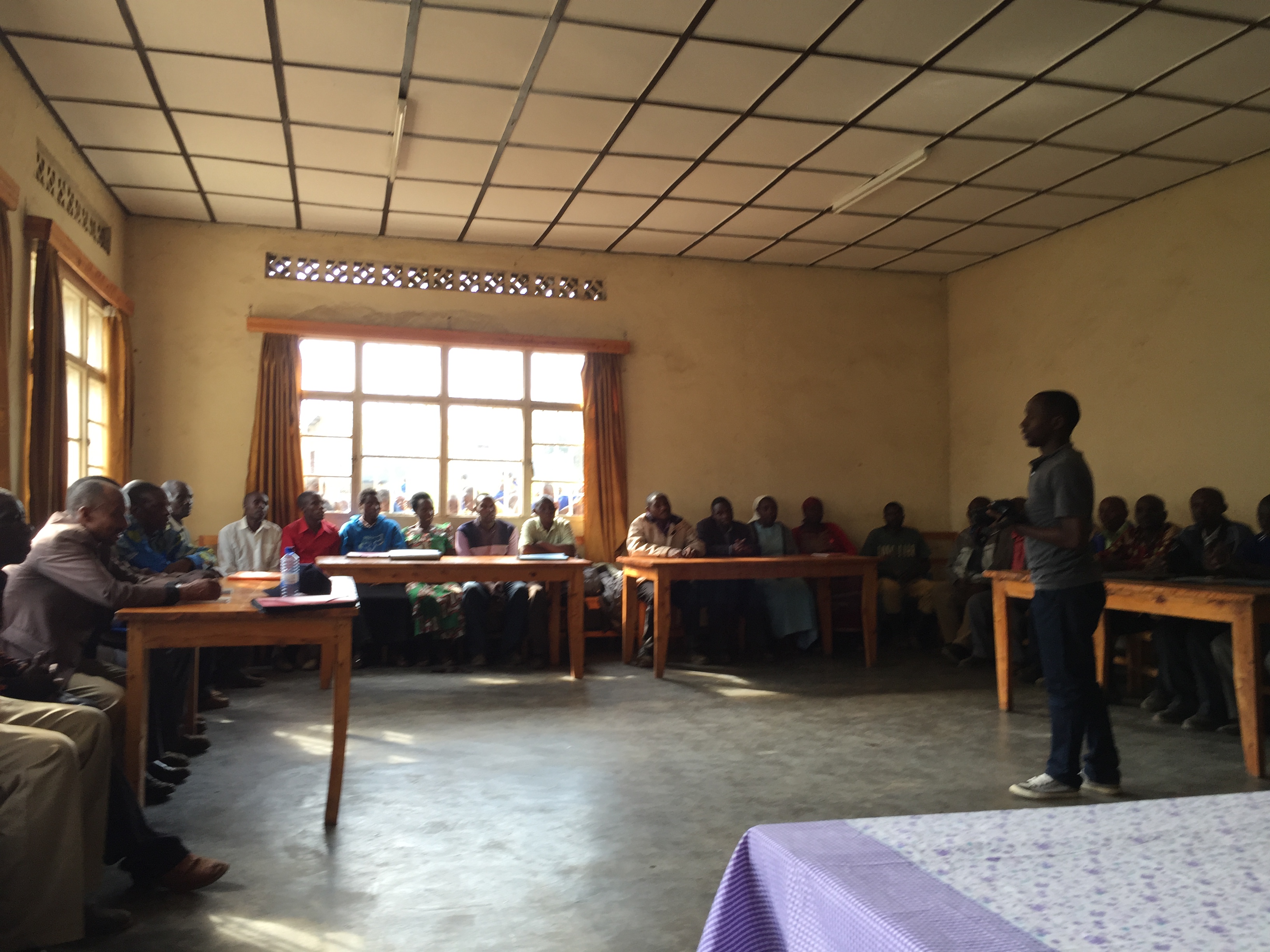
- Pastor training. A friend invited us to a gathering of Evangelical Free pastors to talk about domestic violence and addictions. These pastors received study bibles and training the night before and returned the next day to consider how to address issues of domestic violence in the church. Rwanda has made massive progress in dealing with gender inequality but such shifts have created a fair amount of instability in family dynamics. The training looked at what the bible says about relationships between husbands and wives and compared current culture with what we read. One of the primary outcomes of this training was a request from the pastors to do it again but with their wives present.
- Rwanda life immersion. On such a short trip, it is hard to get fully immersed into the country. Yet, it is important to try to do so. Why? Because we have much to learn from our Rwandan brothers and sisters. And if we hope to be of any help or support, we must continuously learn about this country and people. Otherwise it is sheer arrogance that we have anything of value to offer. Some of our engagments came in the form of Sunday worship, meals together, play and discussion time with orphans, listening to personal stories, visiting a family, hearing about the value

Courtesy Heather Drew
of the trauma healing work of the Bible Society in a remote village not far from the DRC border, and visiting museums to learn more about the genocide and aftermath. A few of our team stayed extra days after the main trip to spend time in the homes of our friends. This kind of immersion provides rich conversation and encouragement to both Americans and Rwandans.
- Church training. Two of our team spent a day with a local church talking about domestic violence in a style of dialogue education. They reported that the conversations were stimulating and the challenge clear that culture sometimes trumps the bible. But the pastor indicated that the material presented would be re-presented again to a group of men a few nights later.
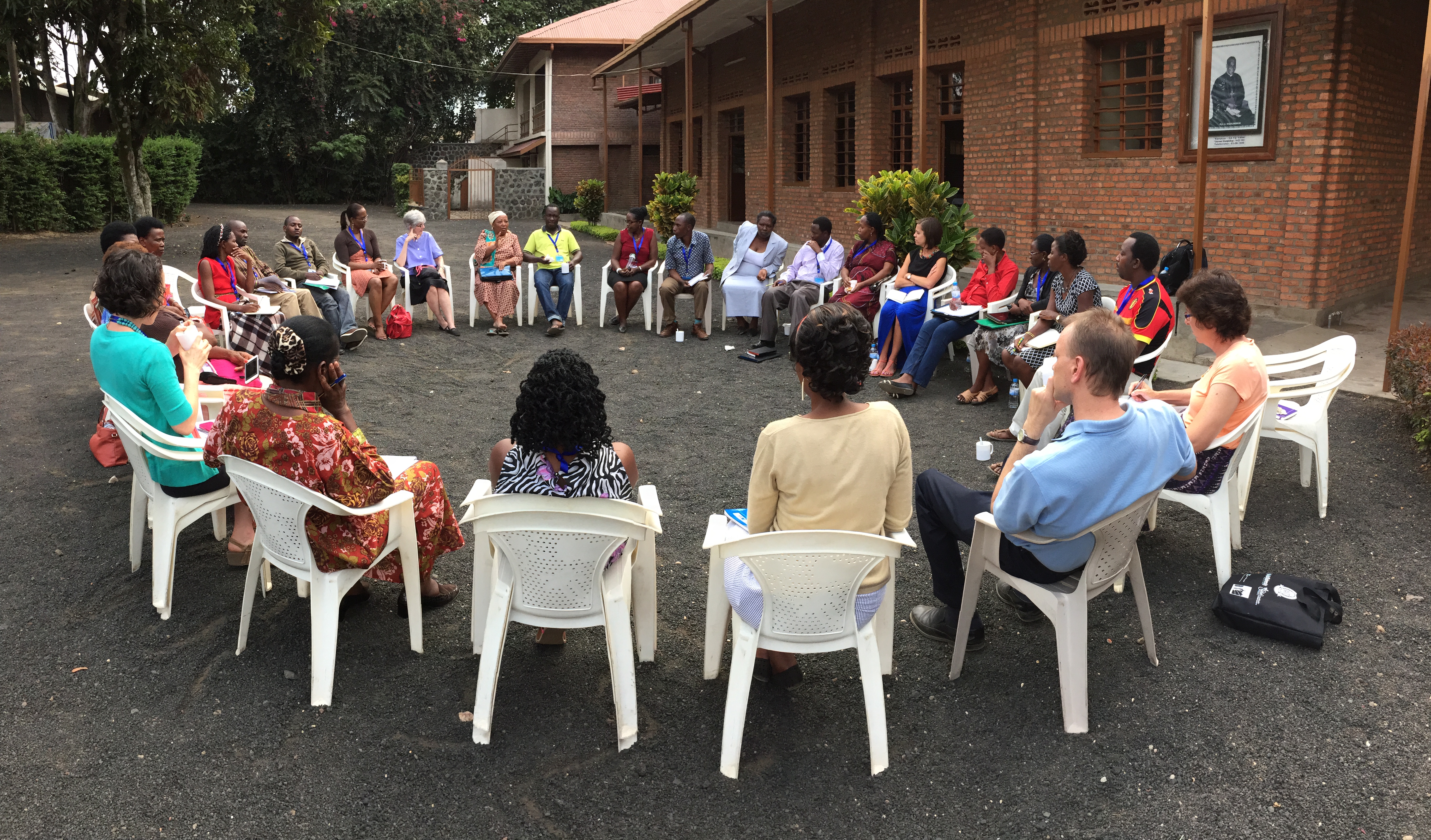
- Community of Pratice. Once again, we facilitated lessons on domestic violence and crisis counseling. These lessons are less about lecture and much more about discussion and application. The conversations about domestic violence were lively to say the least. But the most important par

Courtesy Heather Drew
t of the days were planned and providential conversations regarding cases or personal life experiences. This kind of sharing seemed to provide encouragement for all.
- Case presentations. One of the pleasures of this trip was to listen to cases presented to us in large and small groups as well as in private. Why a pleasure? Several reasons: the immense professional growth we have witnessed over the last 7 years, the opportunity to encourage and validate the hard work they are doing each and every day. Many of these cases were hard to hear with terribly graphic details of suffering. But little bits of light are also evident as the clients were obviously growing in hope as they were cared for by our friends.
There were many more wonderful experiences too complex to explain here. Some went to a refugee center to see gifts of bibles and sewing machines (gifts from a PA congregation) while others of us participated in a community service project in a small village. All of us enjoyed intimate conversations with fellow team members as we traveled, ate, and shared rooms.

Celebrating GTRI grads in Rwanda, courtesy Heather Drew
Some may wonder whether this kind of short term mission is worth the effort and cost. I’ll leave the final evaluation up to others, especially our Rwandan friends. However, our initial evaluation is that both Americans and Rwandans have been encouraged and strengthened in the work we do. And the relationships have been deepened. This deepening will not be on hiatus until the next trip as many maintain daily text, email, and SKYPE conversations throughout the year.
Thank you for those who prayed and supported this trip.
Share this:

Filed under Uncategorized
Volunteerism in Africa: To Go or Not to Go?
From time to time you can find essays identifying serious problems with volunteerism by Americans in developing nations. Last year I wrote a short response to acknowledge the real problem with some trips but countered with several reasons why not all trips are created the same and how some short-term trips can be beneficial.
Now, one year later, I have just returned from leading another Global Trauma Recovery Institute group of mental health professionals on a trip to Rwanda (my 6th trip to this tiny country). And once again, I just finished reading an essay by Heather Ruiz who documents some of the more egregious problems created by short-term trips–unneeded “help”, creating a culture of dependency, and a false perception of a need to develop.
Wrestle with the Problems
As a leader of short-term trips, I highly encourage anyone planning a trip to wrestle with these issues. Do not easily dismiss the reasons your trip might not need to happen. If you are unaware of the complexities of “help” I urge you to read the following books:
- Helping without Hurting in Short-Term Missions (reminds you of the problems but gives the proper posture to short-term missions and why it is important to do more than relief work)
- Dead Aid (gives plenty of examples of abject failures within the humanitarian world)
- The Crisis Caravan (if you need more examples of good intentions gone horribly awry)
- Serving with Eyes Wide Open (How to improve cultural intelligence of a short-term mission team)
Preparing to Go
If you decide your trip is still in the best interests of those you will visit, consider the following preparations as absolutely essential:
- Pray. Obviously.
- Study the region. Know its history, culture (from multiple vantage points), its successes and struggles. Know who is providing aid/help/ministry in this region. Try to make contact before you go to see if you can learn from them.
- Ensure you have been invited. Don’t go if you haven’t had a solid invitation, a “come over and help us” request.
- Find a cultural guide. Having a bridge person is essential. Such a person should be well-respected by many and already considered a leader among her people.
- Examine goals. What really is your purpose? How will you know you have achieved your goals? For example, just because you want to teach pastors how to preach and you deliver classroom training doesn’t mean you have met your goal. Key Question: Did you ask who
- Think about after you leave. What do you expect will happen after you leave? Benefits? Struggles? If one of your goals is “relationship strengthening” then consider how this will continue after you leave. Be realistic. How has your work supported local leadership. How will it make their job easier?
- Review training materials. One of the biggest failures I have made is not to have my training materials reviewed prior to departure. Review by multiple eyes can catch obvious cultural disconnects. Don’t lecture. Always use dialogical forms of education. You may not be able to cover as much material but what you deliver will be better and more useful. You will learn what works and does not work.
- Stay in locations that benefit the local population. Consider your footprint. How will you ensure you are not a burden to your new friends? Try to stay in locations that provide local jobs and where profits go back into local ministries.
- Working with children? Plan ahead what you will give. Likely, you won’t be the first to arrive at their village. We’ve had the experience of children asking for things like watches, bracelets, money, candy, etc. Re-read the essay by Heather Ruiz (above) as to the impact of gifts. They aren’t always helpful. Of course it is nice to please children with a treat. Buy a local treat and share that with them.
Telling Stories When You Return
I confess that I have had many judgmental thoughts when viewing social media pictures of (primarily) white people hugging little African children. Do they not understand how such pictures foster the “great white hope” mentality that is so destructive to Africans and Americans? I have been a bit sheltered from this during my trips to Rwanda as I mostly interact with other counseling and ministry professionals. Also, I tend not to take pictures because I do not like the way taking them makes me feel distant from my friends and even at a zoo when taking pictures of strangers.
And yet, I want to convey my experience to my friends who have prayed for me and who sacrificially supported the trip. Work to share stories (only with permission if identifying information given!) and pictures that show the strength, fortitude and honor of the people you met. Consider, for a moment, what the reverse would be like if they traveled to see you and brought back pictures of you, your family, and the interior of your house to share with their friends. How would that feel?
And if you are going to share pictures of children mobbing you, make sure you first ask yourself about the meaning of the mobbing. Why are these strangers holding your hand, fighting to be next to you, jumping in your lap. Sometimes it is as sweet and innocent as children getting the opportunity to meet

Waiting for Elders to start a village meeting
someone they consider exotic, sometimes it may be due to a lack of parental love (once a child asked if he could make an application to join my family), or worse, it may be learned behavior and lacking the feelings you might expect (once I watched a group sing a song but there was no music in their eyes, just rote behavior).
Share this:

Filed under Africa, Missional Church
How childhood trauma could be mistaken for ADHD
This article: (http://acestoohigh.com/2014/07/07/how-childhood-trauma-could-be-mistaken-for-adhd/) was sent to me by a GTRI student (Thanks Charity!). Worth the read to consider how we may mistake hyperactivity as evidence of ADHD vs. evidence of hypervigilance and PTSD. Given the high prevelance of ADHD diagnoses in areas where there is also much trauma (urban and impoverished settings), it stands to reason that there could be significant misdiagnoses. I began to understand this problem some 17 years ago during my pre and post doc experience in small town Concord, New Hampshire. We saw all sorts of boys first diagnosed with ADHD, then diagnosed (and heavily drugged) with bipolar disorder. Back then we called them emotionally-dysregulated. Nearly all had been subject to domestic violence and had witnessed their mothers abused by boyfriends. A large number had seen their mothers had guns held to their heads. Such experiences shape a child and so it stands to reason that a brain bathed in the hormones released during terror and horror would have an impact. It is also true that in this same population there was a high incidence of tobacco use, also known to be highly correlated with ADHD diagnosed children.
My suspicion is that one day we will find syndromes that encompass both diagnoses but that will not be until we have better understanding and technology to assess what is happening in the brain during an episode of “hyperactivity.”
Check out the above article and if you are a clinician, consider alternative explanations for ADHD diagnosed children. Do you see signs of emotion dysregulation? And if so, how might that be more central feature of the treatment plan?
Share this:

Love your neighbor? Love your enemies? What does this mean today?
The greatest two commands for all christians: Love the Lord your God with all your heart…and love your neighbor as yourself (Mark 12:30-31). As Jesus says, “there is no greater command than these.”
Not hard, right?
Wrong.
The Luke version of this story tells us that the one questioning Jesus about keeping the law follows up with a self-justification question: “Who is my neighbor?” (Luke 10:29). Like him, we want to know just who we have to love. But of course, just a few verses before (6:27, 35) Jesus tells us to love our enemies and to do good to them who hate us. So, whether enemies or neighbors, we are called to love both.
Let’s admit that some neighbors are pretty easy to love. Tomorrow I am leaving for Rwanda to love my Rwandan neighbors. But you know what, it isn’t a hard thing to do. Besides the 23 hours of travel to get there and being away from my family, I can’t say it is much sacrifice. I’m given far more honor there than I deserve. The weather, food, and company are hard to match. If love is a sacrifice, this is hardly love.
Some neighbors are hard to love. They don’t treat us with the honor we think we deserve. They ask for things and don’t give back. Even worse, some neighbors hate us and seek to harm us.
Think for a minute: who do you find it hard to love? Is it a near (actual neighbor) person? A far person (a politician or person who represents an ideology you hate)? Have them in mind yet? Now think about what it means to love them. Since love is both doing things for someone and NOT doing evil to them, consider both the positive and the negative sides of your love.
Here’s some examples: What does it mean to love ISIS fighters? Do we pray for them even as we highlight victim stories? What does it mean to love Barack Obama (if you are opposed to his presidency) or Donald Trump (if you are opposed to his desire to be president? Do we gloat at their failures? Getting closer to home, what does it mean to love a person on the other side of you in the Same Sex Marriage Supreme Court ruling or in the race debates? What does it mean to love the person who swooped in and took your parking spot?
A Few Thoughts on What Love Means
Some might think that “love your neighbor/enemy” means never speaking up when wronged, never seeking justice, never making a stink. It does not. period. You can love your enemy even as you seek justice. Speaking the truth can happen…IF…it is done in love. So, what does speak the truth in love mean?
- Making sure that truth spoken is really true. Not exaggerating the flaws of the other; not engaging in slipperly slope argumentation. Straw men and exaggerations are not true.
- Making sure that love is the agenda for the truth. Speaking up for the sake of destroying a person’s career is not love. Though, speaking up to protect victims is love and to stop a person’s sinful behavior is also love.
Loving your enemy means being willing to forgive even before the forgiveness is sought. Of course, seeking and offering forgiveness does not mean justice and consequences for evil are not felt. But it does mean that I do not participate in an “eye for an eye” or vengence. As we remember, vengence is God’s to wield.
Finally, loving your enemy is not merely avoiding revenge but requires us to “do good.” How do we seek the welfare and the peace of a city (or a person) who does not consider our needs or treat us fairly?
Hard questions, but let us seek to be a community of people known for insane love of victims and perpetrators, willing to tell the truth and to see the prosperity of those who do not love us in return.
Share this:

Filed under Abuse, Biblical Reflection, Justice, love

