Category Archives: Uncategorized

Hungering for Justice? A new read for an old verse


During my recent trip to the DRC and Rwanda I practiced French by reading the Bible in French and English. Not sure it helped much but I did discover an interesting difference in Matthew 5:6 between the two translations that made me stop and think.

First the NIV:

Blessed are those who hunger and thirst for righteousness, for they will be filled.

Now the French:

Heureux ceux qui ont faim et soif de la justice, car ils seront rassasiés!

Notice something different? Most English translations use the word righteousness. Those who hunger after righteousness will be filled (or satisfied). Now, when you substitute the word justice–those who hunger and thirst for justice–does it add meaning to you?  It does to me.

Justice? Righteousness? Do you hear differences?¹

When I hear the word righteous, I think of individual holy acts, attitudes, and character. When I hear the word justice, I often think of fairness, judgment, and legal outcomes that make right prior wrongs. In reading this verse in French and in Goma, DRC where so many have no justice and can’t return to their villages due to ongoing conflict, my mind considers that Jesus might be saying that those who hunger and thirst after justice are going to be blessed in a particular way.

Obviously, those who hunger and thirst after righteousness will also long for justice for individuals, communities and states. One cannot be righteous and yet unjust or just and unrighteous. However, it is possible for us to fight against sin in our own lives, practice individual acts of righteousness, and yet forget to pray and work for justice for those who are being oppressed.

Some years ago Carl Ellis, in a class on African American theology, suggested that White evangelical churches often preach and teach about individual righteousness (i.e., what to put off and what to put on) but rarely teach about corporate righteousness unless it is to rail against worldly matters (e.g., abortion, homosexuality, greed, etc.). I do think this is changing as evangelicals are paying attention to matters of justice around the world. Yet, we can be reminded that God cares about those who are unjustly treated. It is not just Abel’s blood that cries out (Gen 4:10) for justice.

Thankfully, there is a just and righteous outcome. The sacrifice of Jesus “speaks a better word than the blood of Abel.” (Heb 12:24). Yet when you read Matthew 5 don’t forget that God is actively blessing those who are oppressed. He will satisfy them by fulfilling their desires. Let us not forget to hunger and thirst after justice for ourselves and for the world.

¹In this post I am not tackling the best translation for the Greek word (δικαιοσύνην) used in this verse. The 92 times it is used in the KJV are all translated righteous/ness. However justice is implied in 2 Peter 1:1 as we have faith due to the righteousness of God.

1 Comment

Filed under Biblical Reflection, Christianity, Congo, Democratic Republic of Congo, Doctrine/Theology, Evangelicals, trauma, Uncategorized

DRC/Rwanda Trip: October 13, 2011


Up by 5:30am, a nice breakfast (omelet, Nescafe, fresh avocado half, and bread with Nutella), and then a trip to the airport to catch another MAF flight hop south to Beni (3 hour stop) and then on to Goma in the afternoon.

The flight to Beni from Bunia lasts about 35 minutes and travels a over verdant landscapes criss-crossed with reddish dirt paths. Wish we could stop here and there to check out some of the remote places. We see frequent fires being used to burn vegetation to prepare the land for farming. We arrived on time to Beni, a tiny dirt-tracked airport. I do not believe the small building space we walked through had electricity. Surprisingly, the road outside the airport was paved. In fact, it was the best paved road I saw in all of the DRC. We hear that the Chinese built it. What is the pay off for them I wonder.

Our quick car trip takes us to UCBC, a bilingual christian university in the town. We met with a number of young teachers and staff along with Daniel Masumbuko Kasereka, the chaplain and an administrator. The school was running some intensive English language classes in preparation of the start of a new term. Here too we hear about the trauma in students and the negative impact on their learning. We also learn about their attempts to bring some trauma recovery to the community by hosting some seminars using the trauma/reconciliation materials of Rhiannon Lloyd. We hear of sex trafficking and abduction of women by militias. Our time is short but we do have some good conversation with them. Nice to meet Baraka Kasali, the son of the rector and someone who clearly was raised in the US but using his talents in this small area. Also, met an American, Bethany Earickson who teaches English here.

Our time is short so we say our goodbyes (after using the pit toilets), pile back in the car and head back to the MAF plane awaiting our trip to Goma. We arrive at Goma around 1:00pm. Sadly, it was raining and so we did not get a view of the massive volcano just outside Goma. Instead we dodged clouds, flew over high peaks and Lake Albert, and then flew just above the tree tops to avoid turbulence.

First sights at the airport are rusting UN aircraft, lookouts, someone who demands money for landing, and customs officials who laboriously re-enter all of our visa information. Our passports disappear and then reappear. Not sure what they do with them.The trip to the hotel is our first glimpse of this chaotic city. All streets are rutted with potholes and unpaved. Piles of lava chunks litter the streets. Besides potholes and lava, you see boys going in every direction pushing the congolese “bike” as they transport goods hither and yon?

We arrive at Hotel Linda by 2pm. Hotel Linda sits on the edge (literally) of Lake Kivu. It is a beautiful view and beautiful sound (waves). This will be our home base for the next several days. Kingfishers are sitting on flowers outside my room. I find that the hotel has a public computer and free (slow) internet so I quick pop off an email to my family to let them know we have arrived. We have time to rest and talk about what we have so far seen and heard and how we might develop a trauma curriculum for training the faculties of various schools. For dinner, I choose Capitaine fish (chunks not fillet) cooked in spices and a banana leaf. Excellent.

Tomorrow begins an intense time of listening to trauma workers and trauma victims.

Leave a comment

Filed under AACC, counseling, counseling science, Uncategorized

DRC/Rwanda Trip: Day Two


October 12, 2011

Woke up to a beautiful morning in Entebbe. Enjoyed a brief walk along Lake Victoria and the garden areas just outside our hotel. Everything is green and warm. Ate a breakfast of roasted vegetables, croissant, a tamarillo (tree tomato), and coffee. Also read the local English paper. It was all about anti-corruption in politics. Seems to be a universal problem.

Wanted to tell my family that I had arrived safely but the Blackberry system had crashed in Europe and Africa so I resorted to finding a nearby business center that charged me 2 dollars for 30 minutes of internet access. I’m reminded how fast our net speed is here in the states.

By 1 pm we were in the air in a 10 passenger Cessna operated by Missionary Aviation Fellowship (MAF). I got to sit right behind the pilot and had a great view of the landscape below. The short videos I took do not do the landscape justice. But what I saw looked like Savannah (grasslands with stands of palm and other trees) bisected by dirt trails/roads and dotted with small villages and neat terraced farmland. Some abodes had metal roofs whole others were clearly thatch. Throughout our trip we saw small fires being used to clear land for farming.

Our flight took us from Entebbe, Uganda northwest to Bunia, DRC, across the southern end of Lake Albert. Bunia was the site of terrible fighting in 2003-4 between warring tribes, renegade militias, and both Ugandan and Rwandan military. From my seat behind the pilot I got a great view of the runway and the significant presence of UN peacekeepers around the airport. One of the reasons this area has so much UN presence is that it is rich in gold, diamonds, and other important natural resources. Prominent at the airport are rusting and cannibalized UN aircraft.

On the ground, we were met by DRC bible society staff who helped us through the customs. Though we had already secured visas, we were still asked to fill out all the same information and demanded that we present additional passport photos (that we did not have). Our handlers spoke both in French and Swahili and at some point the officials relented. DRC is known for the reality of bribes. However, I did not see money exchange hands. To us US folks, bribes only represent individual corruption. But, I’ve come to understand that many officials in the DRC do not get paid and thus the bribe becomes one way to make some money.

Without much delay we were on our way to Shalom University where we met with faculty and administration to discuss the needs around trauma counseling. The University has a great research department and is having students do field survey work to understand the extent of rape and other traumas as well as the problem of literacy. They spoke of a couple of trauma trainings that had been brought to campus and how they were helpful but not yet enough. One of the key problems was the fact that many good students are still struggle with war/conflict related trauma and are not doing as well as they could. They would like training for their faculty to address the needs of students in all departments.

After the meeting, we were shown around the campus where we saw the chapel, the new library building, some student housing and the house of a top administrator. As we passed the student housing–cinder block 2 room abodes that might have had electricity but surely no other amenities as the outhouses were about 15 feet from the front doors and the “stove” was an outdoor fire pit–I was reminded just how blessed we are in the US. Many of us would think that this housing was traumatizing when I suspect these students are quite thankful for the opportunity to study and live in a relatively safe environment.  Each house had a small garden of beans and other veggies for their food.

Once our meetings were done we then followed Bagu (our ABS host/guide) to the church he planted and had built here while a student at the university. We met a couple of the pastors there who showed us the grounds. This is a burgeoning church with English, French, and Swahili congregations. While there we ran into a choir practice–teens practicing their English singing. In the dusk of the night and in the cramped quarters of a side shack outside the church we were treated with one of their songs. What I am struck with is how much activity, growth, and excitement there is around this church where if it were in the US would be seen as squalor. Also, I’m struck with just how much Bagu is a rock star here. People keep coming up and being amazed at seeing him again after not being here for 15 years (I’m vague on this number but I know it has been a long time!).

As dusk turns to full darkness we walk the dirt streets back to the Hotel, still teeming with people walking here and there, passing shanties filled with people buying various items such as cds, SIM cards, alcohol, photocopies, food and whatever else you might want to buy.  At the hotel, I find the room consists of a bed with a mosquito net, a TV! that gets 2 stations when the electricity is on, and running water. The toilet works great and the shower is in the opposite corner with a drain but no enclosure.

Just before turning in we had a dinner of beef skewers and pomme frites–you need to love potatoes if you live in this part of the world. I think I ate them at every single meal.

As I doze off (or try to in spite of getting used to the net over me, the fighting dogs in the alley below, and later a person who must have screamed for at least 1 hour) I am reminded that I am more blessed than I deserve. I recognize that some of my stress these next 11 days will be the result of the strangeness of my surroundings, my lack of personal comfort, and my missing my family. However, I also recognize that I will be able to rectify these stresses by leaving and that those I will interact with do not have the luxury to leave the difficulties behind. We Americans view suffering as something to get through and not something to live with in this life.

Diane and Bagu resting at Hotel Karibunde

Leave a comment

Filed under Uncategorized

Back in the USA after whirlwind trip to DRC and Rwanda


Glad to have the trip to see the trauma recovery efforts and needs in the DRC and Rwanda. Glad to return home. It has been a whirlwind of experiences and emotions. I know many of you were in prayer for our trip so over the next 2 weeks I plan to post daily logs of our trauma recovery trip to the Democratic Republic of Congo (DRC) and Rwanda. I have some pictures and video that I hope to post but am still trying to figure out how to make some edits to the video clips I took each day.

Let me start by making a couple of observations about the things that were most noticeable–both in going to a new culture and in returning home. These are random…

  1. Chaos is the name of the game in the DRC. Nothing works well. Not customs, not roads, not electricity, not UN.
  2. Smooth roads in the DRC are few and far between. In Goma, they are TERRIBLE. Looks like they just carved them out of lava. What a wonderful place to live if you make your living replacing axles and struts.
  3. Electricity is spotty, internet slow…but most in Goma have 2 cell phones each. Why? Because they have two cell providers and at any time, one may be down
  4. The UN soldiers aren’t well liked in the DRC. Seen as either neutral (just observing not helping) or negative (participating in the raping of the Congo). Being a UN soldier may be one of the most mindnumbing job there is. Stand around. Do nothing for most of the time.
  5. Everybody walks everywhere
  6. Rwanda is developing by leaps and bounds. Not sure if all of it is good. On the one hand, massive construction in Kigali. Roads from Goma to the center of the country a delight. On the other hand, there are large sections that used to be slums in Kigali that are now green space/farming/nice properties. Where did those people go?
  7. Stereotyping: Congolese seem more open about their feelings than Rwandans.
  8.  We are so blessed in this country. We can count on our infrastructure.  We do not have to pay bribes. If we work, we probably will get paid.
  9. Despite their poverty, African worship is far more joyful and therapeutic (in a good way) than what we call worship in this country.
  10. I probably wouldn’t invite guests to my house if it were a 2 room board shack with no running water or toilet. Not the case for some in the DRC and Rwanda.
  11. Trauma is everywhere in Africa. Few resources to deal with it there, including the church

Day One: October 10-11; travel to Entebbe, Uganda

6 pm. Lift off on time from Philadelphia International Airport. Diane and I fly overnight to Belgium. It is always a challenge for me to get sleep on a plane so I got a prescription for Ambien to help. Learned that half a pill doesn’t much work for me. The total trip from Philadelphia to Uganda takes 18 hours of flight time. Add in the waits in Philadelphia, Brussels, and Kigali and you have 24 hours of travel, a long and painful trip. Yet, each leg went well and went off as planned. Two minor interesting experiences

  • Recognized a stewardess on the first leg who plied me with a few freebies to make the trip much more pleasant
  • Pretty sure I sat next to French journalist, Jean Hatzfeld, author of Machete Season and the Antelope Strategy on the trip to Kigali. Not sure since his English isn’t that good but he was editing proofs of a new book he said was about him and his role after the genocide. Wished I had determined for sure who he was and told him how I found his books so helpful.

Arrived in Entebbe at 9:45 pm, October 11. After that many hours, you feel rather fuzzy brained. But, we were met by someone from the Ugandan Bible Society who had us wait at the airport with him until Bagudekia Alobeyo, our American Bible Society friend, arrived on his flight some 45 minutes later. Once Bagu (our Congolese pastor/guide and friend) arrived we set off to a nearby hotel, the Imperial Beach Resort Hotel right on Lake Victoria. This turns out to be our best accommodations of the trip. First impressions right out of the airport. The lovely smell of charcoal cooking fires are quite prominent.

Off to sleep in hopes of good rest to be ready for our quick flight into the DRC tomorrow!

3 Comments

Filed under Congo, counseling, trauma, Uncategorized

Stopping addictive behavior: What works?


I taught Sunday School at my church a few weeks ago. The topic was finding practical and specific ways of escape from the cycle of addiction. If 1 Cor. 10:13 is accurate that there is “always a way of escape” for every temptation, then it was my suggestion that we ought to become experts at finding the gifts of escape offered by God.

I began with a reprise of the cycle of addiction that is often attributed to Patrick Carnes. That cycle goes something like this:

During a period of abstinence the person has the impression they would never fall prey to “old” temptations. But then,  triggers happen. These can be positive (a success) or negative (tired, hungry, lonely, angry, etc.). Triggers can be internal or external. These usually result in some immediate automatic thoughts/desires. We begin a script such as, “I need, I gotta have, if only, I can’t take this…” If we keep up the dialog for very long we find ourselves engaging in SUDs (Seemingly Unimportant Decisions). These behaviors aren’t addictive per se but they are the things we do in an unthinking way that set up us for use. So, the bored person just wants to surf the web and…surprise, surprise…they look at porn. Or, the person who has an alcohol problem is feeling lonely and so goes for drive and…surprise, surprise…they end up at their usual liquor store. After beginning to act out, the person often feels defeated and keeps engaging in the addictive behavior because they have already broken the promise they made to themselves and others. Finally, at some point the person breaks out of the acting out and often does some form of penance. This might include promising over and over to be good next time, doing good things for God and family, or punishing self to make up for the failure.

Stopping Addictions at the Last Minute

When addicts first begin to fight their cravings, they benefit from developing a list of many things they can do to avoid giving in. I recommend that individuals create very specific lists of things to do other than acting out. Most people aren’t good at brainstorming in a crisis so a solid, long list is essential. Items on the list can range from comfort actions (talking with a friend, a cup of  tea, a hot shower, listening to music, etc.) to distracting and positive activities (praying specific prayers, walks, exercise, etc.) to altruistic actions (doing something good for someone else). These lists work best when we share them with those who support our sobriety and who help us troubleshoot when the list doesn’t work well.

A Better way? Building a Different Narrative

But, aborting addictive behavior at the last-minute is a bit like running up to a cliff and hoping to stop before going over the edge. It is good to have a plan for how to stop but it is better to interrupt the cycle before it gets very far. To invoke another analogy, it requires that we change the script if we want to have a different outcome. I like the imagery of script because I think we tend to narrate our lives. Consider these examples of how we narrate life

  • Do you have a “pre-conversation” (fantasy dialog) with someone you know will be difficult? That “conversation” is rarely neutral. You imagine what you will say, what they will say, what you will say, etc. What you imagine is less about facts and more about how you have scripted them and yourself
  • Do you ever determine the unspoken motivations of another? “I know he meant to hurt me because he always does” is narrative. It may be accurate, but it is still your creation of a script and not the same as reality.
  • Do you ever replay a shame experience? A success experience? That is you narrating your life

“So, this relates to addictions how?” you might ask. Good question. Most of us script ourselves as either in a denial story or a despair story in regards to addiction.

  • Denial stories tend to focus on external causes to our acting out. It wasn’t me, it was the devil. I wasn’t going to do that but I was so tired from dealing with my mother. I was just checking ESPN when I clicked the wrong link and got to porn.
  • Despair stories tend to focus on failure and inadequacies. I’ve already failed so I might as well just keep on with my addiction. If anyone finds out I’ll ruin my reputation. No one else struggles like this.

Build A Better Narrative

  1. Identify the subtle ways you tell your own story (look at the typical thoughts, self-invalidations, fantasies, “if onlys”, comparisons, etc.). Find out how these story lines lead you down a four lane highway to your substance of choice.
  2. Practice telling new (and truthful) pieces of your story from God’s point of view. Check out with your trusted friends if they agree with these new pieces. For example, “I feel alone but what is true but God has put these people in my life. I feel like a failure the goal isn’t for me to rise above the struggle but to reach out in the midst of it.” “I am weak but God is present with me in my weakness and isn’t waiting for me to become strong.” Remember, you have practiced old and distorted story lines for many years so don’t expect that one or two attempts will dislodge solidified beliefs.
  3. These new story lines need new goals. The former goal of not using vs. getting “high” no longer works. The former goal of avoiding pain, guilt feelings, or quelling cravings do not work. New goals need to be crafted that work for you. Find one that works for you. Some create goals that focus on the next positive thing. Others focus on goals to stay connected to others during a craving. Still others focus on goals to meditate on something wholly other than their craving.

4 Comments

Filed under addiction, christian counseling, christian psychology, counseling, Uncategorized

Desiring fame: When does it lose lustre?


When I was a kid I would sometimes fantasize about being famous or a hero. Maybe everyone does. As I became an adult, that desire shifted from being a crime fighter or sports star to being a famous intellectual, a professor somewhere. I distinctly remember a conversation with my friend Geoff. We mused that it would be cool if we could succeed the two more famous professors at our bible college. While we were thinking about future possibilities, I’m sure we were also driven by the desire to be somebody.

Fast forward to this past week. My colleague Bryan and I were sitting on his Opryland Hotel balcony and musing about the years we had been coming to the AACC World Conference, our years of presenting there and at other conferences, and how our feelings about presenting had changed. We both began presenting at conferences while at Wheaton College in the PsyD program. We both had aspirations to teach grad students. We both had looked up to a few we thought we would like to emulate. And, we both thought about books we might write one day. Some of the “highs” we experienced were,

  • Getting our paper presentation proposals accepted at CAPS and AACC
  • Getting fairly large crowds to come to these paper presentations
  • Getting published in a peer-reviewed journal
  • Getting academic jobs…moving up the ranks
  • Publishing a book (Bryan, not me)

In the early days when we first presented (as grad students) we found the cheapest ways to get to conferences and stayed in a pretty seedy motel a long walk away from the conference location. But on the balcony of a very nice hotel room, we both felt a bit melancholy and completely unimpressed with ourselves and our former aspirations. These things did not matter and were of little value. Bryan would undoubtedly trade all prior aspirations to have his wife back (she died a little over a year ago).

In many ways, we received some of the recognition we once desired: both had our ways paid to the conference and hotels comped because of our higher level work (pre-conference speakers, track leader). I even got 2 minutes to speak to the entire conference attendees.

Big deal…in light of far more important matters. 1 John 2:15-17 reminds us,

Do not love the world or anything in the world. If anyone loves the world, the love of the Father is not in him. For everything in the world–the cravings of sinful man, the lust of his eyes and the boasting of what he has and does–comes not from the Father but from the world. The world and its desires pass away, but the man who does the will of God lives forever. (NIV)

Fame is elusive, transitory, and dangerous to pursue. The desire for limelight will lead to decisions that will not honor God or benefit anyone but self. May those of us who want to be a somebody be reminded daily that the Kingdom of God is for the meek and lowly of this world. Fame here translates to nothing in heaven. Rather, our hunger must be for righteousness not fame.

So, when does fame lose lustre? When we are able to see greater things of value.

2 Comments

Filed under christian counseling, Christianity, Christianity: Leaders and Leadership, counseling, Evangelicals, Uncategorized

Healing Trauma in International Settings: AACC Seminar


Today, Carol King and myself will be presenting this PowerPoint show for our 1 hour breakout at this year’s AACC World Conference. Feel free to check out what we talk about by following the link.

1 Comment

Filed under AACC, counseling, counseling science, counseling skills, Uncategorized

Psychological rubbernecking?


One of the necessary first steps of doing international trauma work is to listen to the stories of trauma. There are two main reasons. First, it can be healing for the teller to tell their story to someone safe and caring (if those leading the story telling project follow some basic rules). Second, stories often reveal useful information that may determine future trauma recovery intervention strategies.

But let us also admit there can be a downside to getting others to tell their story, especially those who are impoverished and in great need:

  • When “helpers” or journalists helicopter in to hear the stories, the victims may not feel free to not tell their stories because of the help they hope to receive
  • Outside helpers may repeat the stories in such a way as to sensationalize or to gain more money for future trips. While some reasons to tell may be noble and good, does the retelling of the trauma put the victim at risk for retaliation?
  • Getting victims to tell their story may first raise hopes for change and then dash them if there isn’t a plan for follow-up
  • Sometimes outsiders listen only to help themselves feel better (see, we cared enough to listen) but not do anything to help

In less than one month I will be on my way to do just this kind of listening in both the DRC and Rwanda. The challenge for us is to listen and invite story-telling in ways that leaves victims with immediate help and hope and a viable plan for the future (as it pertains to what to do about their trauma).

But we face some hurdles in trying to hear the right (real) or most important stories.
1. Hearing the real stories. Sometimes stories get cleaned up in an effort to tell us what others think we want to hear. Other stories are told with a slant in order to avoid stirring up other trouble.

2. Avoiding our own biases. Some victims may be perpetrators even as they are also victims. It is easy to categorize individuals in such a way that we stop listening to the pain or the recovery. We can fail to see how victims handle temptations for revenge or how perpetrators act humanely.

3. Lost in translation. Most of the stories we will hear are going to be told to us in a language other than English. That means the story we hear may be the words of the translator rather than the victim.

There is a fine line between listening for learning or helping and listening for curiosity. It is not always clear where that line is but pray for us as we seek to listen in ways that bring health and a plan for healing. We do not want to merely rubberneck like those driving past a bad accident, looking but not providing any help.

One sign that we are listening well is that the victim not only recalls the terrible things from their past but that they also recall how they survived and have some sense of being empowered in their present and future.

1 Comment

Filed under christian counseling, DRC, Uncategorized

Observing and Remembering Grief


On September 11, 2001, and for some time thereafter, Americans observed and experienced the grief of individuals and a nation. Now, ten years later, we observe and remember it anew–whether our own or the grief of strangers.

If you caught any of the television coverage you probably saw family members reading the names of the dead or tracing the names of loved ones carved into the memorials at ground zero. These images are both beautiful and heartrending, especially those of the children who are growing up without a parent. Or, you may have watched some of the surviving firefighters and police officers tell of their struggle to breathe or to fight the cancer that is likely the result of breathing in the toxic dust as they dug in the pit without proper protection.

As the names and ages scrolled across my television screen, I noted how many were so young, hardly even into the prime of their lives. Though I lost no one in my family or circles, I feel some small portion of the grief families continue to feel and am glad they have a beautiful place to go to remember their dead. Remembering the dead with ceremonies, markers, and moments of silence is an important part of living and grieving well. It is an active means to recall who we are (whether individual or nation), what we are, and where we are headed. As a people, we tend to do funerals pretty well. We recall someone who has died and how they influenced our lives. And, we endeavor to keep a part of their legacy alive in how we live our own lives.

I think these kinds of memorials have the opportunity to do the same thing.

But, and this takes nothing away from our collective grief, I am also aware that so many around the world die in obscurity without even the dignity of a thoughtful burial, with no one remembering their life or death. This is especially true in war-torn, impoverished areas. One militia erases the village of an opposing faction. Most are killed, a few survive by escaping into the bush or forest. The dead range from infants to elderly. They are left to be raided for any remaining goods, picked over by wild dogs, and whatever bones are found are later bulldozed into a mass grave.

In the West we may hear of these deaths and shake our heads at the senselessness of human atrocity. But distance and disconnect with other parts of the world rarely cause us to rise up as a nation and observe (stop if possible) and remember the grief of others.

One such arena of senseless and invisible slaughter happened in DRC. Bryan Mealer gives you an inside look at suffering and death and the desperate attempts of many Congolese to stay alive during the great African war. What I noticed was how little time there was to remember and grieve. Remembering is done by those who do not fear for their safety.

So, as we remember our own grief, let us also recall and remember those victims who get no grave nor remembrance.

2 Comments

Filed under suffering, trauma, Uncategorized

Getting confirmation on global trauma recovery plans


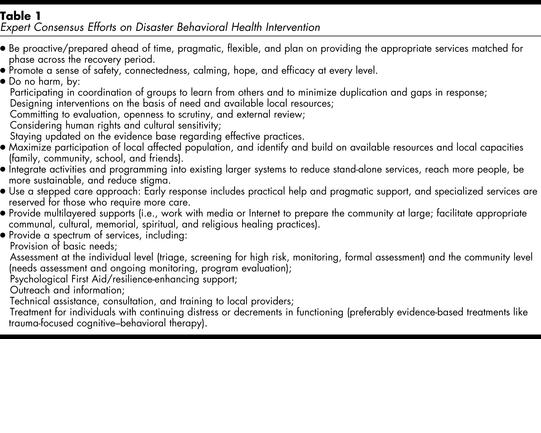
Since January I have been trying to articulate the best practices in doing trauma recovery or trauma healing work in international settings. The foundation of this approach to trauma recovery is, (a) Listen first to the needs, resources, and concerns of a community(b) identify local leaders who can be trained to be the primary trauma recovery workers (rather than outsiders being the primary clinicians), (c) tailoring interventions to the needs of  the community, and (c) above all…do no harm by over-promising, under-delivering, etc.

Today, I opened up my most recent American Psychologist (66:6, September 2011) and found my thinking confirmed in Watson, Brymer, and Bonanno’s Postdisaster Psychological Intervention since 9/11 (see citation at the bottom of the page). On page 485 they list what experts consider an appropriate steps to take in postdisaster behavioral health interventions. Now, most of you don’t probably get excited about research articles like this but I can tell you I did. Here’s the chart (click to see a larger image)

It is nice to find confirmation for something I was thinking but hadn’t read elsewhere.

From: Watson, P. J., Brymer, M. J., & Bonanno, G. A. (2011). Postdisaster psychological intervention since 9/11. American Psychologist, 66(6), 482-494. doi:10.1037/a0024806

1 Comment

Filed under Abuse, counseling science, Post-Traumatic Stress Disorder, Psychology, trauma, Uncategorized