Category Archives: trauma

Free Webinars for polyvictimization and trauma


The Trauma Center at JRI and the National Child Traumatic Stress Network are providing 3 free webinars (for CE credit) on the topic of polyvictimization and diagnosis, developmental issues, and the judicial system. Speakers are Julian Ford (UConn) and Bessel van der Kolk. Each webinar counts for 1.5 CEs.

See OVC Speaker Series Flyer for specifics on who, what, when, and how you get on.

3 Comments

Filed under Abuse, Post-Traumatic Stress Disorder, trauma

Abuse in the Church: Pastoral Responsibilities, Ministry Opportunities


This afternoon I will be speaking to pastors, ministers, elders, and key ministry leaders of the Bible Fellowship Church denomination at their annual conference. Their website states they have over 65 churches and over 10,000 in worship on a given Sunday.

It is a wonderful opportunity to talk about a difficult subject: abuse in the church.

We would like to believe that it happens elsewhere. But the church is not free from those who would harm children. The church has never been free from matters of abuse. The Apostle Paul takes a church to task for putting up with what sounds like abuse and incest. Thankfully, the evangelical church is waking up to the need to educate leaders about sexual abuse and how to care for both victims and perpetrators.

If you are interested in seeing what I will be talking about, here’s the slide show: Abuse In the Church

NEED MORE RESOURCES?

If you are new to this blog, use the search engine to find many other posts about preventing and responding abuse in the church. Or, click the image to the right for a 5 plus hour DVD on this very topic. Or check out www.netgrace.org for excellent resources and help on dealing with abuse in Christian settings.

1 Comment

Filed under Abuse, christian counseling, Christianity: Leaders and Leadership, trauma

What PTSD might feel like


If you haven’t experienced PTSD from a traumatic experience, you might wonder what a traumatic reaction might feel like. What I give below is just a teeny window. Note that what I write about is NOT PTSD but shares some of the same features on a very small and temporary scale.

Imagine the following:

You are sleeping peacefully but at 3:30 am by a horrible metallic crash just outside your home. You recognize the sound as a car crash. What follows that sound is continued crashes, spinning tires, shifting gears, more smashing sounds, shifting gears, then your house rocks when the vehicle hits your porch. You grab your glasses and stumble to your feet, find your pants and start for the phone to dial 911. Without yet seeing what is happening, you imagine that someone is choosing to smash another vehicle in order to get revenge. In a flash you imagine someone very angry who may be dangerous. You try to dial 911 but its dark and you are not yet awake. On the 3rd try, you get it right and the operator comes on the line. She asks several questions (who are you, spell your name, where do you live, what is your nearest cross street, what is your telephone number, what is the emergency, is anyone hurt, etc.). You struggle to answer these questions because of the distress of the situation and the tightening knot in your stomach. You hang up and look out the window. The sound of the offending vehicle dies away. You look outside and see a smashed car crossways the road. It is dark so you cannot tell if anyone is in the vehicle, if anyone is hurt, if danger is outside. You feel paralyzed and sick to your stomach. Should you go outside and see? What if the violent person is still out there?

Soon, the police arrive and neighbors pour out of houses. You venture out to learn that a drunk driver lost control and smashed into a parked car. the driver ended up on your neighbor’s grass and the repeated smashes were the result of his attempt to get back onto the street. Each neighbor describes what they heard or saw. The police arrive and take their reports and photographs. As neighbors share stories and laugh (even the one whose car was destroyed), you feel your stomach relax and you return to you bed for what is left of the night.

The next day, you go to work a bit more tired than usual. You tell a colleague or two about the experience. You perform your duties without significant difficulty. BUT, at moments of silence, you keep hearing the noises of the smashes, spinning tires, more smashes. You feel your stomach tense. You feel embarrassed that you struggled to communicate to the 911 operator. You feel embarrassed about your hesitation to go outside. You feel somehow that you would have failed to protect your family if they were really in danger (due to paralysis). You remember 2 other times you didn’t respond well to a crisis. The next night, you find yourself wound up and unable to sleep.

Again, this little vignette does not make a PTSD diagnosis. Those who have experienced terrible traumas (e.g., sexual assault, witnessing sudden death or forced to participate in a killing) would likely feel this event is simplistic. They are right and yet, you might see how the body/mind may respond to a crisis or the perception of a crisis.

  • Experience of danger
  • Inability to get away from it
  • Horror response
  • re-experiencing intrusive memories
  • Hypervigilance
  • Attempts to shut down the intrusive memories and emotions

Notice in this situation, some of these PTSD symptoms are not present and not likely to form. the problem resolves quickly and, more importantly, the shared conversation with neighbors afterwards reduces much of the isolation that is often common in traumatizing experiences. And yet, notice that sounds of the accident keep coming back to the person. In addition, this person feels some level of guilt and shame about the response to the event. This feeling can increase isolation and negative ruminations about personal failures.

Given this situation and it’s randomness, the person is not likely to remain distressed. Symptoms such as these tend to fade quickly. If, instead, the scenario contained sexual violence by a loved one, confusing physical responses, threats to one’s life if you cried out, you can quickly see how the symptoms would not easily fade but would grow in intensity, frequency and duration.

2 Comments

Filed under Psychology, ptsd, trauma, Uncategorized

Trauma Research: A Quick Update


Last week I made a presentation (Trauma Research Update) to the attendees of the 2013 Community of Practice hosted by the American Bible Society’s Trauma Healing Institute. Video and audio recordings were made and when they come available I will point you all to them here (and there were several VERY GOOD presentations made).

I attach here a PDF of my slide show where I walked ran the audience through a quick review of what we *think* we know about the context, cost of psychosocial trauma in Sub-Saharan Africa (based on peer-reviewed publications). In addition, I review the current thinking about the biology of trauma AND intervention strategies that have some empirical support (though not without significant questions).

Caveats:

If you hope this will be an exhaustive review, look elsewhere. Also, keep in mind that the slide show is written by an educated consumer of research (not a researcher) and designed for a ministry audience. Consider that this review is about what we know from empirical publications. There may be many important things we know that come from other sources!

Also, the information I had about the context and cost of trauma comes, primarily, from an excellent commissioned report written by Wheaton College’s Humanitarian Disaster Institute (yet unpublished). Giving credit where it is due, slide 14 is from an excellent presentation made by Heather Gingrich. Check out her new book on complex trauma.

2 Comments

Filed under Africa, Post-Traumatic Stress Disorder, trauma

A day of trauma recovery: Stimulating talk and an important reminder


American Bible Society

American Bible Society (Photo credit: Wikipedia)

Today was the first day of the Community of Practice convened by the American Bible Society and their Trauma Healing Institute. The room was crowded with recovery specialists in practice around the world. While a few are mental health experts, many are missiologists, bible translators, linguists, pastors, etc. All are individuals who felt the need to address the pandemic of trauma in their little corner of the world. Participants are working in Africa, Asia, the Middle East, South America, Europe, Canada, and the U.S.

It was a stimulating day. Opening remarks by the new ABS president, Dr. Doug Birdsall, reports from ten different areas about recent trauma healing efforts. We heard about what was going on in Nova Scotia to Namibia to Nepal to Nigeria; in South Sudan, Kenya, Thailand, the DR Congo Papua New Guinea and some sensitive areas.

I got a chance to take the group through a fly-over of the cost and context of psychosocial trauma, some recent understandings of the impact of trauma on the body and concluded with a summary of what we know works (and some possible reasons why) and might be transferable and scalable in other parts of the world. Dr. Michael Lyles brought us an update of PTSD and tied it to the experience of the parable of the Good Samaritan. We also heard about resilience training in Namibia and the trauma of persecution and torture in the Middle East.

It is exciting to see what God’s people are doing with just a few resources and to hear how the Bible Society’s program of recovery is maturing and growing by leaps and bounds. However, Doug Birdsall’s meditation on Luke 10 is still ringing in my ears. After sending out the 72 to do ministry, they returned with joy over the great activity they saw. People were healed; demons cast out; the kingdom expanded. Jesus responds to them by saying something rather startling,

Yes, and there is even more amazing things to come. You haven’t seen anything yet. BUT, don’t rejoice over the fact that you have power to cast out demons. Instead, rejoice in the fact that your names are listed in the roll of citizens of heaven. [my paraphrase]

It is good to take heart in the small army of trauma recovery specialists. God is up to something great, even bigger than we can now see. But, it is always more important that he has come and redeemed us. Make sure that you are more happy about your redemption than about what you can do for God.

7 Comments

Filed under Africa, Biblical Reflection, Missional Church, Post-Traumatic Stress Disorder, trauma, Uncategorized

Why “sexy wife” language hurts so many women


Maybe you’ve seen this post: http://deeperstory.com/the-sexy-wife-i-cant-be/? If not, you should read it to learn just how painful and destructive and superficial the “be a sexy wife for your husband” is, especially when combined as “biblical teaching.” Now, the feeling of being sexy isn’t the problem. What is the problem is the failure of speakers/writers to account for the large number of women (and men!) whose sexuality was stolen from them via abuse and other forms of oppression. In addition, these “be sexy” speakers/writers seem to ignore how Scriptures have been distorted to demand sex from spouses (someday I should write a post about the number of times I have been asked during public Q and As about 1 Cor 7 and the demand it makes on women to please their husbands).

Can you imagine giving a talk about the joys of giving birth to an audience where 1:3 women were infertile? Can you imagine NOT acknowledging that a large portion of the audience might struggle with the topic?

For those of you who did read the above talk, the author Mary DeMuth, posted this follow-up post regarding the weight of the stories she heard in the comments section of her first post. Note how she finds hope and comfort among darkness and heaviness. For brave ones, you might read the comments at the bottom of both posts. Note the relief expressed that someone else understands. Note the common refrain, “I didn’t breathe while reading this.” That should tell us how desperate many are for being understood and that most are expecting the other shoe (that “just do it” one) to drop. Note the links to other posts already on this topic.

We need better pictures of sexuality in marriage that recognize pleasure as something that can be had but not at the expense of reality of safety, vulnerability, and comfort. Sexual pleasure is good but it is not the highest end. And decreased quality of pleasure is not a temptation or risk for adultery…unless pleasure has become a god to us.

4 Comments

Filed under Abuse, Christianity, church and culture, Sex, sexuality, trauma

What happens after a trauma may be the key in the formation of PTSD


Thanks to a friend I read this essay today about a possible way to model PTSD formation–by considering what does or does not happen in the trauma victim’s social environment after the trauma experience. The article discusses 2 different studies, one animal and the other human.

The animal study concludes that kidnapping a mother rat from her pups for more than 15 minutes will result in anxious activity upon reunification in the same cage where the trauma happened. Mother and pups will continue to be over-reactive well beyond the event. However, if mother and pups are reunited in a new environment, the trauma reactions (racing around, stepping on each other, aggressive behaviors) seem not to be present. Might it be that they have a shared job of exploring the new environment?

The human study points to the importance of having reunification symbols or rites of re-entry when bringing child soldiers back into the community. This appears to have value over just quietly pretending that nothing happened.

2 Comments

Filed under Abuse, counseling, counseling science, Post-Traumatic Stress Disorder, Psychology, trauma, Uncategorized

Did God injure me? A great pastoral response


I am reading a version of a paper entitled, “Connecting horizons with Job: Pastoral care (in cooperation with professionals) in the trauma-coping process” by Egbert Brink. In one section he discusses pastoral care responses to the victim’s experience that God was the adversary (such as Job experienced). Mr. Brink cites Job 9:10-12, 9:16-17 where Job feels like God’s hand is the one who is doing the wounding. The victim that Mr. Brink is meeting with says,

Did God do this, did He wound me? My heart says yes, but my mind does not allow that answer….Again; did God wound me? Yes…Okay. That’s what Job feels, and I identify with Job. The next logical step is: what emotions do I have? … This is scary, but the step must be taken. It’s not until you say it, that the emotion can be set free. I can do it, I say: I am disappointed in God, and angry, I think. That last bit isn’t proper, but I can’t help it. Don’t take it too harshly. (p. 16)

Mr. Brink (or is it Dr? I do not know) provides this commentary,

…this is a special moment in trauma coping process…every traumatized person is faced with the question why God let it happen and did not protect him or her. The book of Job grants the necessary space to ask these probing life questions dealing with the mysteries of God. Faith in God’s omnipotence and goodness raises many questions in this context, but also provides space for them. Passionate complaints don’t immediately put God’s omnipotence in question but rather underline it.  (ibid, emphasis mine)

And then Mr. Brink says this,

The pastoral task, then, is not to stand in the way of the traumatized client with apologetics, as Job’s friends do. God does not need advocates to plead his case. (ibid, emphasis his)

I found the following Vimeo link (http://vimeo.com/48232843) of Mr. Brink giving a talk on this paper and pastoral case.

1 Comment

Filed under Abuse, Biblical Reflection, pastors and pastoring, Post-Traumatic Stress Disorder, trauma

Good trauma telling?


In preparation for the start of our introductory Global Trauma Recovery course here at Biblical I re-read Richard Mollica’s Healing Invisible Wounds book (see previous posts about the book here and here). Mollica reminds us that there is a healing way to tell one’s trauma story…and there are destructive forms of telling the story.

Destructive forms of storytelling?

Trauma victims do need to tell their story. They need to be heard. But some forms of telling do more damage than good. Signs that the telling may not be helpful?

  • Puts victim/teller into high emotions (reliving the experience versus telling about it)
  • Overwhelms the hearer (who then disconnects thereby leaving the victim feeling more alone)
  • Focuses solely on the trauma or trauma symptoms (e.g., the degradation, shame, etc. thus maximizing paralysis and minimizing survival skills, resiliencies, and other important parts of the person’s life)

Facets of healthy trauma telling?

Mollica suggests 4 facets of good story telling

  • Factual re-telling of trauma (however not every graphic detail)
  • Identifying the cultural significance of the trauma experience
  • Gaining existential or spiritual perspective (reframe from larger perspective on self and world)
  • Identifying the teller/listener relationship forming

Notice that the storytelling is not just about what happened. It is also about the significance, looking from God’s perspective (on self, other, world, etc.) and identifying new connections, skills, resiliencies, etc.

Mollica gives these questions for counselors, family, and pastors to help guide a better story. I find them very helpful if one accepts the caveat that they are not all asked in one sitting nor would we demand articulate answers from victims:

  1. What traumatic events have happened?
  2. How are your body and mind repairing the injuries sustained from those events?
  3. What have you done in your daily life to help yourself recover?
  4. What justice do you require from society to support your personal healing?

3 Comments

Filed under Abuse, counseling, counseling science, counseling skills, Good Books, Post-Traumatic Stress Disorder, teaching counseling, trauma, Uncategorized

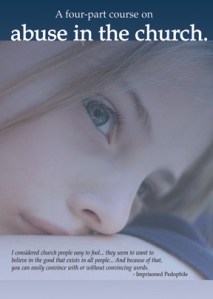
Abuse in the Church DVD now available


This summer I taught a class, along with Boz Tchividjian, about the problem and response of abuse within the church. Our four main plenaries were filmed and are now available on a 2 DVD set distributed by Vision Video. You can purchase the DVDs here at 20% off the price that will be listed on Amazon (and if you use the above link Biblical Seminary makes a few more pennies!). We Abuse in the Churchcover topics such as

  • how to recognize common characteristics of predators
  • prevention strategies beyond background checks
  • why we fail to act on abuse allegations and what to do about it
  • ministry responses to victims and offenders

The class was well-received by students and church leaders alike. It could be a great tool to get conversations going among lay and ordained church leaders as well as counselors who may be helping a church ensure top-notch abuse prevention measures as well as strategies for responding in a Godly way to abuse allegations–a way that ensures that the least of these are protected in the church.

Leave a comment

Filed under Abuse, biblical counseling, christian counseling, Christianity, Christianity: Leaders and Leadership, pastors and pastoring, trauma