Category Archives: Post-Traumatic Stress Disorder

Tuza 2.0: Day Four


[June 26, 2013]

The conference has begun. We have 30 high level caregivers here, 17 of whom attended Tuza 1.0. One of the things we expect is that all of the planning as to how long things will take does not ensure we will be able to stay on schedule. While we expect it, it requires a lot more cultural sensitivity and flexibility than us Westerners usually like to display. When I go to a conference, I don’t want to “waste” time playing games and getting to know my neighbors. Just fill my head up with knowledge, thank you very much. But that is not the way most of the world lives. So, our conference began, appropriately so, getting to know each other. Truth be told, this kind of beginning is necessary if we are going to trust each other!

Our first session included a short review of basic helping skills followed by a roleplay with Carol King. After a large group discussion, we broke attendees up into groups of 4 to form quads (counselor, counselee, and 2 observers). Many attendees remarked at how helpful the quads were for practicing skills. It seems that most have not had this experience before.

After coffee break (coffee plus a bowl containing a little donut with peppers and carrots inside and little fried (whole) fish!), one of our attendees presented a case for large group discussion. The case was of a teen who had experienced sex trafficking and was severely wounded in an attempt to kill her.

Our afternoon session featured a presentation by Dr. Barbara Shaffer on the topic of domestic violence. She spoke about the common cycle of domestic violence (tension building–>violence–>calm), the basis for protection from the scriptures, and gave basic goals when meeting with a person who is domestically abused.

During our large group discussion, we heard from several men and women that men are increasingly abused in Rwanda society. There was some discussion about how much this is an issue. It appears that since the genocide, women have had greater need to be independent and so traditional relationships between men and women are disrupted. Women, these individuals claimed, are more likely to be argumentative than in past eras. Also, we learned that in a separation, children under 7 may be forced to go with the father (or his family) since children belong to the father and not the mother. Not all attendees agreed with this view. We ended the day with small group discussions about how to tell when a person is experiencing domestic violence and how to engage that person in some basic information gathering and invitation to talk further.

One of the major changes we have in our schedule is the fact that we decided it was important to translate in real-time. We had planned that English proficiency would be high enough to do the training in English. However, it appears that substantial concepts are being missed. Even though this doubles the time it takes to do a talk and training, we  believe this is best for the attendees. We give them written text of the talk in English and at the same time give it orally in English and Kinyarwandan.

Some of us ended our work day with a fun swim in Lake Kivu. The water was a perfect temperature and clear many feet down. We swam for about 40 minutes then got ready for dinner. The swim was refreshing after a long day of concentrating and listening. Listening across accents and experiences can really wear you out.

A Funny Anecdote:

Charging phones and readers can be quite a challenge in Africa. You can have a converter and the right plug and find out that your device will not charge. For some reason, I could not charge my phone or nook while in Kigali. However, I was grateful to find that I could charge my devices in my room here at Bethany Centre. Well, last night I awoke at midnight to flames shooting out of my converter right at my head and mosquito net. I yelled, “FIRE” and quickly yanked the blackened plastic out of the wall while sparks continued to fall on flammable material. Thankfully, nothing caught on fire. I opened the patio door and threw the converter outside. My room stunk of that awful burnt plastic smell. In my stupor I wondered if I should call the front desk and ask them to make sure there wasn’t any ongoing problems with the outlet. As I stood thinking about it, I heard/saw outside flourescent lights grow tremendously brighter and then explode, first one, then another, then another. Deciding that I now needed to call the front desk, I turned the light on so I could dial the phone. The overhead light also exploded and sparks fell to the bed/net below. Again, I pounced wanting to make sure nothing caught fire. It did not. I used my phone light to dial the front desk. Minutes later, a sleepy voiced answered. I requested someone come soon to check on me and to ensure something wasn’t terribly wrong. No one came. The next morning I related my story and learned that several others had no power and their lights blew as well. Later we learned that some wires crossed and caused the power surge. It ended well and we had no further electrical problems the rest of the conference.

Leave a comment

Filed under AACC, Africa, christian counseling, counseling, counseling skills, Post-Traumatic Stress Disorder, Psychology, Relationships, Rwanda

Global Trauma Recovery Intensive: Day 1


20 students along with myself and Dr. Diane Langberg just finished a 3 day marathon together at Biblical’s Hatfield campus. This inaugural cohort has been studying together via our e-campus since January. We’ve read books, articles, watched slides shows, and discussed a wide variety of topics (e.g., the psychological, social, spiritual, biological impact of trauma, shame, culture, strengths-based listening skills, and faith and psychological intervention strategies). At this meeting, we continued to consider how to listen andGTRI - First Graduating Class respond to traumatized individuals in places other than our own.

Morning Session: Romania

Our morning consisted of a live engagement (thank you Google Hangout!) with mental health practitioners in Romania. Dr. Ileana Radu and Stefana Racorean hosted the meeting. The Romanian contingent consisted of mental health therapists, psychiatrists, and Christian leaders. As part of their conference, they took time out to ask us questions about trauma, trauma recovery interventions, and integration of psychology and Christian faith practices. In return, we asked them about the mental health scene in Romania, the most common forms of trauma and intervention models in their practices. From our conversations, it appears that they experience a significant divide between secular mental health models or “bible only or prayer only” models.

The conversation bolstered our students understanding of Romanian culture and put a human face to what they had read about regarding torture trauma resulting from pre-revolution days in that country. In addition, students had the opportunity to discuss a couple of PTSD cases written up by mental health practitioners in the conference.

The entire conversation and connection (bridge, according to our new Romanian friends) was the result of Dr. Langberg’s inability to travel to Romania in April. She was to be their keynote speaker but due to the death of her mother, she was unable to attend. The conference was rescheduled and Dr. Langberg spoke via SKYPE and previously recorded DVDs.

Afternoon Session: North Philadelphia

Elizabeth Hernandez, executive director and founder of Place of Refuge, led our afternoon session by giGTRI - appendix photoving us a window into the trauma work going in North Philadelphia among the latino population. She shared with us some of the groundbreaking work they are doing with low-income population who have experienced many traumas. The class also engaged around the matter of syncretism (Catholic faith practices mixed with witchcraft and other superstitions) and how faith-based counseling services are delivered.

We ended the day with some brief use of video to “listen” to trauma stories in Eastern Europe and the US. After these engagements, we had our students explore writing their own laments as means to connect with God and concluded with a corporate lament. The purpose of lament is to confess (one’s own sin or the sins of others!), converse with God and others, question God about what we see that is not the way it is supposed to be, and by questioning acknowledge hope in God that he is in the process of redeeming and rescuing a broken world. Lament is not a tool to get better but to connect to each other and to talk to God about our suffering.

Leave a comment

Filed under Abuse, Biblical Seminary, christian counseling, christian psychology, counseling, counseling skills, Diane Langberg, Post-Traumatic Stress Disorder, trauma, Uncategorized

Free Webinars for polyvictimization and trauma


The Trauma Center at JRI and the National Child Traumatic Stress Network are providing 3 free webinars (for CE credit) on the topic of polyvictimization and diagnosis, developmental issues, and the judicial system. Speakers are Julian Ford (UConn) and Bessel van der Kolk. Each webinar counts for 1.5 CEs.

See OVC Speaker Series Flyer for specifics on who, what, when, and how you get on.

3 Comments

Filed under Abuse, Post-Traumatic Stress Disorder, trauma

Trauma Research: A Quick Update


Last week I made a presentation (Trauma Research Update) to the attendees of the 2013 Community of Practice hosted by the American Bible Society’s Trauma Healing Institute. Video and audio recordings were made and when they come available I will point you all to them here (and there were several VERY GOOD presentations made).

I attach here a PDF of my slide show where I walked ran the audience through a quick review of what we *think* we know about the context, cost of psychosocial trauma in Sub-Saharan Africa (based on peer-reviewed publications). In addition, I review the current thinking about the biology of trauma AND intervention strategies that have some empirical support (though not without significant questions).

Caveats:

If you hope this will be an exhaustive review, look elsewhere. Also, keep in mind that the slide show is written by an educated consumer of research (not a researcher) and designed for a ministry audience. Consider that this review is about what we know from empirical publications. There may be many important things we know that come from other sources!

Also, the information I had about the context and cost of trauma comes, primarily, from an excellent commissioned report written by Wheaton College’s Humanitarian Disaster Institute (yet unpublished). Giving credit where it is due, slide 14 is from an excellent presentation made by Heather Gingrich. Check out her new book on complex trauma.

2 Comments

Filed under Africa, Post-Traumatic Stress Disorder, trauma

A day of trauma recovery: Stimulating talk and an important reminder


American Bible Society

American Bible Society (Photo credit: Wikipedia)

Today was the first day of the Community of Practice convened by the American Bible Society and their Trauma Healing Institute. The room was crowded with recovery specialists in practice around the world. While a few are mental health experts, many are missiologists, bible translators, linguists, pastors, etc. All are individuals who felt the need to address the pandemic of trauma in their little corner of the world. Participants are working in Africa, Asia, the Middle East, South America, Europe, Canada, and the U.S.

It was a stimulating day. Opening remarks by the new ABS president, Dr. Doug Birdsall, reports from ten different areas about recent trauma healing efforts. We heard about what was going on in Nova Scotia to Namibia to Nepal to Nigeria; in South Sudan, Kenya, Thailand, the DR Congo Papua New Guinea and some sensitive areas.

I got a chance to take the group through a fly-over of the cost and context of psychosocial trauma, some recent understandings of the impact of trauma on the body and concluded with a summary of what we know works (and some possible reasons why) and might be transferable and scalable in other parts of the world. Dr. Michael Lyles brought us an update of PTSD and tied it to the experience of the parable of the Good Samaritan. We also heard about resilience training in Namibia and the trauma of persecution and torture in the Middle East.

It is exciting to see what God’s people are doing with just a few resources and to hear how the Bible Society’s program of recovery is maturing and growing by leaps and bounds. However, Doug Birdsall’s meditation on Luke 10 is still ringing in my ears. After sending out the 72 to do ministry, they returned with joy over the great activity they saw. People were healed; demons cast out; the kingdom expanded. Jesus responds to them by saying something rather startling,

Yes, and there is even more amazing things to come. You haven’t seen anything yet. BUT, don’t rejoice over the fact that you have power to cast out demons. Instead, rejoice in the fact that your names are listed in the roll of citizens of heaven. [my paraphrase]

It is good to take heart in the small army of trauma recovery specialists. God is up to something great, even bigger than we can now see. But, it is always more important that he has come and redeemed us. Make sure that you are more happy about your redemption than about what you can do for God.

7 Comments

Filed under Africa, Biblical Reflection, Missional Church, Post-Traumatic Stress Disorder, trauma, Uncategorized

Could surprise divorce cause PTSD?


A former student (HT Armando!) sent me this link today about a woman who experienced PTSD like symptoms after receiving an out-of-the-blue text from her husband telling her he was leaving and divorcing her.

She experienced flashbacks, nightmares, became hyper-alert to dangers, unable to sleep and other such symptoms that are common to PTSD. She did not have an actual or perceived threat on her life–a necessary requirement for the current diagnosis of PTSD. However, she did seem to respond to the surprising evidence that her husband had deceived her for some time as having been “sleeping with the enemy.”

This question for you is whether you think it harms those who suffer classic PTSD (i.e., those who do experience a threat on their life) to lump them together with those who have similar symptoms from non-life threatening trauma. Yes? No?

I have observed pastors in significant conflict with church leaders exhibit PTSD like symptoms. I have observed individuals who learn in late adolescence or adulthood that their parents were actually adoptive parents. It appears that some of the same symptoms exhibited by those who experienced rapes, car crashes, or war trauma show up in some individuals whose world is turned upside down by another’s deception and duplicity.

So I ask the question again: What is gained or lost by expanding PTSD diagnosis to include those with similar symptoms but without the threat of physical injury or death?

Here’s one gain and loss for someone having this kind of divorce reaction. Those who have the symptoms without the physical threats may find some comfort in knowing their reactions are had by many others. However, I would imagine that most of these same people may find their symptoms abate more quickly than that of those who see actual death and destruction. Thus, a diagnosis of PTSD may end up hurting them due to an over-estimation of recovery time needed.

3 Comments

Filed under counseling science, Post-Traumatic Stress Disorder, Psychology

What happens after a trauma may be the key in the formation of PTSD


Thanks to a friend I read this essay today about a possible way to model PTSD formation–by considering what does or does not happen in the trauma victim’s social environment after the trauma experience. The article discusses 2 different studies, one animal and the other human.

The animal study concludes that kidnapping a mother rat from her pups for more than 15 minutes will result in anxious activity upon reunification in the same cage where the trauma happened. Mother and pups will continue to be over-reactive well beyond the event. However, if mother and pups are reunited in a new environment, the trauma reactions (racing around, stepping on each other, aggressive behaviors) seem not to be present. Might it be that they have a shared job of exploring the new environment?

The human study points to the importance of having reunification symbols or rites of re-entry when bringing child soldiers back into the community. This appears to have value over just quietly pretending that nothing happened.

2 Comments

Filed under Abuse, counseling, counseling science, Post-Traumatic Stress Disorder, Psychology, trauma, Uncategorized

Did God injure me? A great pastoral response


I am reading a version of a paper entitled, “Connecting horizons with Job: Pastoral care (in cooperation with professionals) in the trauma-coping process” by Egbert Brink. In one section he discusses pastoral care responses to the victim’s experience that God was the adversary (such as Job experienced). Mr. Brink cites Job 9:10-12, 9:16-17 where Job feels like God’s hand is the one who is doing the wounding. The victim that Mr. Brink is meeting with says,

Did God do this, did He wound me? My heart says yes, but my mind does not allow that answer….Again; did God wound me? Yes…Okay. That’s what Job feels, and I identify with Job. The next logical step is: what emotions do I have? … This is scary, but the step must be taken. It’s not until you say it, that the emotion can be set free. I can do it, I say: I am disappointed in God, and angry, I think. That last bit isn’t proper, but I can’t help it. Don’t take it too harshly. (p. 16)

Mr. Brink (or is it Dr? I do not know) provides this commentary,

…this is a special moment in trauma coping process…every traumatized person is faced with the question why God let it happen and did not protect him or her. The book of Job grants the necessary space to ask these probing life questions dealing with the mysteries of God. Faith in God’s omnipotence and goodness raises many questions in this context, but also provides space for them. Passionate complaints don’t immediately put God’s omnipotence in question but rather underline it.  (ibid, emphasis mine)

And then Mr. Brink says this,

The pastoral task, then, is not to stand in the way of the traumatized client with apologetics, as Job’s friends do. God does not need advocates to plead his case. (ibid, emphasis his)

I found the following Vimeo link (http://vimeo.com/48232843) of Mr. Brink giving a talk on this paper and pastoral case.

1 Comment

Filed under Abuse, Biblical Reflection, pastors and pastoring, Post-Traumatic Stress Disorder, trauma

Good trauma telling?


In preparation for the start of our introductory Global Trauma Recovery course here at Biblical I re-read Richard Mollica’s Healing Invisible Wounds book (see previous posts about the book here and here). Mollica reminds us that there is a healing way to tell one’s trauma story…and there are destructive forms of telling the story.

Destructive forms of storytelling?

Trauma victims do need to tell their story. They need to be heard. But some forms of telling do more damage than good. Signs that the telling may not be helpful?

  • Puts victim/teller into high emotions (reliving the experience versus telling about it)
  • Overwhelms the hearer (who then disconnects thereby leaving the victim feeling more alone)
  • Focuses solely on the trauma or trauma symptoms (e.g., the degradation, shame, etc. thus maximizing paralysis and minimizing survival skills, resiliencies, and other important parts of the person’s life)

Facets of healthy trauma telling?

Mollica suggests 4 facets of good story telling

  • Factual re-telling of trauma (however not every graphic detail)
  • Identifying the cultural significance of the trauma experience
  • Gaining existential or spiritual perspective (reframe from larger perspective on self and world)
  • Identifying the teller/listener relationship forming

Notice that the storytelling is not just about what happened. It is also about the significance, looking from God’s perspective (on self, other, world, etc.) and identifying new connections, skills, resiliencies, etc.

Mollica gives these questions for counselors, family, and pastors to help guide a better story. I find them very helpful if one accepts the caveat that they are not all asked in one sitting nor would we demand articulate answers from victims:

  1. What traumatic events have happened?
  2. How are your body and mind repairing the injuries sustained from those events?
  3. What have you done in your daily life to help yourself recover?
  4. What justice do you require from society to support your personal healing?

3 Comments

Filed under Abuse, counseling, counseling science, counseling skills, Good Books, Post-Traumatic Stress Disorder, teaching counseling, trauma, Uncategorized

Trauma and Trafficking DVDs on Amazon


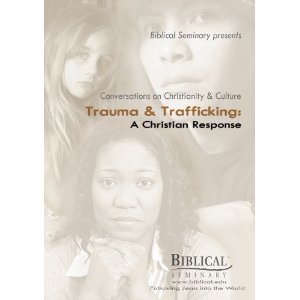
Nearly 2 years ago (March 2011), Biblical Seminary put on a conference about the problem of sexual trauma and trafficking. Our speakers included Dr. Diane Langberg (a noted psychologist), Bethany Hoang (IJM), Robert Morrison (a grassroots organizer), and Pearl Kim (now ADA for 2 Philadelphia counties). The sessions covered domestic and international sex trTrauma and Traffickingafficking, abuse and violence against women worldwide, the problem of sexual abuse in christian organizations, and how to mobilize community action without expending energy on non-profit status.

It was a powerful conference…and you can own it for a mere $19.99. Here’s the link to Amazon. Or, you can find it here at Vision Video (along with MP4 options as well) for 20% off.

This DVD set (3 DVDs) are an excellent starting point if you or your church group want to think more deeply about the biblical call to justice in the area of trafficking, trauma, and violence against women, whether “out there” or in the church.

Look for information on purchasing our most recent DVD series, Abuse in the Church, in the next week.


Leave a comment

Filed under Abuse, biblical counseling, Biblical Reflection, christian counseling, Christianity, Christianity: Leaders and Leadership, Diane Langberg, Post-Traumatic Stress Disorder, trauma