Tag Archives: trauma

DRC/Rwanda Trip: Day 9


October 19, 2011, Kigali, Rwanda

Finally! Our conference begins. 19 separate group represented here for a total of 42 caregivers. Baraka Unwingeneye (IJM and lay counselor trainer) opened the conference with small and large group discussions on the causes, symptoms, and definition of trauma. The participants were active in discussions. The energy is high! Baraka concluded her section by reminding us all that everyone can be traumatized, even the strong in body and faith. Diane then spoke for 50 minutes or so on the nature of traumatic memory and an overview of the first two phases of intervention. Her voice was a bit weak as she came down with a cold but she delivered it well just the same. Her outline provided a useful reminder of treatment necessity: talking…tears…time. She concluded with some discussion of how having healing relationships, a purpose, and faith all play significant roles in the recovery process.

We ended the morning with a handkerchief project where participants created a depiction of their grief/suffering and then shared it with others. We knew this was going to be powerful and that it would take time. However, we were somewhat surprised at just how powerful it was and how much the participants valued telling others (in dyads and groups) a portion of their trauma story. Several told us that even though they had been counseling others since the genocide in 1994, they had never told anyone their own trauma story.

Our afternoon continued with small and large group activities/discussions and concluded with a question and answer session. The group is hungry for information and we do not have to do much to encourage conversation, discussion, and engagement. Our late afternoon and evening is spent resting, planning for tomorrow’s work and enjoying each other’s company. The food continues to be outstanding at Solace. The only complaint I have is how early the roosters and birds start calling. 4 am is way too early for this. Just outside my window is something sounding like a bird having swallowed a bugle. I later discover it is the gray crowned crane. Here’s a short video I shot from my balcony where I got it to “sing.”  (photos by Joshua Straub)

Leave a comment

Filed under AACC, counseling, counseling skills, Post-Traumatic Stress Disorder, Rwanda, trauma

How can you listen to trauma all the time?


How can you stand to listen to [traumatic] stories like these all day long?

This is a question I get from time to time, most frequently from someone who has just told me of the trauma in their life…and most frequently from someone who feels stuck in their responses to their abuse.  They know I see multiple clients in one day and imagine that listening to pain, heartache, abuse, neglect, and the like must be overwhelmingly depressing.

My answer is a little complicated, but here it is

1. You get used to it. This could sound callous and by this answer I do not mean you get numb  to trauma. If you get numb to trauma then it is time quit counseling. But, you do get a bit used to it.  You are less surprised by evil after you hear about it in so many different forms.

2. It is hard. Hearing about brokenness is difficult. It is even more difficult when those who should be responsible for protecting or at least dealing with the sins of others well do not do their job. When systems conspire to harm the victim that is hard to hear over and over again.

3. There is more hope in these stories than you might imagine. Yes, hearing about brokenness can be difficult but we see far more hope than you might imagine. We see more life and more growth despite pain and hurt. When someone abuses a child, that someone destroys another for their own purposes. But, time and time again we see resiliency–even when that person may have significant damage in their life. Often the abused person only sees their brokenness but we see how they are surviving and thriving. It reminds me of how I have seen trees growing up in the middle of abandoned parking lots. What was left as useless is supporting life, even developing an entire ecosystem.

4. You can only do this work if you also spend time with good things. One must imbibe in healthy and living things if one wants to work with death. This means spending time with creative things, with beauty, with life, with art, with music and the like. If you don’t do this, you will die on the vine and you are in great danger of hurting others.

Leave a comment

Filed under Abuse, counseling, counseling skills, Uncategorized

Healing Trauma in International Settings: AACC Seminar


Today, Carol King and myself will be presenting this PowerPoint show for our 1 hour breakout at this year’s AACC World Conference. Feel free to check out what we talk about by following the link.

1 Comment

Filed under AACC, counseling, counseling science, counseling skills, Uncategorized

Sneak preview: Healing Trauma in International Settings (AACC seminar)


Cascade Atrium, Gaylord Opryland Resort & Conv...

Image via Wikipedia

Just completed preparing my breakout seminar for this year’s AACC World Conference at the beautiful but outlandishly expansive Opryland Hotel in Nashville (Sept 28-Oct 2). This time around I presenting with my colleague Carol King on “Healing Trauma in International Settings: Best Practices.” Carol has had some experience in Rwanda and Goma, DRC and will be with our group in October when we do trauma recovery training in Kigali. Come back to the blog on the 30th and you can see and download the slideshow we will do.

What will we be talking about? 3 main points:

  • Listen…don’t assume you already know trauma or treatment practices
  • Train…don’t do the interventions yourself (train local leaders)
  • Utilize…don’t reinvent the wheel (use existing models)

Now obviously we will be fleshing those points out. Our goal is to help prepare interested counselors to develop short and long-range intervention strategies that utilize the cultural and human resources of the people they will serve. The only way to do this well is to have a listening and collaborative/support role approach. To that end I will talk about hoe to build an effective area case map.  We end by reviewing a few models for trauma recovery (both Christian and secular).

Check back on the 30th for the full set of slides.

Leave a comment

Filed under AACC, Abuse, christian counseling, christian psychology, Christianity, counseling, counseling science, counseling skills, Post-Traumatic Stress Disorder

Psychological rubbernecking?


One of the necessary first steps of doing international trauma work is to listen to the stories of trauma. There are two main reasons. First, it can be healing for the teller to tell their story to someone safe and caring (if those leading the story telling project follow some basic rules). Second, stories often reveal useful information that may determine future trauma recovery intervention strategies.

But let us also admit there can be a downside to getting others to tell their story, especially those who are impoverished and in great need:

  • When “helpers” or journalists helicopter in to hear the stories, the victims may not feel free to not tell their stories because of the help they hope to receive
  • Outside helpers may repeat the stories in such a way as to sensationalize or to gain more money for future trips. While some reasons to tell may be noble and good, does the retelling of the trauma put the victim at risk for retaliation?
  • Getting victims to tell their story may first raise hopes for change and then dash them if there isn’t a plan for follow-up
  • Sometimes outsiders listen only to help themselves feel better (see, we cared enough to listen) but not do anything to help

In less than one month I will be on my way to do just this kind of listening in both the DRC and Rwanda. The challenge for us is to listen and invite story-telling in ways that leaves victims with immediate help and hope and a viable plan for the future (as it pertains to what to do about their trauma).

But we face some hurdles in trying to hear the right (real) or most important stories.
1. Hearing the real stories. Sometimes stories get cleaned up in an effort to tell us what others think we want to hear. Other stories are told with a slant in order to avoid stirring up other trouble.

2. Avoiding our own biases. Some victims may be perpetrators even as they are also victims. It is easy to categorize individuals in such a way that we stop listening to the pain or the recovery. We can fail to see how victims handle temptations for revenge or how perpetrators act humanely.

3. Lost in translation. Most of the stories we will hear are going to be told to us in a language other than English. That means the story we hear may be the words of the translator rather than the victim.

There is a fine line between listening for learning or helping and listening for curiosity. It is not always clear where that line is but pray for us as we seek to listen in ways that bring health and a plan for healing. We do not want to merely rubberneck like those driving past a bad accident, looking but not providing any help.

One sign that we are listening well is that the victim not only recalls the terrible things from their past but that they also recall how they survived and have some sense of being empowered in their present and future.

1 Comment

Filed under christian counseling, DRC, Uncategorized

Getting confirmation on global trauma recovery plans


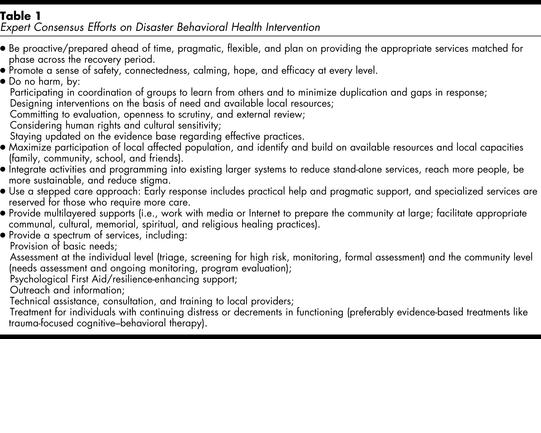
Since January I have been trying to articulate the best practices in doing trauma recovery or trauma healing work in international settings. The foundation of this approach to trauma recovery is, (a) Listen first to the needs, resources, and concerns of a community(b) identify local leaders who can be trained to be the primary trauma recovery workers (rather than outsiders being the primary clinicians), (c) tailoring interventions to the needs of  the community, and (c) above all…do no harm by over-promising, under-delivering, etc.

Today, I opened up my most recent American Psychologist (66:6, September 2011) and found my thinking confirmed in Watson, Brymer, and Bonanno’s Postdisaster Psychological Intervention since 9/11 (see citation at the bottom of the page). On page 485 they list what experts consider an appropriate steps to take in postdisaster behavioral health interventions. Now, most of you don’t probably get excited about research articles like this but I can tell you I did. Here’s the chart (click to see a larger image)

It is nice to find confirmation for something I was thinking but hadn’t read elsewhere.

From: Watson, P. J., Brymer, M. J., & Bonanno, G. A. (2011). Postdisaster psychological intervention since 9/11. American Psychologist, 66(6), 482-494. doi:10.1037/a0024806

1 Comment

Filed under Abuse, counseling science, Post-Traumatic Stress Disorder, Psychology, trauma, Uncategorized

Heal thyself? Do we have the capacity?


Those who follow the Christian faith wholeheartedly believe that God is the “great physician” and eschew the belief that humans heal themselves. As a result of this belief, Christians sometimes react rather strongly to humanistic language of “self-healing.”

But before you do, consider this: if we assume that God is indeed the creator of all things, then we must also assume he puts into place the many corrective features found in the body. The liver and kidneys remove toxins from the body; blood clots when we cut ourselves; we sneeze to get rid of irritants; we sleep to rejuvenate what has become run down. In better words, Richard Mollica says,

This force, called self-healing, is one of the human organism’s natural responses to psychological illness and injury. The elaborate process of self-repair is clearly seen in the way physical wounds heal. At the moment of injury, blood vessels contract to staunch bleeding. Chemical messengers pour into the tissue, signalling a multitude of specialized cells to begin the inflammation process. White blood cells migrate into the wound within twenty-four hours, killing bacteria and triggering a process of cleansing and tissue repair. A matrix of connective tissue collagen is then laid down, knitting together the ragged edges of the wound in a repair that may not be perfect but is highly functional. (p. 94)

He goes on to say,

The healing of the emotional wounds inflicted on mind and spirit by severe violence is also a natural process.

I find his writing on this subject rather helpful. Sometimes we look passively to God to resolve our traumas, as if it were entirely up to Him. Other times we either resist what we can do or attempt what is not healthy for us. Dr. Mollica (an MD) provides many examples in his book of how the body naturally tries to heal/respond to trauma (e.g., DHEA counteracts toxicity of too much cortisol), where the system goes wrong, and what we can do about it from a therapeutic standpoint.

Dr. Mollica is right in that our bodies are designed to respond well to traumatic experiences. However, I’m pretty sure he also agrees that we are not designed to do this unassisted. The community must participate in the process. We are social beings and thus our healing must be socially situated.

Two Toxins: Emotional Memory and Poor Storytelling

Part of the problem, says Dr. Mollica, is the emotional memory system. When we experience a trauma, our cortex forms declarative memories of the event. These are where we store the “facts” (where we were, what we felt, and how these events connect to previous experiences). But there is another memory system, one he calls “emotional memory” (p. 96). Declarative memory involves the cortex and hippocampus while emotional memory involves the amygdala.

The amygdala is the fear-response command center of the brain, and it does not wait around for the conscious mind, located in the cortex, to decide if a threat is real or not. The amygdala can activate an emergency response throughout the body within milliseconds by calling the stress-response system into play.  (p. 96)

Unfortunately, traumatic events can create emotional memories in the amygdala that keep on replaying and are difficult to extinguish over time. (p. 97)

Another toxin is the re-telling of the trauma story in a way that retraumatizes the victim. Dr. Mollica, in chapter 5, describes the problem of poor storytelling. Poor storytelling evokes only the trauma, the shame, the degradation experienced. Storytelling should cause us to form images in the teller and listener’s minds. These images need to symbolize the whole person/story and not only the most damaging details. The problem is we tend to tell stories that fixate on the intense emotions and thus elicit toxic emotions and maintain the experience that the trauma is still ongoing.

Many traumatized persons are plagued by the two poles of humiliation–sadness and despair on one side, and anger and revenge on the other. (p. 122)

Assisted Self-healing?

Mollica says, “A proper clinical approach to emotional memory avoids triggering the emotions stored in the amygdala and enables the cortex to assert conscious control over the recollection of traumatic events. (p. 97)

How do you do this? With the help of a storytelling coach, a person tells their story in a factual, direct, but not grotesque way that would cause the listener to turn away. Why does this matter? Because part of the healing process is to be heard, seen, and empathized with. Fixating on the most grotesque details only enhances the emotional memory system and pushes others away. Good storytelling still tells the truth but does so in a way that reconnects people with the world, enables them to feel sadness but in community with others, and helps them see that their lives are not solely defined by the traumatic events. Further, good storytelling points to larger values that are still held and not lost due to the evil done by others. Surely trauma does shape and change us. Recovery and healing to the point of living as if the event did not happen would be to live in a world of denial and self-deception. But good storytelling reminds us that we are not ONLY defined by and/or limited to being victims. And good storytelling reminds us of God’s sustaining power that is greater than those who can only destroy bodies.

Dr. Mollica summarizes this chapter this way,

Strong emotions comprise the traumatic memories that are imprinted in the survivor’s brain. One of the mind’s key tasks after trauma is to take these strong emotions and gradually reduce them over time through good storytelling. A poor storyteller tells a toxic trauma story, unhealthy to mind and body with its focus on facts and high expressed emotions. In our society situations that demonstrate this type of storytelling are common, including superficial, sensational media reporting of tragedies and debriefing therapy by misguided mental health workers. In contrast a good storyteller is able to express tragic emotions with the artfulness of a musician playing an instrument, engaging the listener’s interest and involvement. (p. 133)

I commend to you the book. He discusses both good and bad dreams, the role of “social instruments” of healing and a call to health. Very helpful book if you are interested in international trauma recovery.

7 Comments

Filed under Abuse, counseling science, counseling skills, Post-Traumatic Stress Disorder, Psychology, ptsd, Uncategorized

The real damage done in abuse?


I’ve written before on the damage done when a community fails to respond to abuse in a justice oriented way. But here is a more succinct and apt quote by Miroslav Volf:

If no one remembers a misdeed or names it publically, it remains invisible. To the observer, its victim is not a victim and its perpetrator is not a perpetrator; both are misperceived because the suffering of the one and the violence of the other go unseen. A double injustice occurs—the first when the original deed is done and the second when it disappears. (italics mine)

Abuse victims sometimes tell us that the most significant damage to them is when community members (family, leaders, peers) fail to “see” or act justly when they hear of the abuse. It was bad enough to be sexually abused (yes, that is real damage too) but far worse to be told it didn’t happen or be told to take it for the sake of the larger community (e.g., you wouldn’t want to harm his reputation, destroy the family, cause others to fall away from Christ, etc.).

I saw this quote in the first pages of The Long Journey Home: Understanding and Ministering to the Sexually Abused, to be released soon by Resource Publications, an imprint of Wipf & Stock. I have the typeset PDF and the editor, Andrew Schmutzer, says the book will be released in August. This book (over 500 pages!) may become the place to turn for Christians seeking to understand the scourge of sexual abuse in all its ugly forms. Chapters are written by those who are expert in the social sciences, theology, and pastoral care. The line up is phenomenal. You can see the title page/table of contents (TOC Long Journey Home) to see the gamut of chapters and authors.

2 Comments

Filed under Abuse, christian counseling, christian psychology, Christianity, Christianity: Leaders and Leadership, counseling, counseling science, pastors and pastoring, Psychology, ptsd, Uncategorized

She’s My Sister Benefit Concert


Join Meredith Andrews, Dove Award winning Christian artist, in a concert to benefit She’s My Sister and celebrate the conclusion of the She’s My Sister Bike Tour. Each $10 ticket will provide Scripture-based trauma care to one abused woman in the Congo. The concert will be held at Calvary Baptist Church in Easton, Pa. on Friday, July 8 at 8:00 p.m. Purchase tickets online at www.congosister.org or contact Hannah Wildasin for group sales at 610-360-3864.


Leave a comment

Filed under Abuse, Christianity, counseling

Listening to trauma


Those interested in trauma recovery work in international settings where rape is used as a tool of war will find this article on CNN to be of interest. WARNING: Not for those who are easily triggered by trauma stories!

Here’s a couple of reasons to read the article.

1. Why do this work?

They believe that listening is acknowledgement — and that acknowledgment is a kind of apology. Listening, they say, is the least the world owes.

2. Impact of this work?

You will experience secondary trauma. Don’t think you won’t.

3. How to do this work?

Start with an open question: Tell me about your experience. Look them in the eye. Don’t look at your notepad. If they say, “No, I don’t want to talk,” then leave. If they say, “Yes,” and tell you horrible things, wipe the emotion from your face. Get over being surprised they would tell a stranger, you, such intimate violations.

Know they are telling you because they need to tell someone, for whatever reason. And bearing that in mind, make no promises. Different victims want different things — revenge, financial compensation, asylum, prosecution of their attackers. Tell them that you can only listen, and do only that.

Leave a comment

Filed under Abuse, Post-Traumatic Stress Disorder, Rape