Tag Archives: Christianity

Characteristics of a competent counselor?


I’ve published another blog post on the Seminary’s faculty blog site. This time, I’ve written a bit on 7 characteristics of a competent counselor. Readers here may remember there was a famous book  by Jay Adams by the title, “Competent to  Counsel”. I’m not trying to compete with that title but rather to focus on the character of the counselor. Too often we worry about the beliefs of the counselor. While beliefs, assumptions, models are very important, they are secondary to the character of the counselor. Having the right model but unable to be kind is a counseling fail. Frankly, choose the kind and humble counselor over the “right” thinking counselor if you have to make the choice between the two. The humble counselor is more likely to keep out of the way of the Spirit’s work in your life.

What are the seven characteristics I look for in my students and that I hope I exude in increasing measure? Read on here.

3 Comments

Filed under christian counseling, christian psychology, counseling, counseling science, counseling skills

New post on creation v. fall approach to relationships


I apologize for the absence here of late. Somehow, my “free time” has been eaten up, this despite my having not taught a class since October 25. Little meetings and assignments add up to a boatload of work! I’m looking forward to getting back into the classroom just so I can have a regular schedule. However, I have a new post up on the Biblical Faculty blog site on the impact of our “glasses” on our relationships. What do you look for most? The good (creation) or the bad (fall) in those around you?

1 Comment

Filed under christian counseling, Christianity, counseling, Relationships

Bookend sins?


Human moral frailty is never singular. Meaning, we don’t sin with just one sin. Every moral failing includes at least 3 parts: deception, action, cover-up. Think of deception and cover-up as bookends and the specific behaviors as the books in the middle. And just as it is hard to keep books on a shelf without bookends, it is hard to do what we know is wrong without deception of self and cover-ups.

What are your versions of bookends that give you “permission” to hate, to excuse, to overlook your faults?

Knocking down the bookends goes a long way to defeating outward sins like abuse as well as inward sins like festering bitterness.

1 Comment

Filed under christian counseling, christian psychology, Christianity, Uncategorized

DRC/Rwanda Trip: Final Days


October 21-22, 2011, Kigali, Rwanda

Friday morning and we are up by 6 am. Have to pack this morning because we have to be out of our rooms. As soon as we finish the conference we must say our goodbyes and get to the airport. We have breakfast with Robert Briggs of the American Bible Society. He’s on his way to a United Bible Society meeting in Kenya. Our conference begins with Diane

Planning the next steps

Langberg and Carol King covering the topics of lament and grief. After their presentations, the participants practiced writing their own laments. We made time for sharing them with others. We concluded this section with a choral reading of Scriptural laments. This choral reading was compiled by Lynn MacDougall and quite moving for all. We had enough time before lunch for me to teach a bit on vicarious trauma.

After lunch, I did a short teaching on peer supervision. It is important for these caregivers to support each other and so I taught on how to do case consultations and to write-up case study/questions. After finishing this teaching, Baraka led the participants in a “What next” brainstorm. Their main recommendation was to form an association of counselor/caregivers–Rwandan Association of Christian Counseling as a place to get further support, training and to share resources. They wanted a website that would allow them to connect via social media. As they explored their current needs, many said that the number one need is ongoing mentoring. Others talked of finding ways to get paid for their work in counseling. Many spoke of the need for skills and training in dealing with drug and alcohol issues, sexuality, gender-based violence, depression, and anxiety. They asked for trainings 2 times per year. The group decided to appoint a few of the attendees to a committee to see these recommendations to completion.

We concluded our time by asking them to tell us what parts they liked the most. They liked the small group activities. They wanted these to go longer. They liked the role plays and want more. They would like PowerPoint slides (we didn’t do these but handed out outlines) and for speakers to speak slower English. We promised to send them a PDF of our talks and outlines for them to have in electronic form.

Our final activity was to hand out the certificates for real. I got the pleasure of doing this and getting a hug and a picture from each attendee. We said our goodbyes, made a quick change of clothes and headed off to the car to take us to the airport. Just as we were about to get in the car, we were given handkerchiefs each with notes and signatures from the attendees. A sweet parting gift!

Friday night at 7 pm, we boarded our plane (Brussels Air) to start the trip back home. The flight was full and our seats were all over the plane so no debriefing for us. For the next 10 hours (including a stop in Nairobi), I was jammed into a middle seat without leg room (front role of cattle class). Arriving in Brussels by 6 am, we managed to get coffee, chat a bit with each other, and buy some Belgian chocolates for the family. After a total of 28 hours of travel, we arrived back in Philadelphia, PA. 42 hours of no sleep (all day Friday and the night and then most of Saturday) but I arrived home wired and ready to tell my family about what I had seen. Funny, as I tried to tell them about my trip, I found I was having a hard time making sense of everything. I’m not sure it was just because I was tired but more because I had too many thoughts and feelings and was without words to express it all.

As I post this, I am now 1 month from the end of this trip. It is still hard to be concise about the trip. We learned much, saw much, and have ideas about how we can have an impact on future counseling training in Rwanda and the DRC. Clearly, we need to do more live vignettes for the counselor trainees. And we can impact the area by offering materials to existing schools.

I am blessed to have been able to do this work. Probably more blessed than the recipients! I couldn’t have asked for a more successful trip, better travel connections (well, unless someone has a teleporter lying around), or better travel companions. Can’t wait til the next time.

4 Comments

Filed under christian counseling, Christianity, counseling, counseling skills, Uncategorized

Counseling as Global Mission of the Church


A few days ago I wrote this for our seminary’s blog regarding how counseling supports the global mission of the church. If you are interested in international counseling work…you need to read this blog and follow the link I promote.

Counseling as Global Mission of the Church.

Leave a comment

Filed under christian counseling, christian psychology, Christianity, counseling science, counseling skills, Cultural Anthropology, ethics, Uncategorized

Desiring fame: When does it lose lustre?


When I was a kid I would sometimes fantasize about being famous or a hero. Maybe everyone does. As I became an adult, that desire shifted from being a crime fighter or sports star to being a famous intellectual, a professor somewhere. I distinctly remember a conversation with my friend Geoff. We mused that it would be cool if we could succeed the two more famous professors at our bible college. While we were thinking about future possibilities, I’m sure we were also driven by the desire to be somebody.

Fast forward to this past week. My colleague Bryan and I were sitting on his Opryland Hotel balcony and musing about the years we had been coming to the AACC World Conference, our years of presenting there and at other conferences, and how our feelings about presenting had changed. We both began presenting at conferences while at Wheaton College in the PsyD program. We both had aspirations to teach grad students. We both had looked up to a few we thought we would like to emulate. And, we both thought about books we might write one day. Some of the “highs” we experienced were,

  • Getting our paper presentation proposals accepted at CAPS and AACC
  • Getting fairly large crowds to come to these paper presentations
  • Getting published in a peer-reviewed journal
  • Getting academic jobs…moving up the ranks
  • Publishing a book (Bryan, not me)

In the early days when we first presented (as grad students) we found the cheapest ways to get to conferences and stayed in a pretty seedy motel a long walk away from the conference location. But on the balcony of a very nice hotel room, we both felt a bit melancholy and completely unimpressed with ourselves and our former aspirations. These things did not matter and were of little value. Bryan would undoubtedly trade all prior aspirations to have his wife back (she died a little over a year ago).

In many ways, we received some of the recognition we once desired: both had our ways paid to the conference and hotels comped because of our higher level work (pre-conference speakers, track leader). I even got 2 minutes to speak to the entire conference attendees.

Big deal…in light of far more important matters. 1 John 2:15-17 reminds us,

Do not love the world or anything in the world. If anyone loves the world, the love of the Father is not in him. For everything in the world–the cravings of sinful man, the lust of his eyes and the boasting of what he has and does–comes not from the Father but from the world. The world and its desires pass away, but the man who does the will of God lives forever. (NIV)

Fame is elusive, transitory, and dangerous to pursue. The desire for limelight will lead to decisions that will not honor God or benefit anyone but self. May those of us who want to be a somebody be reminded daily that the Kingdom of God is for the meek and lowly of this world. Fame here translates to nothing in heaven. Rather, our hunger must be for righteousness not fame.

So, when does fame lose lustre? When we are able to see greater things of value.

2 Comments

Filed under christian counseling, Christianity, Christianity: Leaders and Leadership, counseling, Evangelicals, Uncategorized

How do you make decisions?


A line in a recent sermon by David White has stuck with me for a bit. He asked us to consider the mindset behind our decision-making. He reminded us that we might say, “If the Lord wills I will do thus and so.” Sounds holy right? But maybe we really mean, “If God lets me do what I want, then I’m going to do what I want.” Notice the differences between being concerned about what God wants and what we want to do if he’ll just let us.

The line that got me was this:

If it is not unholy, should I pursue my particular ambition?

To be honest, I’m not sure he said it or if that is what I wrote down in my notes. What I took away from it is that we commonly quick check the box on whether what we want to do is right or not and if we think it is right, then we stop asking God whether we ought to do it or not. While it is good to consider rights/wrongs in decision-making, I can still ignore important matters in determining whether I should choose to do A or B. This probably sounds abstract so let me put this into a specific and real context:

Should I accept a speaking engagement invitation some months from now? The group and topic are worthy of the time. But should I do it? If it is not wrong, can I just say yes? Is right/wrong really the same as asking God whether or not this is good and right for me to do. As I considered the factors in the decision, here’s some of what passed through my mind.

  • Well, it is a conference I was already considering I might attend. So, I would have been gone from my family anyway.
  • This particular invitation was pretty special and might not repeat any time soon. I should do it.
  • You know Phil, a number of your mentors and colleagues would be there and it would be cool to be on the docket as “invited.” Then I admitted to myself: Glory is not really a reason and the work would be greater than just attending. You often underestimate how much effort it takes to do these things.
  • I really want to do this. My motivations are mixed but it still would be fun.
  • I hate saying no to requests. 

So, what did I do? I asked God for some help in making the decisions. I did not choose to talk to anyone about it (other than my wife and the one doing the inviting) for fear I would get folks to tell me what I wanted to hear.

How did it turn out? Believe it or not just as I was crafting the email to tell the conference planner that I would be coming, I remembered I had tentatively given my assent to an event here in the Philadelphia area. Now, you need to know that this event was more of a dream than a reality, more of, “I’m willing to be present if you guys decide to hold that meeting.” After a fleeting thought that I could squeeze both event in (something I’ve tried before), I realized I was getting my answer and some grace to say no to something that was absolutely enticing but not what I need to do this year.

Does God have a specific will?

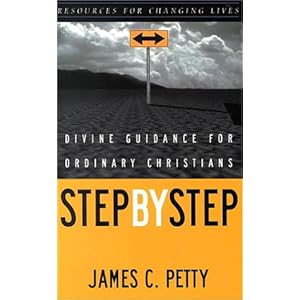
I continue to believe in Jim Petty’s 3 circles of discerning the will of God. Somethings are very clearly wrong and should be avoided. This is the inner circle and you could label it “the law”. The middle circle are things that are not necessarily wrong but need to be evaluated through the lens of “the law of love.” These are things that could be wrong because they reveal that we love ourselves more than others. For example, if I decide to give up my job to take up a risky start-up business, I might be unloving to my family and placing them at more risk than they are comfortable with. Finally, the outermost circle contains everything else and is “christian liberty.” So, I decided to go to college or I’ve decided to get married and this seems good to those who know me well. There may be many choices of good schools and potential spouses. Christian liberty says that there isn’t one choice and if I screw it up I’m out of God’s will.

And while I still think in these terms, I am also realizing I don’t spend much time thinking beyond my own interests. It is time to take up the challenge of this question, “Okay, so it is not wrong…but is it right for me and my family? Is this how I should spend my time?” And then…time to pray a bit more and wait expectantly for an answer.

7 Comments

Filed under Christianity, Guidance and Counseling, Insight, Uncategorized

Surprised by peace? Surprised by suffering? What do you expect?


Traffic slowing to a crawl on the Monash Freew...

Image via Wikipedia

What is your baseline perspective on life? Do you tend to believe that life should work pretty well and are surprised when suffering and pain enter your life? Or, do you tend to believe that life is hard and are surprised and pleased when it is not so hard or when you have moments of peace?

Perspective is pretty much everything. If you are driving during rush hour and you expect that traffic will be really bad but it turns out to be better than you feared, you probably feel great. But, if you were thinking your drive would take you one hour but it took two, you probably feel a bit frustrated. Both drivers might travel exactly the same amount of time but have opposite perspectives.

Expectations shape our feelings and perceptions of how life is going for us. Now, I am NOT arguing that if you just think happy thoughts, you won’t be bothered by problems in this life. No matter your perspective, you will suffer. To think otherwise would be denial of reality. But behind most of our “this is not fair…why would God allow this…I’m not sure I want to believe in a God who allows pain to happen” kind of comments are some assumptions and expectations that reveal what we believe life should be like.

Consider these assumptions or expectations. See one that gets you?

1. Life should be fair and should work. This could be called the Jonah perspective. Yes it should. But since sin entered the world, it isn’t. Instead of blaming God, might we not want to notice how many times in life, things are fair, just, and good? Might we not want to see that God is giving us better than we deserve? How might that mindset modify our general view of God’s care for us?

2. I have sacrificed much for God, why hasn’t he given my good and decent desires)? This one is similar to the 1st point but focuses along the lines of Psalm 73. Fairness is seen along the lines of righteousness. The good guys get blessings and the bad guys get suffering. If we hold this expectation then it is common to feel gypped when we don’t get our good desires met.

3. Suffering is something that is temporary, something to get through. This is an American viewpoint. We can overcome obstacles, we can heal the sick, we can fix problems. Once we get our education, get married, get the job we wanted, get our 401Ks then life will be good.

10 Comments

Filed under Christianity, Doctrine/Theology, Insight, suffering

Book for pastors at risk


Over the last couple of years I have gotten to know Dr. Charles Wickman. He is the founder of Pastor-in-Residence, a ministry to exited and at-risk pastors. He has a huge desire to see pastors flourish in their called locations. Currently, Rev. Ed Lochmoeller is PIR’s national director. This is a wonderful ministry for pastors who may have been forced out of their churches or are about to leave. The ministry places these pastor families in churches where they are “in residence” and being cared for while regaining their ministry footing.

What are the two main reasons for being “at risk” of being forced out? Vision conflict with leadership and burnout.

I tell you all this because Dr. Wickman has just published Pastors At Risk: Protecting Your Future, Guarding Your Present (Peoria, AZ: Intermedia Publishing Group, 2011).

This is a perfect, simple book. It is a simple read for those who are confused. And most pastors I know who meet the definition of being burned out are easily confused by complex details. They get bogged down into rights/wrongs, second-guessing their calling, angry, depressed, embittered. Dr. Wickman puts the issues on the table and then gives some good directions for both the pastor and spouse. I think most will find this small book clear and to the point on the main issues. Interspersed among the chapters are small vignettes of pastors and pastor’s spouses in their own words.

If you are a pastor, it is worth the 13 dollars for a read and hopefully some new directions for preventing a crash and burn. If you are an elder or deacon, I recommend you read it as you can learn much about the special pressures of pastoring. Don’t assume that somehow you or your church is different. That would be like knowing there is an epidemic of the flu and thinking that your constitution is somehow stronger than the rest thus negating your need for a flu shot.

Get the book. Read the book. Take the survey (p. 135). Talk to someone about the results. Make a plan for prevention.

Leave a comment

Filed under Christianity: Leaders and Leadership, church and culture, pastoral renewal, pastors and pastoring

The real damage done in abuse?


I’ve written before on the damage done when a community fails to respond to abuse in a justice oriented way. But here is a more succinct and apt quote by Miroslav Volf:

If no one remembers a misdeed or names it publically, it remains invisible. To the observer, its victim is not a victim and its perpetrator is not a perpetrator; both are misperceived because the suffering of the one and the violence of the other go unseen. A double injustice occurs—the first when the original deed is done and the second when it disappears. (italics mine)

Abuse victims sometimes tell us that the most significant damage to them is when community members (family, leaders, peers) fail to “see” or act justly when they hear of the abuse. It was bad enough to be sexually abused (yes, that is real damage too) but far worse to be told it didn’t happen or be told to take it for the sake of the larger community (e.g., you wouldn’t want to harm his reputation, destroy the family, cause others to fall away from Christ, etc.).

I saw this quote in the first pages of The Long Journey Home: Understanding and Ministering to the Sexually Abused, to be released soon by Resource Publications, an imprint of Wipf & Stock. I have the typeset PDF and the editor, Andrew Schmutzer, says the book will be released in August. This book (over 500 pages!) may become the place to turn for Christians seeking to understand the scourge of sexual abuse in all its ugly forms. Chapters are written by those who are expert in the social sciences, theology, and pastoral care. The line up is phenomenal. You can see the title page/table of contents (TOC Long Journey Home) to see the gamut of chapters and authors.

2 Comments

Filed under Abuse, christian counseling, christian psychology, Christianity, Christianity: Leaders and Leadership, counseling, counseling science, pastors and pastoring, Psychology, ptsd, Uncategorized