Category Archives: Uncategorized

Criticism of Biblical Counseling: Are Joyce’s Concerns Valid?


Katheryn Joyce has recently published a long post about the rise of Biblical counseling and the concerns some have about the movement [read it here].

Most people who have thoughts about counseling and Christianity tend to fall into one of to categories: Those who oppose biblical counseling as dangerous and those who oppose the various versions of Christian psychology as shallow and full of humanistic ideology. Very few people try to maintain identity in both worlds. If you have read my “about me” you will find I’m one of those who does accept the label of biblical counseling and Christian psychology (more on this below)

I encourage both proponents and opponents of Biblical Counseling to read her essay. Let me even take the liberty to suggest some starting questions to keep in mind as you read. While the essay may not answer the questions, having them in mind will keep you from solidifying stereotypes of either sides.§ If you are inclined to reject biblical counseling, consider these questions:

  1. Where might I find a more thorough history of biblical counseling and its various permutations?
  2. What main biblical counseling author voices are missing in this piece? [Note that the mentioned ACBC was, until recently, known as NANC (National Association of Nouthetic Counselors)]
  3. What failures in Christian psychology movement(s) led to the need for a biblical counseling movement?

If you are inclined to defend biblical counseling, consider these questions

  1. Even if some of the bad examples of biblical counseling do not represent you or the heart of the movement, what aspects of the movement may support or encourage some of these distortions?
  2. How might you better communicate “sufficiency of Scripture” to outsiders?
  3. Does biblical counseling seek to eliminate symptoms or improve spiritual responses to symptoms? How might it better acknowledge the body when talking about the causes of mental health problems?
  4. Where does fear of “integration” hinder the maturation of biblical counseling as a movement?

Indeed, these questions have already been asked and answers given in a variety of locations. Readers unfamiliar with biblical counseling should start with websites such as this one, CCEF, ACBC, BCC, and the Society of Christian Psychology to find further and deeper readings on related topics.

Where the Concerns are Valid

Not acknowledging benefits from psychological research. Joyce notes that a good biblical counseling session looks a lot like a good professional counseling session. Why? Well, it is obvious that change happens best in the context of kind, compassionate relationships. Why the similarity? While it is true that psychotherapists didn’t discover empathy, it is true that psychotherapy research has expanded our understanding of the best way to encourage trust relationships in therapy. In addition, some of the cognitive, affective, and dynamic interventions developed from these models are used within biblical counseling. I have absolutely no problem from biblical counseling deriving benefit from interventions developed in other models of therapy. I only desire biblical counselors or acknowledge that benefit. It is clear Jay Adams benefited from Mowrer (and said so to boot). We can do the same. We can admit that Marsha Linehan has revolutionized our understanding of how we work with people exhibiting symptoms of borderline personality disorder.

Emphasizing false dichotomies. Joyce quotes Heath Lambert in this piece (near the end),

“I’m concerned [that] if we say, ‘Oh my goodness, people with hard problems need physicians and need a drug,’ we’re going to lose much of what the Bible has to say about hard problems.”

The quote above is in the context of dealing with difficult or serious mental illness. He worries that if the church creates two categories of problems (normal and special), those with serious problems will no believe that the bible has things to say about those suffering with suicidal ideation or schizophrenia. It seems that some biblical counselors take a negative stance on psychiatry and medical intervention because they fear doing so will hinder the work of the Spirit through the bible. I would argue that this dichotomy does not need to exist. I agree that the bible speaks to everyone, whether they are having difficulty or easy problems. I don’t think that use of medications or medical practitioners has to hinder pastoral care. The message that others get when we suggest that medical intervention need to be avoided is that somehow it is less spiritual to seek a medical intervention. This is patently false. Now, not every medicine is worth taking. Some may create more problems then they solve. But that fact should not cause us to lump all professional/medical care into the same category.

Where the Concerns are Overplayed

Heath Lambert gets it right when he claims that all counseling models will fail, due primarily to the quality of the practitioner. Biblical Counselors do much work that is commendable and successful. Joyce’s piece may suggest that most biblical counselors are ineffective and incompetent. This is not true. Matthew Stanford suggest he has never seen a biblical counselor do well with difficult cases. That may be the experience of my friend, but I can attest to seeing biblical counselors working well with people with serious personality disorders, delusions and other difficult mental illnesses. Now, the truth is, these counselors have succeeded because they did not follow the stereotype and reject learning from professional psychology. Further, these same counselors did not take “sufficiency” to mean that they could only use the bible in considering how to respond to their clients.

Take a moment and read her piece. Review the questions above and keep an open mind to both sides of this story.

[§ I have written on the relationship between Christian psychology and biblical counseling in the Journal of Psychology and Theology, volume 25, 1997. You can buy that essay here.]

Leave a comment

Filed under CCEF, christian counseling, christian psychology, Christianity, counseling skills, Psychiatric Medications, Psychology, Uncategorized

Does living in urban settings increase the risk for mental illness? A complex answer with more questions


I think most recognize some of the inherent stresses of urban life, especially if you add poverty and racial discrimination to the mix. Of course, there are stresses that exist in rural and suburban settings, but some parts of urban life can be quite hard. Being anonymous in a crowd, the amount of violence, the pace of life, higher cost of living are just a few of these stressors.

So, are those who live in urban settings more prone to mental illness? Some doctoral student in Sweden looked at the association of Schizophrenia, population density, and neighborhood deprivation. What did he find?

Our results therefore suggest that it is not the adverse neighborhood conditions that cause the morbidity. Instead, it seems as if there are familial selection effects that draw high-risk individuals into densely populated/socioeconomically deprived neighborhoods. In other words, the same factors that explain residence in such neighborhoods also explain the increased risks for psychiatric morbidity. link to article here.

Does this make sense to you? Certain factors draw (or keep?) some families in deprived settings and those same factors explain increase mental illness risk? What would these factors be?

1 Comment

Filed under Uncategorized

GTRI 2014: Day 12 Kigeme Refugee Camp


July 12, 2014. Kigeme Refugee Camp to Kigali

For all who travelled with us, our visit to the refugee camp was moving in many ways. We saw deep poverty and yet deep resilien

Heather with her new friends

Heather with her new friends

ce. The following observations are from Heather Drew, a counselor and one of my GTRI students and who begins her tenure as Fieldwork Coordinator in my seminary department today! Please welcome Heather and check out her blog as she is a gifted communicator in her own right.

Today was our last full day in Rwanda. We woke up in Butare, got one last cup of the best coffee I’ve ever tasted at a lovely coffee shop called Cafe Connexions, then rode our bus to a UN refugee camp in Kigeme. Around 20,000 Kinyarwandan speaking Congolese

Kigeme camp children

Kigeme camp children

refugees live in this camp, 12,000 of which are children, we were told. The abundance of children was immediately apparent to us as we were greeted by dozens of sweet smiles peering into our bus, waiting for us to climb out. Some of us took photos of/with the children and showed them the photo (they love that). Stan The children followed us around like we were pied pipers. The parents followed us with their eyes, and greeted us kindly. The camp was made up of rows upon rows of small mud houses with metal roofs – living spaces the size of a small American living room – containing 6-8 (or more) family members each. Our group wove through the narrow, red-dusty walkways between houses, climbing up slippery hills with the help of our small chaperones. They taught us some additional phrases in Kinyarwandan, showed us their beautifully-made and efficient water collection/filtration system, and held our hands. The EUG_7154children who could speak a few words in English were eager to do so. The ones who knew no English spoke to us without any words, showing us their homemade toys constructed with old bottles and broken pieces of things. It made me realize that the less a person has, the more resourceful and creative they become. This is a very prevalent characteristic throughout Rwanda.

At the base of the hill on which the camp sits is a meeting space where our team met with several leaders within the camp who lead trauma healing groups with fellow refugees. We were traveling with our friend Harriet Hill, one of the writers/developers of the Healing Wounds of Trauma material put out by American Bible Society, which this group has found so useful. (This book has been translated into several languages and is effectively used to facilitate around the world.) I had greatly anticipated this day, and in the moment the depth of it was not lost on me at all; here we were sitting in a room with about 50 Congolese refugees who use this book to lead healing groups in one of the most trauma-impacted areas of the world with Harriet Hill, the woman who had a dream over a decade ago to develop the material. It was extremely moving.

Leaders/facilitators gave testimonies about the groups and about personal healing, and presented questions they had. One person shared, “We are all traumatized…This material heals us and then we can help others heal.” Another shared, “During the genocide, so many of us – on both sides of the conflict – had hearts like animals. The Bible takes away our animal hearts.” Not all of these testimonies were ones of “arrival,” however. A few shared how they are still in the midst of the long healing process. The truthfulness of this impacted and inspired us.

After their testimony time Phil, Diane, Harriet, and their two leaders were invited to speak. Remarks were encouraging and thankful. Harriet Hill shared how much it meant to her that they have such bravery to share the comfort they themselves have received from Christ. She also shared Psalm 126, words that resonate with their stories. Finally, at the end of the meeting, we shared Fanta and

Zenko with Marianne Millen

Zenko with Marianne Millen

snacks together (a tradition of hospitality in Rwanda), then we said our goodbyes – even to Zenko, our dear new friend, which we were very sad about! – and boarded our bus for a 2 hour ride back to Kigali. I tried to focus on taking in the breathtaking beauty of the country as we made our last drive, because no photo can capture it.

Our final night was spent at East African Villas in Kigali. This was a hotel in Rwanda managed by a lovely Christian man called Ezekiel who was wearing a Georgia Bulldogs shirt when we arrived, which we enjoyed. We rested and enjoyed hot showers (a luxury I will no longer take for granted) during the few hours before dinner. Then we settled together in the dining room, ate our final Rwandan dinner feast, then Phil initiated our final team debriefing & sharing time.

We all shared 3 words that we each felt best expressed what we had learned in Rwanda. Among the things shared: new meaning of “celebrating the recovery of life” and also of “groans that words cannot express,” what it means to embrace Jesus’s invitation to “watch with Him,” the privilege of carrying people’s stories with them, how impactful people’s eyes and testimonies were, how much courage we saw, how much desperation we saw and how that was pointed at God in many cases. It was a much-needed time of sharing. To my knowledge, there wasn’t a dry eye among us.

We ended our night by taking a few group photos on the balcony.

GTRI 2014 Team

GTRI 2014 Team

1 Comment

Filed under christian psychology, counseling, counseling skills, Rwanda, Uncategorized

GTRI 2014: Day 11, Muhanga to Butare/Huye


July 11, 2014.

We ended the Community of Practice at noon and said our goodbyes. The morning consisted of a short devotional comparing the good and the false shepherd described in John 10. We explored how helpers may end up becoming “hirelings” due to burn-out and

Community of Practice

Community of Practice

loss of vision. After the devotional, our tables each became case consultations with caregivers discussing their hard cases and receiving encouragement, support, prayer, and a bit of advice. In a number of instances, caregivers brought up the issue of those who have mixed parentage (Hutu/Tutsi) and the struggle to deal with their identity. I and others have noted that this group has been far more vocal talking about the different “tribes” where previous groups have rarely even mentioned these groupings. It makes me wonder whether this is unique to this group or whether there is something going on in the country that makes it okay to discuss identity.

After our goodbyes, we traveled south for 2 hours to the university town of Butare. Butare is the home of the National University. First stop in Butare consisted of an ice cream at Sweet Dreams just down the road from the Shalom Guest house where we are staying (known internationally as the project with the female drumming corp). Our purpose here is to meet with Anglican Bishop Nathan Gasatura and some of the pastors/leaders of his diocese to discuss the trauma recovery needs. Bishop Nathan has been a friend and attended some of our previous training. Diane spoke a bit about “talking, tears, and time” and the process of healing through trauma. We had a good dialogue where one question was raised, how can a Hutu counselor help a Tutsi victim (or vice versa)? I was thankful that Baraka Paulette, the new president of the new Rwandan Association of Christian Counselors, was present as she answered in a very beautiful way, putting all at ease. Though our time was short, we squeezed in a bit of singing and dancing in the cathedral.

Before our meeting, a few of us purchased locally roasted inexpensive Rwandan coffee and an espresso at Café Connexion across the street from the cathedral and guesthouse. This cafe was not something most would venture into in the United States. It contained dingy walls, a couch and a couple of stuffed chairs, a shelf full of brown bags of coffee, a large coffee roaster and the center of the room was a small desk with an espresso machine. Yet, this was possibly the best coffee I tasted on the trip. [the return trip the next morning and bag of coffee brought home and now gone supports this opinion!] After dinner, many of us walked down the dimly lit main street in the dark passing the university. It was good to walk and good to deepen relationships with fellow GTRI mates.

1 Comment

Filed under counseling, counseling skills, Uncategorized

GTRI 2014: Day 7, Kigali


Credit: Heather Evans

Credit: Heather Evens

July 7, 2014 (day 3 for GTRI students)

The purpose today was to begin immersing in life and ministry in Rwanda after genocide. Today, we began with a brisk walk to the offices of International Justice Mission for their morning devotions. After singing a couple of songs we listened to a brief meditation on Psalm 77 led by Dr. Barbara Shaffer, one of our team leaders. We closed with praying together for the personal and work prayer requests from IJM staffers. I look forward to meeting at IJM each time we are here. It is good to hear about the work they are doing in bringing justice and aftercare recovery to child sex abuse victims.

After devotions, we left for the national genocide memorial. On the way, I needed to get some US dollars exchanged to pay the various bills that could only be paid in Rwandan Francs. 10 one hundred dollar bills became a 4 inch wad of Franc bills (1 dollar equals 690 Francs). Glad many places take US dollars!

Though the group has read much about the 1994 genocide, it is important for the group to go through the memorial and museum to see the roots, progression, and aftermath of the genocide. Walking around mass graves for several hundred thousand Rwandans will sober a person! The final room of museum puts together beautiful pictures of children with text beneath pictures detailing their interests, qualities, and also how they were killed. Very chilling. Though I have been through this room before, I chose to speed through rather than become overwhelmed.

A couple of our team members spoke with a young Rwandan man who had come to the memorial for his birthday. Why? Because it wanted to spend it with his family–family interred in the mass graves. Things like this encourage silence as the right response.

Before leaving the memorial our team had a few minutes with a guide who told us a bit of his story, which included the ugly reality that priests and pastors actively worked for genocide. Miraculously, this young man’s faith is still intact.

Credit: Heather Drew

Credit: Heather Drew

After a lunch at Afrika Bite, a buffet restaurant for the usual foods (multiple starches, cooked vegetables, and some meat), we visited a sewing co-op that provides women counseling and skills in making things from greeting cards to blankets, purses, ipad covers and the like. We met with the leaders to talk about how they were helping children of rape connect with their mothers. After the meeting, we saw a number of the women hard at work.

From here, our team split, one group attending a counseling center for women and the other group meeting with a group of HIV positive men and women who are part of a ministry of a church. In both groups, it was helpful to see ministry at the ground level. Unlike many US counseling centers, these ministries must consider both mental, physical, spiritual, and financial health at the same time.

Our day ended back at Solace Ministries debriefing what we saw, heard, and felt. Words fail to capture the weight of the hurt and pain post-genocide but also the resilience and recovery that we see. One of the nice things about debriefing each night with the team is that we are able to learn from each other and see/hear things we might not have experienced even as we were in the same spaces. For example, one of our team had a front row seat to US congressional concerns and activities during the beginnings of the genocide. Hearing from her provided context to the two dimensional understanding most of us have of the story.

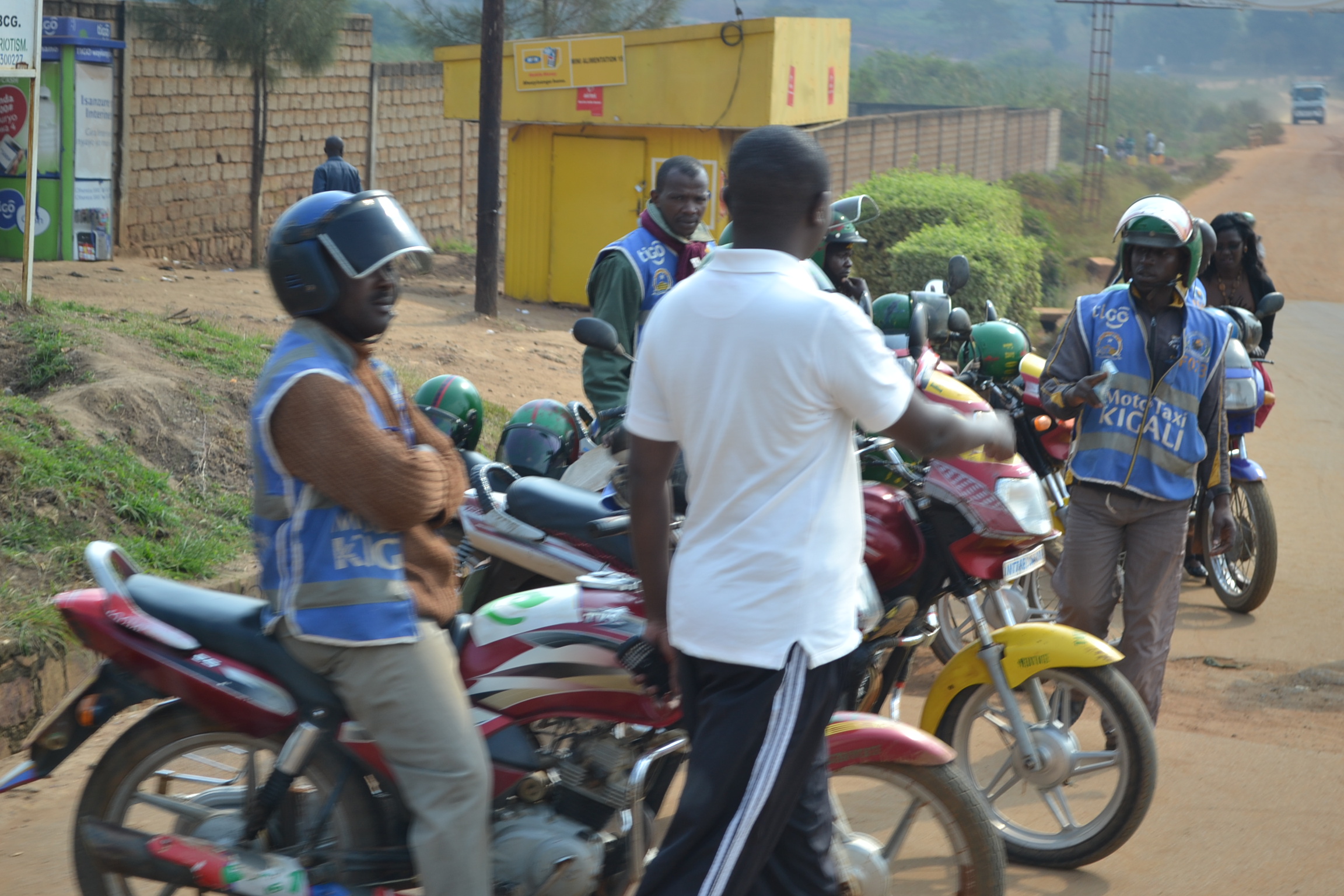
One fun note. I finally got my first moto (called bodas in Uganda) ride. I needed to go to a market and the easiest way to get there was by moto. The driver I flagged had almost no English and very little French. With his broken English and my broken French, I was able toDSC_0013 get him to understand. Though the ride was short, it was fun and pretty inexpensive.


2 Comments

Filed under Uncategorized

Piercing Words From Cry, The Beloved Country


Just returned from 2 weeks in Uganda and Rwanda (more on that in subsequent posts). During interminable transit time to and from Kigali I read Alan Paton’s “Cry, The Beloved Country.” Missed reading that as a student and after last year’s trip to South Africa, I needed to read it. Without giving away too much of the story, one of the characters in the book is going through his son’s papers after his murder. His son had been an activist against the then mistreatment of Black Africans in South Africa. One of the papers said this:

The truth is that our Christian civilization is riddled through and through with dilemma. We believe in the brother of man, but we do not want it in South Africa. We believe that God endows men with diverse gifts, and that human life depends for its fullness on their employment and enjoyment, but we are afraid to explore this belief too deeply. We believe in help for the underdog, but we want him to say under. And we are therefore compelled, in order to preserve our belief that we are Christian, to ascribe to Almighty God, Creator of Heaven and Earth, our own human intentions, and to say that because he created white and black, He gives the Divine Approval to any human action that is designed to keep black men from advancement.

The truth is that our civilization is not Christian; it is a tragic compound of great ideal and fearful practice, of high assurance and desperate anxiety, of loving charity and fearful clutching of possessions. (p. 187-8)

This quote struck me so not because of the focus on Black/White relations but because it also fits other ways we struggle to respond to the “underdog.” We want to feel pity but rarely do we want to give up the power to enable the underdog to be one of us. For “other” to be one of us, we would have to cede power and that creates anxiety.

If you haven’t read the book for a while or never did, I commend it to you.

1 Comment

July 16, 2014 · 4:26 pm

My next two weeks in East Africa


Starting Monday I will be off traveling to Kampala, Uganda and then on to Rwanda for Global Trauma Recovery Institute. I welcome your prayers for myself, my students, and the attendees. In addition, Diane Langberg and myself will be leading a group of 12 Americans (10 GTRI students) on a listening/dialogue immersion trip throughout Rwanda. Some of the highlights of our trip(s) will include,

  • 2 day trauma healing community of practice in Kampala with the Bible Society of Uganda
  • 3 day trauma healing community of practice in Rwanda with the Bible Society of Rwanda
  • Afternoon mini-conference with pastors in Southern Province, Rwanda
  • Day with the newly forming Association of Christian counselors in Rwanda
  • Visits to NGOs working with trauma victims and street children
  • Church services
  • Visits to genocide memorials
  • Visit to a refugee camp
  • Numerous conversations, formal and informal over the next two weeks

I will make some attempts to update all on my trip as I go. You can follow me here and @PhilipGMonroe or @BTSCounseling. If you are interested in seeing more about the GTRI engagement model, check out this short video. And, if you would like BTS to continue doing this kind of missional work, feel free to go here and donate before the end of our fiscal year, June 30.

Leave a comment

Filed under Biblical Seminary, christian counseling, christian psychology, counseling skills, Diane Langberg, genocide, Rwanda, trauma, Uncategorized

Traumatic Nightmares? Two Treatment Possibilities


Many who suffer from PTSD or other traumatic reactions also experience chronic nightmares. It is bad enough to have to deal with intrusive memories and triggers during the day but being robbed of peaceful sleep can send you over the edge, both in terms of physical and emotional health. Christian counselors may be tempted to ignore these nightmares (how can you stop something you have little control over?) or overly spiritualize the content of the dream.

But we ought not neglect the problem of nightmares. It is well-known that reductions in quality of sleep make all mental illnesses worse. Nightmare sufferers understandably avoid sleep but of course this creates a vicious cycle of insomnia, anxiety, and increased avoidance strategies.

There are two intervention options (among many) that appear to have fairly robust positive data indicating helpfulness. (For detailed descriptions of these two and others including the analyses of value, see this pdf): Prazosin (medication) and Imagery Rehearsal Therapy (IRT).

Prazosin is an anti-hypertensive (alpha blocker) that may work on the problem of too much norepinephrine in PTSD patients. It seems to improve sleep length and REM time. Interestingly, beta blockers have been found to increase nightmares rather than reduce them. I am no physician and so cannot evaluate the value of this medication for clients but would encourage clients with chronic, severe and re-occurring nightmares to talk with their doctor about whether Prazosin might work for them. The studies I have reviewed primarily examined the value of this medication for veterans with extreme nightmare problems. The most significant downside to medication treatment is that it only works when the medication is taken. Stop the medication, the nightmares may come back. However, some relief may be beneficial and thus the medication then has value.

Imagery Rehearsal Therapy (IRT) is a short-term therapy that does not work on the actual content of the traumatic experience or attempt to treat PTSD. Instead, it treats nightmares as a primary sleep disorder problem. There are variations on IRT but most versions last between 4 and 6 sessions and may be delivered in individual or group formats. Sessions include education about the nature of nightmares, sleep hygiene protocols, and the imagery replacement protocol. While some of the IR protocols are done imaginally, others ask nightmare sufferers to (a) write down the details of the distressing nightmare, and (b) write a new ending to the nightmare. As Bret Moore and Barry Krakow describe, the therapist does not dictate the new outcome of the revised dream but encourage the sufferer to “change the nightmare anyway you wish” (Psychological Trauma, v. 2, 2010). The nightmare sufferer then rehearses (multiple times) the new ending and is instructed to ignore the old nightmare.

Sound goofy? How is it that a person can just decide to have a different dream? However, the evidence that this therapy works is quite robust. Numerous studies with veterans and civilians indicates it is effective in reducing unwanted nightmares. Most treatment protocols suggest starting with nightmares with content unrelated to actual traumatic events.

Thus, Christian counselors ought to review these two treatments and consider learning the IRT protocol to bring relief to chronic nightmare sufferers.

4 Comments

Filed under christian counseling, christian psychology, Christianity, counseling, counseling science, counseling skills, Post-Traumatic Stress Disorder, Psychology, Uncategorized

Counselors talking about themselves? Additional thoughts


Last week I described some research supporting counselor self-disclosures, research that suggests clients appreciate disclosures revealing (a) similarities between counselor and client, and (b) vulnerabilities or personal emotions. While this research flies in the face of conventional wisdom in most counselor training programs, I cautioned counselors to ask some questions first before talking too much about self. With this post, I would like to press the caution just a bit more.

Why do counselors talk about themselves?

Why do counselors talk about their personal life with clients? Read the following numbered list to see some of the main reasons (and the sub-points in italics as illustrations of that reason). Then, consider the bracketed sub point as an alternative to self-disclosure.

  1. We want to put clients at ease and we think knowing something about ourselves might help
    • I can see you are anxious about whether taking antidepressants is appropriate for faithful Christians. I take them and it has only helped my faith.
      • [You’re not alone with that question so let’s explore the pros and cons to taking an antidepressant. Why don’t you start by telling me the reasons you’ve heard or thought about for not taking Prozac?]
  2. We believe our personal history will help a client understand, accept, or challenge something about their struggle
    • I know this treatment for panic disorder is difficult for you but I can tell you it works. It worked for me.
  3. We want to please an inquiring client
    • Yes, I am married and I have 2 children.
      • [Sure, I don’t mind telling you who is in my family, but could you first tell me why that is an important question for you?]
  4. We want to earn their respect and believe that our history will help
    • Well, for starters, I want you to read my book. It is now in its second edition and has been translated into 4 languages. I think you will find it very helpful for your problem.
      • [I’d like for you to start reading about your problem. There are a couple of books out there that I think you might find helpful, including one I wrote. But, feel free to look these over on Amazon and choose the one that seems right for you.]
  5. We like talking about ourselves; our personal stories seem difficult to avoid
    • You and I have a lot in common. My wife has the same problems as your husband. So, I know how lonely you must feel. We’ve tried…
      • [Though you are not saying so, I wonder if you feel lonely in your marriage.]
  6. We see the relationship more like a friendship with mutual sharing
    • I’m so glad to see you today. You are a bright light in a dull day. I look forward to our stimulating conversations. Just yesterday I was thinking about you and wishing to have coffee with you to discuss your career future. 
  7. We want to be seen as human rather than just professional
    • Yes, it has been a stressful day. I could use a back rub after all these sessions today.
      • [You know, some days are harder than others, but I’m curious why you asked this today?]
  8. We want the client to help us in some way
    • I was thinking about your need to work and my need to have someone edit my website. Or, I’m headed out on a mission trip next month. Well, I am if I can get enough donations. I’m about $1000 short thus far but I know God will come through.
      • [neither of these need to be said!]

Is it necessary? Is it helpful?

While self-disclosures may improve client perceptions of counselors, I suspect that empathic, client-centered therapists evoke these same feelings by asking good questions making observant reflections yet still minimizing disclosures, especially those where we initiate them and those that force the conversation to our personal history. There are some disclosures that are in response to client questions (e.g., have you ever struggled with addictions? Are you married? Do you believe in medications? Are you angry with me?) that warrant an answer. When giving this answer, work hard at keeping it brief and returning to the client’s story.

Don’t forget about social media self-disclosures

Clients sometimes “hear” our disclosures through social media. Imagine a client reading, “Well, that was a difficult session, glad I’m done for the day” having been that counselor’s last appointment! Blogs (like this!), Twitter, Facebook, and Instagram can be forms of self-disclosure. Be wary of these. Conventional wisdom says to avoid social media contacts with most clients so as to avoid harm to the counseling relationship. While we need not require an outright ban of these connections, a thoughtful counselor will review connections via social media for potential harm.

Be human

Despite these efforts to avoid letting our selves intrude too far into the session, sometimes life gets in the way. A counselor has a health or a family crisis. Clients have ways of finding this out and often want to ask how things are going. Here it is appropriate to say something brief, thank them for their concern and then start the session. In other situations a client discovers a shared passion for food, a sporting team, a connection through mutual friends. Enjoy these connections, acknowledge them, but be sure not to linger there during the session proper. We are, after all human. Don’t be surprised when counselor and client humanness come into contact.

4 Comments

Filed under christian psychology, counseling, counseling skills, Psychology, Uncategorized

Should therapists talk about themselves to clients? Surprising information


How do you feel when your counselor begins to self-disclose during a session? When they do, is it helpful or a lapse in their judgment?

This is a common conversation in counselor training programs. Generally, most models of counseling and therapy discourage counselor-self-disclosure; some models do so more than others. The reasons for discouraging counselor self-disclosure vary from breaking the unconscious projection (analytic) to just confusing clients because we change the subject from client to counselor.

But a recent article in the April 2014 Journal of Counseling Psychology, suggests that self-disclosure might actually help more than we think. Henretty, Currier, Berman, and Levitt completed a meta-analytic review of 53 studies examining counselor self-disclosure versus non disclosure. And “overall” they found that clients have favorable perceptions of disclosing counselors.

Why? It appears that when a client perceives great affinity/similarity with a counselor, they rate that counselor higher. Also, when a counselor reveals something difficult or painful (a vulnerability?), it makes them more human to their clients. Some examples of this negative valence might include, “when you said that, I felt really sad.” Or, “Let’s talk about your anxiety, having suffering with it some years ago, I suspect you…”

Not so fast!

So revealing similarities with clients and being human make clients feel more similar and possibly more understood. This makes sense. Client/Counselor matching seems to correlate with better outcomes. However, before counselors go talking about themselves they ought to consider a few things.

  1. Why am I doing this? Is what I have to say for them or really for me? (Too often, we speak to talk about self)
  2. Is what I say really going to keep my clients focused on themselves or distract them to my story?
  3. Am I sure that what I say will show similarity? The truth is that we *think* we have a similar story but the times we are sure we know what our clients are feeling we are most likely to stop listening and then miss the client.
  4. How often do I do it?

3 Comments

Filed under christian psychology, Christianity, counseling, counseling science, Psychology, Uncategorized