Category Archives: Psychology

King to psychologists: Some maladjustment is necessary!


Dr. Martin Luther King at a press conference.

Image via Wikipedia

Recently, someone forwarded to me an email from Ken Pope (see his fabulous and informative website: www.kenpope.com) containing excerpts of Martin Luther King’s address to psychologists in September 1967. I pass on excerpts for your enrichment and encourage you to read the entire address available for download here.

Here’s King on the necessity of being maladjusted to some things:

On creative maladjustment

There are certain technical words in every academic discipline which soon become stereotypes and even clichés. Every academic discipline has its technical nomenclature. You who are in the field of psychology have given us a great word. It is the word maladjusted. This word is probably used more than any other word in psychology. It is a good word; certainly it is good that in dealing with what the word implies you are declaring that destructive maladjustment should be destroyed. You are saying that all must seek the well-adjusted life in order to avoid neurotic and schizophrenic personalities.

But on the other hand, I am sure that we will recognize that there are some things in our society, some things in our world, to which we should never be adjusted. There are some things concerning which we must always be maladjusted if we are to be people of good will. We must never adjust ourselves to racial discrimination and racial segregation. We must never adjust ourselves to religious bigotry. We must never adjust ourselves to economic conditions that take necessities from the many to give luxuries to the few. We must never adjust ourselves to the madness of militarism, and the self-defeating effects of physical violence.
Thus, it may well be that our world is in dire need of a new organization, The International Association for the Advancement of Creative Maladjustment. Men and women should be as maladjusted as the prophet Amos, who in the midst of the injustices of his day, could cry out in words that echo across the centuries, ‘Let justice roll down like waters and righteousness like a mighty stream’; or as maladjusted as Abraham Lincoln, who in the midst of his vacillations finally came to see that this nation could not survive half slave and half free; or as maladjusted as Thomas Jefferson, who in the midst of an age amazingly adjusted to slavery, could scratch across the pages of history, words lifted to cosmic proportions, ‘We hold these truths to be self evident, that all men are created equal. That they are endowed by their creator with certain inalienable rights. And that among these are life, liberty, and the pursuit of happiness.’ And through such creative maladjustment, we may be able to emerge from the bleak and desolate midnight of man’s inhumanity to man, into the bright and glittering daybreak of freedom and justice. (emphases mine)

Leave a comment

Filed under counseling, Great Quotes, Psychology, Race

How to evaluate a counseling model or intervention: Step four


Picking up on this series that was started last week, we come to the next-to-last step. Thus far I have suggested that whenever you are exploring the next best thing in counseling, you should

  • start with a healthy dose of suspicion about the motives and goals of the author. What are they trying to sell you?
  • Read with an open mind. Can you see what they observe about life?
  • Evaluate the author’s assumptions, worldview, etc. Be willing to be challenged!

Now we come to step four.

Step Four: Let yourself be critiqued

How might their observations and assumptions challenge your own? Sit with this a bit. Don’t worry that you will lose your faith. It never hurts to have our beliefs and values refined and challenged by our critics. Maybe some of your values are uncritically formed. How might these assumptions cause you to refine and renew your own? Can you eliminate some faulty logic?

Be willing to state some of the weaknesses within your own system of beliefs and assumptions. I wish every model builder would start with their own flaws. But, most of us are better at pointing out the speck in our brother’s eye than addressing the log in our own.

Finally, our next step will be to possibly adopt some portion of the model or intervention into our own repertoire.

Leave a comment

Filed under biblical counseling, christian counseling, christian psychology, Christianity, counseling, counseling science, counseling skills, Psychology

Health effects of traumatic stress on infants


In Rwanda we hear that children born after the genocide exhibit signs of trauma–even though they did not experience it firsthand. You could hypothesize a number of reasons for this:

  • Hearing of the stories of lost loved ones; being told that their neighbors were killers
  • Having peers in school stigmatize: “You are Hutu, you are a killer. You are Tutsi, you are a cockroach.”
  • Seeing pictures of genocide

Notice that all three have to do with the child’s internalization of trauma through their environment.

But what if their trauma began in utero and biologically altered their capacity to handle stress? Consider these words by Maggie Schauer (available to be seen in context here),

Exposure to significant stressors during sensitive developmental periods causes the brain to develop along a stress-responsive pathway. The brain and mind become organized in a way to facilitate survival in a world of deprivation and danger, enhancing an individual’s capacity to rapidly and dramatically shift into an intense, angry, aggressive, fearful, or avoiding state when threatened. This pathway is costly and non-adaptive in peaceful environments. Babies born with a deformed stress-regulating system (HPA-a) experience higher and faster arousal peaks, longer intervals of crying and irritability, and impaired affect regulation (Sondergaard et al., 2003). (p. 398, emphasis mine)¹

How might this information help us better understand how “the sins of the fathers” (or whoever is the abusive individuals or communities) extend beyond primary victims to those victim’s children? How might this help us train survivors to understand what might be happening in their children and support parenting strategies that will encourage healing. Might it also help survivors to feel less guilty for the struggles of their children? Survivors don’t ask to be abused and can’t help the impact on their children while in utero.

Now, not every child with a “deformed stress regulating system” is that way due to the mother’s stress. We just don’t know why one child has a good stress regulation system and why another does not. But we can say that those whose stress regulation seems broken (or different) likely need different parenting strategies and a different paradigm in understanding volition (will) when it comes to their outbursts.

 ¹ Schauer, M., & Schauer, E. (2010). Trauma-focused public mental-health interventions: A paradigm shift in humanitarian assistance and aid work. In E. Martz (ed.) Trauma Rehabilitation after War and Conflict (pp. 389-428). Springer

Leave a comment

Filed under counseling, counseling science, Psychology, Uncategorized

How to evaluate a counseling model or technique: Step three


In my two previous posts I suggested that the best way to evaluate “the next best thing” in counseling models or techniques is to start with a healthy dose of suspicion and then to read with an open mind as you try to enter their world and see what they see. Now, moving on to step three, I recommend that you take a look under the hood.

Step Three: Evaluate Assumptions

Whether you are considering adopting a whole model of counseling or merely a technique, you want to step back a bit and assess what assumptions and presuppositions color the author’s view of the world. If you adopt any portion of the model, you will be likely to adopt some portion of their assumptions. In evaluating assumptions, I find it best to ask yourself a few questions,

1. What presuppositiong, worldview, beliefs, etc. bleed through on their pages? Do they focus most on nature? Nurture? Individualist? Communitarian?

2. What ideas and values seem to be most prominent for this author, especially about human nature, health, healing, struggle, etc.

For some authors (especially model builders) assumptions are handed to you on a platter. When Carl Rogers said that he believed that humans had a drive to find health and wholeness, he made his assumptions quite well known. However, during the 80s and 90s, many psychologists stopped trying to build models. They hid behind “eclectic” and focused on “what works.” Well, “what works” (aka utilitarianism) is an assumption that we ought to be aware of. Many current authors have returned to try to build a better explanatory model for human flourishing. For example, Mark McMinn has penned an integrative psychotherapy model (reviewed here in past years) attempting to bring together cognitive and affective and spiritual models. Despite the return to model building, most popular trade book authors rarely discuss their own assumptions.

Still sound fuzzy? Just what are we looking for and what do we do with it once we find it? Consider these made up examples.

Author one: “…her problem? Her love tank was empty, had a huge hole in it from the way she was treated by her father.” Assumptions? You can see a little Maslow’s hierarchy of needs and a statement that present problems are the result of victimization from the past. This will surely impact the author’s ideas for treatment.

Author two: “…her problem? She struggles to connect her whole brain when processing emotions. Neural networks need to be developed and used to cool down her hypothalamus. she…” You can see here that the focus is on neural networks, possibly brain chemistry issues, and an overactive hypothalamus. You might not hear anything about will, choice, right thinking or experiencing. This client is a product of her brain. This will surely impact the author’s ideas for treatment.

Now, a word of caution. Just because we discover assumptions that we don’t agree with, it doesn’t mean we have to chuck the model or technique. Rather, we are merely trying to understand some of the straggler assumptions that might cling to the parts we buy into. I used to start all of my model evaluations with this step. However, I found that I was more likely to wholesale reject their observations if they were wrong in their assumptions. But everyone sees—even if poorly. And observations can be very helpful—even if fixated on one small aspect of life.

In our next step we will seek to let their assumptions challenge, correct, or refine our own (rather than just believing what we have always believed is airtight correct).

Leave a comment

Filed under christian counseling, christian psychology, counseling, counseling skills, Psychology

How to evaluate a counseling model or technique: Step two


In my last post, I discussed the importance of evaluating the next “great” counseling method or technique with a good dose of suspicion. What is the author (or disciple) trying to sell us? Why? What is the basis of their model?

However, I do not want you to think that we ought to dispatch every counseling intervention with a snooty once-over. Rather, I want you to immediately follow-up your suspicion with an opening of your mind!

Step Two: Read with an Open Mind

Even the shakiest of ideas, models and techniques provide opportunities for us to grow. No matter our wisdom and intellect, we will always see life (reality) from a particular vantage point. Every human vantage point contains bias. This is why we should read outside our own disciplines and family groups. I especially encourage readers to listen to their loudest critics. They will have a point or two that we ought to take to heart.

So, find the originators of the model or technique you want to explore (often, original authors praise their ideas a bit less than their disciples do). As you read, ask these questions,

  1. What does this author observe about their world, the way it works (or doesn’t)?
  2. How do they envision the purpose and goal of life?
  3. What human problems are most significant to them?
  4. What solutions do they seek? What techniques or interventions are most prominent?

While you may disagree with their interpretations (save that for a later step), work hard to view the world through their eyes. Can you see what they see? You want to make this effort because you recognize you do not see the world entirely as it is. You see in part. Your humility here will help raise to your mind questions that you mint not thought were all that important.

Let me give you an example. In my first semester at Wheaton College (PsyD program) fresh out of the biblical counseling world of CCEF, I wrote a paper for Stanton Jones defending/critiquing a model of biblical counseling. At the end of the paper, Dr. Jones asked me to conduct a thought experiment,

Would [this] model urge medical research forward? After all, if worship is our primary end, and we can give glory to God with a serene death, why try to eradicate disease? If suffering is a human trial that gives us opportunity to glorify, should the concrete contributions to the suffering be addressed? I know this can be answered, but oh the subtleness of emphasis!

I have to tell you that these words were powerful to me at the time (and still are!). He knew I would say, “of course we should eradicate suffering.” But, in promoting the human end of enjoying God, even in suffering, I had emphasized suffering well to the point of de-emphasizing concrete helps that often come through psychological and medical research.

The goal of step two is to challenge our own assumptions to see if they need tweaking. Once we have concluded exploring the observations of the model builder, next we move to evaluating interpretations and assumptions.

Leave a comment

Filed under christian counseling, christian psychology, Christianity, counseling science, Psychology

How to evaluate a new counseling model or technique: Step one


Being a professor of counseling I get lots of questions like this: “What do you think of _____ (a new or popular counseling model/intervention)? These days, I’m being asked about coaching models, neurofeedback, EMDR, EFT, brainspotting, the use of SPECT scans, the use of psychiatric medications, nutritional supplements, and the like. In past years, I might have been asked about theophostic ministry, DBT, or ECT.

To be honest, I haven’t read every counseling model to the nth degree. I know a bit about a lot of models and a whole lot about some models. So, I try to be careful not to offer too much critique on what I don’t know first hand. That said, I do think there are good ways to go about evaluating any new model and proponents’ claims of efficacy. Over the next few posts I plan to show you how I try to investigate any new (to me) model:

Step One: Start with Suspicion

What? Shouldn’t we give them a fair shake? Yes, of course. And we will. But first, I do think it is helpful to ask yourself, a few key questions about what you are being sold.

  • Who is promoting this model/intervention? What financial benefit are they seeking?
  • What claims or promises do they make about their successes? Do they seem reasonable? Overly optimistic?
  • What supporting evidence is offered? Anything other than anecdotes from the inner circle of disciples? Any empirical evidence?
  • Do supporters distance from everything that has gone on before? How do they connect to mainstream models?
  • How transparent are the authors about what is being done?

None of these questions will answer our ultimate question of the value of any new model. There are excellent new models with almost no empirical evidence. Conversely, there are those who connect their intervention to a piece of mainstream research but do so only tangentially (thereby giving the appearance of scientific support but lacking validity and reliability (i.e., much of the change your brain popular models)).

A model that starts in the popular sphere may turn out to be good. Yet, we still want to gather the data about the motives and purpose of the new model. Take coaching for example. There is good evidence that coaching techniques work. However, much of what you find in popular places (bookstores and the Internet) is about someone trying to make a buck, either to coach you or to sell you a certification to become a coach. Thus, it is important to look at “packaging” to see what we are being sold. We may well want to buy the “product” but buyers need to know that sellers don’t usually talk about the weaknesses of their product.

Watch out for those models that over-sell their results, especially in the area of “complete freedom” from suffering. These are almost always unsupported by empirical evidence and certainly do not line up with good theology. We want complete removal of mental pain. This isn’t a bad desire, but it does set us up to buy the “next best thing” without proper critical evaluation. And well-meaning friends may tempt us to try out some new technique because it worked for them.

And yet, we need to be open to the possibility that there is something new on the horizon. Truthful anecdotes still have some merit. And so, tomorrow I will suggest that step two includes “reading with an open mind.”

4 Comments

Filed under christian counseling, christian psychology, counseling, counseling science, Psychology

Best Christmas ever?


My colleague, Bryan Maier, has written a great and melancholic reminder of how longing and enjoyment of Christmas mingle soon after opening of presents. You can read it here.

He speaks the truth about our inability to remember most Christmas gifts and how quickly the unwrapping process is over, leaving us with a desire for more. If your family hands out gift cards or cash, I suspect the mingled feelings are even more prominent.

What Christmas was the best you ever had? Did it have anything to do with gifts? Location? People you spent it with?

One to Remember:

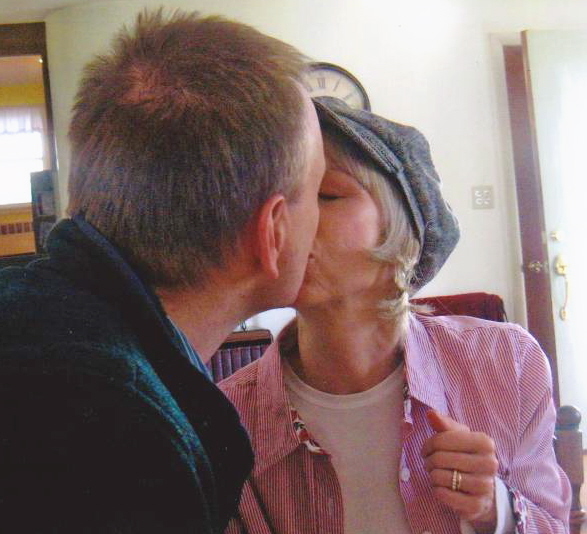
My wife and I rarely give each other gifts. That is a tradition we started back when we had little money to spend. Last year I broke with tradition and gave her an early present, captured here by my sister-in-law. Squint real hard and you can see the gift on her left hand next to her wedding band. 20.5 years with me plus recovering from recent breast cancer treatment (her fight and recovery was a gift to me!) was ample reason enough for her gift–as if she needed a reason!

But even a gift of jewelry won’t always stay in the mind. This year, one of my favorite gifts was this picture that I didn’t know existed. But soon I’ll put it away and not remember how great it was to give her the ring. I’ll see the ring on her finger and won’t be moved by it. That is the way of humanity. We have short memories for joy and thankfulness but sadly, longer memories for disappointment.

May we work hard to remember the many blessings of gifts we receive each and every day. The practice of remembering blessings will be a gift to you and to others as you are less likely to be a bitter person.

4 Comments

Filed under memory, Psychology

Calculated high risk takers: A different breed?


Some people are willing to take far more risk with their lives than most other human beings. Now, I’m not talking about the impulsive types who take uncalculated risks. I’m speaking here of those who make very considered risk. Take mountain climbers as an example. What drives a man or a woman to climb peaks such as Everest or K2 or Annapurna? Climbing mountains over 8,000 meters is a high risk endeavor. It is considered the riskiest form of sport. More people die trying in this sport than per capita in any other sport. Why are some willing to risk climbing. We cannot attribute this to impulsivity. The planning, effort and costs associated with climbing eliminate whimsical reasons. Further, opportunities to turn back in the face of increasing hardship (cold, lack of air, isolation, etc.) also eliminate those who would be adventurous but would rather not suffer much in the process.

So, if not impulsivity and if not passivity about life…then what is it that drives calculating risk takers?

I’m reading Ed Viesturs’ The Will to Climb: Obsession and Commitment and the Quest to Climb Annapurna–The World’s Deadliest Peak.  Ed Product Detailsexplores a number of climbers who are willing to spare no expense and effort to get to the top of Annapurna as well as all 14 of the 8K plus peaks. (He’s nuts enough to do all 14 without supplemental oxygen!). You get the sense that he is (a) driven, (b) willing to turn around again and again if he thinks he cannot climb safely, (c) yet willing to take far more risks than the rest of the population by being in/near danger and by pushing his body right up to the edge of the breaking point, and (d) supremely confident in his capacity to know where that breaking point is and how to stay on the right side of it.

I think he might agree with me that many of his colleagues who didn’t make it back down the mountain (more die on the way down rather than the way up) is a large dose of luck along with his will to turn back when he meets a risk too large.

As I look at this list I see that I am not that driven. I don’t get that much rush out of doing the impossible or pushing my body beyond the breaking point. I don’t like that much pain. I don’t have that much focus or drive to do just one thing either. In addition, I not that confident in my skills of making decisions on a knife’s edge nor confident in the skills of others to help me along the way (most mountain climbers put immense trust in their partners).

How about you? Do you know any calculated risk takers? Are you one? What is the difference between those who watch and those who do? How do you calculate risk?

Leave a comment

Filed under book reviews, Good Books, Psychology

Sex Offenders v. Sex Abusers: Is there a difference?


Justin Smith (Phoenix Seminary) has written a helpful chapter in The Long Journey Home: Understanding and Ministering to the Sexually Abused where he discusses the characteristics and types of sexual offenders. While we tend to lump everyone who commits a sexual offense into one (despised) category, it is better to differentiate between types of offenses and those who might commit them. More differentiation helps us (a) understand causes of abuse, and (b) treat those who commit them with more competent and compassionate care.

He believes we need to distinguish between those who have abused and those who are sexual offenders. Why? Because if 20-25% of females report abuse along with 10-20% of males, then our current stats that offenders make up 1-2% of the population cannot be accurate. The number (given that abuse is often not reported) must be higher.

If the number of perpetrators of sexual abuse is 20-50 percent of the male population, as opposed to 1-2 percent, then sexually abusive behavior is not that unusual and neither is the sexual abuser. (p. 44)

Not sure I would venture the 50% number in the above quote but the point about abusive behavior isn’t as unusual as we would like to believe.

Before we look at the differences between offenders and abusers, let Dr. Smith set the stage:

If all persons have sexual impulses and the capacity to be manipulative and potentially violent, perhaps the question should be: “Why don’t people offend”? instead of, “Why do people Offend?” “What constrains some people and fails to constrain others?” (p. 45)

Smith suggests 3 main requirements for those who abuse. First, they must disregard boundaries. They disregard social and moral prohibitions, turn off empathy and compassion for the victim, change meanings of words (to coerce), etc. Second, they disregard or deny the distress of the victim. Third, the person must struggle to regulate internal impulses.

Now to our question. Is there a useful way to differentiate offenders from abusers? Is there any value to those of us who work with those who have committed sex crimes?

Having established that sexual abuse covers a wide range of behaviors and undoubtedly involves a significant portion of the population, what can be said about sex offenders? Offenders are a subset of sexual abusers. They have not only committed sexual abuse but they have committed a specific sexual crime as defined by society.  (p. 47)

So, his primary differentiation is this: offenders are those who are caught. Abusers are those who did an offense but weren’t caught.

Now to the question: is this helpful? My answer is yes and no. Yes. When we describe the research on offenders (as Smith does) we are able to differentiate offenders in subsets: those who rape, those who are sadistic, those who offend against family members, children, or strangers. These differences do matter when considering incarceration and treatment. And likely those who get caught are different from the many who may abuse one person or who have more self-control or other factors that keep them from continuing the abusive behavior.

But the answer is also no. Because so many sexual abusers do not get caught, we can’t really say that there is much difference between an offender (one who is caught) and an abuser (one who did not get caught). I doubt it would be possible to gather a population of individuals to study them in comparison to the offenders. Who would sign up for that study?

That said, this chapter and the entire book is a great resource for those wanting more help in their quest to minister and treat survivors of sexual abuse. I am especially pleased with chapter 13 (mine!).

4 Comments

Filed under Abuse, counseling science, Psychology

Stopping seasonal high anxieties: Some strategies and a better goal


For most people, anxiety is a looped internal conversation. It just keeps starting over even when we don’t want to listen to it anymore.

The Christmas season we’re in can make anyone quite anxious. (Don’t think so, watch this fun video to remind you why.) Those of us naturally anxious and ruminative find the added responsibilities, family stresses, and disappointments just adding fuel to the fire. You try to take a moment to rest but all you can do is think about what is yet to be done or what you tried to do but failed. You pray but before you finish you are back to your worries. You distract yourself but the looped fears keep running in the background.

What helps you decrease your anxieties and repetitive worries? Can you really suppress them? Or should you have another goal in mind than just trying to shut them down? Are there any practical strategies that work?

Practical Strategies?

Daniel Wegner gave a short award address on this topic at the 2011 APA convention (now found in v. 66:8 of the American Psychologist, pp 671-680). In the address he tells us what we already know. It is hard to suppress thoughts in a direct manner (e.g., I won’t think about how much work I have to do). So, Wegner focuses on indirect strategies. Here is a sample of strategies with empirical support:

  • focused distraction
    • pre-planned alternative topic to think about when the rumination starts. Benefit? Avoids mind wandering which will more quickly return to the anxiety. Example: Every time I think about the conflict at work I will focus on a comforting favorite verse or an upcoming happy occasion.
  • Stress and load avoidance
    • Overall reduction of stress helps reduce unwanted/anxious thoughts. Focused distraction helps only to a point. Overwork which may provide some distraction will increase anxious thoughts over time.
  • Thought postponement
    • Choosing to postpone anxiety to a set time can work to reduce the amount of rumination experienced.  Example: I’ll spend time worrying about my visiting in-laws at 4:30 pm.
  • Acceptance
    • Instead of fighting and arguing with fears some find it helpful to observe fears without taking action. There is some evidence that those who accept the occurrence of unwanted thoughts have less distress than those who fight the thoughts.

Wegner goes on to mention other strategies (i.e., planned exposure, mindfulness, focused breathing, self-affirmation, hypnosis, and journaling) for reducing unwanted thoughts.

 A Different Goal?

What if the goal isn’t to remove or end unwanted thoughts and anxieties but to cope with them and not to be dragged along by them? Does this sound like failure to trust God? Failure to be at peace? if the goal is to trust God in the midst of uncertainty and anxiety, what would that look like? How would you know that you were doing well? To do this we would need to give up on the goal of having an absence of anxiety and to reimagine peace as something one can have in the midst of angst. After all, we are not seeking to be absent from this world but to live in the world that is full of chaos and uncertainty.

Here are two goals you might consider:

  • Being okay with things not done to perfection and with the disappointment of others who have come to expect perfection from you
  • Experiencing anxious thoughts as normal and yet savoring moments of rest when they present themselves
  • Using one strategy for anxiety reduction each day

So, how do you measure your seasonal high anxieties and what goal do you seek to reach during this Christmas season?

4 Comments

Filed under Anxiety, Psychology, Uncategorized