Category Archives: counseling

Entering into the Emotions of Others: Thoughts by Winston Smith


Winston Smith delivered an extraordinary plenary about how we enter into the pain of others. He began by telling the story from Good Will Hunting, an exchange between the Matt Damon character and his therapist, Robin Williams. The exchange illustrated the difference between having loads of knowledge about love or hurt and a true experience of love (or hurt). Knowledge knows nothing in comparison to experience. Winston then talked about an early counselor experience he had where he listened to a person’s pain but only critiqued it rather than entering in. He acknowledged the danger of biblical counselors to whip out a 3 trees chart and assessing them, thereby invalidating their experiences of pain. 

Instead, he suggest a better path

  1. Enter in. Really listen to them. Don’t imagine how you would feel in that situation as that will cause you to think and respond to yourself, not to the concerns and needs of the one who you want to help.
  2. Connect to their experience. Don’t go first to fixing or giving perspective. That can be helpful in the right time. When you are trying to connect, that is NOT the right time.
  3. Care. Let their grief become yours. Caring does not mean agreeing. And when you see strong responses or biases, we start to think that care means to correct. There is something true enough that you can start with their experience. 

(By the way, I find most first year counseling students really believe they are ready and willing to do these. But here’s where the challenge lies. You sit with someone and they begin telling you their pain. You convey a few connecting and caring responses and then after 5 minutes, you have nothing else to say. You are already wanting to comfort, give perspective, gently correct. We really do struggle with sitting with another’s pain. It makes us uncomfortable)

There is a cost to entering in. It will cost you your comfort. 

These 3 steps are quite hard even as they are simple. They are skills to be learned, but Winston reminds us that it is mostly hard because of something within. Why hard? You have to connect to something inside yourself that enables you to connect with them. You need to connect to fear, to grief, to despair, to rage. It will cost you something to do this well. You have to be willing to be uncomfortable. 

So why would we do this? Sincere love calls us to enter in. It isn’t just a motive; love is a person. We can do this because we know and are connected to Jesus. His nature is love, willing to leave his comfort zone and enter into the world of another. He becomes one of us. Want to give the same love to others? Experience God’s entering into your world. 

He ended with 1 John 4:12: No one has ever seen God. But if we love each other, God lives in us, and his love is brought to full expression in us. So enter in with boldness. 

3 Comments

Filed under biblical counseling, CCEF, counseling

Emotions in the face of suffering: Thoughts by Joni Eareckson Tada


“Most people think that living with quadriplegia is overwhelming. And it is.” Speaking at #CCEF16, she says this even as she says that now, nearly 50 years later, she would not give up her intimacy and depth in Christ, deepened through suffering, in order to walk. How do we bring these two opposing experiences together.

Joni tells us there are 1 billion disabled people in the world, most living in the developing world–people who are at greatest risk of being abused, neglected, and not protected. 

She spoke of her chronic pain that grew over the years and exploded in the mid 2000s and how it robbed her of joy and capacity to do the work she wanted to do. “It (the pain) made my quadriplegia a walk in the park.” “I know I am under the sovereignty of God but now his sovereignty seemed so scary.” “My depression lifted the day I was diagnosed with stage 3 breast cancer.” She said this with a smile, “Oh God, you might be taking me home now.” 

“I knew in my head that God is sovereign and that I trust him. Why can’t my emotions fall in line?” She then used the idea that in this life we experience “splashovers” of hell and “splashovers of heaven.” “There is nothing more sweet than finding Jesus in your moment of hell.” Pain tends to bring us into self-focus. But when we see the affliction of Jesus on the cross, our focus is changed. It doesn’t mean we no longer suffer but that our suffering done in and with Christ, “no longer afraid of it.” There is comfort in the promises of God even in the dark seasons. 

How can counselors convince others that Jesus is enough even if the pain is not able to be fixed? We start by counseling with compassion (being with them in their pain and suffering). When the sufferer sees they have a place in the body of Christ, that they are not isolated, this is of great importance. Spiritual community helps the sufferer to accept the pain as their own. God never intended us to suffer alone. Together, healing begins. We don’t just declare God is over all suffering, we demonstrate it through deep relationships. 

Someone who knows suffering can say things that many able-bodied people cannot say, or cannot be heard to say. Joni’s voice is prophetic for the Church. She calls us to walk with those with disabilities rather than avoid. May we listen. May be validate their pain first as we sit with them. May we never tired to hear of their difficulties. May we never put our need for assurance that “everything will turn out right” ahead of their need to be heard and loved. 

1 Comment

Filed under biblical counseling, CCEF, conferences, counseling, suffering

3 negative consequences of having too many options


I prefer having choices to make over not having the option to choose how I spend my time. And yet, just like any medication you might take, the freedom to choose brings with it some potentially dangerous side effects. I’d like you to think about 3 and then consider a couple of modifications about how you make choices.

Consider the differences between choosing a mate today versus 50 years ago. According to Daniel Jones (listen at the 17 minute mark), in previous generations people chose mates from close proximity–from their block, building, or neighborhood. Now, we have endless choices if we are willing to use the Internet.  Consider the differences in choosing professions. In the past, your father was a farmer, you became a farmer. Now, not only can you pursue any career, you have to choose from endless post-secondary educational schools on your way to that career.

How can having choices/options lead to negative consequences?

  • Dissatisfied. You are always wondering if there is something better out there. Again, consider Daniel Jones as he discusses online dating sites,

“…it turns you into a flaky person who is always looking for something better, that can become a kind of mania…if you have a moment of boredom, you think there are 12 more possibilities in your inbox…”

Later in the same interview, Jones tells us that the issue of today is “not labeling relationships. Based on his college student interviews, many young people today are loathe to identify someone as their partner or lover. They tend to resist labeling someone as a boy or girlfriend. The failure to accept normal labels not only lead to potential of chronic dissatisfaction but also confusion–if you don’t know when a relationship begins, ends or what it is founded upon. It would seem that commitment to a relationship would suffer if it never is named as such.

Dissatisfaction leads to comparing self against others and both lead to depression.

  • Anxious. Coupled with the tendency towards feeling dissatisfied with life, more choices lead many to anxiety. What if I made the wrong decision? What if the next person I meet would make a better spouse? What if I’m missing out on something important? Continual choice and/or rumination over choices increases the sense of importance for the choices we have.

Anxiety leads to chronic stress and chronic stress begins to break down our immune system.

  • Fatigued (cognitive and emotional). We find ways to simplify life. A colleague of mine has a system to know what to wear each day so as to avoid the “What am I going to wear today” question. We (try to) put our keys in the same place to avoid the stress of looking for them every time we leave the house. When we live with too many open choices and options, we burn more glucose and our brains become less efficient. We numb our feelings or we become edgy.

Fatigue leads to poor decision-making (impulsive, reactive, unthinking). This is why we blow diets more at 10 pm than we do at 9 am. This is why those with addictions are more likely to use later in the day than early in the morning. When we are emotionally and cognitively fatigued, we are prone to feel greater anxiety and dissatisfaction. The “gift” of choice continues to give.

Can We Do Anything About This?

Now, rest assured that I am not advocating for life to return to a place of no choice (arranged marriage, one career path, etc.). Choice has enabled me to learn about myself and given me many wonderful experiences that as a boy growing up in Vermont I never imagined. But are there ways we can minimize the common negative consequences of too many choices?

  1. Examine your view of God’s will. I meet many people who fear making a choice God does not want them to make. They fear they will somehow end up on plan B of life as punishment from God. While there are many very black and white decisions (should I cheat on my taxes? Is it okay to kill my annoying neighbor?) most decisions are not that clear. What if most of your decisions are neither right nor wrong? Whether you go to university A or B, marry person A or B is less of concern for God than we might think. Typically God seems more interested in our motives than some of our daily choices. Consider seeing God’s will as guardrails on a road rather than a pinpoint decision.
  2. Limit your decision-making time. It can be a habit of some to mull over future decisions long before the decision needs to be made. Do you find yourself worrying about the challenges of next week? While it might seem wise to think through your decisions in a thorough way, anxious rumination is not helpful. Limit when you think about big ticket future decisions. For example, if you are considering a career change, set a specific time during the week to search out available options. Then, when you find your mind mulling over options outside that set time, you can say to yourself, “I’m going to think about that during the scheduled time, not now!” When you do make a decision, use the same technique to limit when you review/evaluate that decision, thereby limiting time for “what ifs.”
  3. Challenge post decision “if only” regrets. I made a major career decision 17 years ago. I chose to become a seminary professor over an Ivy League appointment. For the first few months at Biblical Seminary I found myself wondering if I had made the right choice. I imagine this was the result of financial struggles (the other job paid double) and the overwhelming stress of creating grad courses from scratch (the other job was something I had ample experience to do). So, I could easily see that I chose the harder job for less pay. That became the truth I believed for a bit. But, the real truth is that I chose a job that had immense freedom and opportunity for growth. I would not have been able to travel the world as I do now. Of course, I couldn’t know all that then. So, work to challenge your assumptions about the future. Yes, like me, you will grieve when doors close. But remember, God is at work in providing a future for you, even in tough locations and times.

2 Comments

Filed under Anxiety, biblical counseling, counseling, counseling science, Psychology, Uncategorized

4 Reasons I Promote Scripture-Based Trauma Healing


[Note: broken link fixed. If anyone is interested in taking this course with me this summer, see here.]

As a psychologist I have had a front row seat to observe the destruction that traumatic experiences have on individuals and families. And as a professor training future counselors I see the necessity of passing on best practices for treating those with symptoms of posttraumatic stress disorder (PTSD). New understandings of trauma’s impact on bodies, minds, souls, and relationships appear on the pages of our academic and clinical journals. As a result, I read daily about innovative attempts to hasten trauma recovery for individuals and even whole communities.

With a world filled with trauma, it is clear to me we need an army of psychologists and mental health practitioners. How else could we address problems faced by 60 million displaced peoples in the world at present? How else could we address the scourge of sexual abuse, where worldwide 1:4 women and 1:6 men have experienced sexual violation before they reach the age of 18?

So, given the needs I have just mentioned, why would I spend considerable time and effort to promote a bible-based trauma healing training program? Let me tell you four key reasons I think this program is essential to address the world-wide problem of trauma. [Note, this is NOT a paid advertisement.]

Trauma disrupts faith and identity. The church must be at the center of the response

While many practitioners recognize the physical and psychological symptoms of PTSD, fewer have noticed that trauma disrupts and disables faith and connection to faith practices. Just now the scientific community is beginning to track this problem and acknowledge the role faith plays in the recovery process. Some are brave enough to suggest that failing to utilize faith practices and communities in the recovery process is tantamount to unethical practice! But most mental health practitioners have had zero training and experience engaging faith questions as part of treatment. The field of psychology is waking up from more than 100 years of training practitioners to ignore, even reject, faith as essential to healthy personhood. If faith is essential to most people on the planet then any intervention must engage faith and spiritual practices if it is going to consider the whole person.

Dr. Diane Langberg recently reminded a world gathering of national Bible Society leaders that trauma needs in the world are far too large for any government to handle. The only “organization” in the world situated to respond to at both a micro and a macro level is the Church. But is the church prepared? We need the church willing to understand the nature of trauma and participate in supporting faith and Bible-based healing responses. These responses include practices the church has not always been known for: validating, supporting and comforting victims, speaking up about injustice, inviting individual and corporate lament, re-connecting oppressed people to God. We need the church to be a safe community for victims.

The Healing the Wounds of Trauma (HWT) program fills this void. It offers basic trauma education, illustrates how God responds to traumatized peoples and provides simple yet effective care responses average believers can enact without being professional caregivers.HWT_USA_2014
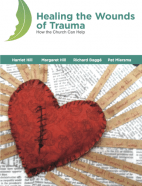
While I believe we psychologists with specialized skill sets are essential to trauma recovery, much of what we do can be done by every day individuals. I tell my students that most of counseling is not rocket-science. Being present, listening well, building trust, validating, asking good questions, and walking with someone in pain is largely what helps counselees get better. With a little training, the church can be at the forefront of the trauma healing.

But we need an army…of capable trainers who reproduce

There are approximately 2.2 Billion Christians in the world today. If we decided (and I am not suggesting this AT ALL!) to only serve traumatized Christians, we do not have enough capable practitioners to serve those in need. The ONLY way we would be able to serve this population is to train up capable trainers (wise, able to work well with others, understand group dynamics, know when to be quiet, etc.) who are then able to reproduce themselves and make even more trainers who subsequently serve ever increasing populations. This creates a cascade effect—1 trains another who each, in turn, trains others. Conservatively speaking, one training of 35 future trainers could reach up to 15,000 traumatized people in 3 training generations.

To maintain quality, the program must be able to be delivered and passed on in a consistent manner. The HWT program is designed not merely to educate participants regarding trauma symptoms and good care/healing practices but how to pass on such knowledge and skill to others. The facilitator (trainer) handbook provides a wealth of information to ensure that the quality does not erode as the information is passed on.

Experiential learning trumps lectures every time

In the West, we cherish academic lectures as the primary training mode. Lectures enable a speaker to give a large amount of information in a short period of time, with minimal interruption. A good lecture casts vision, identifies problems, and points to effective responses. But a lecture cannot produce skilled practitioners. Any academic mental health program worth attending will require practicums where head knowledge is put into repeated practice.

Consider this scenario. My father is capable of building a house. He sits me down and he spends hours gong over the steps to building an addition to my house. I listen, take notes, and even handle the tools that will be used. Am I prepared now to build the addition? No! If I am to build a proper addition, I will need to do so under his close supervision. In fact, most of the hours of lectures are not necessary at all. What will be more effective is his teaching me as we build together.

The HWT program is all about experiential learning. Participants learn as they experience trauma and trauma healing through story, dialogue, and practice. First applied to self and then in consideration of others. This is in stark contrast to most continuing education programs that amount to little more than monologues and passive audiences. While the monologue may give more information, it is highly unlikely that participants can in turn teach what they heard to others. The HWT program is not designed to deliver large amounts of new academic information. And yet, what participants get via experience and practice will be far more easily passed on when they become the teacher. There will be no army of trainers if we cannot quickly get experience and practice and pass on what we learn in simple everyday language.

Good training hinges on contextualization

If trauma is universal, then it might be thought easy to deliver trauma healing training across cultures. This is not so. If I prepare a lecture or training on trauma in my context (the megalopolis of the Northeastern seaboard of the United States) but deliver it on a different continent, my training may be of minimal value. The reason it is sure to fail is that what I had to offer didn’t fit the context; it didn’t speak to the heart of that audience. Good training must be contextualized so that participants immediately recognize trauma in their settings and that interventions make sense. Imagine if I deliver a talk on good conflict skills to a hierarchical society but emphasize the need to speak in “I” language (I need, I feel, I would like)? Such interventions will rightly be rejected as inappropriate. And if experience holds, whatever else I say will also be rejected.

The HWT program is founded on contextualization. Not only has it been translated into many different heart languages, the central stories and illustrations are also contextualized so that the participants can see themselves in the stories and interventions. At heart of each lesson, participants are asked about their own culture’s take on the particular problem. In dialogue, they compare responses to that of biblical passages highlighting trauma, grief, loss, and pastoral care. Nearly every major training point addresses context and encourages participants to develop creative interventions in keeping with key biblical and psychological foundations.

Is the HWT program all a traumatized person needs? No, it doesn’t assume this. Is the HWT program perfect? Of course not. I continue to make suggestions for improvement and the authors and developers are some of the most flexible I know, always looking for ways to improve the materials and training program. There are many other solid programs out there, but few programs I know have refined the content and delivery systems to be able to scale out across the globe. I’m grateful for the opportunity to serve the Mission: Trauma Healing team at the American Bible Society as co-chair of their advisory council and occasional trainer.

For a more visual exposure to this training, see this downloadable documentary.

14 Comments

Filed under Abuse, Christianity: Leaders and Leadership, counseling, Missional Church, Post-Traumatic Stress Disorder, ptsd, teaching counseling, trauma, Uncategorized

Counseling Advice From Lady Gaga?


Lady Gaga has a new song about the aftermath of sexual assault. Unless you’ve been living in a cave, you likely have heard of Lady Gaga who is known for crazy getups and stunts. Known in my household as the lady who wore the meat dress, she sings these words (I’ve included just a few lines) in the song “Til it happens to you.”

You tell me it gets better, it gets better in time
You say I’ll pull myself together, pull it together, you’ll be fine
Tell me, what the hell do you know? What do you know?
Tell me how the hell could you know? How could you know?

Till it happens to you, you don’t know how it feels, how it feels
Till it happens to you, you won’t know, it won’t be real
(How could you know?)
No it won’t be real
(How could you know?)
Won’t know how I feel

Her message is clear: If you haven’t been raped or assaulted (or experienced any other sort of trauma) you can’t possibly know what it is like. And since you can’t know what it is like, stop giving superficial comfort and advice.

Is Lady Gaga right? Does she offer sound counseling advice?

Yes and no. Yes, we are far too willing to offer platitudes to people in pain and wonder why they get angry and hurt and avoid us altogether. Lady Gaga captures the sentiment of the doubly hurt–first by the initial trauma and second by foolish words. The ancient Greek Aeschylus aptly puts it this way

It is an easy thing for one whose foot is on the outside of calamity to give advice and to rebuke the sufferer

Our quips roll easily off the tongue, but they injure the already wounded. Before you speak to someone and offer your ideas, do your friend a favor and be quiet. Ask them again (and again) to tell you what they experienced (past or present tense). But I don’t think Gaga goes far enough. I would argue that EVEN IF you have experienced the same trauma as the person in front of you, stop thinking that you know what they are feeling and struggling with. You may, but you may not as well. Do not assume your experience is theirs. Listen. More than you think you need to. Assumptions of “getting it” communicate that their pain doesn’t really matter to anyone.

But also, Lady Gaga is wrong (and I get it, this is art not counseling skills training!). It is possible to help others even when you have not had their experience. As long as you approach your work with humility and the heart of a student, you can do much good. You bear witness to their experience through your reflections and observations. You can ask good questions and paint word pictures of trajectories of growth. Do not think that just because you did not have the trauma, you have nothing to offer. Offer yourself (more than your words). If you fail to offer yourself out of fear of not being adequate, you also harm by not giving the present of being understood.

But let Gaga’s anthem be a challenge to those of us, myself included, who speak before listening and who assume rather than learn. We won’t get it. But we can bear witness.

4 Comments

Filed under Abuse, christian counseling, counseling, counseling skills, Post-Traumatic Stress Disorder, sexual abuse, sexual violence, trauma, Uncategorized

Spiritual Competencies for Clinicians


I will be presenting a 2 hour seminar at Penn Foundation today on Spiritually Informed Practitioners: Exploring Challenges and Opportunities. Over the last year or so I have been part of a multi-faith working group, Standing on Sacred Ground, that has been thinking about how to educate mental health practitioners to recognize, value, and work with the faith of clients (rather than see it as something automatically pathological or insignificant). Given the historic divide between mental health and faith communities (there have been haters on both sides) few clinicians have much training in understanding faith, religion, and spirituality beyond “be respectful.” Thus, religiously committed individuals often have had their faith marginalized or pathologized.

This presentation will look at roots of the historic divide, explore the complex relationship between faith and recovery, provide opportunities for MHPs to examine their own biases, and examine several key spiritual competencies needed for adequate provision of care.

Interested in the slides, check them out: Spiritually Informed Care.

2 Comments

Filed under counseling, mental health

What can we do about the refugee crisis?


If you have any connection to the outside world you know that the Middle East, North Africa, and Europe is undergoing a refugee crisis of massive proportions. Syrian and Iraqi refugees are finding their way to Europe to try to escape the violence, hunger, and lack of basic resources resulting from ongoing conflicts in both countries. For years, Lebanon, Jordan, and Turkey have borne most of the brunt of the burdan from the crisis, but now refugees are risking their lives crossing the Mediterranean to Europe. What was a regional conflict is now a wider political and economic challenge. 

If you are like me you read the stories, see the pictures, dig into the complexities of the problem and end up feeling helpless or hopeless. Someone has to do something. But what? Is there anything you and I can do to help? We know we can pray and we know we can give money to aid organizations. However, I suspect we often fail to do either of these things because will my prayers or fifty dollars do anything, realluy? 

Can we do anything else? Here are a few things I think merit consideration as doing our part. They may not do anything at all in the big picture, but then again, they may help you take one more step, even if only helping you to pray more pointedly and persistently. 

  1. Choose to be continuously educated. It is easy to make sweeping generalizations about those who are fleeing violence, about those in host countries, about the various armed militias. Sometimes we are right but far too often we develop simplistic formulas for the problem and solutions. Read outside of your normal news sources. If you are in the U.S., check out the stories by BBC and Al Jazeera news corps. Especially look for news stories about the refugees, who they are and what they are looking for. Many journalists in this area tweet out their stories/blogs. Find them and read them. Don’t allow hopeless feelings keep you from bearing witness to the tragedies nor from calling on God to intervene.
  2. Study the Scriptures regarding the God who loves refugees, hears their cries (think Exodus) and his son who was himself a refugee (check out Matthew 2). What is God’s mind on caring for those who have nothing and who will cost us something if we do care for them? Too often we can become consumed with political and economic realities and forget that God’s word calls us to love immigrant and outsider among us. In doing so, challenge your common assumptions about how we should relate to Muslim outsiders. 
  3. Learn a lay-counselor trauma training model.  The American Bible Society has a program, Healing Wounds of Trauma. This program is Scripture-engaged, dialogical, lay-oriented, and cascade oriented. You can get trained by attending a low-cost equipping session (4-5 days) and then train others (hence the cascade effect). You do not need to be a counselor but plenty of counselors love this model because it is so easily transferrable. Translated and contextualized into many languages, you can teach in English and the participants can teach in their own communities in their own language. Wait, you migh think, I don’t know any refugees in my community. While there may not be any Syrian refugees (then again, there many well be!), immigrants and refugees are all around us. Find out who is serving them (e.g., Lutheran Social Services, World Relief, etc.) and see if you can use this materials with them. This particular program isn’t the only one out there but it is effective and budget friendly. 
  4. Of course, give and pray. Once you get connected to local refugee serving organizations, you will have a better sense of who is serving in your community and how your time, talent, and treasure could be used. 

Leave a comment

Filed under counseling, Justice, news, News and politics, Training, trauma, Violence

Are all sins equal? The dangers of leveling all sins


There but for the grace of God go I.

Humility requires that we do not think too highly of ourselves; that we do not think ourselves better than anyone else. We all struggle with the same weakness–the desire to love self more than neighbor and to be our own god. We are all easily deceived, born into sin.

And yet, the evidence of humility is not equalizing all sins. Sadly, treating all as human has led some Christians to believe that it is wrong to point out the sins of others, to seek justice after wrongdoing. The error in thinking goes something like this:

  1. We have all sinned and come short of the glory of God. We all deserve judgment. No one can earn God’s love.
  2. God’s love is a free gift for all, not based on merit.
  3. Therefore, we must treat all sinners the same; that grace means the same treatment for all.

But ask victims who have heard this stated something like this and they hear, “since we’re all sinners then the way you were sinned against is no different than the way you sinned against God.” So, if there are no differences, then what happened to you (victimization) is no different than what happens to anyone.

Get over it. That is the message we send to victims when we level all sins.

So, consider this question: Does Jesus differentiate between sins? Do some sins result in more judgment and consequence? What about how he speaks of those who hinder the little children from coming to him? How does he speak to those who understand the depth of their sin vs. those who deflect or deny their sin?

Some years ago I was speaking to a large gathering of church leaders about the care for victims and sex offenders. I suggested that sex offenders did not have an automatic right to attend worship but that we could find meaningful ways to bring worship to sex offenders. One leader stood up and accused me of making multiple classes of sinners and ignoring the sin of victims (in his mind they would forever control the lives of the offenders thereby becoming abusive to the offenders). He claimed that I did not believe that God can restore and redeem the worst of sinners. This leader believed that all sin is forgiven (as do I) and thus all consequences should also be erased.

Leveling sins actually harms both victims and offenders. If consequences are erased, then offenders risk remaining unaware of unique temptations, unaware of how they may follow Zaccheus and pay back above and beyond what the Law requires. Victims continue to have little to no voice because what happened (and continues to happen) to them is just commonplace.

5 Comments

Filed under Christianity: Leaders and Leadership, counseling

Thinking about offering SKYPE counseling? Think twice!


There has been a lot of focus on telepsychology over the last decade. What started out being about counseling over the phone has morphed to counseling via the video chat, text chat, instant message, social media, and even in virtual settings with avatars.

At times it seems like the wild west, that anything goes without regulation.

But now, more counseling related associations have developed standards for telehealthcare delivery. And licensing boards are also beginning to restrict who can offer telecounseling. Did you know that Georgia only allows Georgia licensed mental health providers to provide telecounseling to its citizens?

Ken Pope has an excellent website listing many resources you will need as you consider what you might be allowed to do. He lists standards of care, recent professional articles, and links to state boards who are beginning to regulate telepsychology. I encourage anyone who currently practices “Skype” counseling (BTW, SKYPE is not HIPPA compliant), to become informed.

1 Comment

Filed under christian psychology, counseling, Psychology

Online Trauma-related (Cheap!) Continuing Education at BTS


[Note: the video-based training described below is available to anyone for free. The information below is for those interested in purchasing continuing education credits after watching the video. If any of the titles interest you, click the link below and start watching right away!

BTS is an NBCC approved continuing education provider. Just in time for those looking for last-minute CEs before renewing their LCSW or LPC this month, please check out our new online offerings. We offer three new trainings:

  1. Narcissism and the System it Breeds, By Diane Langberg, PhD
  2. Understanding and Responding to Dissociation, By Diane Langberg, PhD
  3. Making the Church a Safe Place for Trauma Victims, By Philip Monroe, PsyD

The videos are free for anyone to watch. If you desire CE certificate, the cost is quite nominal in comparison to the usual going rate. Check out the abstract and objectives and follow the links to pay for your CE quiz. Watch the videos, complete the quiz, and we will email you a certificate you can use to claim on your license renewal form.

7 Comments

Filed under Biblical Seminary, continuing education, counseling, Counselors, trauma