Category Archives: Christianity

Christian counseling theory and the bible: A dangerous mix?


Maybe Christian counselors shouldn’t use the bible when they promote their counseling theory. Maybe they should just articulate their theory and leave the bible verses out. Sound radical? An overreaction? Guilty as charged. But…consider with me that some of our most popular Christian models may be built on rather flimsy biblical data.

Some (simplistic) background thoughts

All Christian counselors recognize that the bible plays a unique role in counseling theory. Otherwise, they would just be “counselors.” But not all use the bible in the same way. Some view the bible as the primary (even sole) guide or resource for understanding human nature and recovery from every sort of relational and/or emotional struggle. These counselors would likely cite 2 Tim 3:15-16 as evidence that Scripture is powerful and primary in our fight against sin and suffering. Others view the bible as a helpful foundation designed to remind us who God is, who we are, and a resource for comfort, encouragement, and rebuke. But, these counselors might also look to other resources as well–psychological research, physiology, medicine, sociology, etc. They would not dismiss the value of the bible but would argue that the bible doesn’t intend to be the answer guide for all the questions we might have. Thus, sources of human knowledge are important to the work of good Christian counseling. Now within this second camp, counselors vary widely as to how important either Scripture or human sources of knowledge function in their given practice. Some seem to emphasize (or neglect) one source more than the other.

The problem…

No matter where a counselor falls on the above continuum, it is far too easy to use the bible to baptize a particular viewpoint or theory. From my most recent christian counseling conference, I heard a plenary speaker say something like this (not a quote but pretty near exact):

Men need respect. It is their airhose. Women need love. It is their airhose.

Along with this statement, the speaker bolstered their points with personal stories and biblical passages indicating the women should be loved and men treated as having authority (submitted to). Here the speaker used bible passages to indicate that men are designed to operate optimally when respected and women designed to operate optimally with love.

Is this true? It could be. I certainly think that this SEEMS to be true for most men and women. But, and this is the BIG BUT…does Scripture indeed teach this. Does Paul teach us that these are our basic needs in order to function well?

Close but way off

Notice that love and respect cannot be our “airhose.” Habakkuk 3:16f would suggest that when everything has been taken away, it is possible to have joy in all things. Notice that Ephesians 5 is about what each are commanded to do…not about what each of us needs to receive. Christ is our “airhose” and nothing else. This speaker would have been better served just teaching us about observations made about what actions tend to make for better marriages than to indicate that the Scriptures teach us we have these two needs.

So, the next time you pick up a cool book by a christian counselor. Check out how they use the bible. As a support for a good theory (e.g., this verse teaches us…)? Or, as a source for understanding the problem of evil and the nature of our God who leads, guides, and saves us?

If you are interested in this topic, let me give you a couple of resources.

  • October 2011 print issue of Christianity Today covers the general misuse of the bible. It is not just counselors who do this. They list the example of a book with anti-aging techniques supposedly gleaned from the bible.
  • 2 chapters in Care for the Soul:Exploring the Intersection of Psychology & Theology (IVP, 2001). Chapters 12 and 13 both cover the issue of hermeneutics. Richard Schultz addresses how counselors misuse wisdom literature and chapter 13 (myself and my colleague Bryan Maier) give more general recommendations for good hermeneutic work.

12 Comments

Filed under biblical counseling, Biblical Reflection, christian counseling, christian psychology, Christianity, counseling science, counseling skills

Off to Nashville!


This marks the 6th trip to the Opryland Hotel for AACC’s World Conference. It is quite the spectacle. I love meeting up with old and new friends. I love the opportunities to teach and learn. I don’t love the Opryland. It is behemoth (though good for exercise) and feels fake after a day or two in the climate controlled indoor bubble. Nice greenery and all but still a bit stifling for my taste.

This year I will be present at the following

  1. 9/27
    1. Speaking to Salvation Army Officers on ministry challenges and spiritual renewal (slides on slides page)
    2. Speaking to golfers at the Project Tuza Golf fund-raiser and dinner about Rwanda and the work we will do there in a few weeks.
  2. 9/28
    1. Presenting with Diane Langberg on Complex Trauma (3 hour pre-conference seminar)
    2. Meeting with the American Bible Society, AACC, and others about supporting global trauma recovery
    3. Meeting with those going to Rwanda to make final plans on our 3 day training of World Vision workers
  3. 9/29 Conference opens!
    1. Attending as many plenary and breakouts as possible
    2. Representing Christian Psychology to counseling students at “Awakenings” event
    3. Pizza with Langberg & Associates staff who will be there!
  4. 9/30
    1. Presenting a 1 hour breakout with Carol King on international trauma recovery (slides on slides page)
  5. 10/1
    1. Making a pitch from the main stage to all attendees during the “ask” for support for Project Tuza.

I think I will be plenty busy. This doesn’t count all the interactions with friends and colleagues I often have. So, I look forward to it and look forward to it being over and returning home to family. Feel free to pray for their stamina as well!

2 Comments

Filed under AACC, christian counseling, christian psychology, Christianity, counseling, counseling skills

Sneak preview: Healing Trauma in International Settings (AACC seminar)


Cascade Atrium, Gaylord Opryland Resort & Conv...

Image via Wikipedia

Just completed preparing my breakout seminar for this year’s AACC World Conference at the beautiful but outlandishly expansive Opryland Hotel in Nashville (Sept 28-Oct 2). This time around I presenting with my colleague Carol King on “Healing Trauma in International Settings: Best Practices.” Carol has had some experience in Rwanda and Goma, DRC and will be with our group in October when we do trauma recovery training in Kigali. Come back to the blog on the 30th and you can see and download the slideshow we will do.

What will we be talking about? 3 main points:

  • Listen…don’t assume you already know trauma or treatment practices
  • Train…don’t do the interventions yourself (train local leaders)
  • Utilize…don’t reinvent the wheel (use existing models)

Now obviously we will be fleshing those points out. Our goal is to help prepare interested counselors to develop short and long-range intervention strategies that utilize the cultural and human resources of the people they will serve. The only way to do this well is to have a listening and collaborative/support role approach. To that end I will talk about hoe to build an effective area case map.  We end by reviewing a few models for trauma recovery (both Christian and secular).

Check back on the 30th for the full set of slides.

Leave a comment

Filed under AACC, Abuse, christian counseling, christian psychology, Christianity, counseling, counseling science, counseling skills, Post-Traumatic Stress Disorder

How do you make decisions?


A line in a recent sermon by David White has stuck with me for a bit. He asked us to consider the mindset behind our decision-making. He reminded us that we might say, “If the Lord wills I will do thus and so.” Sounds holy right? But maybe we really mean, “If God lets me do what I want, then I’m going to do what I want.” Notice the differences between being concerned about what God wants and what we want to do if he’ll just let us.

The line that got me was this:

If it is not unholy, should I pursue my particular ambition?

To be honest, I’m not sure he said it or if that is what I wrote down in my notes. What I took away from it is that we commonly quick check the box on whether what we want to do is right or not and if we think it is right, then we stop asking God whether we ought to do it or not. While it is good to consider rights/wrongs in decision-making, I can still ignore important matters in determining whether I should choose to do A or B. This probably sounds abstract so let me put this into a specific and real context:

Should I accept a speaking engagement invitation some months from now? The group and topic are worthy of the time. But should I do it? If it is not wrong, can I just say yes? Is right/wrong really the same as asking God whether or not this is good and right for me to do. As I considered the factors in the decision, here’s some of what passed through my mind.

  • Well, it is a conference I was already considering I might attend. So, I would have been gone from my family anyway.
  • This particular invitation was pretty special and might not repeat any time soon. I should do it.
  • You know Phil, a number of your mentors and colleagues would be there and it would be cool to be on the docket as “invited.” Then I admitted to myself: Glory is not really a reason and the work would be greater than just attending. You often underestimate how much effort it takes to do these things.
  • I really want to do this. My motivations are mixed but it still would be fun.
  • I hate saying no to requests. 

So, what did I do? I asked God for some help in making the decisions. I did not choose to talk to anyone about it (other than my wife and the one doing the inviting) for fear I would get folks to tell me what I wanted to hear.

How did it turn out? Believe it or not just as I was crafting the email to tell the conference planner that I would be coming, I remembered I had tentatively given my assent to an event here in the Philadelphia area. Now, you need to know that this event was more of a dream than a reality, more of, “I’m willing to be present if you guys decide to hold that meeting.” After a fleeting thought that I could squeeze both event in (something I’ve tried before), I realized I was getting my answer and some grace to say no to something that was absolutely enticing but not what I need to do this year.

Does God have a specific will?

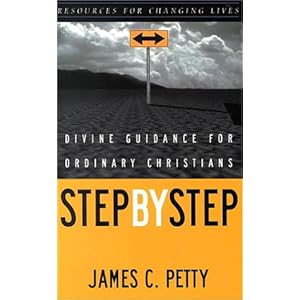
I continue to believe in Jim Petty’s 3 circles of discerning the will of God. Somethings are very clearly wrong and should be avoided. This is the inner circle and you could label it “the law”. The middle circle are things that are not necessarily wrong but need to be evaluated through the lens of “the law of love.” These are things that could be wrong because they reveal that we love ourselves more than others. For example, if I decide to give up my job to take up a risky start-up business, I might be unloving to my family and placing them at more risk than they are comfortable with. Finally, the outermost circle contains everything else and is “christian liberty.” So, I decided to go to college or I’ve decided to get married and this seems good to those who know me well. There may be many choices of good schools and potential spouses. Christian liberty says that there isn’t one choice and if I screw it up I’m out of God’s will.

And while I still think in these terms, I am also realizing I don’t spend much time thinking beyond my own interests. It is time to take up the challenge of this question, “Okay, so it is not wrong…but is it right for me and my family? Is this how I should spend my time?” And then…time to pray a bit more and wait expectantly for an answer.

7 Comments

Filed under Christianity, Guidance and Counseling, Insight, Uncategorized

Surprised by peace? Surprised by suffering? What do you expect?


Traffic slowing to a crawl on the Monash Freew...

Image via Wikipedia

What is your baseline perspective on life? Do you tend to believe that life should work pretty well and are surprised when suffering and pain enter your life? Or, do you tend to believe that life is hard and are surprised and pleased when it is not so hard or when you have moments of peace?

Perspective is pretty much everything. If you are driving during rush hour and you expect that traffic will be really bad but it turns out to be better than you feared, you probably feel great. But, if you were thinking your drive would take you one hour but it took two, you probably feel a bit frustrated. Both drivers might travel exactly the same amount of time but have opposite perspectives.

Expectations shape our feelings and perceptions of how life is going for us. Now, I am NOT arguing that if you just think happy thoughts, you won’t be bothered by problems in this life. No matter your perspective, you will suffer. To think otherwise would be denial of reality. But behind most of our “this is not fair…why would God allow this…I’m not sure I want to believe in a God who allows pain to happen” kind of comments are some assumptions and expectations that reveal what we believe life should be like.

Consider these assumptions or expectations. See one that gets you?

1. Life should be fair and should work. This could be called the Jonah perspective. Yes it should. But since sin entered the world, it isn’t. Instead of blaming God, might we not want to notice how many times in life, things are fair, just, and good? Might we not want to see that God is giving us better than we deserve? How might that mindset modify our general view of God’s care for us?

2. I have sacrificed much for God, why hasn’t he given my good and decent desires)? This one is similar to the 1st point but focuses along the lines of Psalm 73. Fairness is seen along the lines of righteousness. The good guys get blessings and the bad guys get suffering. If we hold this expectation then it is common to feel gypped when we don’t get our good desires met.

3. Suffering is something that is temporary, something to get through. This is an American viewpoint. We can overcome obstacles, we can heal the sick, we can fix problems. Once we get our education, get married, get the job we wanted, get our 401Ks then life will be good.

10 Comments

Filed under Christianity, Doctrine/Theology, Insight, suffering

The real damage done in abuse?


I’ve written before on the damage done when a community fails to respond to abuse in a justice oriented way. But here is a more succinct and apt quote by Miroslav Volf:

If no one remembers a misdeed or names it publically, it remains invisible. To the observer, its victim is not a victim and its perpetrator is not a perpetrator; both are misperceived because the suffering of the one and the violence of the other go unseen. A double injustice occurs—the first when the original deed is done and the second when it disappears. (italics mine)

Abuse victims sometimes tell us that the most significant damage to them is when community members (family, leaders, peers) fail to “see” or act justly when they hear of the abuse. It was bad enough to be sexually abused (yes, that is real damage too) but far worse to be told it didn’t happen or be told to take it for the sake of the larger community (e.g., you wouldn’t want to harm his reputation, destroy the family, cause others to fall away from Christ, etc.).

I saw this quote in the first pages of The Long Journey Home: Understanding and Ministering to the Sexually Abused, to be released soon by Resource Publications, an imprint of Wipf & Stock. I have the typeset PDF and the editor, Andrew Schmutzer, says the book will be released in August. This book (over 500 pages!) may become the place to turn for Christians seeking to understand the scourge of sexual abuse in all its ugly forms. Chapters are written by those who are expert in the social sciences, theology, and pastoral care. The line up is phenomenal. You can see the title page/table of contents (TOC Long Journey Home) to see the gamut of chapters and authors.

2 Comments

Filed under Abuse, christian counseling, christian psychology, Christianity, Christianity: Leaders and Leadership, counseling, counseling science, pastors and pastoring, Psychology, ptsd, Uncategorized

Whose shame do you carry?


Diane Langberg and I talked recently about the concept of shame. She mentioned reading an interesting mystery that had a couple of lines about shame that might be powerful imagery for some. The novel, C.J. Sansom’s Sovereign, is about a hunchbacked lawyer. About 200 pages in the lawyer has an encounter with King Henry the 8th. The King scorns the lawyer publicly for his hunch (at which everyone laughed).

His first reaction?

“Now I had met him. I felt for a second that he shown me what I was, an unworthy creature, a beetle crawling on the earth.” (p. 221)

Then anger arises in the lawyer. Why? for he recognizes the weight on him is not his own shame, but that of the king.

Whose shame do you carry? Most often we carry either the clear shame of our own misdeeds OR the shame foisted on us by the misdeeds of others. And it seems that the shame put upon us by abuse and maltreatment weighs us down the most. Often those who mistreat us do so in ways to make us believe that in fact we are worthy of shame or that they are righteous in their treatment of us.

What would happen if you saw it not as your own but thrust upon you by those who mistreated you? If you could hand it back (metaphorically), would your own back straighten? Would you feel less dirty and self-negating? If you suffer from shame due to mistreatment, try to imagine that the feelings are not yours but in fact the abusers.  Imagine what life might be like if you were to shed that shame that does not belong to you.

21 Comments

Filed under Abuse, christian counseling, christian psychology, Christianity, counseling, Meditations, Post-Traumatic Stress Disorder

Book Note: “Why the Church Needs Bioethics”


Just received a copy of Why the Church Needs Bioethics: A Guide to Wise Engagement with Life’s Challenges (Edited by John F. Kilner; published 2011, Zondervan). Using 3 case studies, a wide variety of authors discuss “better birth” (fertility), “better life”, and “better death.”

Authors include Richard Averbeck (OT and Counseling), Kevin Vanhoozer (theology), DA Carson (NT), and Stephen Greggo and Miriam Stark Parent (Counseling). In addition, there are business, law, medical, education, pastoral care, bioethics, and intercultural ministry authors.

I got a little chance to play a part in this book as a “critiquer” (p. 9) Stephen Greggo authors chapter 3, “Wisdom from Counseling” as a counseling response to the case study of Betty and Tom, a couple who are considering using Betty’s sister’s eggs and Tom’s sperm and to implant embryos into Betty. I got a chance to read and react to this chapter some time ago all because of a little article my wife and I wrote in 2002 and published in 2005.

On page 71, Greggo and Parent say,

A recent search of the leading peer-reviewed journals that inform Christian MHPs [mental health providers] and pastoral counselors yielded only a single article to guide a Christian counselor who might be dialoging with  Betty and Tom.

Their footnotes reveal that they searched The Journal of Biblical Counseling, The Journal of Psychology and Christianity and the Journal of Psychology and Theology between the years 2000 and 2009.

I find it surprising that there are no other articles than ours (full text here) and gratifying to see our essay summarized in this volume. While there are a number of good full length books, there is a serious need for good Christian counseling articles dealing with infertility and assisted reproductive technology (ART) because this is where many counselors start their study on a given topic.

4 Comments

Filed under christian counseling, christian psychology, Christianity, ethics, monroe

She’s My Sister Benefit Concert


Join Meredith Andrews, Dove Award winning Christian artist, in a concert to benefit She’s My Sister and celebrate the conclusion of the She’s My Sister Bike Tour. Each $10 ticket will provide Scripture-based trauma care to one abused woman in the Congo. The concert will be held at Calvary Baptist Church in Easton, Pa. on Friday, July 8 at 8:00 p.m. Purchase tickets online at www.congosister.org or contact Hannah Wildasin for group sales at 610-360-3864.


Leave a comment

Filed under Abuse, Christianity, counseling

Must Read: Diane Langberg on “Trauma as a Mission Field”


My supervisor, mentor, and colleague, Dr. Diane Langberg has been telling us for some time that “trauma is the mission field of our time.” Recently, however, a few Christian NGO/Missions leaders have heard this line in one of her talks and have become electrified by it. I cited it last week in a board meeting at Biblical as I was trying to make the case that developing postgraduate trauma training at Biblical fits our mission: following Jesus into the world.

But, some of you have not heard her give one of these talks. For you, I point you to the World Reformed Fellowship website so you can read a report she made on June 5 regarding the problem of trauma and the opportunity of the church to have a hand in healing this man-made scourge. Below is an excerpt of that short report. Do go to the WRF link and read it in its entirety. The report is not long but it is powerful and includes a couple of specific comments from two leaders in Africa.

We are the church. That means we are the body of Jesus Christ and He is our Head. In the physical realm, a body that does not follow its head is a sick body. That is also true in the spiritual realm. We are His people and I believe with all my heart He has called us to go out of ourselves and follow Him into the suffering of this world bearing both His character and His Word. And we do go – we send missionaries and the Scriptures; we provide food, clean water, education and jobs for many. And we should. We have rarely, however, seen trauma as a place of service. If we think carefully about the extensive natural disasters in our time such as earthquakes, hurricanes and tsunamis and combine those victims with the many manmade disasters – the violent inner cities, wars, genocides, trafficking, rapes, and child abuse we would have a staggering number. I believe that if we would stop and look out on suffering humanity we would begin to realize that trauma is perhaps the greatest mission field of the 21st century.

5 Comments

Filed under Abuse, christian counseling, christian psychology, Christianity, Congo, counseling, counseling skills, Diane Langberg, Great Quotes, missional, Missional Church, Post-Traumatic Stress Disorder, Rwanda