Category Archives: Uncategorized

Counseling Adult Survivors of Child Sexual Abuse: Phase 2 mis-steps and correctives


Today Dr. Diane Langberg and I will be offering a 3 hour pre-conference CE training at AACC’s 2015 World Conference here in Nashville, TN. Our focus is on some of the common counselor mistakes made during the phase of processing the abuse history and all that happens as a person tries to see self and history through different eyes. We focus on the relational approach to repair the mistakes we make. I have a small bit on reframing resilience and posttraumatic growth. Our perceptions of recovery and where we (counselors and clients) should be headed sometimes need to be examined.

For those interested in seeing the slides from my portion of the talk, click: AACC WC Pre-conf 2015

1 Comment

Filed under Uncategorized

Learn the Shape of Yourself and Other Advice for Counselors


The best counselors know themselves well. No, I don’t mean that the best counselors are self-centered. Rather, good counselors understand their biases, foibles, strengths and challenges. The best counselors know themselves inside and out and notice when they start to project their own thoughts and feelings onto others.

Why is this capacity so important? A counselor must see and note the difference between yourself and the client in front of you. This is vitally important if you are going to be of any help to that person. When we fail to see the difference, we end up counseling the other person as if they were an extension of ourselves. As a result, we fail to challenge our own biases and assume what helped us will help them.

Enter writer Mary Karr to illustrate this problem from the vantage point of writing a memoir.

Mary, author of several memoirs, has written a new book on how to write a memoir. I heard her being interviewed on NPR’s Fresh Air program today (find the audio here) and was taken by her advice to writing students. In response to a question about how to know if memory of events is accurately described, Mary tells of how she stages a fight (unbeknownst to her students) and then asks them to write about what they saw. As you might expect, each student sees something different. Why? Because they project their own lives and experiences onto the event. Even those with perfect recall, those who can get the dialogue just right, never fail to project their own assumptions into the story. Mary reminds listeners that it is impossible not to project ourselves into our observations. “We don’t so much as apprehend the world as we beam it from our eyeballs.” What can we do about this problem? She implores that writers to,

Learn the shape of yourself. Learn what you tend to project onto the landscape so that you can account for that tendency in your life and question it…

Learn to know the shape of yourself. What excellent advice for counselors.

Just last week I met with a man with decades of cross-cultural missions work on several continents. We spoke about the best ways to help students and new arrivals succeed cross-cultural ministry. This man reminded me that the best cross cultural education is not reading volumes about another culture (as good and helpful as that can be) but learning to know oneself inside and out so as to see the projections we tend to place on “the other.”

Want to avoid hurting others? You will surely need to know good counseling techniques and methods. you will want plenty of experience differentiating between types of problems. But, if you fail to really understand yourself and your tendencies, your utilization of those techniques may not be what the client needs.

Best advice to know yourself?

  1. Don’t take yourself too seriously.
  2. Ask your friends who you really trust to give it to you straight about your annoying habits.
  3. Get into your own therapy and don’t hide who you really are from the counselor.

2 Comments

Filed under Uncategorized

Evaluating Character of a Leader? See How they Treat “The Other”


How a person treats “the little people” or “outsiders” tells you a lot about a person’s character. I once remember interviewing someone with great credential for an upper level job. On paper and in the interview, this person seemed like a perfect fit. But afterwards, I learned that this potential hire had clearly mistreated (with arrogance) a lower level administrative assistant in the organization. That changed everything I thought about the quality of the character of the person.

Most leaders are gifted. They have vision and drive and a capacity to instill both in their followers. Usually, this means the person has an excellent command of language so as to move others to feel as she or he does. But such strengths can be easily cloaked in deceptive languages and what could have been good is used for a bad purpose, most often that of personal gain.

How much more dangerous if the leader combines these gifts with spiritual/religious language. Notice how the cloak of good things could easily cover up evil outcomes:

GOOD WORD  ==> CLOAKED INTENT

  • unity                      your opinion doesn’t matter
  • trust                      don’t question my actions and decisions
  • truth                      believe as I do or you are out

An Evaluation Tool Better than Words?

Check how they treat vulnerable people, people who do not tend to listen well, people who need lots of attention due to their weaknesses. See how they talk about those who work for them and who get little public glory. Do they blame underlings for their mistakes. Do they receive criticism well? Do they talk in “we” language (vs. “I”) and back that talk up with giving glory to others where it is due? And finally, how do they describe their enemies or those who are not part of the cheerleader squad?

For all of us who have any leadership, let us remember God’s strong warning to shepherds in Ezekiel 34. False shepherds are those who

  • Use the sheep for personal gain (milk, wool, meat)
  • Starve the sheep
  • Not cared for weak, sick or injured
  • Not sought after the lost ones
  • Ruled with harshness
  • Abandoned the flock altogether

These are God’s enemies, destined for destruction. But we are not left in the dark about what a good leader looks like. Ezekiel 34:11f provides the test of a true shepherd, God himself. He finds, rescues, brings back, feeds, provided pleasant places and peace. He will bandage and heal and bring justice.

4 Comments

Filed under Uncategorized

Giving Grace To Yourself When Change Is Slow


Have you ever struggled to change a habit, attitude, or thought process and wondered, “Why can’t I just change this in my life?” Maybe you wish to think different thoughts or feel differently about a person. Maybe you want some cravings to go away. But it just seems you aren’t improving as you hoped.

Without excusing your flaws or ignoring bad patterns that need change, you may find that giving grace to the challenge of change actually helps you make the change more quickly.

Consider this silly example of change. The seminary where I work poured a new walkway between my small building and our main classroom building. Now, instead of a step up to get in the building, it is all level ground. I have used this walkway for fifteen years as I walk from my car into the building and for the past two as I have walked between the two buildings.

Here’s the problem. I am almost falling down every time because my brain wants to step down when leaving the building and to raise my leg up higher as I enter the building. Either I am tripping as I leave, stepping down only to find that there is no step or I am entering gingerly trying not to look foolish. My body and brain have one expectation and unless I concentrate, I keep doing what I have always been doing, which no longer works.

If this is true about a walkway change, it stands to reason that other more emotional and relational changes would be even harder to manage. Consider some of these

  • the loss of a loved one: coming to terms with someone who is no longer there
  • trusting someone who has shown themself in the past to be trustworthy
  • trigger fears in public spaces after a trauma
  • eating habits after years of over or under control of food
  • having a positive thought after years of negative rumination upon waking
  • avoiding porn when bored
  • choosing a soft response when angry instead of yelling

So, change is hard. How does giving grace to myself help me? 

Imagine for a minute that you make a mistake. Now, consider both of these self responses and how it would impact your capacity to keep working at change:

  1. Stupid, stupid, stupid! Why are you such a failure. You are a waste of space and energy in this world. Lots of people change, why can’t you? You say you are a Christian but I fail to see any maturity. 
  2. [sigh]. Change is so hard. You’ve been thinking and responding to this situation like this for decades. So, it’s not surprising change comes slowly. Good thing God is gracious. Lord, I may not be able to stop the first thought but thank you for helping me catch myself just a bit sooner. Now, deep breath, try again, here is what I want to think/do/say…”

Which of the above two examples of self-talk will help you move forward and which one leaves you stuck in a perception of failure?

Notice the problem that keeps us stuck longer is shame (and our responses to it) more so than our particular changes that may be coming slower than we want. Sometimes pride is the barrier more than the behavior we want to change.

Today, watch your self-talk and instead of beating yourself up with shame talk, just acknowledge the flaw/failure/sin and remind yourself that right now, you can choose a different response. See how that influences your attitude and your energy for change.

2 Comments

Filed under addiction, christian counseling, christian psychology, Uncategorized

Rwanda 2015 Trip Recap: Deepening Relationships


9 mental health professionals representing Global Trauma Recovery Institute travelled to Rwanda a couple weeks ago to continue the work of learning from and with trauma healing specialists in that country. This marks my 6th trip to this lovely, complex little country. While the centerpiece of this trip was once again the Community of Practice bringing together Bible Society Rwanda volunteers and Association of Christian Counselors for training, much of the heart of this trip was the support and encouragement of our friends.

Here are a few highlights from the trip:

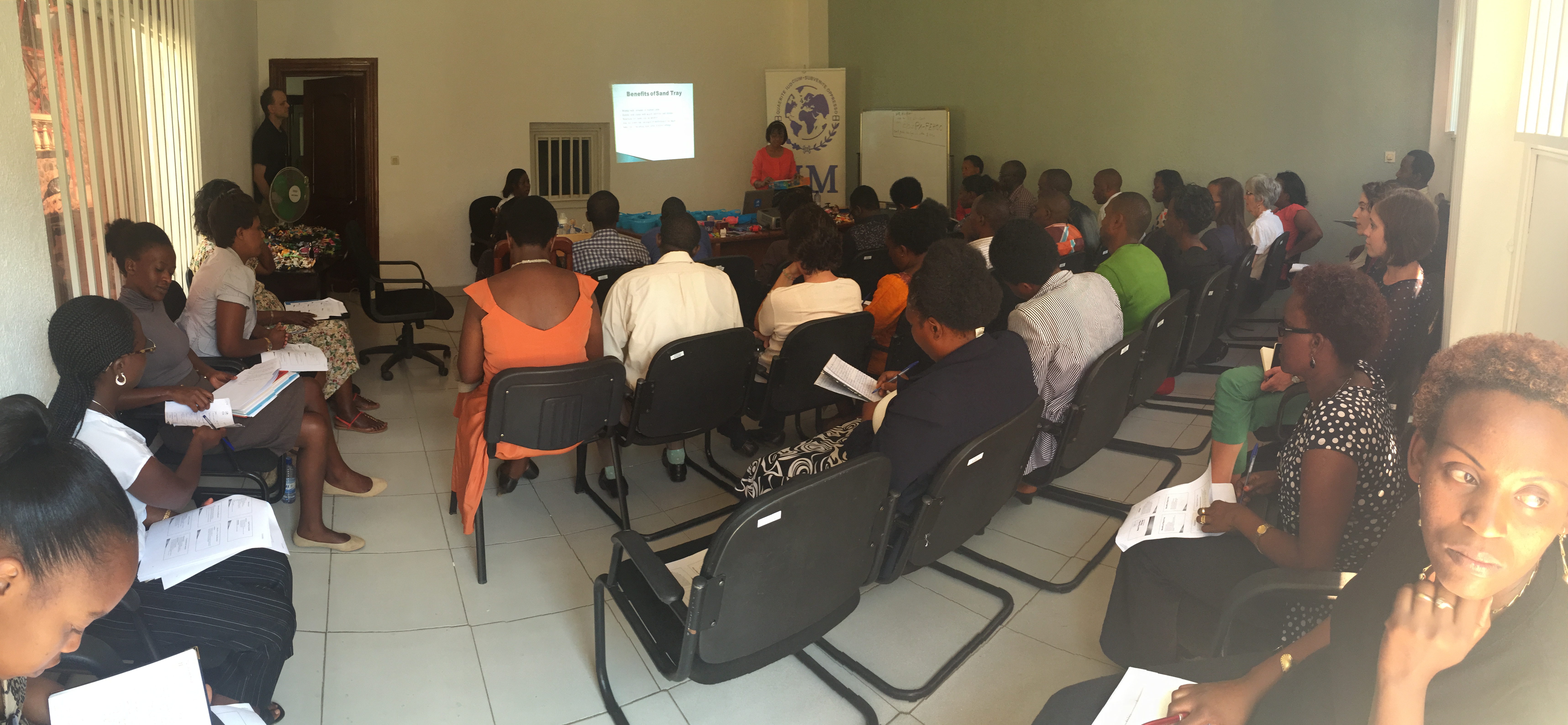
  • Sandtray training. At IJM Rwanda’s new office location one of our team, Rowan Moore LCSW, provided a short lecture and demonstration of the value of sandtray work with trauma victims. It is true that telling the trauma story can be a significant part of the recovery process. Yet,
    Courtesy Heather Drew

    Courtesy Heather Drew

    “telling” is not only with words. In fact, telling” need not use words. Enter sandtray work. After the presentation, the 35 plus participants made their own sandtrays and shared the meaning in small groups. As a parting gift, our team left two sandtrays, 25 lbs of sand, and a suitcase full of miniatures to be used. Special thanks to the sandtray company that donated the two trays.

  • Pastor training. A friend invited us to a gathering of Evangelical Free pastors to talk about domestic violence and addictions. These pastors received study bibles and training the night before and returned the next day to consider how to address issues of domestic violence in the church. Rwanda has made massive progress in dealing with gender inequality but such shifts have created a fair amount of instability in family dynamics. The training looked at what the bible says about relationships between husbands and wives and compared current culture with what we read. One of the primary outcomes of this training was a request from the pastors to do it again but with their wives present.
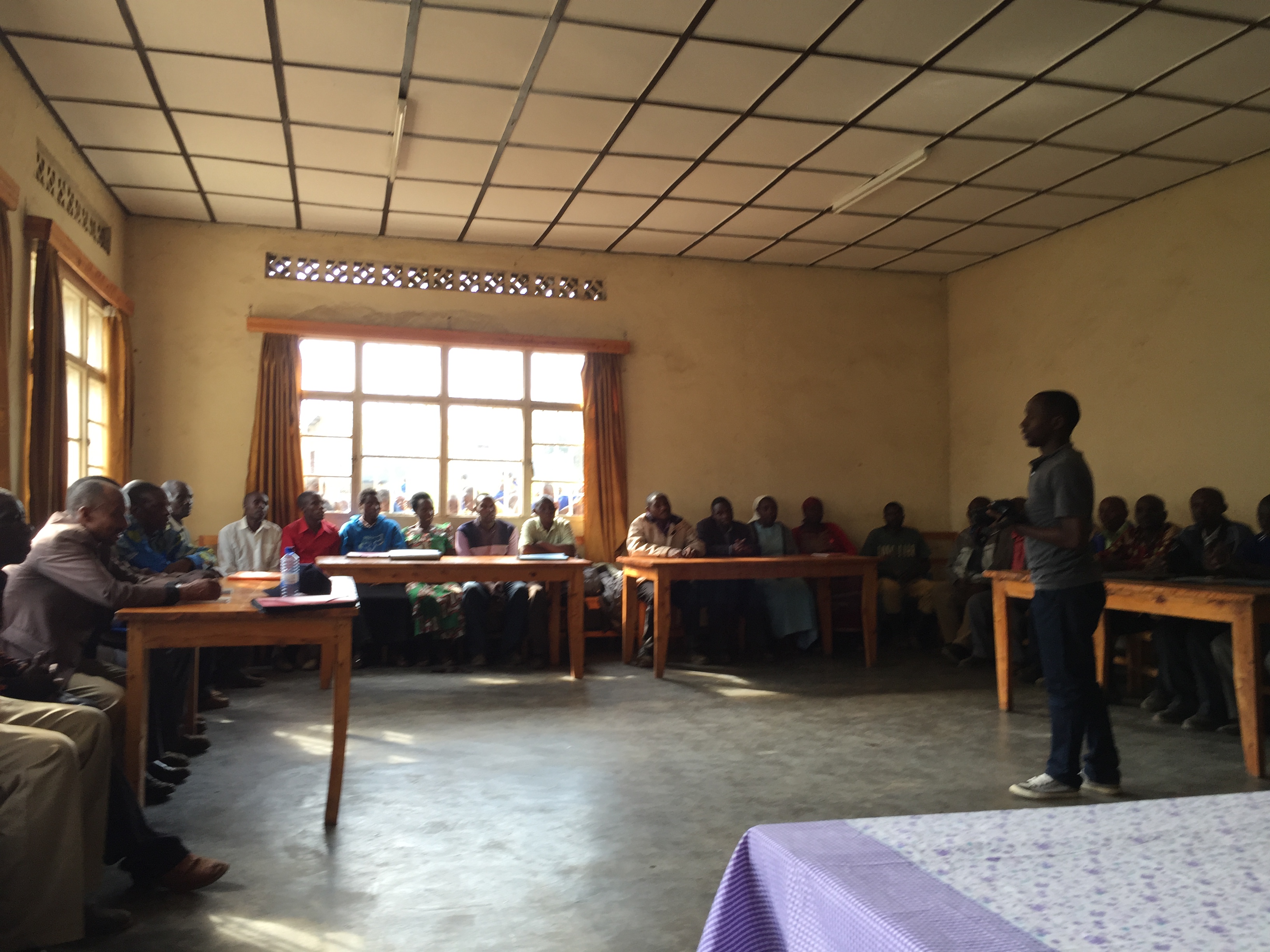
  • Rwanda life immersion. On such a short trip, it is hard to get fully immersed into the country. Yet, it is important to try to do so. Why? Because we have much to learn from our Rwandan brothers and sisters. And if we hope to be of any help or support, we must continuously learn about this country and people. Otherwise it is sheer arrogance that we have anything of value to offer. Some of our engagments came in the form of Sunday worship, meals together, play and discussion time with orphans, listening to personal stories, visiting a family, hearing about the value
    Courtesy Heather Drew

    Courtesy Heather Drew

    of the trauma healing work of the Bible Society in a remote village not far from the DRC border, and visiting museums to learn more about the genocide and aftermath. A few of our team stayed extra days after the main trip to spend time in the homes of our friends. This kind of immersion provides rich conversation and encouragement to both Americans and Rwandans.

  • Church training. Two of our team spent a day with a local church talking about domestic violence in a style of dialogue education. They reported that the conversations were stimulating and the challenge clear that culture sometimes trumps the bible. But the pastor indicated that the material presented would be re-presented again to a group of men a few nights later.
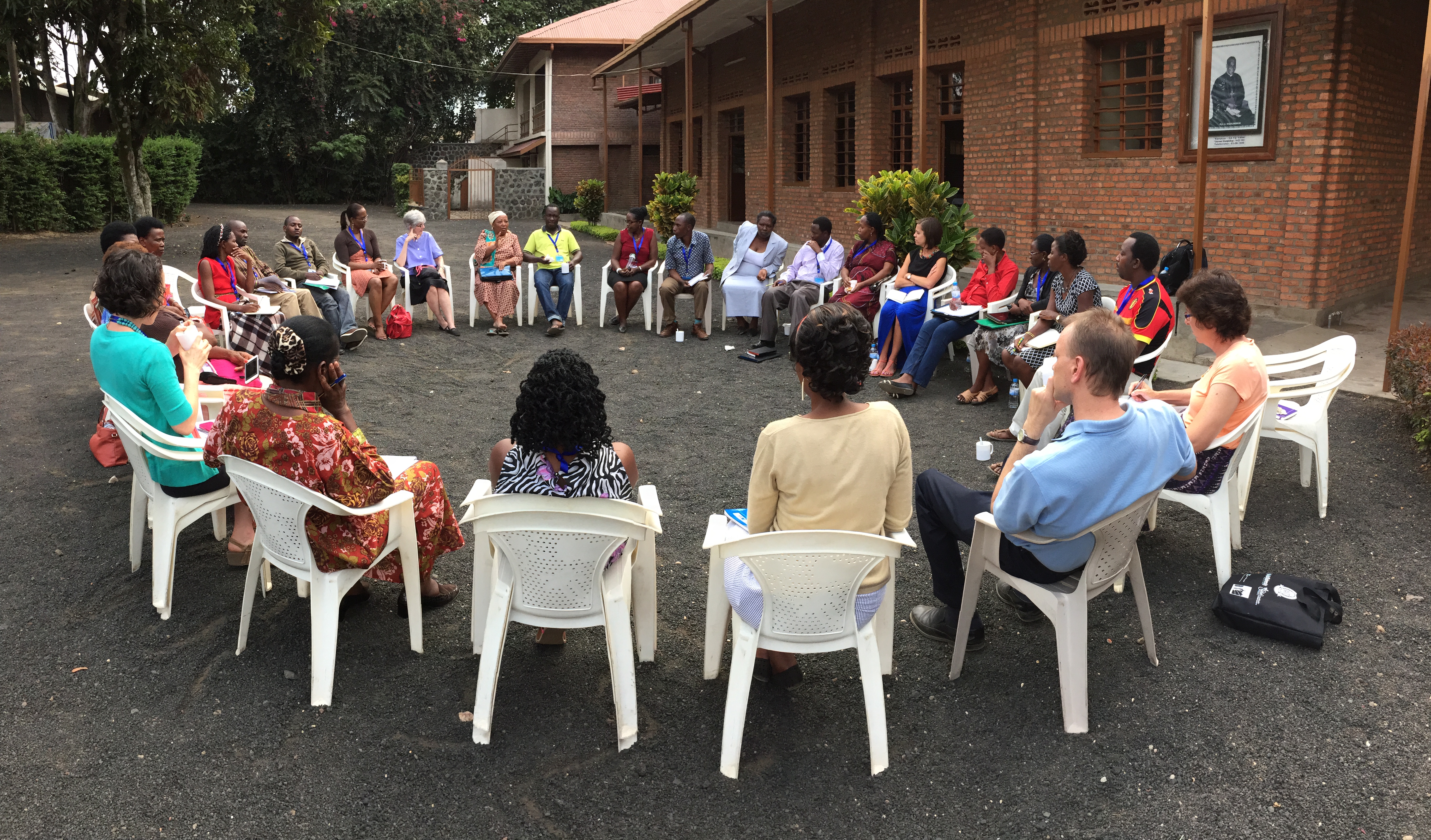
  • Community of Pratice. Once again, we facilitated lessons on domestic violence and crisis counseling. These lessons are less about lecture and much more about discussion and application. The conversations about domestic violence were lively to say the least. But the most important par
    Courtesy Heather Drew

    Courtesy Heather Drew

    t of the days were planned and providential conversations regarding cases or personal life experiences. This kind of sharing seemed to provide encouragement for all.

  • Case presentations. One of the pleasures of this trip was to listen to cases presented to us in large and small groups as well as in private. Why a pleasure? Several reasons: the immense professional growth we have witnessed over the last 7 years, the opportunity to encourage and validate the hard work they are doing each and every day. Many of these cases were hard to hear with terribly graphic details of suffering. But little bits of light are also evident as the clients were obviously growing in hope as they were cared for by our friends.

There were many more wonderful experiences too complex to explain here. Some went to a refugee center to see gifts of bibles and sewing machines (gifts from a PA congregation) while others of us participated in a community service project in a small village. All of us enjoyed intimate conversations with fellow team members as we traveled, ate, and shared rooms.

Celebrating GTRI grads in Rwanda, courtesy Heather Drew

Celebrating GTRI grads in Rwanda, courtesy Heather Drew

Some may wonder whether this kind of short term mission is worth the effort and cost. I’ll leave the final evaluation up to others, especially our Rwandan friends. However, our initial evaluation is that both Americans and Rwandans have been encouraged and strengthened in the work we do. And the relationships have been deepened. This deepening will not be on hiatus until the next trip as many maintain daily text, email, and SKYPE conversations throughout the year.

Thank you for those who prayed and supported this trip.

Leave a comment

Filed under Uncategorized

Restoring Pastors to Ministry After Affairs? Possible or Impossible?


In recent weeks there have been sad and public accounts of pastors removed from their positions after being caught having sex with someone not their spouse. These pastors (mostly men) are gifted speakers, writers, and leaders. They are good at what they do. It seems is a shame that they no longer use those gifts to lead God’s people. It is also a shame that God’s good name and the spouse/kids are dragged through the mud.

But can there be redemption? Could the pastor who loses integrity regain it and with it regain a pastoral position again? After all, we are all sinners and no pastor ever is without sin. Indeed, it seems God uses those who are moral and ethical disasters to lead his church. There’s David the rapist and murderer, S/Paul the terrorist, Abraham the liar, and Peter the wishy-washy, self-protective and impulsive “rock” of the church. Certainly, if God uses these people to write huge portions of Scripture and to build the church then why can’t a pastor who strays also be used by God?

No reason…any some possible reasons at the same time.

First, let’s call “affairs” with congregants what they are–pastoral sexual abuse. Now, not all sexual activity between a pastor and a congregant are the same. Having sex with a person you are counseling is not the same as developing a relationship with someone who is a bit more your equal. And yet, both would still not be an affair but an abuse of the position of pastor since the pastor has the obligation and moral responsibility to protect the relationship between the shepherd and the sheep.

Reason 1: The greater the misuse of power, the less likely a power holder should get that power back. An accountant who steals money is less able to return to being an accountant than a painter is returning to another painting job who happened upon some money on a desk and took it.

Stories of redemption in the Bible aren’t road maps for what should happen today. They tell us much about the amazing grace God bestows on sinners, but they don’t tell us what we should do when we encounter a fallen pastor. In fact, if we want to stack up the restored leaders in the Bible against the cursed leaders, I think our few positive examples of restoration would be vastly outnumbered by the stories of permanent removal. And on top of stories, we have some very serious warnings about bad shepherds (Jer 23, Ezek 34, 44, Matthew 23). The Ezekiel 44 passage denies false shepherds from ever speaking for God ever again but does show kindness in allowing them to help out with the sacrifices.

Reason 2: Human gifting does not necessarily lead to spiritual authority and leadership. Value to the kingdom continues even if “ministry” is only that of behind the scenes support services.

Finally, desire for the position is not always evidence of readiness. Recall in Acts 8 that there was a magician name Simon who wanted the ability to cast out demons like the apostles. He must already have had some capacity as he was famous. But he wanted more. He wanted the position of power. When confronted he begs for mercy and help.

Reason 3: Tears, passion, vision, and drive are not enough of a reason to place someone back into public ministry.

Now, none of these reasons are enough to always say no to return to pulpits after sexual infidelity. While a return may not be probable, it can be possible. Every situation is unique. That said, unless the disgraced pastor has evidenced many of the signs of repentance (taking full ownership, accepting consequences, giving up control over recovery process/submitting to the work of therapy, seeking accountability, pursuing utter transparency, and not placing demands to return to the position) for a long season, it is doubtful that a return to leadership is right. Frankly, one of the best signs of repentance is not being so worried about reputation and not seeking a return to a previous level of ministry.

10 Comments

Filed under adultery, Christianity: Leaders and Leadership, pastors and pastoring, Uncategorized

Do we have a theology of trauma?


Over at the BTS faculty blog (here), you can read my post about the need for a theology of trauma. I wrote it a few days ago and coincidentally it was published today as I was listening to Dr. Robert Schreiter teach on trauma in the biblical text. He described the bible as bookended by trauma (death of Abel in Gen 4 to cosmic trauma in Revelation) and the move to read the bible through the lens of trauma.

So how would you articulate a theology? Click my link above and see if you agree/disagree.

Leave a comment

Filed under Uncategorized

Making the Church a Safe Place for Trauma Victims: WRF Plenary Address


 Here are the slides from my plenary address given on March 26, 2015 in Sao Paulo to the World Reformed Fellowship General Assembly. #WRF2015 WRF GA 2015 Presentation

1 Comment

Filed under Uncategorized

Turn the other cheek? Does this apply to abuse victims?


The Christian Scriptures teach followers of Jesus to forgive as we are forgiven, to love our enemies, and to turn the other cheek rather than seek revenge when mistreated. Does this mean that victims of domestic violence and abuse need to, sometimes quite literally, take it on the chin without seeking protection or justice?

There are a good many resources out there right now that help teach Christians how we should respond to domestic violence and abuse. If you want some in depth argumentation why victims do NOT need to just take it, you can consider my top 3

  • Leslie Vernick (website and books)
  • No Place for Abuse (Book, and when you follow the link, notice the many suggested books on the same topic; books by Brancroft, Roberts, Crippen, and more!)
  • G.R.A.C.E (website with information about the moral requirement to report child abuse)

Rather than repeat the good advice in these resources–biblical foundations for protecting victims and calling out offenders–I want to point you to an older resource given to me in the past week. Older resource as in from 1840! Henry Burton, in chapter 22 (“The Ethics of the Gospel”) of his Expositor’s Bible: The Gospel of St. Luke discusses the application of Luke 6:27f to those inside the community of Christ as well as to “enemies.”

First he reminds readers to love enemies,

We must bear them neither hatred nor resentment; we must guard our hearts sacredly from all malevolent, vindictive feelings. We must not be our own avenger, taking vengeance upon our adversaries, as we let loose the barking Cerberus to track and run them down. All such feelings are contrary to the Law of Love, and so are contraband, entirely foreign to the heart that calls itself Christian. (p. 344-5)

I suppose his words capture most Christian teaching on what it means to love our enemies and to use the Golden Rule as our measure for how we respond. And yet, listen to his very next sentence:

But with all this we are not to meet all sorts of injuries and wrongs without protest or resistance. (p. 345)

Did you catch his point between the double negatives? We MAY and OUGHT to meet all injuries with resistance and protest. Burton goes on to answer why we should resist wrongs done to ourselves and to those around us,

We cannot condone a wrong without being accomplices in the wrong. (ibid)

There you have it. Complicity with evil, especially evil within the community of Jesus, is tantamount to approval and support of that evil act. Thus, telling a victim of abuse to “turn the other cheek” is essentially the same as abusing the victim yourself.

Burton extends his argument in the following way,

To defend our property and life is just as much our duty as it was the wisdom and the duty of those to whom Jesus spoke to offer an uncomplaining cheek to the Gentile [outsider] smiter. Not to do this is to encourage crime, and to put a premium upon evil. Nor is it inconsistent with a true love to seek to punish, by lawful means, the wrong-doer. Justice here is the highest type of mercy, and pains and penalties have a remedial virtue, taming the passions which had grown too wild, or straightening the conscience that had become warped. (ibid)

He completes his thoughts on this by reminding the reader that none of this justice seeking activity (to the point of excommunication if necessary) negates forgiving when the offender repents. We still love, we still forgive, we still treat others by the Golden Rule. But we do not avoid justice and protection seeking behavior, both for the sake of the one being harmed and for the one doing the harm. Both need rescue. The means of rescue differ for sure and may not be viewed as rescue when it comes in the form of sanctions and restrictions. But to look away from abuse and cover it up with “turn the other cheek” does not do right by the true meaning of love.


3 Comments

Filed under Abuse, biblical counseling, christian psychology, Christianity, Uncategorized

Choosing Sides in the Sex Trafficking Problem


last Sunday I led our adult class discussing the demand side of trafficking. In the USA, about 16% of men buy sex at some point in their life. Most of these men are in committed relationships. That begs many questions, but that isn’t the point of this post. We ended the class discussing the things we could do as individuals, as a congregation, and as a community to reduce the demand side of trafficking. As one astute audience member said, “if there wasn’t a demand, there wouldn’t be sex trafficked individuals.”

Over at the BTS faculty blog, I have a bit more about the demand for good people to do something. Check it out plus the additional ideas of what you might do at the end of the blog.

Leave a comment

Filed under Uncategorized