Category Archives: Post-Traumatic Stress Disorder

Knowledge vs. information: When trauma stories change you


Last night in our Advanced Global Trauma Recovery Institute (GTRI) course web conference, we were discussing the weight of listening to trauma stories. This conversation spawned from our delving rather deeply into the systemic torture, trauma, and loss of identity occurring in post-WWII eastern Europe (specifically in Romania). We considered the question

What should we do when we are overwhelmed with the weight of trauma stories around the world? Especially, what are we to do when we can do little to nothing about the new stories we hear every day? How do we respond to temptations to despair?

Knowing or just information?

During the web conference, Diane Langberg pointed out the common phenomenon that sometimes we hear of atrocities but do not really know about them. We hear information on the news about various tragedies (e.g., ISIS, Boko Haram, shootings, suicides, etc.) and sometimes fail to process it. One of our students reminded us of a bit of dialogue in Hotel Rwanda between the hotel manager and an American journalist,

Paul Rusesabagina: I am glad that you have shot this footage and that the world will see it. It is the only way we have a chance that people might intervene.

Jack: Yeah and if no one intervenes, is it still a good thing to show?

Paul Rusesabagina: How can they not intervene when they witness such atrocities?

Jack: I think if people see this footage they’ll say, “oh my God that’s horrible,” and then go on eating their dinners.

Not far from the truth, right? However, when someone takes the time to really listen to trauma stories, something changes in that person; they are no longer able to go about their life as the did in the past. When we choose to sit with stories of pain, we gain knowledge that changes our view of the world. For example, when we take new individuals to Rwanda, we often hear, “I remember hearing about the genocide….but I didn’t know. I knew but I didn’t know what I know now.” The same thing happens when individuals are willing to learn about racism, domestic violence, gender based sexual violence and the like.

When you see something in detail, you can’t unsee it. You will be changed.

I know…now what?

Once you know, really know, the depth of suffering of a community, you are changed. That knowing often creates deep pain, especially when we can do nearly nothing about it. So, now what? What can we do? Here are a few things that may be overlooked as insignificant

  1. Listen. Wait, didn’t we already do that? What good is hearing more about the story if I can’t do anything about it? No, listening is part of the solution. Individuals and communities who are enabled to tell their trauma story benefit from repeated truth-telling. They benefit from “being seen and heard.” It matters that those from outside cared enough to come and hear of the pain. Do not underestimate how such listening may empower a trauma survivor to move towards healing.
  2. Lament. Laments are conversations with God about the brokenness before you. Whether done in private or in public, these laments help us to communicate to God what we find intolerable, to ask God to do what is impossible, and to look closely for his response. Laments hand the problem back to God. “Do something Lord!” Laments also tell victims that their pain is real and not merely an emotional weakness on their part.
  3. Look for seeds of healing. If you are hearing a story of tragedy, then you are also hearing a story of survival. While being careful not to dismiss losses and pain, we can also point out signs of life, of resistance, of resilience. These seeds do not deny the damage being experienced. Jeremiah’s plaintive sigh, “Yet this I call to mind and therefore have hope: because of the Lord’s great love we are not consumed…” does not undo his previous tears, “I remember my affliction and my wandering, the bitterness and the gall. I well remember them, and my soul is downcast within me.”
  4. Do one thing. If you are in direct contact with the person who is suffering, you can check in with them, find out what would be helpful. If you are not in direct contact, then do any number of “one things.” You can pray daily. Ask not only for restoration and justice but also for God to direct your response. You can tell one person about what you have learned. You can look for ways to identify how the seeds of the same tragedy might be in your own environment and not just “over there.” You can give an alternative points of view when you hear someone speaking naively about the situation. Start a conversation with friends.
  5. Remember. Look to find God’s view of the situation. How does He feel about injustice, whether minute forms in us or the massive ones we see on television? What reason might God have for waiting to bring all things under his control?


2 Comments

Filed under Abuse, christian counseling, christian psychology, Christianity, Post-Traumatic Stress Disorder, trauma

Why are Some Trauma Victims More Vulnerable to Re-Victimization


For those who have not suffered a chronic trauma reaction it can sometimes be hard to understand how a victimized person gets situations where re-victimization can happen. Wouldn’t one trauma at the hands of another cause you to be vigilant against any subsequent danger?

You might think so, but here’s how it happens in simplistic terms:

  1. Interpersonal Trauma leads to confusion, self-doubt (and hatred), loss of voice.
  2. Vigilance against one kind of victimization leads to making decisions to give up other values/interests to avoid the trauma
  3. That decision (or impulse) leads to opportunity for exploitation

Still doesn’t make sense? Consider how a societal trauma preps a community or country for re-victimization. Dave Zirin writes about the use of “Shock Doctrine” in his 2014 book, Brazil’s Dance with the Devil: The World Cup, the Olympics, and the Fight for Democracy. Shock doctrine is opportunist moves by governments interested in taking advantage of a traumatized population

Left to their own devices, people tend to vote for things that make their lives better, like sharing wealth and resources and ensuring quality health care and education for all. Nobody wins elections by promising to turn the country into a sweatshop zone. So in order to put neoliberal policies in place, the world’s elite need a strategy—some clever sleight of hand to get what they want before anyone can object. Enter the shock doctrine

The idea is simple: people who are traumatized are more likely to agree to authoritarian measures, to suspending democracy, to doing whatever it takes. The trauma can be unexpected, like a natural disaster or a terrorist attack, or planned, like a massive budget cuts or a military coup—anything that

‘puts the entire population into a state of collective shock. The falling bombs, the bursts of terror, the pounding winds serve to soften up whole societies much as the blaring music and blows in the torture cells soften up prisoners. Like the terrorized prisoner who gives up the names of comrades and renounces his faith, shocked societies often give up the things they would otherwise fiercely protect…’

While people are reeling, trying to figure out how to survive, corporations and the corporationist state walk through the open door and take what they please.” (p 73-4)

Zirin illustrates this by pointing to countries who take privacy rights or freedom of speech from citizens in the name of protecting the people (state) from outside attack. Or corporations who find ways to take land from poor citizens after a natural disaster—to use for their own benefit.

My point is not to attack political ideologies, corporations, or governments. Rather it is to show that trauma sets us up to give up rights and boundaries more easily in order to avoid a terror. That same willingness is more easily exploited by one who sees the vulnerability. The authority will protect us we think. But if the authority is only interested in its own protection, the victim is prone to re-victimization.

3 Comments

Filed under Post-Traumatic Stress Disorder

Overspiritualizing invisible wounds?


When someone suffers an obvious injury to a leg it is clear to us that this injury limits prior capacities for walking, running, standing, and other things we do with our legs. If the injury is slow to heal, would we be likely to tell them to act as if the injury never happened? No. We can see the injury, its effects, and we recognize that recovery may be limited. We would be unlikely to judge the person for failing to run like they had prior to the accident. Of course, physical wounds will prompt spiritual concerns, from “where was God…?” to trusting God for the future even while continuing to experience pain symptoms and the inability to complete tasks that used to be easy.

But what about the wounds we can’t so easily see?

Sadly, I think we spiritualize them and do judge others for having them. Take for example a victim of abuse or trauma that results in a diagnosis of Posttraumatic Stress Disorder. We see no obvious wound. The body looks sound and fit. So, the anxiety we see, the hesitancy to trust others, the mental confusion, the inability to sleep well…these symptoms must be primarily evidence of a spiritual problem, right?

Wrong, at least in part. While we rarely see the damage done to victims of trauma, changes to the brain are nonetheless present. Here’s a couple of things we think we know about trauma and the brain:

  • The brain is an adaptable organ and use-dependent. Activity along neural pathways can become more efficient with practice (i.e., the more something happens, the easier it is for the brain to respond). So, certain pathways and structures in the brain become more easily activated
  • Observing activity brain scans in those who suffered severe traumas such as child abuse, we see evidence that the part of the brain that processes emotion seems to be routinely overactive. Likewise, the part of the brain that provides conscious analysis of where we are in time and space, seems underactive when emotional processing increases. This activity problem (too much in some areas, too little in others) appears to cause individuals to relive/re-experience trauma and have less capacity (in the moment of reliving) to talk back to their feelings (analyze what is happening) or explain it to others
  • Along with these structures, hormone feedback systems appear to produce fight/flight hormones in the presence of triggers

Simplistic as my points above are, I hope you can see that a person has little conscious control over these reactions in any given moment. Now, there are things that can be done to help the brain adapt and respond better, but the fact of being triggered is not the result of not trusting God.

So, consider the multiply-traumatized man in your church who reacts negatively to well-intentioned requests to join a small group or to be prayed over with the laying on of hands. Is this because they do not trust God, are sinfully fearful, or evidence of invisible wounds of PTSD? I suspect some would be inclined to assume this man had a spiritual problem. In fact he may, but the reaction he is having is most likely not that problem.

A Better Question

Recently I asked my students to consider this question: What does faithfulness look like for the Christian who is suffering pervasive panic? Does it mean an absence of fear? Forcing themselves into situations that will flood them with panic? How would you answer this question? Are the evidences of fear in your life a sign you do not trust God? Can you acknowledge fear and still trust God? What does that look like for you?

8 Comments

Filed under Abuse, Christianity, Post-Traumatic Stress Disorder

Making the Church a Safe Place for Victims of Trauma


This afternoon I will be speaking at Chelten Church on the topic of “Making the Church A Safe Place for Victims of Trauma.” This 3 hour continuing education seminar (co-sponsored by Biblical Seminary who provides the NBCC approved CEs) will focus primarily on trauma resulting from child sexual abuse. However, other forms of sexual violence and traumas (domestic violence, military trauma) will get a bit of attention as well. If you can’t make it or wish to see what I am talking about, you can download and see the slides: Making the Church A Safe Place For Victims.

Tomorrow, Mary DeMuth will speak on a topic similar to her book. Her talk is entitled, “Unmarked Marriage.”  I suspect the conference organizers will take walk-ins!

1 Comment

Filed under continuing education, Post-Traumatic Stress Disorder

Cameo in “Hope Rising” on ABC on November 30


Hope Rising, a documentary about The American Bible Society’s efforts to bring trauma healing to the Congo is going to be played on some local ABC stations beginning November 16. However, it airs here in Philadelphia on November 30 in the wee hours of the morning. I make a brief cameo in the documentary. Plus many of my friends doing the work are featured quite a bit. It will be aired on another local ABC affiliate channel, #246, the Live Well Network (LWN) on December 3. But, as they say, check your local listings or follow the instructions on this page to ask your local affiliate to air the program. In the meantime, check out this trailer,

Leave a comment

Filed under Post-Traumatic Stress Disorder, sexual violence

Institutional betrayal: Secret ingredient to PTSD


We live in the world where human frailty and pathology is viewed in individual terms. When we see sickness we imagine that the person must have some weakness in biology, faith, or behavior. Rarely do we think about the role the system or community has played in the development of that person’s pathology. This is true when we think about a person diagnosed with PTSD. We therapists hypothesize about individual factors (personality factors, early childhood experiences (a slight nod to external causes) and neurobiological risk factors) and situation factors (the frequency, duration, and intensity of overwhelming trauma events) when we try to answer the “why” of the development of PTSD in a person.

The problem with this kind of thinking is that it fails to take into consideration of known research that suggests that environmental response to an individual’s trauma experiences may be a determining factor in whether PTSD or chronic traumatic reactions form.

In the most recent American Psychologist (2014, 69:6, 575-587), Carly Parnitzke Smith and Jennifer Freyd write about the concept of institutional betrayal. Traumatologists recognize Freyd’s name as the researcher who developed “betrayal trauma theory”, pointing to the especially toxic form of PTSD caused by those who were supposed to be safe and protective. These begin to examine “institutional action and inaction that exacerbate the impact of traumatic experiences…”

How can an institution betray a victim?

When a person trusts that a system designed to defend, respond, protect, or seek justice will do its job after an interpersonal trauma, and when that system either chooses not to respond (omission) or worse, chooses to lay blame at the feet of the victim (commission), institutional betrayal occurs. Examples include law enforcement accusing rape victims of “asking for it” with their clothing, church leaders allowing offender clergy to “leave with their reputations” or refusal to investigate a case of date rape when the reported offender is an important leader in the community.

In summarizing a couple of studies, Smith and Freyd point out that institutional betrayal after a trauma experience leads to higher rates of dissociation, sexual problems, and health difficulties. This is even more likely when the trauma takes place in an environment where protection of the members is trumpeted (i.e., church or military).

What are the common characteristics of betraying institutions?

Smith and Freyd note several characteristics found in institutions at greater risk for betraying members.

  • membership requirements to define in group identity. This produces a need for members to act in ways to maintain such an identity
  • Prestige (both leaders and institutions). Prestige produces both trust and fear, dependency and power
  • Priorities. “Institutional betrayal may remain unchecked when performance or reputation is valued over, or divorced from the well-being of members.” As the authors note, maintaining reputation as a priority will lead to neglect or attack of those who challenge reputation
  • Institutional denial. Blame a few bad apples, avoid institutional blame or responsibility

Those institutions that do make efforts to prevent abuse within its community may still yet fail to respond well. They may fail to use adequate screening procedures, normalize abuse, fail to utilize or follow appropriate response procedures, punish whistleblowers, and aid cover-ups.

What to do?

Smith and Freyd argue that transparency (about past actions/failures to act as well as power structures) and priority to protect the well-being of all members will move institutions away from the risk of betraying individual members. I would argue that the shift to protect moves from the institution as a whole to protection of the most vulnerable.

Let me recommend a few resources that have appeared here in the past:

  1. Diane Langberg’s 5 part video about narcissistic leaders and the institutions they lead. She too describes systemic narcissism.
  2. Why some spiritual leaders abuse (and systems allow it)
  3. Narcissistic systems
  4. Resources to combat narcissism one person at a time

10 Comments

Filed under Abuse, personality, Post-Traumatic Stress Disorder, Psychology

GTRI 2014: Day 10, Muhanga


July 10, 2014. Centre St. Andre

Thursday, Day 2 of the Community of Practice with the Bible Society of Rwanda. Already we are seeing deepening relationships. Last night many Americans and Rwandans sat together in the dining area talking and getting to know each other and revealing deep stories, stories of courage, pain, and hope. Precious times.

On day two of the Community of Practice we began with a short devotional considering Jeremiah’s lament. Barbara Shaffer and Carol King led a training and discussion of the problem of domestic violence. This is a new chapter in the Healing Wounds of Trauma materials. We discussed how much of a problem it is in Rwanda, why women stay, and how we can help both victim and abuser.

DSC_0307In the afternoon, we did another teaching (Carol and myself) regarding the problem of suicide. It appears that most Rwandans believe that one who commits suicide is automatically going to hell. In addition, the family is often shunned. This seemed a very entrenched belief and so my raising doubts and questions resulted in very spirited debate. While we also discussed how to help the suicidal person and how to help the family members, I left them with the encouragement not to speak for God and since no verses speak to the future of suicide persons, they ought to be careful to put words into God’s mouth.

We ended this conference day by giving the Rwandans an opportunity to have a session for their own care. We can see the weariness on their faces. Baraka led a care for the caregiver session while the GTRI team met to process what we were hearing and seeing–the heartache and the resiliency.

Monique (R) with Souvenir

Monique (R) with Souvenir

We had the privilege of listening to Monique’s story of surviving the genocide as a teenager and God’s subsequent call on her life. The story is too precious and hard to share here beyond a few words. She survived when family members around her were executed (shot) and fell on top of her. The killers left the pile of bodies, not knowing that she was not killed. Just prior to this event, she had read Psalm 91 and heard God speaking to her about her own future when she read verse 7,

“A thousand may fall at your side, ten thousand at your right hand, but it will not come near you.” 

She has gone one to become an evangelist for Christ and a helper of the hurting. I can attest that she has a gift that few have. And I will never read that verse again in the same way

As the previous night, many of us stayed up quite late deepening relationships with new and old Rwandan friends. Looking over the dinner area, I saw heads bowed in prayer, attempts to speak in French, cackling laughter, and the sharing of food and drink. Such a beautiful sight.

Tomorrow will end our COP and we will move on south to Butare.

Leave a comment

Filed under Africa, counseling skills, Post-Traumatic Stress Disorder

Brooks on journaling about emotions


Friend Jeff McMullen pointed out a recent David Brooks op ed in the New York Times. (Read it here). While I’m not sure I agree fully with his journaling/not journaling point he says something very important about the timing of writing one’s emotions after a traumatic event. He says,

When people examine themselves from too close, they often end up ruminating or oversimplifying. Rumination is like that middle-of-the-night thinking — when the rest of the world is hidden by darkness and the mind descends into a spiral of endless reaction to itself. People have repetitive thoughts, but don’t take action. Depressed ruminators end up making themselves more depressed.

Then later, this important distinction between immediate processing of emotions and later processing,

We are better self-perceivers if we can create distance and see the general contours of our emergent system selves — rather than trying to unpack constituent parts. This can be done in several ways.

First, you can distance yourself by time. A program called Critical Incident Stress Debriefing had victims of trauma write down their emotions right after the event. (The idea was they shouldn’t bottle up their feelings.) But people who did so suffered more post-traumatic stress and were more depressed in the ensuing weeks. Their intimate reflections impeded healing and froze the pain. But people who write about trauma later on can place a broader perspective on things. Their lives are improved by the exercise.

David points to some research that exists that suggest CISD is unhelpful for some participants. Some are made worse. Yet, narrating one’s trauma in the broader context of a life tend to see a reduction of symptoms. The difference seems to be whether the focus in on life or mostly on the trauma. Trauma in perspective is the goal. Just reviewing trauma may in fact strengthen the traumatic reaction rather than weaken it.

1 Comment

Filed under Abuse, counseling, counseling science, Post-Traumatic Stress Disorder, Psychology, ptsd

GTRI 2014 Trip: Day 3


[These are journal entries from my recent trip To Uganda and Rwanda during the first weeks of July.]

Day 3, July 3

Today was the 2nd and final day of the first ever Community of Practice for the Bible Society of Uganda trauma healing volunteers. Another long day as the program did not end until about 7 pm! Today I presented on an overview and update on the impact and treatment of PTSD. This is a group that likes to ask questions! We discussed the role of demonic in PTSD and how to know the difference. Many of the participants were quite interested in discussing how to educate local pastors in understanding the nature of dissociation. I also participated in teaching the new lesson (added chapter to Healing The Wounds of Trauma material) on domestic violence. In discussing why victims “choose” to stay in DV situations we had some lively discussion about whether the Bible teaches that women must stay. Very productive I think and gave some people a new perspective on the need to bring this hidden scourge out into the light.

The conference ended with reports, public conference evaluations (loved the very direct and loving evaluation of my presentations: have me speak more, have me slow down!), the handing out of the certificates, and final words. One of the most moving items was that I received “thank yous” in every mother tongue present. Seemed like there were at least 30 different languages represented. It was hard not to be choked up. I recognized a few (Arabic, Swahili, Kinyarwandan).

Two take-aways I want to remember:

  1. We need special materials for ex-combatants. First, much of the focus in Uganda has been on child soldiers. But the country is full of adult ex-combatants who were in Amin’s military or subsequent militaries and who now feel disconnected and distanced from current society. Some report that if they get together for sharing with other ex-combatants, they get reported (falsely) for starting a rebel group. One reported being jailed briefly for such a matter. Several told me that they were suffering terribly from being in POW camps and from the violence they witnessed. But most importantly, they noted that much of the trauma healing materials only speak of soldiers as the cause of trauma and so they feel more isolated when they read about or attend trauma healing exercises. No one, they feel, speaks of the trauma of seeing comrades die, of being forced to carry out commands against their will.
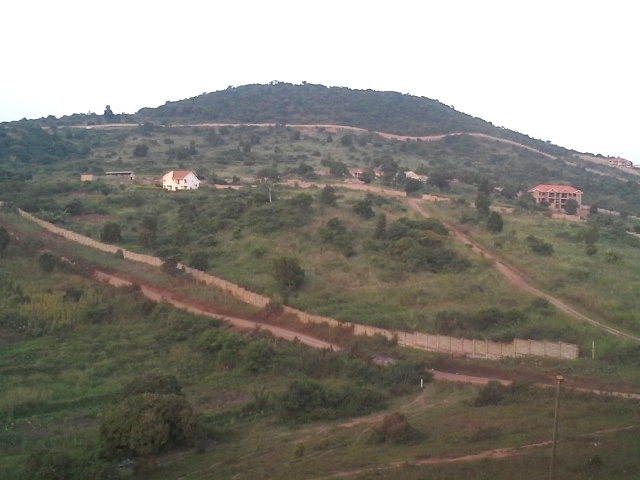
  2. Trauma healing volunteers, financing, and the need for View from my roomtangibles. Some of the volunteers believe that they must bring tangibles when coming to do trauma healing work. Words are not enough and participants expect some sort of handout: soap, money for transport, etc. The discussion we had about this ranged from criticism of this part of Ugandan culture and the need to develop a donor rather than handout culture to recognition that this culture has been formed, in part, by well-meaning foreign (Muzungu) NGOs that offer handouts as a means to increase participation in projects. Some volunteers noted they had been falsely accused of pocketing monies intended for participants when they didn’t come with any “gifts.” In addition, many discussed the difficulty of funding the trauma healing groups and the need to find sustainable funding using micro-enterprise.

My day had three other stimulating experiences. First, I was interviewed by a journalist for television broadcast. Supposedly, it aired across the nation this evening, though I did not see it. Second, a woman told me of meeting Joseph Kony about 4 years ago (during the failed attempt to negotiate with him). She said that he was very winsome and crafty. If she didn’t know better, she could have fallen for his lines. I guess this is one of the reasons he is able to stay “missing” by convincing others to help hide him. Finally, I received a text from my wife letting me know that the US government warned of a terror plot at Entebbe airport tonight (about 10 miles from here). I’m planning on being there tomorrow to fly to Kigali. I guess I will evaluate the treat in the am.

3 Comments

Filed under Africa, counseling skills, Post-Traumatic Stress Disorder

GTRI 2014 Trip: Day 1 and 2


unnamed[I’ve been back for a couple of weeks but just now getting to write about this trip. These notes from each day come from my journal and don’t represent all that I did each day.]

Today (July 1), I landed midday at Entebbe airport just outside Kampala, Uganda. Entebbe is on the shores of Lake Victoria. I was met by Justus Rubarema of the Bible Society of Uganda as well as Klero Onuha of the Bible Society of South Sudan. Both men worth getting to know! We waited a bit for Margaret Hill’s plane arriving from Nairobi. Once gathered, we made for the Lweza Conference Centre about half way to the city of Kampala. Lovely grounds. Peaceful. Enjoyed the little monkeys eating flowers and looking for handouts (I had none).

I arrived at this conference (Community of Practice for Trauma Healing practitioners trained by the Bible Society) feeling fairly awake despite 26 hours of travel time. It may have helped a bit that I was unexpectedly bumped to business class on Qatar Airways from Philadelphia to Doha (a 13 hour leg). I suspect the lay flat seats had something to do with my feeling pretty good. Feeling good, I invited Margaret to go on a small walk around the area and on a quiet road outside the compound. Discussed some of her techniques to help quiet distress in participants where violence and trauma was ongoing (e.g., Bangui, CAR). We discussed the use of the “butterfly hug” as a means to calm. Also, discussed the use of drawing a place “bien etre” rather than a “safe place” since most participants she had did not have such a safe place at the present time. We finished our discussion of how to safeguard the mis-use of these calming techniques so that they would not be mis-represented as being more than they are, techniques used to help someone in the midst of distress.

Ended our day with a meal of rice, bananas, potatoes and chicken. Off to bed in hopes of getting on the right time zone quickly.

Day 2

First full day of the conference (and FULL it was, 8am to 6:30pm). Attendees are all Ugandan plus Klero from South Sudan. Most are volunteers for the Bible Society, trained to provide healing groups using the Healing Wounds of Trauma materials. Some work with children, some with adults, some with ex-combatants, some with refugees, and some with women with HIV. The purpose of this conference is to add to their knowledge and skill base plus problem-solve as to how to provide more trauma healing experiences around the country—with almost no budget. Most of the country is well-represented including a number from Gulu and also the Nakivale refugee camp. More men than women. A couple of academic types are also present, representing both the Ugandan Counseling Association and the Ugandan Christian Counseling Association. Plus, one nun representing the faculty of a nearby Catholic college.

I presented on an update to listening skills which seemed well-received. This group is very willing to discuss, raise questions, and debate. I like it! It was requested that I offer some counseling sessions after dinner and so I did. Two men requested it and so I got a chance to hear about their ministries, their hearts, and their difficult struggles, both from the past and in the present. One of the things I am seeing here is that Ugandans need the wisdom of Solomon, the heart of David, and the integrity of Daniel, even when trying to deal with so-called Christian bosses. One fun fact is that the power went out right in the middle of one of the sessions. No problem. We could keep talking in pitch-dark! But by the time I fumbled with lighting a nearby candle, a generator kicked on and power was restored.

Leave a comment

Filed under "phil monroe", Africa, counseling skills, Post-Traumatic Stress Disorder