Category Archives: christian psychology

Jack Miller on repentance (again)


If you haven’t seen Jack Miller’s little book on repentance I encourage you get ahold of the new edition published by CLC publications (2009). The cost is under 8 dollars! Jack Miller wrote the first edition in 1975 under the title, “Repentance and the 2oth Century Man”. This one, entitled: Repentance: A Daring Call to Real Surrenderalso includes a foreward by Andree Seu (World Magazine) and an epilogue by Miller’s widow, Rose Marie.

Here’s why I find this little book very helpful. It clarifies the subtle but oh-so-important differences between true repentance and penance; between true repentance and regret. It reminds us that repentance is a daily moment-by-moment attitude but is not something that is full of shame and morose feelings. 

As someone who works with Christians struggling with addictive patterns, I find one of the greatest challenges is to help clients move from penance to repentance and from guilt to freedom. This book ought to help with both.   

For those unfamiliar with Jack’s legacy, he started New Life Presbyterian Church in Glenside (my church) and out of that church a number of other churches were planted as well as the founding of World Harvest Missionwhich has 170 missionaries now in 15 countries–including Uganda where missionaries were intimately involved in the care of those suffering through last year’s ebola outbreak.

Leave a comment

Filed under addiction, biblical counseling, christian counseling, christian psychology, Christianity, Evangelicals, self-deception, sin

Inside the brain of a Christian Psychologist


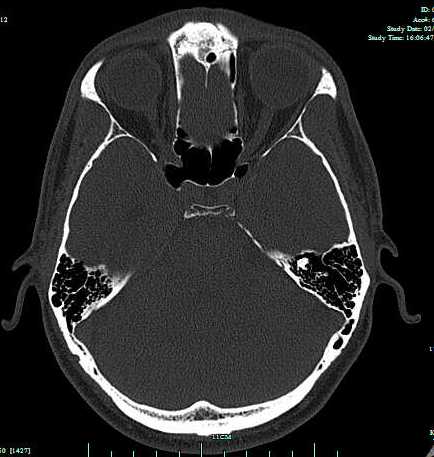
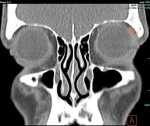
Ever wanted to get inside the head of a christian psychologist? Now you can explore the CAT scan images of a psychologist’s head courtesy of yours truly. Consider offering diagnoses and explanations as to how such an mind might work.

headtop viewvertical slice

These images were taken to rule other matters that might be causing sinusitis. I found looking at my head both nerve wracking AND exciting at the same time.

Conclusion: Negative sinusitis. Nothing missing of note.

3 Comments

Filed under christian psychology

Breaking down Christian Counseling barriers


Maybe it’s a stage of life, maybe I’m hallucinating, but it seems to me that the divisions withing Christian forms of counseling are exploding. And to that I can only say hurrah!!

Let me give you the clifnotes version of American Christian counseling history (minus many important details) starting with the 20th century:

  • Fundamentalist/Modernist fallout after the turn of the century builds division between fundamentalist/evangelicals and academics, including psychology. Division over naturalism
  • Christians authoring psychology related books (Boisen, Clinebell, Hiltner, Narramore) in 30s-50s
  • Creation of Christian Association of Psychological Studies in 1956 by Dutch Reformed pastors but later broadened to include those wacky Californian evangelicals interested in psychology. Writings at this time were broadly evangelical but often contemporary psychology models with bible verses attached. Beginnings of the integrationof psychology and Christianity movement with creation of doctoral training programs by Fuller Seminary and others.
  • Jay Adams counters in late 60s and early 1970 (Competent to Counsel) with nouthetic counseling model to return to the power of the Scripture to change people and to throw off the humanistic clutches of psychology. Numerous models of biblical counseling birthed. Most prominent: CCEF
  • Divide between Biblical counseling models and professional Christian Psychology widens in the church. Much maligning of each other. To associate with one meant no possible association with the other. Biblical counseling avoids professional jargon; integrative psychology pushes for meeting state licensing standards
  • Biblical Counseling moves in 1980s from predominantly deconstructive and critique oriented to more positive model building
  • 1990s: some beginnings of dialogue between key thinkers/authors in biblical counseling and integration movement. Integrative clinicians see benefits of the biblical work done by biblical counselors, see problems with many superficial integrative models, and both sides seem to be less separatistic and more open to learning from each other
  • Now in the 21st century: A new version of Christian Psychology willing to embrace biblical counselors, psychologists, theologians, etc. and desiring to build a robust, biblically founded understanding of people informed by psychological research.

Okay, that’s in broad brush strokes and I left out huge developments and individuals. But yesterday I received a survey about biblical counseling programs. It’s clear our old divisions and categories no longer work. Now, today I get an advertisement for a biblical counseling conference that includes a wide variety of speakers. We are truly crossing lines! I’m interested to see what comes of this in the next 5 years.

FYI, interested in a fuller history? Start with the 1st chapter in Eric Johnson and Stan Jones’ “Psychology and Christianity: 4 Views” book. Follow their reference list. Then check out David Powlison’s U Penn PhD dissertation on the history of Jay Adams. Neftali Serrano published his PsyD dissertation on the beginnings of CAPS. That will whet your appetite.

5 Comments

Filed under biblical counseling, christian counseling, christian psychology, Christianity, History of Psychology, Psychology

Access to short christian counseling articles


I’ve noticed that the American Association of Christian Counselors has made many of their magazine (Christian Counseling Today) articles available for free on their www.ecounseling.com website. You can search by author or keyword to find what you might be looking for.  

My 800 word essay on repentance after abuse can be found here. A longer and very helpful article by another psychologist on the 12 features of spiritual abuse can be found here.

3 Comments

Filed under Abuse, biblical counseling, christian counseling, christian psychology, Christianity, Forgiveness, Repentance

Wanna see a MA Counseling program in action?


For those of you in the Philadelphia region and considering an Masters degree in Counseling you are hereby invited to our March 9th “taste of Biblical Seminary.” This open house is just for those interested in a counseling degree and will expose attendees to what we do at Biblical. You’ll come hear from profs and students, have a meal with us, have time to ask current students anything you want, and then sit in on our classes. You’ll leave with a very clear sense of what we are about.

For more information and an opportunity to have a meal with me, check out this pdf on our website: http://www.biblical.edu/images/embark/PDFs/infoeventmar09.pdf

Leave a comment

Filed under biblical counseling, Biblical Seminary, christian counseling, christian psychology, counseling, education, teaching counseling

Persisting Conflict: Breaking the cycle


As you can imagine, most people I see in counseling settings have a conflict with someone in their life that doesn’t seem to resolve. The problem comes up again and again. Change the scenario, but the dialogue remains the same. Someone shuts down, someone presses hard, someone brings up the past, someone changes the subject, someone seems to agree at first but then later reverses their position. You get the picture.

There are many reasons why we fall into this kind of pattern. But, one comes to mind as a common reason: We want to be heard and we don’t feel like we are being heard so we keep doing things in order to be heard (silence, many words, loud words, etc.). The end result is both parties feel unheard and generally unwilling to really “hear” the other for fear their concerns will be ignored.

One way I try to break the cycle is to draw 2 intersecting roads. In most conflict, we are going different directions and we want the other to come with us. And when we consider going with the other down their road, it feels as if our road (concerns, desires) will be left far behind.

In order to break the cycle we have to stay in the intersection, without demanding that we go down either road. The intersection means that both of our concerns and interests are being considered. We stay there to hear without leaving. We fight the anxiety that staying there means giving up. It doesn’t. The intersection is to be a safe place (okay, in real life hanging out in an intersection probably isn’t the smartest thing).

When conflicting parties agree to hang out in the intersection, I find that most of the anxiety and fears of rejection or neglect subside. And frequently, parties agree that the concerns of both are legitimate. And just maybe they can find another road that they both can travel in safety.

What word pictures do you find helpful when confronting persisting conflict?

2 Comments

Filed under christian counseling, christian psychology, conflicts, counseling, Relationships

Improving Case Conceptualization?


For my counselor readers: What books or other helps have you encountered that improved your ability to conceptualize cases?

When we teach counseling skills we do the following (we do more than this but this is the general trajectory):

  1. Build basic helping/counseling skills (if you can’t connect with a person and build a trusting relationship, any knowledge you might have will be useless!)
  2. Expose students to a wide variety of problems (so they can understand and describe common problems in living or common pathologies–even if they are not sure of the causes of these problems)
  3. Explore human growth and development from a descriptive and biblical viewpoint (this at the same time as #2 so that they learn about common problems  and sufferings as well as what healthy and Godward lives look like in a fallen world)
  4. Teach case conceptualization (marrying client information (e.g., background info, presenting problems, attempts to solve the problems, etc.) with theoretical understanding of the person/problem/desired outcome.
  5. Build intervention repertoire during fieldwork.

#4 is the hardest, especially in a generalist program that doesn’t spend a great deal of time on theoretical models (we teach models as part of every course and our model of Christian psychology (biblical anthropology along with process oriented model) isn’t as defined as the old models (e.g., Rogers, Freud, etc.).

If you were teaching counseling to practicum students who needed help with conceptualizing cases, what resources would you turn to?

2 Comments

Filed under biblical counseling, christian counseling, christian psychology, counseling, counseling science, counseling skills, Psychology, teaching counseling

Doing the unthinkable: Obeying Commands to do Evil


Have you ever wondered how a person could participate in a genocide? How was it that the average German citizen either explicitly or implicitly participated in the extermination of millions of Jews? Or consider the more recent genocides in Sudan, Rwanda, and the Congo. If you are honest, you’ve asked this question and have thought, “there’s just no way I would do something like that.”

Or would you? The January issue of the 2009 American Psychologist is devoted to the topic of obedience and the controversial studies by Stanley Milgram. Recall your Psych 101 class and the obedience studies in the 60s where he found that participants would be willing to shock “learners” when they made mistakes despite the learner’s protests. Shocks were administered to the point of the learner becoming non-responsive. Well, no, there wasn’t any real shocks in the study, but participants didn’t know that and agreed to obey the instructor and push buttons for increasing shock levels when the confederate learner made a mistake.

But, we’re more advanced nowadays, right? One of the authors, Jerry Burger (Santa Clara U.) modified Milgram’s study (by eliminating some of the ethical controversies in the study) and found that still obeyed the instructor to apply shocks even when the “learner” cried out and asked for it to stop–EVEN when they saw defiant participants (really, confederates) refuse to obey the instructor.

So, why do we not speak up? Why do we go along with bad ideas? What is it that happens when we know we should not go along with something but do anyway? What happens then to our conscience?

Is the problem the power of the situational factors, as some assume, that make us feel we should obey? Or is it our dislike of being in conflict that causes us to be willing to pass on conflict to another in order to stay free from it?

Consider how you have listened to off-color jokes and said nothing. Consider how you have watched someone do something inappropriate or say something inappropriate to another but decided to say nothing. While we can give ourselves a break due to the surprise and shock factor and time to consider what the best option should be, we have to admit we have times of non-action.      

I saw a recent TV show filmed at a deli where someone behind the counter made fun of individuals trying to order but lacking in English skills. It was all staged so as to see what would those waiting behind do. Would they agree with the ethnic comments? Would they stand up and demand the server stop the offensive language? Would they leave? Many did speak up, but some did not and some even participated in telling those immigrants to go back where they came from.

Fact is, we don’t like suffering and we prefer comfort. But, living in a sinful world means speaking up and taking one on the chin from time to time. Some of us have “hero” fantasies where we imagine us taking the high road, but if we are honest, we are just as likely to freeze up and go along with things we ought not.

8 Comments

Filed under christian psychology, Christianity, conflicts, Cultural Anthropology, Psychology

Some critical thoughts about Biblical Counseling


For those reading this site interested in christian counseling and more specifically, biblical counseling, I have a quote below for you to muse about. I’d like to hear your reactions to the author. Is he right? If not, what is wrong with his critique of the biblical counseling movement or wrong with his insistence on producing evidence of the effectiveness of biblical counseling?

The quote comes from the website www.christiancounseling.com (The Association of Biblical Counselors) which publishes an ejournal for paying subscribers. On occasion they publish interviews with those outside (but friendly with) biblical counseling. Some of their interviewees, like myself (November issue) have a foot in their world but also one in the professional world. FYI, there are more and more of us who reject the necessity of separating clinical care from biblical care but do not believe the integrative attempts of the past were all that useful either.

In September they interviewed a Dr. Stephen Farra, professor at Columbia International University and director of their psychology or counseling program. You can find him and his writings at www.ciu.edu/faculty/bio.php?id=12. He has one work there on his model of counseling called Accountability Psychology, a biblically based CBT model.

After lauding the biblical counseling movement for its deconstructive work of then accepted notions of christian and secular counseling, he says, 

…the biblical counseling movement has been better at critique than positive creation, however. Whenever I seek for an answer as to whether Biblical Counseling has developed clinically powerful counseling methods to help meet the needs of most of those suffering from severe psychological disorders, all I find are a few anecdotal accounts of counselor-reported recoveries for a few individuals… To “get it right,” we do need to move from “integration” to biblical consistency, but we must also move from anecdote to evidence. The Biblical Counseling movement needs to squarely face up to its need to provide solid, empirical evidence of effectiveness and efficiency. Without a solid evidence-based, “best practices” approach, Biblical Counseling will continue to be seen by most Christian counselors in the country as primarily a theological-critique society, making some interesting and valuable points along the way, but without practical means for helping many of the suffering souls who come to us seeking help.

Theological consistency and doctrinal purity is vital, but it is half the battle. The other half is showing that the recommended procedures really work for most people suffering with particular disorders.

Well, what do you think? I’m not looking for anyone to trumpet the superiority of biblical counseling or trash it. In fact, I think biblical counseling has one of the best understandings of biblical anthropology out there. But, should it seek empirical evidence for its methods? While empiricism isn’t the only means of truth, it does tell us something. How would one test the effectiveness of biblical counseling? That all would depend on the outcomes sought–which raises a good question: Does biblical counseling seek to reduce anxiety and depression or sinful or immature responses to it? Is it primarily discipleship or is it counseling to reduce the experiences of what has been commonly known as mental illness?

Good questions to mull over.

15 Comments

Filed under biblical counseling, christian counseling, christian psychology, Christianity, counseling

Psychology for the (Christian) Masses


So, the other night I had woke up with thistitle in my head that I couldn’t get it out of my mind. Its an academic’s kind of dream/wake state–a book idea. I wondering if you have ideas to flesh this out a bit after reading some of mine.

The title came, I think, as a result of a Miroslav Volf’s comment that consumerism, not religion, was the opiate of the people. Lightbearer provided us with the context of Karl Marx’s quote. And many of summarize his point but saying that something (religion, psychology, anything) is for “the masses.”

So, I got to thinking about the tendency among evangelicals to fall into one of two trap about psychology. Either they use it unthinkingly (cut and paste bible verses on theories without much thought) OR they reject it because psychology is unbiblical and only rank secular humanism. But, I can’t tell you the amount of conversations I’ve had about the benefits of psychological study–whether about medication, therapeutic interventions, professional ethics, etc. where it was clear that few had ever drilled down below pop psychology to understand both its value and presuppositional foundation.

So, here’s my thought. What if we developed a resource for Christians to come to that would give thoughtful, sometimes lighthearted, but always honest answers (and nonanswers when they are better) about psychology, psychotherapy, medications, psychological testing, etc.

Here’s some of the questions that tend to come up most frequently (from my memory of the last 2 months)

1. Is it wrong to take psychiatric medications for my depression? Shouldn’t I be able to either handle it or get over it using spiritual resources?

2. How do you know if the problem is demonic or psychiatric?

3. Should I ever go see a secular therapist?

4. Isn’t Mindfulness really just a Buddhist form of meditation?

5. Should I go for healing prayer for my mental health problem?

6. Isn’t ADD/ADHD just a fad?

7. Can I divorce my spouse because they refuse treatment?

8. Can pedophiles ever return to the church in a safe manner?

9. Can leaders who abuse their roles ever be restored to leadership?

I’m sure there are more. What else would YOU want to read about regarding psychology/psychotherapy from a christian perspective?   

14 Comments

Filed under biblical counseling, christian counseling, christian psychology, Christianity, counseling, counseling science