Monthly Archives: August 2011

Great literature on the effect of unconfessed guilt and refused forgiveness


The Scarlet Letter (1860) by T. H. Matteson. O...

Image via Wikipedia

Listening to Nathaniel Hawthorne’s The Scarlet Letter. You can read for free here (if you have a Kindle you can download).  Hawthorne does a fantastic job illustrating the anguish of unconfessed sin. Despite the book being about Hester Prynne and her reception of the scarlet letter, Rev. Dimmesdale takes center stage with his struggle with his own sin shame and his unwillingness to speak the truth.

For those of you who read this back in the dark ages of high school, you will remember it takes place in Puritan Boston and Hester is a known adulterer given her lack of a husband and her infant daughter just born. She is branded with the scarlet letter but refuses to reveal her paramour.

Rev. Dimmesdale is a staunch reformer but in chapter 11 you see what his interior life is like and his torment between his perception of his own sin shame and the way his community views him (as near saint).

It is inconceivable, the agony with which this public veneration tortured him. It was his genuine impulse to adore the truth, and to reckon all things shadow-like, and utterly devoid of weight or value, that had not its divine essence as the life within their life. Then what was he?—a substance?—or the dimmest of all shadows? He longed to speak out from his own pulpit at the full height of his voice, and tell the people what he was. “I, whom you behold in these black garments of the priesthood—I, who ascend the sacred desk, and turn my pale face heavenward, taking upon myself to hold communion in your behalf with the Most High Omniscience—I, in whose daily life you discern the sanctity of Enoch—I, whose footsteps, as you suppose, leave a gleam along my earthly track, whereby the Pilgrims that shall come after me may be guided to the regions of the blest—I, who have laid the hand of baptism upon your children—I, who have breathed the parting prayer over your dying friends, to whom the Amen sounded faintly from a world which they had quitted—I, your pastor, whom you so reverence and trust, am utterly a pollution and a lie!”

More than once, Mr. Dimmesdale had gone into the pulpit, with a purpose never to come down its steps until he should have spoken words like the above. More than once he had cleared his throat, and drawn in the long, deep, and tremulous breath, which, when sent forth again, would come burdened with the black secret of his soul. More than once—nay, more than a hundred times—he had actually spoken! Spoken! But how? He had told his hearers that he was altogether vile, a viler companion of the vilest, the worst of sinners, an abomination, a thing of unimaginable iniquity, and that the only wonder was that they did not see his wretched body shrivelled up before their eyes by the burning wrath of the Almighty! Could there be plainer speech than this? Would not the people start up in their seats, by a simultaneous impulse, and tear him down out of the pulpit which he defiled? Not so, indeed! They heard it all, and did but reverence him the more. They little guessed what deadly purport lurked in those self-condemning words. “The godly youth!” said they among themselves. “The saint on earth! Alas! if he discern such sinfulness in his own white soul, what horrid spectacle would he behold in thine or mine!” The minister well knew—subtle, but remorseful hypocrite that he was!—the light in which his vague confession would be viewed. He had striven to put a cheat upon himself by making the avowal of a guilty conscience, but had gained only one other sin, and a self-acknowledged shame, without the momentary relief of being self-deceived. He had spoken the very truth, and transformed it into the veriest falsehood. And yet, by the constitution of his nature, he loved the truth, and loathed the lie, as few men ever did. Therefore, above all things else, he loathed his miserable self!

His inward trouble drove him to practices more in accordance with the old, corrupted faith of Rome than with the better light of the church in which he had been born and bred. In Mr. Dimmesdale’s secret closet, under lock and key, there was a bloody scourge. Oftentimes, this Protestant and Puritan divine had plied it on his own shoulders, laughing bitterly at himself the while, and smiting so much the more pitilessly because of that bitter laugh. It was his custom, too, as it has been that of many other pious Puritans, to fast—not however, like them, in order to purify the body, and render it the fitter medium of celestial illumination—but rigorously, and until his knees trembled beneath him, as an act of penance. He kept vigils, likewise, night after night, sometimes in utter darkness, sometimes with a glimmering lamp, and sometimes, viewing his own face in a looking-glass, by the most powerful light which he could throw upon it. He thus typified the constant introspection wherewith he tortured, but could not purify himself. In these lengthened vigils, his brain often reeled, and visions seemed to flit before him; perhaps seen doubtfully, and by a faint light of their own, in the remote dimness of the chamber, or more vividly and close beside him, within the looking-glass. Now it was a herd of diabolic shapes, that grinned and mocked at the pale minister, and beckoned him away with them; now a group of shining angels, who flew upward heavily, as sorrow-laden, but grew more ethereal as they rose. Now came the dead friends of his youth, and his white-bearded father, with a saint-like frown, and his mother turning her face away as she passed by. Ghost of a mother—thinnest fantasy of a mother—methinks she might yet have thrown a pitying glance towards her son! And now, through the chamber which these spectral thoughts had made so ghastly, glided Hester Prynne leading along little Pearl, in her scarlet garb, and pointing her forefinger, first at the scarlet letter on her bosom, and then at the clergyman’s own breast.

None of these visions ever quite deluded him. At any moment, by an effort of his will, he could discern substances through their misty lack of substance, and convince himself that they were not solid in their nature, like yonder table of carved oak, or that big, square, leather-bound and brazen-clasped volume of divinity. But, for all that, they were, in one sense, the truest and most substantial things which the poor minister now dealt with. It is the unspeakable misery of a life so false as his, that it steals the pith and substance out of whatever realities there are around us, and which were meant by Heaven to be the spirit’s joy and nutriment. To the untrue man, the whole universe is false—it is impalpable—it shrinks to nothing within his grasp. And he himself in so far as he shows himself in a false light, becomes a shadow, or, indeed, ceases to exist. The only truth that continued to give Mr. Dimmesdale a real existence on this earth was the anguish in his inmost soul, and the undissembled expression of it in his aspect. Had he once found power to smile, and wear a face of gaiety, there would have been no such man!

This is a long quote but you can see the psychological and spiritual torture of unconfessed sin and the public/private divide. At one level Dimmesdale is painted as one who can really relate too the common sinner. At another level, he is tortured by his living a false persona.

1 Comment

Filed under deception, Good Books, Great Quotes

What did you read this summer?


Here in Philadelphia we are preparing for whatever part of Hurricane Irene comes our way. Looks like there will be time spent in the Monroe basement fighting the onslaught of water. Wet vacs at the ready.

In the lull before the storm, this would be a good time to review the good reads of the summer. I’ll tell you what I read if you tell me what you read or listened to via CD/recorded books. Is there a theme? I read things that caught my interest which was all over the place.

  1. Dancing in the Glory of Monsters: The Collapse of the Congo and the Great War of Africa, by Jason Stearns. Stearns has done a masterful job in collecting first person interviews from those involved. From Congolese, rebel fighters, RPF soldiers, Ethnic Tutsis who have long called the Kivus area home. If you are interested in trying to understand the complex nature of the political and humanitarian crises in this area after the Rwandan genocide, this is a good book to read. A bit depressing but helpful in prep for our October trip to the Congo and Rwanda. I also started a book about Robert Mugabe and Zimbabwe but didn’t finish it.
  2. The Anglo Saxon World, by Michael D.C. Drout. I listened to this 7 CD set. Dr. Drout (from the other Wheaton College) was eminently capable in his lectures covering the rise and fall of the Anglo Saxon world in England from 500 t0 1000 AD. I never lost interest! Helped me understand its Germanic roots, influence on English Christianity, the value of Epic poetry like Beowulf (which I have decided to read now), and some of the foundations for Tolkien’s Lord of the Rings (Drout considers Tolkien one of the foremost Anglo-Saxon experts).
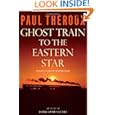
  3. Ghost Train to the Eastern Star, by Paul Theroux. Listened to this book as well. Paul writes a travel log of his retracing a prior travel some 33 years earlier where he takes trains across Europe to China and up Russia. Some 25,000 miles of travelling. Quite interesting if you like knowing what life is like in the countries he explores. Seems to be quite focused on the sex trade and some very heartbreaking descriptions of trafficked women in southeast Asia. But the BEST part of his book is this: read his introduction to the book here on p. 1-3. See what he says about travel writers pathology. Funny!
  4. Baseball books. I read two this summer. Knuckler: My Life with Baseball’s Most Confounding Pitch by Tim Wakefield. I’m a big Sox fan and I have a great deal of respect for Wakefield. He’s no superstar but he is absolutely willing to do whatever his team needs, whether go out and start, do long relief, or sit the bench during the playoffs because they need someone else to be on the roster. As I write this, Wake is trying for his 200th win…and getting hit around. Seems he’s stuck on 199 for a bit. The book was a nice look at his life from his own vantage point. The second book was even more interesting to read. Nobody’s Perfect tells the story and the back story on what should have been a perfect game thrown by Armando Galarraga–except for a blown call on the last out (what SHOULD have been the last out). What makes this interesting is that each chapter is written in the first person telling the inner story of the pitcher and the umpire, James Joyce. Both show their quality character. If you like baseball and understand that a perfect game is so unlikely and that umpires never admit their mistakes, you will like this book.
  5. On recommendation by someone who gets how systems work, I read, The Primes: How any Group can Solve any Problem, by Chris McGoff. Excellent business planning book that didn’t feel like business at all but how to figure out how to do the “one thing” that you just have to do. I’m reading it as I try to figure out how to devise a continuing education and consultation side of my work. If you ever dream about starting a business or solving a work problem, I’d encourage you to read this.
  6. You might be wondering if I read anything in my own domain of counseling. I did. Two books. Healing Invisible Wounds: Paths to Hope and Recovery in a Violent World, by Richard Mollica. He describes how the act of telling one’s trauma story can lead to healing. If you are working with international trauma, a must read. I also read Working with Narrative in Emotion-Focused Therapy, by Angus and Greenberg. I started blogging on the chapters but went on vacation and finished it when I didn’t have access to the Internet. I hope to get back to blogging the chapters.

I think that is it. I know I skimmed and glanced at a whole bunch more. I tend to do the 5 minute read on lots of books that might be interesting but that I know I don’t have time to read. The 5 minute read gives me the main points and conclusions without having to take so much time.

By the way, the summer isn’t over. I have an edition of Beowulf on my nightstand. Not sure I’ll get through it. Linda Polman’s The Crisis Caravan: What’s Wrong with Humanitarian Aid is waiting right beside it. I’m about to start listening to John Milton’s Paradise Lost on my drives to work and I’m listening to Hawthorne’s The Scarlet Letter at the gym. My new great love is listening to stuff when it would normally be wasted time. My way of not thinking about problems.

So, did you read or re-read something fun this summer? What was it?

4 Comments

Filed under book reviews, Good Books, Uncategorized

How do you make decisions?


A line in a recent sermon by David White has stuck with me for a bit. He asked us to consider the mindset behind our decision-making. He reminded us that we might say, “If the Lord wills I will do thus and so.” Sounds holy right? But maybe we really mean, “If God lets me do what I want, then I’m going to do what I want.” Notice the differences between being concerned about what God wants and what we want to do if he’ll just let us.

The line that got me was this:

If it is not unholy, should I pursue my particular ambition?

To be honest, I’m not sure he said it or if that is what I wrote down in my notes. What I took away from it is that we commonly quick check the box on whether what we want to do is right or not and if we think it is right, then we stop asking God whether we ought to do it or not. While it is good to consider rights/wrongs in decision-making, I can still ignore important matters in determining whether I should choose to do A or B. This probably sounds abstract so let me put this into a specific and real context:

Should I accept a speaking engagement invitation some months from now? The group and topic are worthy of the time. But should I do it? If it is not wrong, can I just say yes? Is right/wrong really the same as asking God whether or not this is good and right for me to do. As I considered the factors in the decision, here’s some of what passed through my mind.

  • Well, it is a conference I was already considering I might attend. So, I would have been gone from my family anyway.
  • This particular invitation was pretty special and might not repeat any time soon. I should do it.
  • You know Phil, a number of your mentors and colleagues would be there and it would be cool to be on the docket as “invited.” Then I admitted to myself: Glory is not really a reason and the work would be greater than just attending. You often underestimate how much effort it takes to do these things.
  • I really want to do this. My motivations are mixed but it still would be fun.
  • I hate saying no to requests. 

So, what did I do? I asked God for some help in making the decisions. I did not choose to talk to anyone about it (other than my wife and the one doing the inviting) for fear I would get folks to tell me what I wanted to hear.

How did it turn out? Believe it or not just as I was crafting the email to tell the conference planner that I would be coming, I remembered I had tentatively given my assent to an event here in the Philadelphia area. Now, you need to know that this event was more of a dream than a reality, more of, “I’m willing to be present if you guys decide to hold that meeting.” After a fleeting thought that I could squeeze both event in (something I’ve tried before), I realized I was getting my answer and some grace to say no to something that was absolutely enticing but not what I need to do this year.

Does God have a specific will?

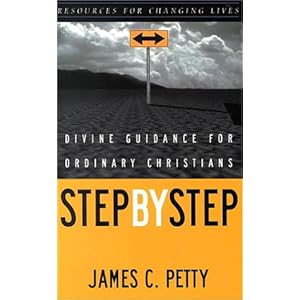
I continue to believe in Jim Petty’s 3 circles of discerning the will of God. Somethings are very clearly wrong and should be avoided. This is the inner circle and you could label it “the law”. The middle circle are things that are not necessarily wrong but need to be evaluated through the lens of “the law of love.” These are things that could be wrong because they reveal that we love ourselves more than others. For example, if I decide to give up my job to take up a risky start-up business, I might be unloving to my family and placing them at more risk than they are comfortable with. Finally, the outermost circle contains everything else and is “christian liberty.” So, I decided to go to college or I’ve decided to get married and this seems good to those who know me well. There may be many choices of good schools and potential spouses. Christian liberty says that there isn’t one choice and if I screw it up I’m out of God’s will.

And while I still think in these terms, I am also realizing I don’t spend much time thinking beyond my own interests. It is time to take up the challenge of this question, “Okay, so it is not wrong…but is it right for me and my family? Is this how I should spend my time?” And then…time to pray a bit more and wait expectantly for an answer.

7 Comments

Filed under Christianity, Guidance and Counseling, Insight, Uncategorized

Surprised by peace? Surprised by suffering? What do you expect?


Traffic slowing to a crawl on the Monash Freew...

Image via Wikipedia

What is your baseline perspective on life? Do you tend to believe that life should work pretty well and are surprised when suffering and pain enter your life? Or, do you tend to believe that life is hard and are surprised and pleased when it is not so hard or when you have moments of peace?

Perspective is pretty much everything. If you are driving during rush hour and you expect that traffic will be really bad but it turns out to be better than you feared, you probably feel great. But, if you were thinking your drive would take you one hour but it took two, you probably feel a bit frustrated. Both drivers might travel exactly the same amount of time but have opposite perspectives.

Expectations shape our feelings and perceptions of how life is going for us. Now, I am NOT arguing that if you just think happy thoughts, you won’t be bothered by problems in this life. No matter your perspective, you will suffer. To think otherwise would be denial of reality. But behind most of our “this is not fair…why would God allow this…I’m not sure I want to believe in a God who allows pain to happen” kind of comments are some assumptions and expectations that reveal what we believe life should be like.

Consider these assumptions or expectations. See one that gets you?

1. Life should be fair and should work. This could be called the Jonah perspective. Yes it should. But since sin entered the world, it isn’t. Instead of blaming God, might we not want to notice how many times in life, things are fair, just, and good? Might we not want to see that God is giving us better than we deserve? How might that mindset modify our general view of God’s care for us?

2. I have sacrificed much for God, why hasn’t he given my good and decent desires)? This one is similar to the 1st point but focuses along the lines of Psalm 73. Fairness is seen along the lines of righteousness. The good guys get blessings and the bad guys get suffering. If we hold this expectation then it is common to feel gypped when we don’t get our good desires met.

3. Suffering is something that is temporary, something to get through. This is an American viewpoint. We can overcome obstacles, we can heal the sick, we can fix problems. Once we get our education, get married, get the job we wanted, get our 401Ks then life will be good.

10 Comments

Filed under Christianity, Doctrine/Theology, Insight, suffering

Good Read: Covenant Eyes on Porn/Trafficking Connection


The link between the demand side of sex and trafficking has already been established by good research. But, few are aware of some of the connections and many think that porn use is only a personal decision without larger consequences.

I commend to you this link to a well-written essay by Luke Gilkerson of Covenant Eyes. (Covenant Eyes provides technology to track and filter unwanted sexual content for Internet users.) In this essay he summarizes the linkages and reminds readers that one of the best ways to get the message out is with a good video. He provides an extensive bibliography of videos on the topic of sex trade, porn, trafficking, and their impact on victims, families, and users.

Good stuff for you to consider.

8 Comments

Filed under pornography, prostitution, sexual addiction

Narrative Therapy and Emotion: Meaning Making


Continuing with our summary of Working with Narrative in Emotion-Focused Therapy (by Angus and Greenberg) we come to chapter 2. Here the authors attempt to lay out how we make meaning. But before we try to describe their model, consider how you make events and feelings mean something to you.

What data do you use to make something mean something? You use your body, your culture, your emotion, your reason, your previous meaning making (and the messages you receive from others). Consider this example. You pull up to a light and you glance over and see a person in the car waiting in the next lane. They wave a finger towards you. What does it mean? Well, it depends on your culture and your previous experience with that finger way. Is it a curse or a point to something else? The answer depends on where you live and what your lived experience of that finger wave.

The authors slow this process of meaning making (and meaning changing) down by considering facets:

1.   Bodily sensations. These do not exist by themselves but are connected to a sequencing of events. So, you have a feeling and then you immediately put it into a sequence. “I feel this way because…” The goal of therapy is to work to accept, tolerate, and “explain” or narrative emotions in a healthier way.

2. Words. Putting feelings into words tends to “[diminish] the response of the amygdala and other limbic regions to negative emotional images.” (p. 21). Thus, as they say, “…the person is having the emotion rather than the emotions having the person.” (ibid). “…naming an emotion integrates action, emotion, and meaning and provides access to the story in which it is embedded.” (ibid).

3. Naming is construction. “Conscious experience is not simply ‘in’ us and fully formed but instead emerges from a dialectical dance” (p. 22). Thus clients can learn how their own construal of emotions (the words, the meanings) shapes ongoing feelings

…understanding how a condemning self-critical voice leads to feelings of shame and helplessness helps clients to recognize the role they themselves play in maintaining their feelings of depression. (p. 22)

Thus, the goal is to encourage reflection of one’s common interpretative themes to see how they tend to organize and categorize their lived experiences.

4. Change the story. How does a person go about changing narrative themes (e.g., challenge and re-write feelings of shame)? How does one re-interpret shame feelings as sadness? Note the that goal is not to deny the feeling or reject it in any way. Rather, the goal is to interpret the feeling in a more constructive way. Consider this example:

I offer my son some advice. He does not take it but goes on to do the opposite. I might feel rejected? Further, I might go on to remind myself that no one ever respects me and listens to my ideas. I might feel insignificant and unloved. With the help of a counselor, I might re-name the feelings as sadness rather than rejection (e.g., I feel sad that he didn’t take my advice and recognize he might face certain consequences that he might have avoided if he had listened to me). Part of the transformation requires that I live with limitations. I am not capable of making my son choose what I want. I suspect that part of what leads us away from sadness and towards anger and feelings of rejection is our unwillingness to live with feelings such as sadness and grief. These things shouldn’t be this way if  others would just treat us right!

5. Reconstruct identity. Its one thing to re-write a narrative of a single event. It is yet another to write a new narrative about our self or about others. The authors say this, “Constructing a sense of self involves an ongoing process both of identifying with and symbolizing emotions and actions as one’s own and constructing an embodied narrative that offers temporal stability and coherence.” (p. 25)

What might a counselor do to facilitate reconstruction? The authors go on to give a brief overview of 4 phases of “narrative-informed EFT.” I will cover them in the next post.

1 Comment

Filed under counseling, counseling science, Uncategorized

Do therapy dogs in the courtroom create an undue benefit for the prosecution?


Check out this NY Times article about the use of therapy dogs in the courtroom. They are being used to comfort someone testifying about their sexual assault. In the article, it tells of the dog Rosie who provided a girl some measure of comfort as she testified against her father about his rape of her. She would pause or delay her answers and the dog would sense her pain and nuzzle her.

Seems like a good thing! But wait, the defense doesn’t think so. Each time the dog comforts the child, the jury sees her distress more clearly and develops sympathy for the client. Does such a dog sway the court toward conviction? The defense worries that the girl might be under distress from lying and thus the dog might aid her to tell a better lie.

I’m sure that these dogs are providing a wonderful service that ought to be continued. Someone with a bright mind will figure out how to have the dog in the courtroom and yet shield the jury from seeing the dog do his or her work. And other bright minds will try to craft ways to eliminate the dogs and give the defense the upper hand again.

1 Comment

Filed under Abuse

When someone you love suffers from PTSD?


Has anyone read this book? The full title is: When Someone You Love Suffers from Posttraumatic Stress: What to Expect and What you Can Do  (By Claudia Zayfert and Jason DeViva (Guilford Press).

If so, any thoughts on it? I do not yet have it in my possession. One of the areas I found wanting re: PTSD is a good book for spouses of survivors of sexual abuse. There was a book that I would use but is no longer in print. Some do read “Stop Walking on Eggshells”, a book about living with Borderline Personality Disorder. While there are relational behaviors commonly seen in people with either complex PTSD or BPD, the two problems are different and sadly, those with complex trauma reactions get stigmatized with the BPD label.

So, if anyone has seen this and wants to lend their comments, I would welcome them here.

4 Comments

Filed under Abuse, Post-Traumatic Stress Disorder, Psychology, ptsd, Uncategorized

Narrative therapy and emotion 1


This month, Richard Smith and I are teaching an on-line class entitled, Christian Counseling in Postmodern Culture. Dr. Smith is managing the culture side of things in this class and has students thinking about the impact of consumerism, the “empty” self of the modern era, and “infantilist ethos” (from Barber’s 2008 Consumed)

This week Dr. Smith gave the class this quote:

At heart postmodernity [is] the same anthropology: both see humans as primarily units of consumption for whom choice is the defining characteristic… The difference between modernity and postmodernity is not that great looked at in this way: The cult of the autonomous ego, an endlessly acquisitive conqueror and pioneer devolved into a commodious individualism characterized by an unencumbered enjoyment of consumption goods and commodities.  (Brian Walsh and Sylvia Keesmaat).

A mouthful? Boil it down to this…postmodernist philosophy is very much concerned about the self. Not all that new. Now, postmodernism is much more than that and NOT all bad. But my point here is this: a counselor working in this culture must be able to connect with the client and help them construct/reconstruct their story rather than just give them lists of universal truisms to apprehend. Not that there isn’t universal truth but that the approach to them must  done in a dialogical and storying manner.

Enter narrative therapy.

Thus, I intend to blog a bit on this topic during the rest of August by summarizing and commenting on Working with Narrative in Emotion-Focused Therapy: Changing Stories, Healing Lives, by Lynne E Angus and Leslie S. Greenberg (APA, 2011).

Chapter one begins with this statement:

Being human involves creating meaning and using language to shape personal experiences into stories, or narratives. (p 3)

Do you agree? I would argue there is much truth in this. We shape our sense of self from our retelling of our experiences (both in words and in unspoken thoughts/emotions). But, we do not re-tell all of our experiences. Rather, we collect some and ignore others. Part of counseling is to dialog with the clients about how they shape their own narrative.

The authors then make this statement about the work of counseling,

As therapists, it is when we listen carefully to our clients’ most important stories that we gain access to how people are attempting to make sense of themselves in the context of their social worlds. In this way, psychotherapy is a specialized discursive activity designed to help clients shape a desired future and reconstruct a more compassionate and sustaining narrative account of the past. (p. 3-4)

Here they are telling us that our stories we tell are shaped by our emotions and at the same time make sense of our emotions.

What is EFT? It is a therapy that sees emotions as “centrally important in the experience of the self.” (p. 6). It was developed (principally by Les Greenberg) out of humanistic and Rogerian ideas of self-actualization and of counselor activities of being with, following the client and guiding. Throw in some F. Perl’s empty chair techniques as well. EFT focuses on emotions. Adaptive emotions are “the most fundamental, direct, initial, and rapid reactions to a situation…” (p. 7). Maladaptive emotions “…usually involve overlearned responses based on previous, often traumatic, experiences.” By this they mean emotions such as shame and abandonment sadness. They define secondary emotions as those reactions that are intended to protect the primary or most vulnerable emotions. Finally, they define instrumental emotions as those expressed for a motivation to achieve an aim.

Why the focus on emotion? Because they seek the goal of being emotionally congruent and adaptive. In this book, they focus on empathic attunement and changing client narratives.

How? Clients identify, experience, explore, story, make sense of, and flexibly manage their emotions (their words). Therapists notice “meaning markers” that reveal client confusion or conflict with the self.

This book will explore the narrative approach to EFT. “Critical life events must be described, reexperiences emotionally, and restoried before the trauma or damaged relationship can heal. New meanings must emerge that coherently account for the circumstances of what happened and how the narrator experienced it…” (p. 11)

Finally, they say,

…no form of psychotherapy is likely to have a big impact on basic temperament traits, but a client’s specific strategies, adaptations, and their internalized life narratives (i.e., macronarratives) have as much impact on behavior as do dispositional traits. (p. 13)

That is an interesting quote and puts the act of storying as more important than disposition.

So, what we will look at in the remaining 7 chapters is how the authors help facilitate new meanings and change their own narrative. The question for us is whether or not the narrative or re-storying approach to therapy is (a) effective in remediating problems, and (b) fits with Christian faith.

3 Comments

Filed under christian counseling, counseling, counseling science, counseling skills, Psychology, Uncategorized

Shepherding Survivors of Sexual Abuse • EFCA Today


Shepherding Survivors of Sexual Abuse • EFCA Today.

Click the above link for a good read: 6 myths about shepherding sexual abuse survivors. Written by Andrew Schmutzer, OT prof at Moody and editor of the forthcoming multiauthored The Long Journey Home: Understanding and Ministering to the Sexually Abused (Wipf and Stock).

1 Comment

Filed under Abuse, christian counseling, counseling